Archives

An Overview of the Most-Commonly-Used Medications to Treat Symptoms in Alzheimer’s Disease and Dementias

There is no cure for dementias or Alzheimer’s Disease. Once the journey begins, its course is downhill, sometimes gradually, sometimes rapidly, but always in decline. 

There may never be a way to prevent these neurological diseases from occurring before the damage is done – I’m going through several neurology-related courses right now and the professors teaching these courses readily admit there is more about the brain’s chemistry, physical structure, communication systems, and function that is not known than is known – but once dementias and Alzheimer’s Disease have begun to damage the brain, there is no remedy.

The brain is a unique organ in the body in that once cells in the brain die, they do not regenerate themselves. They’re dead and gone.
seroquel-namenda-drugs-alzheimer's-disease-vascular-dementia-lewy-body-dementia-going-gentle-into-that-good-night

The neurological damage of dementias and Alzheimer’s Disease cannot be reversed.

So when Mama’s diagnoses came in late July 2010, I had a unique and personal perspective on what that meant for her and for me. “Mid-to-late-stage vascular dementia and mid-to-late-stage Alzheimer’s Disease” from the psychiatrist at the geriatric psychiatric hospital that Mama was in after her meltdown on July 10, 2010 didn’t surprise me. But I knew there was no cure, no going back, no fix.

I transitioned, probably more easily than most family members who hear this for the first time, to “what can we do to stabilize?” The psychiatrist assured me that stabilization was possible, but it would take time and tinkering with the medicines that the symptoms of dementias and Alzheimer’s Disease demand.

I was almost convinced that nothing could turn around the psychosis that Mama was experiencing in full throttle in those days. I realized my own helplessness to help her and make it better for her. I experienced a lot of guilt and inner turmoil because nothing I was doing was working and I knew how much she was suffering and how afraid she was and it was all out of her control and my control.

I was also extremely sad. This was not the mama who had, with open arms along with my daddy, brought my sisters and me into their home through adoption, loving us with a fierceness and tenacity that we struggled with at times but also realized over time was the real deal. This was not the mama who opened her arms, her heart, her door to me when life was banging against me and threatening to destroy me. This was not the mama who put up with me and loved me in spite of myself, at times, unconditionally.

How could I not do the same for her after all she (and Daddy) had done for me? They loved me in spite of myself. How could I not love Mama in spite of herself? This was a no-brainer for me.

It was during the geriatric psychiatric hospital stay that I learned about many of the most-commonly-used medications used to control and improve the symptoms of dementias and Alzheimer’s Disease.

drugs-alzheimer's-disease-dementia-going-gentle-into-that-good-nightAll the medical professionals involved in Mama’s care were very careful to tell us repeatedly that the medications they were trying with Mama were controlling symptoms only.

Since Mama was experiencing hallucinations, paranoia, and delusions, the psychiatrist prescribed SeroquelXR (50 mg twice a day), Citalopram (40 mg a day) for anxiety, Namenda (generic: memantine) for cognition enhancement, Exelon (24-hour-patch/4.6 mg – this is also available in oral form since the patch can cause skin irritation) for cognition enhancement, and Clonazepam (.25 mg/PRN) for extreme agitation as the dementia and Alzheimer’s Disease medication regimen for Mama’s symptoms.

And it worked.

I gave Mama Clonazepam only twice in two years (it knocked her out and I didn’t like the side effects, but it was for extreme agitation and there were only two times when she was agitated to the point of fearing for her heart health, that I decided to give it to her). The rest of this combination of anti-psychotic, anti-depression, anti-anxiety regimen gave Mama a better quality of life from near the end of July 2010 until her death on August 14, 2012.

With the exception of SeroquelXR.

Just after Thanksgiving 2011, Mama awoke one morning with tardive dyskinesia. At the time, I didn’t know what it was, but Mama was scared (and so was I as I watched the involuntary movements that rhythmically were going through her body).

I got Mama to the ER, where a nurse practitioner, who refused to listen to me (and the nurses who were with Mama and me and with whom we were talking to all day) for eight hours, was convinced that the tardive dyskinesia was Mama’s pacemaker going haywire.

So we waited all day in the ER for a cardiac consult that tested Mama’s pacemaker and confirmed it was working properly and not the problem (which I’d been telling the nurse practitioner all day because we’d just had it checked the week before).

Finally, the nurse practitioner decided to admit Mama, and late-stage tardive dyskinesia was diagnosed with the culprit being SeroquelXR.

Mama had Lewy Body dementia as well. It was not diagnosed (a firm diagnoses cannot be made without an autopsy of the brain, but symptoms are quite obvious while our loved ones are living), but I’d seen it, not knowing what I was seeing (I began researching it after Mama’s full-blown symptoms starting appearing in January 2012), just after Mama had gotten out of the geriatric psychiatric hospital when we were going to doctors’ appointments together.

Anti-psychosis drugs and Lewy Body dementia don’t mix well together. Mama was fortunate that she was able to stay on SeroquelXR as long as she was, and for that I am thankful. But we reached a point where we had to choose between mood and hallucinations/delusions.

I chose to help Mama with her mood. I knew I could handle hallucinations and delusions (although, in reality, what I thought I could handle still turned out to be surprising and perplexing, causing me to have to scramble to try to adjust with honesty and integrity even when things got way out of my comfort zone), but I could not handle Mama’s mood swings with these diseases.

So we (the hospitalist and I) went with Depakote Sprinkles (100 mg, 3 times a day – I could mix it with foods and drinks and make it easier for Mama to take) with the hospitalist telling me that Mama’s hallucinations and delusions would come back. 

They did, but they were not particularly scary for Mama (I think because I was there), but they often threw me for a loop initially. I’m probably the least spontaneous person on the planet, so adjusting to these was particularly hard for me, but eventually, I got better at dealing with them and easing Mama’s mind. A new normal for both of us.

These medications that Mama was on are not the only ones used to treat the symptoms of dementias and Azheimer’s Disease, but they are the most common in the mid-to-late stages.

In the early stages, Aricept is commonly prescribed. From everything I have read and heard, it’s efficacy is limited. I believe that this is because by the time most people are diagnosed with dementias and Alzheimer’s Disease, they are already beyond the early stages of the diseases.

I would caution all of us as caregivers to make sure our loved ones are not over-medicated. Many of the anti-psychotics and anti-anxiety drugs can anesthetize our loved ones to an almost-coma-like state, which is not what we or they want or need.

We are their advocates. We are the only people who can fight for our loved ones medically. We have a responsibility to make sure our loved ones suffering from dementias and Alzheimer’s Disease have the best quality of life they can have for as long as they can have it. This is our obligation to them. 

So unless anti-anxiety drugs are absolutely necessary and unless morphine and its derivatives and cousins are absolutely necessary, please don’t give them. They deprive our loved ones and they deprive us of quality time in the face of these terminal diseases. Nobody wants that.

There are medications that I haven’t talked about in this post. If you want to know about any medications that your loved ones may be taking, please comment here or email me at goinggentleintothatgoodnight@gmail.com. I’ve researched many, if not all, the medications used to deal with the symptoms of these diseases, so I’ll be happy to help you with any questions you may have.

Medical Advocacy and Support and Dementias and Alzheimer’s Disease

Author’s note: I originally posted this in June 2013, but I will now be reposting this every month, because it is one of the most important ways in which we can help and support our loved ones with dementias, Alzheimer’s Disease, and other age-related illnesses (“Going Gentle Into That Good Night: A Practical and Informative Guide For Fulfilling the Circle of Life For Our Loved Ones with Dementias and Alzheimer’s Disease“) offers a more comprehensive list of the areas in which we can offer help and support to our loved ones).

*****

Today’s post will discuss our role as medical advocates and medical support for our loved ones suffering from dementias and Alzheimer’s disease. Here I will provide practical advice and suggestions, from my own experience, in managing the medical aspect as easy, as straightforward, and as  un-disruptive for our loved ones as possible.

The very first thing we need to do as caregivers is to make sure medical wishes and medical legal authority – medical power of attorney – are documented and authorized (primary care physicians can do this; I suggest getting them notarized as well). Hopefully, these have been discussed enough so that either our loved ones have already taken care of them or we know what they want and are able to execute them ourselves.

For anyone reading this who is not a caregiver or suffering from dementias and Alzheimer’s Disease, now is the time to think about these because time and chance happen to us all. For those of us who are caregivers, these are documents we need to locate and keep in one place.

A medical power of attorney document designates who will make decisions when the person drawing up the document is unable to.

Living willA living will essentially specifies whether a person wants everything done possible to keep them alive, no matter how long, how futile, and how expensive or whether only comfort care is given when it’s clear that the end of life is at hand.

DNR (Do Not Resuscitate)A DNR (Do Not Resuscitate) document states that the person does not want to be resuscitated if he or she stops breathing.

I suggest getting a briefcase or backpack to keep all the documents related to the medical care for our loved ones in. The briefcase or backpack should be accessible at all times, so it goes everywhere we and our loved ones go.

The medical power of attorney, living will, and DNR should be kept together in a folder in the briefcase or backpack. The other items in this backpack should include medical history documents and an up-to-date list of of medications (I’ve attached a sample Excel spreadsheet you can download and for this). Get an inexpensive wallet to put a photo id and Medicare Part A and Part B cards in and keep that in the briefcase or backpack as well. Always have something (electronic or pen and paper) to take notes with.

It is important to remember that we caretakers have a responsibility to advocate for our loved ones with dementias and Alzheimer’s Disease with all medical professionals (primary care physicians, psychiatrists, nurses, dentists, hospital staff, home health staff, and hospice staff). However, it is equally important to remember that, unless our loved ones are in the dying process and, therefore, unresponsive, that we need to include them in all conversations, explain to them what is being discussed and why, and make sure the medical personnel include them as well.

While our loved ones may not understand everything, we must not treat nor let anyone else treat them as if they are invisible. This is probably one of the greatest gifts of love and respect we can show them.

We have to usually initiate this by stopping the conversation the medical professional is having with us, turn to our loved ones and hold their hands, make eye contact, and explain. Eventually, the medical professional will make eye contact with both us and our loved ones.

The reality is that we don’t really know how much our loved ones comprehend or understand. It’s my personal belief that they understand more than the diseases allow them to respond to. I also know that touch and inclusion are two basic needs we all share as humans, so it’s essential that our loved ones never feel excluded or unloved.

Hospitalizations are hard on elderly people. I don’t know all the reasons why, so I wouldn’t begin to speculate (although I have some opinions about it) as to why. For our loved ones with dementias and Alzheimer’s Disease, hospitalizations are not just hard, but extremely traumatic because of unfamiliarity of everything: people, place, and routine. Going into a hospitalization, we as caregivers must be aware that it will be a setback for our loved ones when they come home.

hospitalizationBecause of the traumatic effect of hospitalizations on our loved ones, it is critical that we as caregivers stay with them as much as we’re able during the hospitalizations. We are, even if some of the time they don’t know who we are, familiar. And our presence can help neutralize some of the fear and anxiety that often occurs during hospitalizations. 

Always have a “hospital bag” with clothes, toiletries, and other things our loved ones need packed. That bag goes every time we take our loved ones to the ER or with us as we follow an EMS transport. (It is imperative to be sure to wash the clothes from the hospital stay immediately and separately from any other laundry when we get home.)

Spend the night for as long as our loved ones are hospitalized. I know, because I’ve spent way more nights than I could ever count with my mom – even before her dementias and Alzheimer’s Disease diagnoses because I didn’t want her to be all alone – in the hospital, that there’s iffy sleep, awful coffee, and not-so-great food. But our loved ones are worth it. 

But spending the night has an additional, and equally-important, benefit. Most doctors make rounds between 7 pm and 8 pm in the evening and between 6 am and 8 am in the morning, so by spending the night we’re always there when the doctors are there so we can be current on what’s going on with our loved ones. I’ve found that, in general, hospital nurses either don’t know much or are too busy to take the time to give you real updates, so the only in-depth information you’re going to get will be from the doctors.

The other benefit of staying with our loved ones is that we can make sure they get the quality care and attention they need. It’s been my experience that most hospitals simply to don’t have enough staff to provide much personalized care, so if there is no one there with the patient, the patient just has to wait until someone gets around to him or her. By us being there, we can ensure that our loved ones are clean, taken care of, and not uncomfortable in any way physically. That’s one of the best ways we can serve them.

As I mentioned, expect a setback after hospitalization. It can last anywhere from a few days to a couple of weeks. Recovery will eventually occur, but it’s important to know that it will never return to the pre-hospitalization state. That’s just the nature of these diseases.

It’s important to be patient, loving, kind, gentle, and tender no matter what. It’s my opinion that most of the behavior is a way of expressing fear, so it’s important that we allay those fears and help our loved ones feel safe again. It takes time and a lot of deep breaths sometimes, but this is another way we show them how much we love them.

Is the Precipitous Rise in Dementias and Alzheimer’s Disease Over the Last Twenty to Thirty Years Linked to Lifestyle?

I have discussed lifestyle dementia, especially in the Baby Boomer generation and beyond, being a real concern for the near future.

One of the lifestyle factors that I discussed was improperly managed and uncontrolled diabetes. Diabetes can occur at any age, but it seems that more people in their 30’s and 40’s are, at the least, pre-diabetic, with many going on to be diagnosed with Type II diabetes. Type II diabetes used to be controlled with exercise and diet, but now typically includes non-insulin medication as part of the equation (Type I diabetes must be controlled with insulin).

One of those medications is the diabetes drug, Victoza (liraglutide [rDNA origin] injection). You’ve probably begun seeing a lot of commercials for this drug in the last couple of months here in the United States.  Victoza is also being tested to see if it can slow the progression of Alzheimer’s Disease.

Personally, in addition to dementias and Alzheimer’s Disease being labeled as diabetes III, some of the new research seems to me to show a more compelling link between high blood glucose levels and the burgeoning explosion of not only dementias and Alzheimer’s Disease in the elderly population, but also in people as young as their late 30’s.

processed-foodsI suspect – this is my opinion – our more highly-processed food diets combined with being overly sedentary are major factors in this. I’ve spent a lot of time thinking about why over the last twenty to thirty years, we’ve seen such an explosion in these two neurological diseases.

And we’re seeing an alarming increase in dementias and Alzheimer’s Disease at younger and younger ages.

And, it is, no doubt, in large part due to a greater toxicity in our natural environment (air, water, and even big-farm-grown food, with all the pesticides and herbicides that have, with prolonged use, permeated our soil and our water supplies so that we’re eating and drinking poisons every time we put “fresh” food in our mouths).

But with this emerging link between high glucose blood sugar levels and cognitive impairment, I am coming to believe that our fast-food, “meal-in-a-box,” highly-processed foods diet combined with little-to-no regular exercise is a significant contributor as well.

Americans, especially, have some of the most atrocious eating habits in the world. Eating real meals at appropriate times during the day has all but disappeared and, in a lot of homes, eating has become whatever, whenever, and results in being the equivalent of nonstop snacking.

I’m always amazed at how much we eat out and don’t cook at home. I’m equally surprised that when we do cook at home, it’s not really cooking, but taking a box, can, or bag of something prepackaged and heating it up.

We have grown to really like the taste of processed food, fast food, and restaurant food and we don’t like the taste of home-grown food and foods made from scratch. The fast food, restaurant food, and processed food industries have made sure that we prefer their food to real food by making it high fat, high carbohydrate, and even high sugar.

McDonald’s, for instance, uses a simple sugar, dextrose, to give its french fries their unique and – I may the only person on the planet who has eschewed McDonald’s food all my life – for most people, addictive flavor .  

Check your pantry, refrigerator, freezer, and cabinets right now and see how many of the processed foods in there have a form of sugar (dextrose is a common one) added. Remember that the listing order of ingredients on food packages is from most used to least used.

big-vegetable-garden-lgWhile our grandparents or great-grandparents had gardens and fruit trees, raised chickens and/or beef cattle (or had a neighbor who did), and worked more laborious jobs to earn a living and then spent a lot of time working laboriously at home (cleaning houses, mowing lawns with a push mower and tilling, planting, harvesting, and preserving the produce they grew), we modern westerners grow very little of our own food, preferring the boxes, cans, and bags of food at the grocery store and buy hormone and antibiotic-filled chicken and beef in super WalMarts after our 10-12 hour days mainly sitting in an office staring at a computer screen.

When we do get home, if we haven’t hired a lawn maintenance service, then no matter how small the yard, we jump on a riding lawn mower video-gamesand cut the grass in a few easy sweeps. A fair number of us pay someone to clean our houses. Our other time at home is mostly spent in sedentary activities in front of computer screens, video games, and TVs.

So in many ways, although I don’t at all discount genetic factors and a very toxic planet, we westerners have adapted a diet and exercise lifestyle that very likely  could be contributing to the earlier and exploding rise in cognitive impairment and decline.

As with all diseases, there are many factors out of our control, but what we eat and whether we exercise are two factors we have complete control over. When I consider everything outside of my control working against me, then I undertake very seriously anything that is within my control.

Does that mean, if I live long enough, I won’t suffer with dementias push-lawn-mowerand/or Alzheimer’s Disease? Frankly, the odds are against me – as they are against you – with these diseases.

However, how I personally to choose to eat and exercise all my life may have a great impact on how long it takes and how bad it becomes. It may not, but I’d rather err on the side of caution.

I steadfastly believe that because Mama ate healthily all her life and exercised every day, even in little, short, slow increments throughout the day, with my guidance, almost up to her death, the worst of her symptoms were in only the last two years of her life.

So, what will you do differently, starting right now, with the things in life – and your lifestyle – that are in your control?

Medical Advocacy and Support and Dementias and Alzheimer’s Disease

Author’s note: I originally posted this in June 2013, but I will now be reposting this every month, because it is one of the most important ways in which we can help and support our loved ones with dementias, Alzheimer’s Disease, and other age-related illnesses (“Going Gentle Into That Good Night: A Practical and Informative Guide For Fulfilling the Circle of Life For Our Loved Ones with Dementias and Alzheimer’s Disease“) offers a more comprehensive list of the areas in which we can offer help and support to our loved ones).

*****

Today’s post will discuss our role as medical advocates and medical support for our loved ones suffering from dementias and Alzheimer’s disease. Here I will provide practical advice and suggestions, from my own experience, in managing the medical aspect as easy, as straightforward, and as  un-disruptive for our loved ones as possible.

The very first thing we need to do as caregivers is to make sure medical wishes and medical legal authority – medical power of attorney – are documented and authorized (primary care physicians can do this; I suggest getting them notarized as well). Hopefully, these have been discussed enough so that either our loved ones have already taken care of them or we know what they want and are able to execute them ourselves.

For anyone reading this who is not a caregiver or suffering from dementias and Alzheimer’s Disease, now is the time to think about these because time and chance happen to us all. For those of us who are caregivers, these are documents we need to locate and keep in one place.

A medical power of attorney document designates who will make decisions when the person drawing up the document is unable to.

Living willA living will essentially specifies whether a person wants everything done possible to keep them alive, no matter how long, how futile, and how expensive or whether only comfort care is given when it’s clear that the end of life is at hand.

DNR (Do Not Resuscitate)A DNR (Do Not Resuscitate) document states that the person does not want to be resuscitated if he or she stops breathing.

I suggest getting a briefcase or backpack to keep all the documents related to the medical care for our loved ones in. The briefcase or backpack should be accessible at all times, so it goes everywhere we and our loved ones go.

The medical power of attorney, living will, and DNR should be kept together in a folder in the briefcase or backpack. The other items in this backpack should include medical history documents and an up-to-date list of of medications (I’ve attached a sample Excel spreadsheet you can download and for this). Get an inexpensive wallet to put a photo id and Medicare Part A and Part B cards in and keep that in the briefcase or backpack as well. Always have something (electronic or pen and paper) to take notes with.

It is important to remember that we caretakers have a responsibility to advocate for our loved ones with dementias and Alzheimer’s Disease with all medical professionals (primary care physicians, psychiatrists, nurses, dentists, hospital staff, home health staff, and hospice staff). However, it is equally important to remember that, unless our loved ones are in the dying process and, therefore, unresponsive, that we need to include them in all conversations, explain to them what is being discussed and why, and make sure the medical personnel include them as well.

While our loved ones may not understand everything, we must not treat nor let anyone else treat them as if they are invisible. This is probably one of the greatest gifts of love and respect we can show them.

We have to usually initiate this by stopping the conversation the medical professional is having with us, turn to our loved ones and hold their hands, make eye contact, and explain. Eventually, the medical professional will make eye contact with both us and our loved ones.

The reality is that we don’t really know how much our loved ones comprehend or understand. It’s my personal belief that they understand more than the diseases allow them to respond to. I also know that touch and inclusion are two basic needs we all share as humans, so it’s essential that our loved ones never feel excluded or unloved.

Hospitalizations are hard on elderly people. I don’t know all the reasons why, so I wouldn’t begin to speculate (although I have some opinions about it) as to why. For our loved ones with dementias and Alzheimer’s Disease, hospitalizations are not just hard, but extremely traumatic because of unfamiliarity of everything: people, place, and routine. Going into a hospitalization, we as caregivers must be aware that it will be a setback for our loved ones when they come home.

hospitalizationBecause of the traumatic effect of hospitalizations on our loved ones, it is critical that we as caregivers stay with them as much as we’re able during the hospitalizations. We are, even if some of the time they don’t know who we are, familiar. And our presence can help neutralize some of the fear and anxiety that often occurs during hospitalizations. 

Always have a “hospital bag” with clothes, toiletries, and other things our loved ones need packed. That bag goes every time we take our loved ones to the ER or with us as we follow an EMS transport. (It is imperative to be sure to wash the clothes from the hospital stay immediately and separately from any other laundry when we get home.)

Spend the night for as long as our loved ones are hospitalized. I know, because I’ve spent way more nights than I could ever count with my mom – even before her dementias and Alzheimer’s Disease diagnoses because I didn’t want her to be all alone – in the hospital, that there’s iffy sleep, awful coffee, and not-so-great food. But our loved ones are worth it. 

But spending the night has an additional, and equally-important, benefit. Most doctors make rounds between 7 pm and 8 pm in the evening and between 6 am and 8 am in the morning, so by spending the night we’re always there when the doctors are there so we can be current on what’s going on with our loved ones. I’ve found that, in general, hospital nurses either don’t know much or are too busy to take the time to give you real updates, so the only in-depth information you’re going to get will be from the doctors.

The other benefit of staying with our loved ones is that we can make sure they get the quality care and attention they need. It’s been my experience that most hospitals simply to don’t have enough staff to provide much personalized care, so if there is no one there with the patient, the patient just has to wait until someone gets around to him or her. By us being there, we can ensure that our loved ones are clean, taken care of, and not uncomfortable in any way physically. That’s one of the best ways we can serve them.

As I mentioned, expect a setback after hospitalization. It can last anywhere from a few days to a couple of weeks. Recovery will eventually occur, but it’s important to know that it will never return to the pre-hospitalization state. That’s just the nature of these diseases.

It’s important to be patient, loving, kind, gentle, and tender no matter what. It’s my opinion that most of the behavior is a way of expressing fear, so it’s important that we allay those fears and help our loved ones feel safe again. It takes time and a lot of deep breaths sometimes, but this is another way we show them how much we love them.

Medical Advocacy and Support and Dementias and Alzheimer’s Disease

Author’s note: I originally posted this in June 2013, but I will now be reposting this every month, because it is one of the most important ways in which we can help and support our loved ones with dementias, Alzheimer’s Disease, and other age-related illnesses (“Going Gentle Into That Good Night: A Practical and Informative Guide For Fulfilling the Circle of Life For Our Loved Ones with Dementias and Alzheimer’s Disease” offers a more comprehensive list of the areas in which we can offer help and support to our loved ones).

*****

Today’s post will discuss our role as medical advocates and medical support for our loved ones suffering from dementias and Alzheimer’s disease. Here I will provide practical advice and suggestions, from my own experience, in managing the medical aspect as easy, as straightforward, and as  un-disruptive for our loved ones as possible.

The very first thing we need to do as caregivers is to make sure medical wishes and medical legal authority – medical power of attorney – are documented and authorized (primary care physicians can do this; I suggest getting them notarized as well). Hopefully, these have been discussed enough so that either our loved ones have already taken care of them or we know what they want and are able to execute them ourselves.

For anyone reading this who is not a caregiver or suffering from dementias and Alzheimer’s Disease, now is the time to think about these because time and chance happen to us all. For those of us who are caregivers, these are documents we need to locate and keep in one place.

A medical power of attorney document designates who will make decisions when the person drawing up the document is unable to.

Living willA living will essentially specifies whether a person wants everything done possible to keep them alive, no matter how long, how futile, and how expensive or whether only comfort care is given when it’s clear that the end of life is at hand.

DNR (Do Not Resuscitate)A DNR (Do Not Resuscitate) document states that the person does not want to be resuscitated if he or she stops breathing.

I suggest getting a briefcase or backpack to keep all the documents related to the medical care for our loved ones in. The briefcase or backpack should be accessible at all times, so it goes everywhere we and our loved ones go.

The medical power of attorney, living will, and DNR should be kept together in a folder in the briefcase or backpack. The other items in this backpack should include medical history documents and an up-to-date list of of medications (I’ve attached a sample Excel spreadsheet you can download and for this). Get an inexpensive wallet to put a photo id and Medicare Part A and Part B cards in and keep that in the briefcase or backpack as well. Always have something (electronic or pen and paper) to take notes with.

It is important to remember that we caretakers have a responsibility to advocate for our loved ones with dementias and Alzheimer’s Disease with all medical professionals (primary care physicians, psychiatrists, nurses, dentists, hospital staff, home health staff, and hospice staff). However, it is equally important to remember that, unless our loved ones are in the dying process and, therefore, unresponsive, that we need to include them in all conversations, explain to them what is being discussed and why, and make sure the medical personnel include them as well.

While our loved ones may not understand everything, we must not treat nor let anyone else treat them as if they are invisible. This is probably one of the greatest gifts of love and respect we can show them.

We have to usually initiate this by stopping the conversation the medical professional is having with us, turn to our loved ones and hold their hands, make eye contact, and explain. Eventually, the medical professional will make eye contact with both us and our loved ones.

The reality is that we don’t really know how much our loved ones comprehend or understand. It’s my personal belief that they understand more than the diseases allow them to respond to. I also know that touch and inclusion are two basic needs we all share as humans, so it’s essential that our loved ones never feel excluded or unloved.

Hospitalizations are hard on elderly people. I don’t know all the reasons why, so I wouldn’t begin to speculate (although I have some opinions about it) as to why. For our loved ones with dementias and Alzheimer’s Disease, hospitalizations are not just hard, but extremely traumatic because of unfamiliarity of everything: people, place, and routine. Going into a hospitalization, we as caregivers must be aware that it will be a setback for our loved ones when they come home.

hospitalizationBecause of the traumatic effect of hospitalizations on our loved ones, it is critical that we as caregivers stay with them as much as we’re able during the hospitalizations. We are, even if some of the time they don’t know who we are, familiar. And our presence can help neutralize some of the fear and anxiety that often occurs during hospitalizations. 

Always have a “hospital bag” with clothes, toiletries, and other things our loved ones need packed. That bag goes every time we take our loved ones to the ER or with us as we follow an EMS transport. (It is imperative to be sure to wash the clothes from the hospital stay immediately and separately from any other laundry when we get home.)

Spend the night for as long as our loved ones are hospitalized. I know, because I’ve spent way more nights than I could ever count with my mom – even before her dementias and Alzheimer’s Disease diagnoses because I didn’t want her to be all alone – in the hospital, that there’s iffy sleep, awful coffee, and not-so-great food. But our loved ones are worth it. 

But spending the night has an additional, and equally-important, benefit. Most doctors make rounds between 7 pm and 8 pm in the evening and between 6 am and 8 am in the morning, so by spending the night we’re always there when the doctors are there so we can be current on what’s going on with our loved ones. I’ve found that, in general, hospital nurses either don’t know much or are too busy to take the time to give you real updates, so the only in-depth information you’re going to get will be from the doctors.

The other benefit of staying with our loved ones is that we can make sure they get the quality care and attention they need. It’s been my experience that most hospitals simply to don’t have enough staff to provide much personalized care, so if there is no one there with the patient, the patient just has to wait until someone gets around to him or her. By us being there, we can ensure that our loved ones are clean, taken care of, and not uncomfortable in any way physically. That’s one of the best ways we can serve them.

As I mentioned, expect a setback after hospitalization. It can last anywhere from a few days to a couple of weeks. Recovery will eventually occur, but it’s important to know that it will never return to the pre-hospitalization state. That’s just the nature of these diseases.

It’s important to be patient, loving, kind, gentle, and tender no matter what. It’s my opinion that most of the behavior is a way of expressing fear, so it’s important that we allay those fears and help our loved ones feel safe again. It takes time and a lot of deep breaths sometimes, but this is another way we show them how much we love them.


Dying Wishes – The Discussion Everyone Needs to Have with Their Loved Ones Long Before They Need to Be Honored

Ellen Goodman is one of my favorite essayists and authors. My first exposure to her writing was an essay entitled “The Company Man.” Even though I was just 16 years old when I read it in my AP English class, it had a profound impact on me. I still often think of it when the days and nights of life get long, hectic, and overwhelming and it helps me to step back and do, if nothing else, a little reset to get my priorities realigned.

Therefore, when I read her post on the living-or-dying decision-making (and second-guessing) she had to do for her mom when Alzheimer’s Disease had forced Ellen to be the decision-maker, I found it very interesting.

And familiar. Because even if you’ve had “the conversation” many, many times, I think second-guessing, especially toward the end of life when push comes to shove, is inevitable.

Mama and I had talked in-depth about her dying wishes for years and we had the documents and the paperwork done well in advance of her dementias, Alzheimer’s Disease, and congestive heart failure diagnoses.

Living will - dying wishesShe had a living will with no extraordinary measures, as I do. And she decided on a DNR after Daddy died without one and she saw first-hand the effects of futile life support that he had to go through in that last hour of his life because he didn’t have a DNR.

Even though Mama was a medical professional, as was Daddy, I believe the impact of seeing her soul mate and best friend go through being kept artificially alive even for that short period of time was profound and life-altering for her.

We talked about it a lot right after Daddy died, and I told her I had a DNR and had gotten itDNR (Do Not Resuscitate) in my early 20’s and I told her why I had (and still have) it. It made sense to her and we had her doctor draw it up and certify it.

As Mama’s heart health declined, we continued to have conversations about what she wanted and didn’t want as far as quality of life versus quantity of life.

We were so much alike in our very strong views that quality of life was what was important and not quantity (and this really is the core issue that must be addressed and resolved as part of the dying wishes conversation) that we never disagreed on care, treatment, and outcomes.

But it was because we had these heart-to-heart talks a lot in the last years of Mama’s life and we openly and frankly discussed death as the inevitable outcome and how Mama wanted that to be, as much as was within her control. 

When Mama told me she didn’t want to go to the hospital anymore for treatment for her congestive heart failure, I honored that wish, despite the frantic response about liability from the nurse on the phone when I called to have Mama’s doctor give us a prescription for the medicine (Lasix and potassium) and a schedule so that I could treat Mama for it at home.

The doctor ended up calling me himself and he got Mama in the next day to the office and gave me the prescriptions and schedule to do at home with a follow-up visit within the week with him. And we continued to do this at home until Mama’s death. That’s what she wanted and I was determined to make sure that her dying wishes were honored.

The issue came up again three months later when, on her birthday, Mama started throwing up in the afternoon and had chills and sweating. I wasn’t sure whether the symptoms were heart-related or not, so I took Mama to the ER. She had a gall bladder infection and after we were transferred to a bigger hospital early the next morning, a gastrointestinal surgeon came in and tried to talk us into putting Mama under general anesthesia to remove her gall bladder.

I refused that because I knew with Mama’s weakened heart, she wouldn’t survive it and told him we needed a Plan B. He reluctantly said they could put a drain in with local anesthesia to drain the infection out, but that reinfection was likely within a year. I realized even then that Mama’s health was such that it was unlikely that she would live long enough for a reinfection to occur, so after she and I discussed it, we agreed to the drain, which was successful in removing the infection.

It wasn’t until the very end of Mama’s life that I did any second-guessing. I knew logically and intellectually what she wanted and I was committed to honoring that. And I did.

But most of my second-guessing came in the form of wanting to be sure that I wasn’t overreacting as death approached and that once it was clear that Mama was in the dying process, I wanted to be sure she wasn’t suffering and I didn’t know how to gauge that (she wasn’t and I know that now, but it was paramount on my mind then).

The reality is that, with appropriate comfort care during the dying process, it’s harder to watch someone die than it is for them to actually die. Because we watch our loved ones die with all our senses intact, all our systemic functions intact, and all our alertness intact and it’s almost impossible to not project our intact selves into the process.

And that is why having the dying wishes conversation with our loved ones long before we have to honor it is so important. Most people seem to be very uncomfortable with this conversation – and the subsequent similar conversations that will and should follow it.

But let me ask you a question that shows why we need to get comfortable with it.

What if something with a life-ending outcome looming happened to you today and you’d never discussed and formalized your dying wishes with your loved ones and they were suddenly thrust into the position of having to decide whether to postpone the inevitable or let you go with no intervention in God’s timing?

Would you want your loved ones to be in that position? Would you want to be in that position? Think about it. And have the conversation. As soon as possible. 

Medical Advocacy and Support and Dementias and Alzheimer’s Disease

Author’s note: I originally posted this in June 2013, but I will now be reposting this every month, because it is one of the most important ways in which we can help and support our loved ones with dementias, Alzheimer’s Disease, and other age-related illnesses (“Going Gentle Into That Good Night: A Practical and Informative Guide For Fulfilling the Circle of Life For Our Loved Ones with Dementias and Alzheimer’s Disease” offers a more comprehensive list of the areas in which we can offer help and support to our loved ones).

*****

Today’s post will discuss our role as medical advocates and medical support for our loved ones suffering from dementias and Alzheimer’s disease. Here I will provide practical advice and suggestions, from my own experience, in managing the medical aspect as easy, as straightforward, and as  un-disruptive for our loved ones as possible.

The very first thing we need to do as caregivers is to make sure medical wishes and medical legal authority – medical power of attorney – are documented and authorized (primary care physicians can do this; I suggest getting them notarized as well). Hopefully, these have been discussed enough so that either our loved ones have already taken care of them or we know what they want and are able to execute them ourselves.

For anyone reading this who is not a caregiver or suffering from dementias and Alzheimer’s Disease, now is the time to think about these because time and chance happen to us all. For those of us who are caregivers, these are documents we need to locate and keep in one place.

A medical power of attorney document designates who will make decisions when the person drawing up the document is unable to.

Living willA living will essentially specifies whether a person wants everything done possible to keep them alive, no matter how long, how futile, and how expensive or whether only comfort care is given when it’s clear that the end of life is at hand.

DNR (Do Not Resuscitate)A DNR (Do Not Resuscitate) document states that the person does not want to be resuscitated if he or she stops breathing.

I suggest getting a briefcase or backpack to keep all the documents related to the medical care for our loved ones in. The briefcase or backpack should be accessible at all times, so it goes everywhere we and our loved ones go.

The medical power of attorney, living will, and DNR should be kept together in a folder in the briefcase or backpack. The other items in this backpack should include medical history documents and an up-to-date list of of medications (I’ve attached a sample Excel spreadsheet you can download and for this). Get an inexpensive wallet to put a photo id and Medicare Part A and Part B cards in and keep that in the briefcase or backpack as well. Always have something (electronic or pen and paper) to take notes with.

It is important to remember that we caretakers have a responsibility to advocate for our loved ones with dementias and Alzheimer’s Disease with all medical professionals (primary care physicians, psychiatrists, nurses, dentists, hospital staff, home health staff, and hospice staff). However, it is equally important to remember that, unless our loved ones are in the dying process and, therefore, unresponsive, that we need to include them in all conversations, explain to them what is being discussed and why, and make sure the medical personnel include them as well.

While our loved ones may not understand everything, we must not treat nor let anyone else treat them as if they are invisible. This is probably one of the greatest gifts of love and respect we can show them.

We have to usually initiate this by stopping the conversation the medical professional is having with us, turn to our loved ones and hold their hands, make eye contact, and explain. Eventually, the medical professional will make eye contact with both us and our loved ones.

The reality is that we don’t really know how much our loved ones comprehend or understand. It’s my personal belief that they understand more than the diseases allow them to respond to. I also know that touch and inclusion are two basic needs we all share as humans, so it’s essential that our loved ones never feel excluded or unloved.

Hospitalizations are hard on elderly people. I don’t know all the reasons why, so I wouldn’t begin to speculate (although I have some opinions about it) as to why. For our loved ones with dementias and Alzheimer’s Disease, hospitalizations are not just hard, but extremely traumatic because of unfamiliarity of everything: people, place, and routine. Going into a hospitalization, we as caregivers must be aware that it will be a setback for our loved ones when they come home.

hospitalizationBecause of the traumatic effect of hospitalizations on our loved ones, it is critical that we as caregivers stay with them as much as we’re able during the hospitalizations. We are, even if some of the time they don’t know who we are, familiar. And our presence can help neutralize some of the fear and anxiety that often occurs during hospitalizations. 

Always have a “hospital bag” with clothes, toiletries, and other things our loved ones need packed. That bag goes every time we take our loved ones to the ER or with us as we follow an EMS transport. (It is imperative to be sure to wash the clothes from the hospital stay immediately and separately from any other laundry when we get home.)

Spend the night for as long as our loved ones are hospitalized. I know, because I’ve spent way more nights than I could ever count with my mom – even before her dementias and Alzheimer’s Disease diagnoses because I didn’t want her to be all alone – in the hospital, that there’s iffy sleep, awful coffee, and not-so-great food. But our loved ones are worth it. 

But spending the night has an additional, and equally-important, benefit. Most doctors make rounds between 7 pm and 8 pm in the evening and between 6 am and 8 am in the morning, so by spending the night we’re always there when the doctors are there so we can be current on what’s going on with our loved ones. I’ve found that, in general, hospital nurses either don’t know much or are too busy to take the time to give you real updates, so the only in-depth information you’re going to get will be from the doctors.

The other benefit of staying with our loved ones is that we can make sure they get the quality care and attention they need. It’s been my experience that most hospitals simply to don’t have enough staff to provide much personalized care, so if there is no one there with the patient, the patient just has to wait until someone gets around to him or her. By us being there, we can ensure that our loved ones are clean, taken care of, and not uncomfortable in any way physically. That’s one of the best ways we can serve them.

As I mentioned, expect a setback after hospitalization. It can last anywhere from a few days to a couple of weeks. Recovery will eventually occur, but it’s important to know that it will never return to the pre-hospitalization state. That’s just the nature of these diseases.

It’s important to be patient, loving, kind, gentle, and tender no matter what. It’s my opinion that most of the behavior is a way of expressing fear, so it’s important that we allay those fears and help our loved ones feel safe again. It takes time and a lot of deep breaths sometimes, but this is another way we show them how much we love them.

Facebook Page for Going Gentle Into That Good Night and Caregiver’s Support Group

I wanted to post a reminder that I’ve created this blog to give more extensive details on practical and “in-the-moment” information that we caregivers can use to ensure the best and most loving care of our loved ones suffering with Alzheimer’s Disease and dementias.

I am working on several posts that you’ll be able to read shortly, but I would like to encourage and invite everyone to like the Going Gentle Into That Good Night Facebook page and join the Facebook Caregivers – Alzheimer’s Disease, Dementia, and Other Age-Related Illnesses group where I am continually posting links and short comments about research and relevant blog posts that we can all use as we go through the caregiving journey.

If you have not yet read my book, Going Gentle Into That Good Night, please be sure to get your copy. It is an overview – and the genesis of this blog – of my own caregiving journey with my mom and I offer lessons I learned in the form of resources and advice you won’t find anywhere else in the Alzheimer’s Disease and dementia literature.

And, as always, if you find any of the information that I provide here or on Facebook useful and helpful, and are so inclined, a small donation (click on Donate on the left side of your screen) would be greatly appreciated. This mission to write, share, and provide helpful information, advice, and encouragement is, it seems, my life’s work now. It is a labor of love because I know firsthand what each of you is going through, but I still have to pay the bills. 

Thank you in advance for reading, for sharing, and for allowing me to share my journey with you.

Delusions, Suspicions, and Fears in Alzheimer’s Disease and Dementias

Today’s post will discuss the psychotic manifestations of the brain damage that occurs in dementias and Alzheimer’s Disease. These, in my opinion, are the ones that are the hardest for us, as loving caregivers, to understand, anticipate, and manage.

I think part of the reason delusions, suspicions, and fears resulting from dementias and Alzheimer’s Disease are so difficult to be on the receiving end of is because they often can be sudden, random, and transitory, so they have the effect of keeping us, as family, friends, and caregivers constantly off-balance.

And that’s not comfortable for anyone as a constant state-of-being, since a sort of everpresent anticipatory anxiety is a common side effect for those of us on the receiving end.

For several months in 2010, as my mom was experiencing these in full-throttle, it seemed like my heart was constantly about ready to beat out of my chest as we went through this together. Sometimes it was because I didn’t know what I was walking into and other times it was because of what I’d just experienced. But it was nonstop for the duration.

One of my mom’s biggest fears after my dad died was that I would die before she did and she’d be left, in her mind, alone. Although I constantly reassured her that she didn’t need to worry, there were times in 2010 when I thought her fears might just come true.

Before we identify some of characteristics of the common psychoses associated with dementias and Alzheimer’s Disease, it’s important to understand what they are.

Delusions and hallucinations are not the same thing. Hallucinations are part of the visuoperception disorders that were discussed in “‘I See Dead People’ – Vision, Perception, and Hallucinations in Alzheimer’s Disease and Dementias.”

dementia Alzheimer's Disease delusionsDelusions, on the other hand, are persistent untrue beliefs not substantiated by facts or evidence. In our loved ones suffering from dementias and Alzheimer’s disease, these delusions often are accompanied by paranoia. And, frustratingly, there is no amount of logic, evidence, persuasion, or proof that is effective to counteract the delusions.

It’s important to note, though, that the influence of delusions waxes and wanes with our loved ones, and sometimes may not be present at all. I found with Mom that hers were worsening and more pervasive as her sleep patterns got more and more disrupted

The most common negative (not all delusions are negative) delusions among our loved ones suffering from Alzheimer’s Disease and dementias are:

  • that everyone is stealing their money, valuable items, and important documents
  • that everyone is lying to them
  • that everyone is abandoning them
  • that everyone is against them
  • that everyone hates them

These delusions actually create the other two psychoses of malignant suspicions and irrational fears.

Mom exhibited all of these before medication (SeroquelXR was a life-saver for her and me until the tardive dyskinetic effects related to her Lewy Body dementia prevented her from being able to take it anymore), and the belief that people were stealing things from her was the first to emerge.

It’s interesting to note that some delusions have a factual foundation in our loved ones’ pre-dementia and pre-Alzheimer’s Disease lives.

Mom actually had experienced theft of money (an insurance policy her dad had left to pay for her college was stolen by the aunt who was her guardian after his death) and a chest of items he and her mother had left to her (by the same person).

So, even before the dementias and Alzheimer’s Disease started taking their toll on her brain, Mom had a heightened fear of people stealing from her and taking advantage of her.

So when she began moving things – and this moving things got more frenetic as the damage from these diseases increased, so it just exacerbated everything and was a losing battle for me to try to keep up with – and then forgetting where she moved them, she immediately started accusing people of stealing them.

At first, her accusations were against other people, but eventually, she became convinced that I was the thief of everything, including her money (which I had no access to) and everything she misplaced.

I will never forget a Sunday afternoon a few weeks before her psychiatric hospitalization when my sister called to tell me Mom said she’d been at the hospital all the night before. I knew it wasn’t true, but my sister urged me to go back for a third time that day to Mom’s apartment and check on her.

I pulled into the parking lot next to a police car that was running and my gut told me that Mom had called 911 and the police were there because of her. Someone met me at the entrance and said that she’d called the police to have them arrest me for stealing her money.

suspicionsFortunately, the policeman just sat and talked with Mom and realized what was going on and got her calmed down and by the time I saw her, she was out of the delusional episode and tearfully welcomed me and said she loved me and asked me to forgive her.

Her tears always broke my heart and there was nothing to forgive, because I knew it wasn’t her fault, but my reaction was more a sense of helplessness to do anything about what was happening to her brain and the realization that it was bigger than both of us.

(Fields of Gold: A Love Story and Going Gentle Into That Good Night are two books I’ve written that detail different aspects of the details of how this unfolded. 

Fields of Gold: A Love Story is the history of my dad and mom [much of what explains my mom’s background that led to her behavior and thinking as vascular dementia, Lewy Body dementia, and Alzheimer’s Disease affected her brain] and us, me included, as kids and our lives together. It is a story of love, of commitment, and of endurance. For all of us. I recommend it because I chronicle so much of the last years of Mom’s life, and for all caregivers, this will resonate, but more importantly, hopefully it will help you.

Going Gentle Into That Good Night is the big-picture overview of caregiving for loved ones who are suffering from Alzheimer’s Disease and dementias and my general offering of the lessons I learned in the process with Mom. This blog is a direct result of that book, so I can fill in the specifics, the details, and hopefully encourage and help you.)

After that Sunday, though, the delusions took over and every day until her hospitalization was like a siege. There were moments – and even a morning after a week of pure hell that I’ll never forget – of love and lucidity, but they were few and far between.

She was convinced I was stealing from her, that I hated her, and that I was purposefully hiding things in her apartment so she couldn’t find them.

Some days I spent hours trying to find things – sometimes successfully and sometimes not – and give her proof that nothing was missing and that I loved her.

But Mom simply, because of the dementias and the Alzheimer’s Disease and the ravaging effects that they were having on her brain, was unable to be persuaded that what she believed wasn’t true.

The one thing that always stung me most, however, was when I’d tell her that I loved her and she’d angrily say “Don’t tell me that! You don’t love me! It’s not true!”

And although she seemed to be doing everything she could – again, she wasn’t aware of nor was she responsible for this – to push me away or to push my buttons so that my behavior would validate her delusions, all I could see was the scared little girl who had been left all alone at the age of six and, instead of being angry or quitting her, compassion and mercy took over and all I wanted to do was protect her and love her and make it all okay.

fearsAnd here is where I’ll offer some advice from my experience with delusions, suspicions, and fears. I’m not saying I always handled it with grace, but that was always my intent, and, most of the time, I did okay.

The first thing is to not take it personally. The reality is that delusions are the product of damage to the brain and mixed up memories of a lifetime and, as hurtful as the accusations and the strong negative reactions can be, they’re not really about us in the present.

The second thing is to remain calm. Reacting emotionally to or arguing with our loved ones suffering from delusions, suspicions, and fears actually heightens the suspicions and fears and in a strange way validates, for them, that their delusions are true.

It’s hard to stay calm, but it’s absolutely essential that you do. An even, reassuring tone of voice, deliberate and smooth movements and gestures, and supportive and encouraging words will not stop or change the delusions, suspicions and fears, but they will help.

If the situation escalates because of your presence, leave.

But not without being sure to tell our loved ones that we love them and we’ll see them later. I don’t care what kind of reaction that elicits – because it usually is negative – but it lets our loved ones know we’re not abandoning them.

And, then come back later, and start over. Repeat as often as is necessary.

The most important things, in my opinion, that we can do is to be loving, be patient, be merciful, and be compassionate. You and I have no idea of the tumultuous mental landscape that our loved ones with dementias and Alzheimer’s Disease are living with.

It’s beyond comprehension.

There’s a sense, for our loved ones, of the knowledge that they’re “going crazy,” and yet doing anything about that is beyond their control. It’s sad, it’s scary, it’s depressing, and it’s lonely.

Love, patience, mercy and compassion given and expressed unconditionally and continually will not change the reality of what these diseases are taking from our loved ones, but they will be the greatest gifts that we are able to give and will ensure that our loved ones can count on us to be there and give them these things, no matter what else happens, as they and we walk this journey together to its natural conclusion.

Sundowning and the Sleep Conundrum of Dementias and Alzheimer’s Disease

Today’s post will discuss how dementias and Alzheimer’s Disease affect circadian rhythms and sleep, as well as some tips to help manage sleep disruptions effectively.

There are a lot of factors that make up our sleep behavior. I first want to discuss the biology of sleep and how, even if there are no other sleep disorders, dementias and Alzheimer’s Disease disrupt the biological sleep cycle.

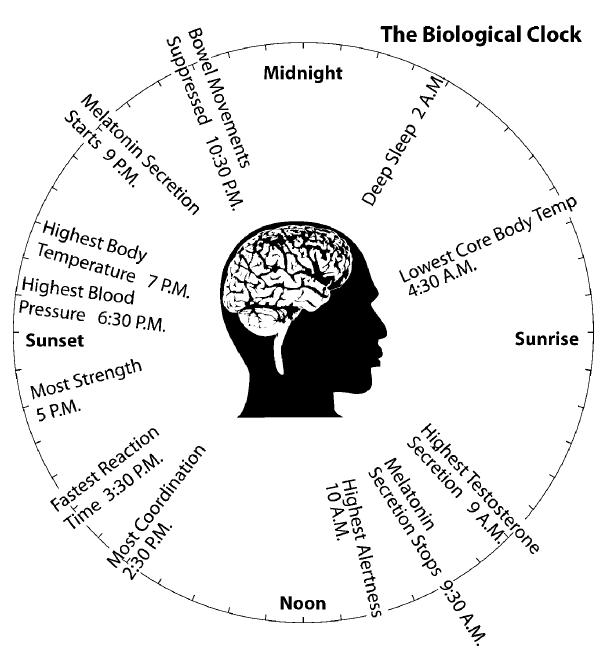
Normal Circadian RhythmHumans have an internal 24-hour clock that is synchronized with daytime and nighttime (light has a profound impact on this clock). This clock is referred to as our circadian rhythm.

As people age, this clock changes so that they normally tend to go to sleep earlier and wake up earlier. Sleep disorders like insomnia and sleep apnea are more common in older people as well. But their circadian rhythms are still primarily based on light (the more light, the more wakefulness; the less light, the more sleepiness) and time of day.

However, in our loved ones suffering from dementias and Alzheimer’s Disease, circadian rhythms go out the window because the diseases impair the brain’s ability to tell time and to distinguish between light and dark as indicators of when to sleep and when to awaken. It is sometimes helpful, in the early stages, to get a 24-hour clock to help our loved ones distinguish between A.M. hours and P.M. hours, but eventually that will be a casualty of the diseases.

The most common circadian rhythm disorder associated with dementias and Alzheimer’s Disease is a phenomenon known as “sundowning.” It occurs in the late afternoon and early evening.

It is characterized by speech and behavior repetition, constant pacing , excessive restlessness, wandering, disorientation to time and place, and agitation or aggression towards others.

Wandering is especially dangerous because if our loved ones get outside, they can walk long distances with limited vision because of the sun going down, sometimes on crowded roadways, and are susceptible to being the victims of crime and vehicular death.

One probable cause of sundowning is that there is damage to the part ofSleep/Wake Patterns Circadian Rhythm the brain that produces melatonin (the sleep hormone) and the reduced production causes an irregular sleep-wake rhythm

Another theory on the cause of sundowning is related to the energy levels of our loved ones with dementias and Alzheimer’s Disease . At the end of the day they are likely tired from the day’s activities.

This can aggravate the symptoms of the diseases, making them more anxious and stressed. Before the onset of these diseases, this time of day would have typically been the busiest for them. They would be getting home from work, getting ready for dinner, doing household chores, and going to bed. Now that they’re unable to do those things, they have little to do at a time that was the busiest of the day for them.

The most common sleep disorder that occurs with dementias and Alzheimer’s Disease is an irregular sleep-wake rhythm. You can see in the graph above how disruptive this rhythm is and why our loved ones with dementias and Alzheimer’s can be so tired, in general, all the time.

However, I believe the most damaging effect of this sleep pattern is that it actually prevents the restorative/repair functions that occur during a normal sleep rhythm, which exacerbates the neurological damage that dementias and Alzheimer’s Disease do to the brain. In short, this sleep pattern makes the diseases worse.

The most effective – and safe – way to try to minimize an irregular sleep-wake rhythm is to add melatonin to nighttime medications. As I’ve said before, up to 12 mg of melatonin is considered safe, but start with a low dose (3 mg or 5 mg) and give it time to see if that gives our loved ones more continuous and restful sleep. The goal is to keep them asleep at night and keep them awake during the day. Too much melatonin can have them sleeping all the time.

I would also suggest keeping our loved ones active and busy – as they are able – during the day (I will talk more about this in another post, but will briefly touch on it here). Up until the last week and a half of my mom’s life, when she’d had the major heart attack and just couldn’t do much with me, I had her help me with the household chores that she could like making the bed, folding laundry, preparing meals, and helping me with the dishes.

I didn’t care whether it was perfect or not (initially a big challenge to my normal OCD about those kinds of things), but I found that the more she did, the better she felt and the better she slept.

There is a sleep disorder that is specific to Lewy Body dementia and is one of the primary symptoms of that form of dementia. It is called R.E.M. sleep behavior disorder.

R.E.M. sleep behavior disorder is impossible to miss. Anytime a sufferer is asleep, they are in motion acting out their dreams and, at least in my mom’s case, having sometimes understandable and sometimes not in-depth conversations. It is also characterized by “picking” at clothing or bedclothes while asleep.

On the one hand, at least for me, it was quite fascinating to watch Mom dream and act out her dreams. Apparently – and I’ve seen this with other Lewy Body dementia sufferers, so it must be common for all of us to dream about – she dreamed quite often about food, because she’d often make the motion of either eating with a utensil or with her hands to her mouth. That was usually when she was napping during the day. 

Most of her conversations occurred at night, although occasionally she’d say a line or two during a daytime nap. And they’d last all night sometimes.

Her nightime dreams also included a lot of moving around and possibly a version of restless legs syndrome (not uncommon for R.E.M. sleep behavior disorder).

While I know this had a detrimental effect on her quality of sleep, it was disruptive for me too. I have always been a light sleeper and have had my own issues all my life with not sleeping much (and sometimes not sleeping at all for a day or two) and not getting quality sleep (waking up a lot or being wide awake in the early morning hours and not being able to go back to sleep for an hour or two). With Mom talking and moving around all night, it made sleep that much more difficult for me.

An increase in melatonin helped with this as well. I bumped her up to 7 mg each night (she was at 5 mg before) and it was just enough to keep most of the symptoms at bay. There were still some nights when it was noticeable, but the worst of the symptoms seemed to be alleviated. And because she slept better, she felt better and did better during the daytime.

I hope this brief overview helps. If you have any questions or any topics you would like to see discussed here, leave me a comment or email me at goinggentleintothatgoodnight.com. If I don’t know the answer, I’ll do my best to try to find it.

You’re not alone and my intent and goal is to keep reminding you of that and help you as much as I am able.