Archives

Profiles in Dementia: King George III (1738 – 1820)

George IIIKing George III was the monarch of England from 1760 to 1801 and the first King of Great Britain and Ireland from 1801 until his death in 1820.

For the United States of America, King George III played a prominent role in both establishing colonies here and instituting the unpopular policies, particularly with regard to taxation, that caused the colonies to rebel, declare their independence from England in 1776, and led to the Revolutionary War that handed the British an unthinkable defeat.

He was known both in England and in the colonies as “Mad King George.”

King George III came to the throne in 1760 at the age of 22, but as early as 1765, he showed signs of cognitive impairment. Although his cognitive decline was gradual and his “mad” bouts were episodic for the next 30 years, King George III showed every sign of neurological decline associated with dementia, as the times when he was completely incapacitated increased and worsened during those 30 years.

King George III’s neurological condition was advanced enough by 1788 that Parliament passed a regency bill to be able to quickly and immediately hand the reins of government over to his son, George IV, at any time.

Although King George III managed to hold on to power in name only for another 23 years, his dementia was so pronounced by 1801 that he was largely unable to govern.

More likely than not, King George III had frontotemporal dementia (an early-onset dementia) and that was responsible for the erratic and irrational behavior that characterized his “madnesses” that are recorded in both the histories of England and the United States.

The damage appears to have been slower than most instances of frontotemperoral dementia, but it is easy to see the the progression of the journey he traveled through dementia.

It is also entirely possible that King George III had developed other types of dementia as he aged. Some of the historical accounts of his later years suggest that King George III also had vascular dementia and Alzheimer’s Disease.

One of the interesting things that occurred to me is the question of whether the United States of America would have ever existed as an independent country if King George III had not had frontotemporal dementia.

While it’s conceivable that at some point the United States would have sought independence as a nation in its own right, you can’t help but wonder if it might have been delayed for decades or even a century or more and it might have been under more peaceable conditions had King George III not been on the throne.

Dementias affect everything and dementias change everything.

For most of people, the sphere of influence affected and changed is relatively small.

In the case of King George III, it affected and changed the world.

Profiles in Dementia: Zelda Fitzgerald (1900-1948)

Profiles in Dementia Zelda Fitzgerald Going Gentle Into That Good NightI recently finished reading Sometimes Madness is Wisdom: Zelda and Scott Fitzgerald – A Marriage. I highly recommend it, although it’s a harrowing book in so many ways.

Two of those harrowing aspects are Scott’s alcoholism and how he deliberately and consciously broke Zelda, who had her own demons and a genetic predisposition toward mental illness, for good.

A third harrowing aspect of this book is the barbaric state of psychiatry – diagnosis and treatment – in the 1930’s and 1940’s.

Zelda, who was diagnosed in 1930 with schizophrenia (most likely an inaccurate diagnosis, since it’s highly unusual for schizophrenic’s first symptoms to not appear during adolescence), was repeatedly subjected to three types of treatment routinely used for schizophrenia.

Not only did they, in many ways, exacerbate Zelda’s mental illness as well as qualify for legalized torture, but two of them eventually caused irreversible neurological damage, including cognitive impairment and memory loss consistent with all forms of dementia.

The first of these that Zelda endured over the course of 18 years was insulin coma therapy. Begun accidentally by Viennese physician Manfred Sakel, it involved giving large doses of insulin hourly daily for several weeks to keep the patients in a comatose state. It was believed that this gave the brain a chance to rest and heal itself.

Of course, other than the obvious risks of not being able to bring patients out of the comas (happened regularly) or death (also happened regularly), the high doses of insulin produced a prolonged state of hypoglycemia, resulting in permanent neurological damage.

The second treatment that Zelda was routinely given was chemically induced seizures. This treatment, based on very iffy logic at best, was pioneered by Hungarian pathologist Ladislas Joseph von Meduna.

Zelda Sayre Fitzgerald 16 Years Old Going Gentle Into That Good Nightvon Meduna made the unscientific leap with his observation that because people diagnosed with epilepsy rarely were diagnosed with schizophrenia. Therefore, he concluded that the epileptic seizures – and their aftereffects, which to von Meduna’s mind seemed to indicate blissful happiness – must be the reason for rare schizophrenic diagnoses. von Meduna then concluded that the seizures could cure schizophrenia.

By the time Zelda was subjected to chemically induced seizures, the original substances used to induce seizures – strychnine, absinthe, caffeine, and camphor – had been abandoned in favor of the drug Metrazol.

Given to schizophrenics in a regimen of 30-40 injections, with the injection rate of two to three times a week, the first injection produced such a powerful seizure within a minute of injection that torn muscles and fractured bones were not uncommon.

Beyond the high physical risks of violent injury, Metrazol also caused permanent memory loss.

Zelda died in a tragic fire at Highland Hospital, a psychiatric hospital, in Asheville, North Carolina in March of 1948, during the latest of on-and-off commitments to the facility she had from 1936 onward.

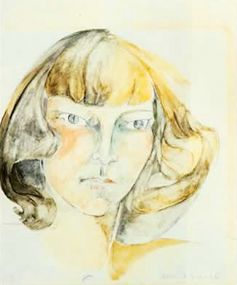
Zelda Fitzgerald Self-Portrait 1940's Going Gentle Into That Good NightHowever, in many ways, Zelda was gone years before the fire took her physical life. Zelda spent the last several years of her life devoid of memory, devoid of personality, and devoid of any sort of intellectual spark. 

Zelda’s physical appearance was so drastically changed that friends and acquaintances had a hard time recognizing her. 

Even in her hometown of Montgomery, Alabama, where she lived with her mother when she wasn’t at Highland Hospital, Zelda was unrecognizable to people who’d know her and her family all their lives. 

Zelda spent the majority of the daylight hours in Montgomery restlessly and aimlessly wandering around town in old, ragged, dirty clothes with no evidence of any care for personal grooming until her mother would find her and get her home before darkness fell.

It was a sad end of days for Zelda Fitzgerald.

Profiles in Dementia: Bill Guthridge (1937 – 2015)

Bill Guthridge UNC-Chapel Hill Basketball Coach 1997-2000On May 13, 2015, former University of North Carolina – Chapel Hill basketball coach Bill Guthridge died from heart failure. However, it was Coach Guthridge’s incurable heart condition that led to his development of vascular dementia, and with its progression, his placement for the last several years in a Chapel Hill assisted living facility. 

If Bill Guthridge doesn’t look familiar to you as a UNC-Chapel Hill head basketball coach, there’s a very good reason for that. He was and has been overshadowed and a bit lost in the shuffle of UNC basketball coaches by his lifelong friend, former UNC head coach Dean Smith (1961 to 1997), and current UNC head coach Roy Williams, who was an assistant coach along with Guthridge at UNC from 1978 to 1988.

However, Coach Guthridge served as the perfect replacement as head basketball coach when Coach Smith unexpectantly announced his retirement from the University of North Carolina at Chapel Hill in 1997.

UNC Coach Dean Smith and UNC Coach Bill Guthridge 1970'sCoach Guthridge had been Coach Smith’s assistant coach at UNC for 30 years, so he knew Coach Smith’s style, plays, and strategies inside and out. Coach Guthridge was the right choice to lead the transition to another, younger leader of the famed basketball program at the University of North Carolina.

Unfortunately, it took UNC two tries to find that leader.

The university made a huge misstep when it hired former UNC player, Matt Doherty, a young, untested coach in the league of the Atlantic Coast Conference (ACC) and a 180-degree change from the coaching styles of Coach Smith and Coach Guthridge, as its head basketball coach in 2000, when Coach Guthridge retired.

University of North Carolina Chapel Hill Head Coach Roy WilliamsAfter a three-year disastrous tenure under Doherty, the University of North Carolina hired Roy Williams from Kansas and got the leadership and gravitas that had characterized the UNC basketball program under Coach Smith and Coach Guthridge.

After Coach Guthridge’s retirement in 2003, he and Coach Smith stayed in close contact, visiting each other frequently. Ironically, both coaches developed dementia along the way (Coach Smith died in January 2015 of complications from dementia).

Coach Smith began showing signs of cognitive impairment before Coach Guthridge did. It was profoundly hard for Coach Guthridge to watch his lifetime friend become forgetful and lose the memories they shared together, not just as the architects of a fantastic and highly-ethical college basketball program, but as friends who regarded each other and their respective families as their own.

Coach Guthridge Early Years as UNC Assistant CoachWhen Coach Smith died, Coach Guthridge knew that his friend was gone, but he quickly moved back to their time together when they were younger and dementia had not knocked on their doors yet.

My guess is that Coach Guthridge probably never came back from that place after Coach Smith’s death and I would speculate that Coach Smith’s death may have been the final straw of an increasingly-unfamiliar and disconnected life for Coach Guthridge. Perhaps, at last, somewhere in his mind, Coach Guthridge finally made the decision to retire from this physical life.

Perhaps, at last, somewhere in his mind, Coach Guthridge finally made the decision it was time for him to retire from this physical life.

Coach Guthridge made his retirement official on May 13, 2015. 


Profiles in Dementia: Woody Guthrie (1912 – 1967)

Woody Guthrie as a Young ManWoody Guthrie was born into a troubled life and family in Okemah, Oklahoma. From an early age, life was harsh and unsettled and the instability affected Guthrie in profound ways and probably was responsible for his lifelong wanderlust.

Guthrie’s father, Charles, was, according to Guthrie, a member of the Ku Klux Klan and was personally involved in the 1911 lynching of Laura and L. D. Nelson.

His mother, Nora, suffered from Huntington’s Disease, an inherited neurodegenerative disorder that eventually includes dementia among its late-stage symptoms. Nora is believed to be responsible for setting two house fires: the first killing her 7-year-old daughter, Clara, and the second severely burning her husband, Charles. After the second fire, Nora was committed to the Oklahoma House for the Insane where she died in 1930.

Guthrie married his first wife at the age of 19, but soon headed out to California during the Dust Bowl to try to find work to support his family. He began writing songs about the plight of the midwesterners he joined in the labor camps out west. The wages were meager, the living conditions awful, and the work hard and back-breaking.

In the late 1930’s, Guthrie finally broke into radio in California and was able to make a living to support his growing family (it appears he got back home just often enough to help create another child, and then was back out on the road again). 

In the 1940’s, Guthrie moved to New York and it was there where he became famous. “This Land is Your Land” was written during this period as a response to Irving Berlin’s “God Bless America,” which Guthrie believed was an elitist song that wasn’t realistic for and applicable to the common man in America. 

The original lyrics are quite different from the sanitized version I heard growing up, so it might interest you to see how a protest song somehow got co-opted by America and became a standard in pro-American music. Guthrie, no doubt, had he been able, would have written an anti-“This Land is Your Land” in response.

It’s was also in the late-1940’s that Guthrie, already known for his fondness for alcohol, his general contrariness, his quick temper, and his scrappiness and eagerness for a fight, began to drink heavily. 

Guthrie’s behavior became increasingly erratic around the same time, with the singer either not showing up for performances or when he did show up, often not being able to remember all the lyrics or music.

The memory loss was initially attributed to Guthrie’s heavy drinking, but it soon became clear during the early 1950’s that something else was wrong, as Guthrie began losing muscle coordination and he had trouble playing even basic melodies on his guitar.

In 1952, Guthrie was diagnosed with Huntington’s Disease, which he had inherited from his mother. By 1956, Guthrie’s condition had deteriorated to the point where he required permanent care placement.

After 11 years of hospitalization, as everyone but his closest family disappeared from Guthrie’s life because of the toll that Huntington’s Disease exacted on his brain, making Guthrie almost impossible to be around, Woody Guthrie died in 1967.

Woody Guthrie 1960'sGuthrie married three times and had seven children.

Two children died in car accidents.

Two children from Guthrie’s first marriage developed Huntington’s Disease and both died at the age of 41.

Guthrie’s three remaining children, of whom one is Arlo of “Alice’s Restaurant” fame, to date have not developed any symptoms of Huntington’s Disease.


Profiles in Dementia: B. B. King (1925 – 2015)

B. B. King 2014The blues were born in the Mississippi Delta shortly before the dawn of the 20th Century. The genre, known for its stories of hard times and suffering, originated with African-American sharecroppers who endured long, hot and hard labor picking cotton in the sweltering heat of the summer sun, lived in squalid conditions, and were kept in manipulated indentureship and perpetual debt by never quite making enough money to pay off their bills at local merchants.

While a few blues artists – Robert Johnson, W.C. Handy, Bessie Smith, and Billie Holiday – brought the sound of the blues into the mainstream of music during the first half of the 20th Century, it was not until the late 1940’s and early 1950’s that blues blossomed and hit its stride as a bona fide genre of American music.

Among now-familiar names like Lead Belly, Howlin’ Wolf, John Lee Hooker, Elmore James, and Willie Dixon emerged a young Mississippi Delta bluesman named B. B. King

An accomplished guitarist with an one-of-a-kind voice that wrung out every bit of pain, sorrow, and pragmatism that the blues had to offer, King, in many ways, became the face of the blues for a lot of America.

While blues artists had a profound influence on rock – British artists of the 1960’s drew heavily on their influence and vast body of work and groups like the Yardbirds, Cream, and Derek and the Dominos, fronted by Eric Clapton, were the crossroads where blues and rock met and married, producing generations of rock-blues musicians that continue today (listen to Nirvana’s haunting acoustic version of “Where Did You Sleep Last Night?,” and it’s as though you can hear Lead Belly singing along in the background) – in general, they continued to exist, much like jazz musicians, in a popular, but tightly-defined, niche in the landscape of popular American music.

Except for B. B. King. With his famously-named guitar – Lucille – and his showmanship as a guitarist, along with highly-accessible songs, including his eponymous “The Thrill Is Gone,” King managed to gain a large popular audience. 

Young B. B. King B. B. King stayed on the music circuit, performing along the way with artists like Clapton, The Rolling Stones (King opened for them on their 1969 tour), and U2, despite battling diabetes and high blood pressure for decades.

In the last few years, blues fans have consistently pointed out that B. B. King’s performances were erratic at best: King missed musical cues, forgot lyrics, and often went into long, rambling, and random soliloquies while onstage.

B. B. King’s last performance was on October 3, 2014 in Chicago. However, the performance had to be cut short because King wasn’t feeling well enough to continue. He was hospitalized with dehydration and exhaustion.

On May 1, 2015, after two hospitalizations due to complications from diabetes and blood pressure, B. B. King’s website announced that King had entered hospice care at his home in Las Vegas.

On May 14, 2015, B. B. King died. The official cause of King’s death was complications from dementia (vascular dementia).

Sadly, B. B. King’s family has already begun the legal fight over who will control his estate (there are allegations that King’s long-time manager, Laverne Toney, whom King appointed as his power of attorney, mishandled King’s care and money).

It’s a tragic footnote to an incredible life.


Profiles in Dementia: Muriel June Foster Ross (1929 – 2012) – My Beloved Mama

mama mother's dayWith Mother’s Day right around the corner, I decided to make this profile in dementia personal, and so I write about one of the heroes in my life, my mama, Muriel June Foster Ross.

Mama is the reason that I wrote Going Gentle Into That Good Night: A Practical and Informative Guide For Fulfilling the Circle of Life For Our Loved Ones with Dementias and Alzheimer’s Disease and You Oughta Know: Acknowledging, Recognizing, and Responding to the Steps in the Journey Through Dementias and Alzheimer’s Disease.

Mama is the reason the Going Gentle Into That Good Night blog exists.

And Mama is the reason why I created a Facebook support group for caregivers of loved ones with Alzheimer’s Disease, dementias, and other age-related illnesses.

My mama, Muriel June Foster Ross, was born March 2, 1929 in Erwin, Tennessee, a small town in the hollows of the Smokey Mountains in northeast Tennessee.

Fields of Gold: A Love StoryFrom the get-go, Mama had a life full of tragedy and triumph, successes and failures, bad times and good times, love and hate, deep-down sadness and uplifted-heart happiness and forgiving and forgetting, which I chronicled in the first book I wrote after her death, a memoir about my parents and us kids and our life together titled Fields of Gold: A Love Story

My mama was a most remarkable woman in so many ways, because no matter what came her way in life, she persevered, she overcame, and she prevailed.

Mama left me with an incredible legacy and some pretty big footsteps – ironically, because Mama was a lady whose physical foot size was 4.5W while my own foot size was almost twice that big and even wider – to follow in and I see continually how far I fall short of the example she left me.

However, even in my failures, I see Mama’s legacy of prevailing and not quitting. I’ve finally been able to see that even trying and failing is doing something and that beats not failing because I’m not trying to do something any day of the week.

It’s still hard for me to fail over and over, but I find myself rehearsing Mama’s life and all the places where it looked like failure and she could’ve quit but she didn’t. And, in the end, not quitting brought incredible meaning and blessings to Mama’s life.

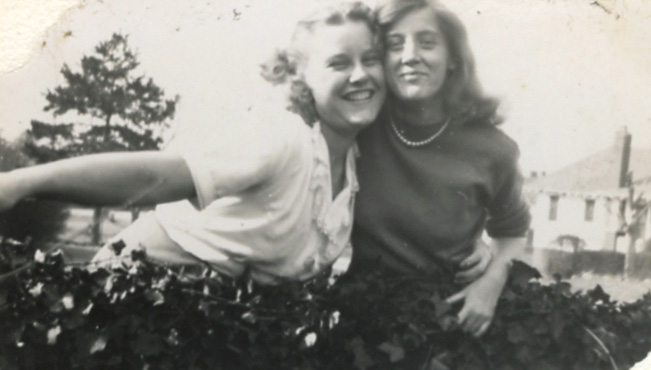
Mama and Ethel Pennell SparksMy mama was intelligent, curious, active, humorous, whimsical, outgoing, and loving. She had a lifelong love affair with learning anything and everything. Mama was a decent writer – she got her second Bachelor’s degree in English at the age of 54 – but she was an even better oral storyteller.

Mama’s twinkling blue eyes and her mischievous smile could light up even the darkest room. She had her dark moments, her fears, and her insecurities as well, but she reserved those for the people she loved and trusted the most: my daddy and us kids.

Mama’s journey with dementias (vascular and Lewy Body) and Azheimer’s Disease probably began in 2005. The real nuts and bolts of these neurological diseases didn’t really appear in full force and persistently until 2009. And the downhill slide was Mama and me dancing togetherpretty precipitous from that point forward until her death (related to congestive heart failure) on August 14, 2012.

But I had the blessing of being beside Mama throughout the journey and through the end. That’s priceless. I also had the blessing that Mama didn’t live long enough to become completely uncommunicative and bed-ridden. That would have killed both of us. The journey was no picnic, but the blessing was that we shared it, and I am thankful for that.

It seems that each Mother’s Day since Mama’s death has made me miss her more than the one before. On the one hand, I’m glad Mama’s not suffering anymore. But, on the other hand, I miss her.

And not just the Mama I remember before these neurological diseases, but the Mama I remember after they appeared. There Mama and Daddywere moments interspersed with the chaos, the uncertainty, and the tough stuff that were some of the softest and gentlest and most loving moments Mama and I ever shared and those are etched just as deeply in my heart, in my soul, and in my mind. 

Side by side with Daddy, Mama’s resting now in the peace that often eluded her in life until the Sun of Righteousness arises with healing in His wings

May that day come quickly for us all. I love you, Mama. See you and Daddy soon.


Profiles in Dementia: Katherine Anne Porter’s Granny Weatherall

The Jilting of Granny Weatherall Katherine Anne PorterIn 1930, Katherine Anne Porter wrote a short story entitled “The Jilting of Granny Weatherall” (click on the link to read the short story in a new window).  When I first read this short story in high school, I had never heard the term dementia (my mom’s grandma was senile in her old age, but she was the only person I ever heard of being senile based on firsthand knowledge).

I found Granny Weatherall, an elderly woman whose reverie drifted simultaneously between the past and present as if they had become merged, interesting, but heart-breaking. And as she relived her past like it was the present, her story gave full meaning to her surname of Weatherall.

However, it wasn’t until my own mom started intersplicing her past into the present during her journey with vascular dementia, Lewy Body dementia, and Alzheimer’s Disease that Granny Weatherall came back to the front of my mind. Upon rereading the story, I realized Granny Weatherall had some type of dementia. 

In my book detailing acknowledging, recognizing, and responding to the steps of the journey we take with our loved ones through dementias and Alzheimer’s Disease, I again had Granny Weatherall on my mind as I wrote Chapter 10.

It’s a story I highly recommend for all caregivers with loved ones who have dementias and/or Alzheimer’s Disease.

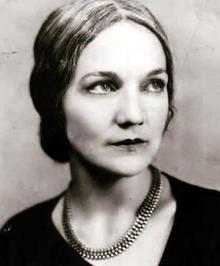
Katherine Anne Porter 1930How Porter had this kind of insight into the inner workings of how these neurological diseases manifested themselves internally – with Granny Weatherall – and externally – with her caregiving daughter – is a mystery, but Porter captures it perfectly and poignantly.

I think one of the things Granny Weatherall does for us as caregivers is that she reminds us that our loved ones were once vibrant, full of life, and they’ve seen a world of ups and downs that not only may we not be privy to, but that we can’t fully imagine or understand. 

I believe another thing that Granny Weatherall does is to remind us of the fragility, the humanity, and the dignity of our loved ones. Her internal indignation at her daughter’s well-meaning, but clueless caregiving makes us take stock of our own caregiving in relationship to our loved ones.

And the last thing that Granny Weatherall does is to remind us that death is part of the circle of life and it’s often harder on those it leaves behind than those it takes.

There a lot of good lessons here. I hope you take some time to read “The Jilting of Granny Weatherall.” Porter’s a good writer, so the story moves well, but it gives us as caregivers an inside look at our loved ones that we may not have considered or even been aware of before.

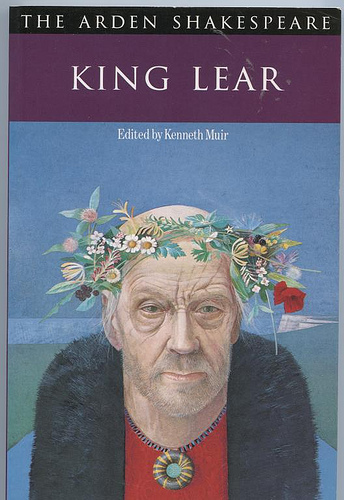
Profiles in Dementia: William Shakespeare’s King Lear

William Shakespeare as a young manWilliam Shakespeare, the playwright, was one of the most intuitive and astute observers of the human race. A careful reading of his body of plays – especially the histories and the tragedies – show an author who intimately understood human nature and human folly at their very core manifestations.

In King Lear, one of Shakespeare’s most gut-wrenching plays, Shakespeare gives us an in-depth look at what dementia – and, most likely, based on the symptoms, Lewy Body dementia – looks like in action in his portrayal of King Lear.

From a big-picture standpoint, the play shows in close detail how dementia can destroy a family (and a kingdom), and it shows how family dynamics can hasten the destruction. It also shows how dishonesty with our loved ones with dementia is never acceptable

The summary of King Lear is fairly straightforward. King Lear, a monarch in pre-Christian Britain, who is in his eighties and aware of his own cognitive decline, decides to abdicate the throne and split the kingdom among his three daughters, with the promise that they will take care of him. 

The first sign of Lear’s dementia is his irrational criteria for how he’s going to decide which daughter gets the largest portion of the kingdom: not by their abilities, strengths, rulership experience, but by which one professes the greatest love for him.

His two oldest daughters are duplicitous and try to outdo each other with their professions of love for their father (they don’t love him, but they want the lion’s share of the kingdom).

King Lear’s youngest daughter, who genuinely loves her father and who is his favorite, gets disgusted with the whole thing and refuses to play the game.

King Lear, in a sudden fit of rage, then disowns his youngest daughter completely. When one of her friends, the Earl of Kent, tries to reason with the king, King Lear banishes him from the kingdom.

King Lear’s youngest daughter then marries the king of France and leaves King Lear in the hands of his two devious older daughters.

The Tragedy of King Lear - William ShakespeareBoth daughters are aware of King Lear’s vulnerability because of his cognitive decline and are intent on murdering him so that they can have everything without the responsibility of having to take care of him. They treat King Lear horribly in the process of formulating their scheme to end his life and be rid of him.

The youngest daughter comes back from France to fight her sisters, but loses and is sentenced to death instead.

While she is awaiting execution the two older sisters fight over a man they both want. The oldest sister poisons the middle sister, who then dies. 

The man the two sisters were fighting over has been fatally wounded in battle and he dies (but he reverses the execution order of the youngest sister before he dies). After his death, the oldest sister commits suicide.

Meanwhile, the youngest sister is executed before the reversal order reaches the executioners. And King Lear, upon seeing his youngest daughter dead, dies too.

Woven throughout the plot are signs that King Lear has dementia, that he knows something is cognitively wrong, and we watch him actually go through the steps of dementia throughout the play.

King Lear exhibits deteriorating cognitive impairment, irrational thinking, sudden and intense mood changes, paranoia, hallucinations, and the inability to recognize people he knows.

Lewy Body dementia seems to be evident in King Lear’s conversations with nobody (he thinks he sees them but they aren’t there) and the sleep abnormalities that are brought out in the play.

A few poignant lines spoken by King Lear give us a glimpse:

“Who is it that can tell me who I am?”

“O, let me not be mad, not mad, sweet heaven
Keep me in temper: I would not be mad!”

“I am a very foolish fond old man,
Fourscore and upward, not an hour more or less;
And, to deal plainly,
I fear I am not in my perfect mind.”

“You must bear with me:
Pray you now, forget and forgive: I am old and foolish.”

Everyone around King Lear knows he’s not himself, including his deceptive daughters, who note after he disowns his youngest daughter, how bizarre his behavior was toward someone he loved so much and how quickly his temperament changed. King Lear see

As the play progresses, King Lear’s dementia continues to be revealed in his frequent rages against fate and nature, in his disregard for personal comfort or protection from the elements, and in his eventually having fewer and fewer lucid moments in which he recognizes people and knows who he is.

If you haven’t read King Lear in a while or you’ve never read it at all, it is an entirely different experience to read it now with the knowledge of dementia as a backdrop. It’s even more tragic than we even imagined. 


Profiles in Dementia: Jonathan Swift (1667 – 1745)

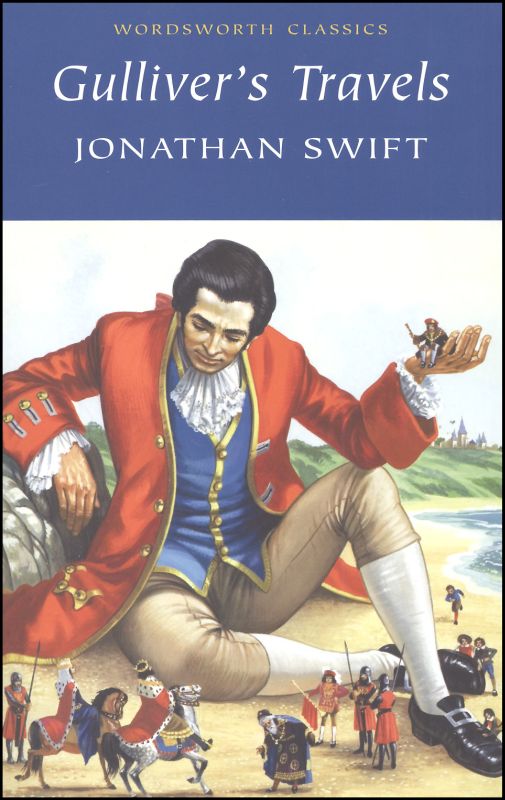
Gulliver's Travels - Jonathan SwiftThere aren’t many people who haven’t, at some point in their lives, read Jonathan Swift’s best-known work, Gulliver’s Travels.

While most of us read it when we were too young to appreciate it because it was considered a staple in classic children’s literature (I was eight the first time I read it), reading this book as an adult and understanding what Swift is really writing about puts a whole new, interesting – and, yes, even comical at times – light on his most famous work.

But Swift was a prolific writer and a brilliant satirist beyond Gulliver’s Travels and was heavily involved in politics in both Ireland and England. He is considered one of the leading voices of The Age of Reason.

Swift’s prodigious public writing ended with Drapier Letters in 1724, and by the time his wife, Stella, died in 1728, Swift was already showing signs of neurological decline.

A fastidious and highly-organized man, Swift became more and more whimsical and capricious in his daily living. He also developed obsessive paranoia and miserliness.

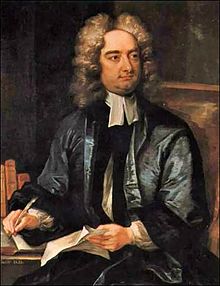
Profiles in Dementia - Jonathan SwiftAs he descended further into dementia, Swift still tried to maintain a semblance of private correspondence after 1728, but eventually was unable to write at all. 

In 1740, in a rare letter to his niece, Swift confessed “I hardly understand a word I write.” By 1742, guardians had to be appointed to care for Swift and maintain his estate because he was simply unable to.

Jonathan Swift died in 1745, when “he exchanged the sleep of idiocy for the sleep of death.”


Profiles in Dementia: Ralph Waldo Emerson (1803 – 1882)

Ralph Waldo Emerson and Concord, MA writersI recently read Susan Cheever’s American Bloomsbury, a compelling account of the interwoven lives of the Concord, MA literary giants of 19th Century literature and, with a notable exception (Nathaniel Hawthorne), the core members of both the Transcendental Movement and the Abolition Movement that saw John Brown as a heroic martyr.

This group of closely-interconnected writers included, among others (Edgar Allan Poe passed through as did Walt Whitman and Herman Melville), Emily Dickinson, Louisa May Alcott, Henry David Thoreau, Nathaniel Hawthorne, and Ralph Waldo Emerson.

Despite all my college studies in English Language and Literature, I have never been able to really like – or even endure – most 19th Century American literature. (Yes, I’m American and, yes, I really loathe this period of American literature for the most part.)

My three exceptions are the three writers in this Concord, MA conclave who never quite fit in with the mindset and the groupthink of the rest of the writers: Nathaniel Hawthorne, Edgar Allan Poe, and Emily Dickinson.

I won’t bore you with all the reasons – and there are many – why I like these three writers and don’t like the rest.  If in another lifetime I decide to start a literary analysis blog, a post with those reasons will definitely make its appearance there.

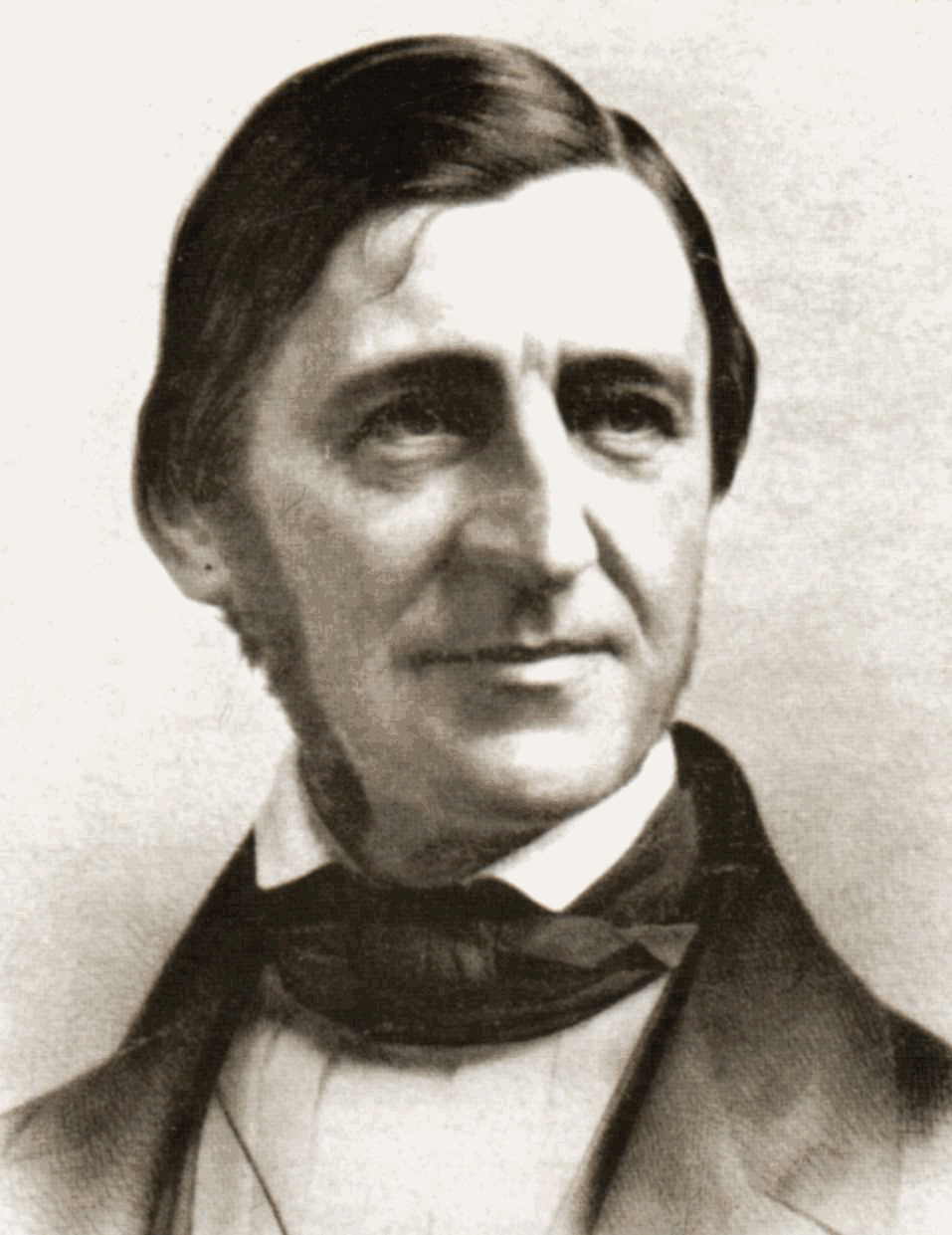
Ralph Waldo Emerson Dementia and AphasiaSo, although I read my required – and no more – share of Ralph Waldo Emerson, I didn’t know much about him as a person. This book shed a lot of light on that.

Emerson, it turns out, was the financial support for these writers and their families, some for all their lives (Henry David Thoreau) and some until they published successfully (Nathaniel Hawthorne and Louisa May Alcott).

Emerson was older than most of the other writers and was treated by them as a father figure and a mentor. Emerson was intelligent (a graduate of Harvard), thoughtful, and a practical intellectual who guided this group in both their literary endeavors and their personal lives.

So I was surprised to learn that Emerson developed dementia (Cheever, perhaps because she has not dealt with dementia in a more personal way, made the common mistake of calling it Alzheimer’s Disease, which is only one type of dementia), accompanied by aphasia during the last decade of his life.

Because aphasia was a key feature of Emerson’s neurological degeneration, it’s very possible that he suffered from vascular dementia, since aphasia is very often a feature of that type of dementia.

One of the devastating aspects of aphasia as it worsened for Emerson was that he had supported his family and, to one degree or another, many of the other Concord writers for decades by conducting a rigorous yearly schedule of paid speaking engagements around the country. Once his ability to communicate coherently was gone, Emerson’s income was gone as well.

In the last couple of years of Emerson’s life, he forgot most of the people and things around him in Concord, MA. Louisa May Alcott, whom Emerson had known for 42 years, watching her grow up from a nine-year-old spunky girl into an equally spunky woman, became a stranger to him, as did his family. 

The Forgetting PBSHowever, and this is fortunate, in the acclaimed PBS documentary, The Forgetting, Emerson is quoted as having remarked, when he was well into the disease, to a friend that, “I have lost my mental faculties but am perfectly well.”

I plan to make “Profiles in Dementia” a regular feature on this blog since I’ve got a lot of stories like these that I’d like to share and will give another dimension, in terms of personal interest, to this blog.

So, if you like this one and you like the idea, let me know by your likes and comments.

This blog’s for you, so you have a voice in what kinds of things are included here.

I appreciate you reading and hope that you will find the extensive body of information here helpful in your journey with dementias and Alzheimer’s Disease, whether that’s as a caregiver for loved ones or it’s you that’s walking the journey yourself.