Insights: How Life Experiences Factor Into Dementias and Alzheimer’s Disease

Life experiences are factors in dementias and Alzheimer's DiseaseThis post begins a series that provides us as caregivers a perspective into the behaviors of our loved ones with dementias and Alzheimer’s Disease that I’ve never seen discussed anywhere else. 

I’m a big-picture person. I believe that there are tangible connections among things for everything and everybody.

In other words, nothing is random, even if it appears that way. There’s a logic to everything and everybody. However, the only way to find the order and the logic is to back away from the immediate present and abandon the tendency to believe that it exists in a vacuum.

Nothing and nobody exists in the vacuum of a moment in time. Everything and everybody is the sum of their parts over a continuum of time.

By looking at the whole picture of our loved ones’ lives – life experience, temperament, and personality/quirks/flaws/foibles (which we all have, by the way) – we can gain insight into how those factor into the behaviors we see in their journeys through dementias and Alzheimer’s Disease.

Knowledge is power in this case. Because if we understand what factors of a lifetime are driving the behaviors we see, then we can find ways that are beneficial for us and for our loved ones to respond to those behaviors.

I will be the first to admit, from personal experience, getting our responses consistently right is not easy and, at times, because our own emotions (especially as children or grandchildren dealing with parents and grandparents where the landscape, even in the best of circumstances, is complex and complicated) are intimately involved, we will fail. We will fail miserably.

But, as with anything else in life, we have two choices after we fall flat on our faces. We can either quit in defeat or we can get up and try again with more resolve to move forward successfully.

It’s my opinion that a substantial part of the fatigue that we experience as caregivers for our loved ones with dementias and Alzheimer’s Disease is not physical, but instead emotional and mental.

And the resolve to not quit emotionally and mentally in going through this journey with our loved ones is a significant contributor to that fatigue.

Do it anyway. For them and for ourselves. Because when we stand alone at the end of this journey we will find out that we gained more than we lost.

We will know ourselves better than most of us probably really want to know ourselves.

We will find strengths that we didn’t know we had. We will be surprised at our endurance and the levels of adversity we had to persevere through.

But we will also find our weaknesses and we will see our shortcomings. A lot of these come to light in the years that follow the journey through dementias and Alzheimer’s Disease. They come to the forefront of minds slowly as we consider and reflect on the journey.

As painful as that is – and it is very painful – it is positive. Because once we see areas where we need to change, we have the opportunity to change. We have the opportunity to continue to reap the benefit of growth.

That’s why I personally advocate remembering, examining, and considering the journeys we’ve been through with our loved ones. Some people are not able to do that and that’s okay, but personally for me, it has been an unparalleled period of change and growth in my life.

Life experiences factor significantly into the behaviors of our loved ones with dementias and Alzheimer’s Disease. 

Because short-term memory is impacted more than long-term memory and the core of our perspectives on life are formed during the early years of our lives, the life experiences of the first twenty years of our loved ones lives seem to drive some of the behaviors we see.

For example, my mom’s mother died when she was three days old. Her 78-year-old grandmother and 80-year-old grandfather immediately took Mama and her dad – an absent binge drinker under stress (he disappeared for several days after his wife died while the maternal and paternal grandmothers fought over custody of his daughter) and a World War I veteran whose lungs had been permanently damaged in a mustard gas attack in France – into their lives.

Although Mama was loved, it was an unsettled start to life with constant moves and frequent absences of her father (hospitalizations at the VA hospital, drinking binges, and a few arrests for public drunkenness). 

Mama - 6 years oldWhen Mama was five, the fragile environment of love began to disintegrate.

Her grandfather, her best friend and trusty ally, died. A year later her father succumbed to pulmonary disease.

The memory that haunted her most of her life was the 30 minutes or so before her father died. He told Mama he wanted to talk with her, but she wanted to go outside and play with her cousins. Her father kissed her and said, “Go ahead.”

That was the last time Mama saw her father alive and her guilt over not knowing, because she was six years old, that he was dying and not staying with him when he wanted her to followed my mom all her life.

Shortly after her father’s death, Mama was sent away from the family she knew and loved to live with an aunt she didn’t know and who didn’t want her. For the next 12 years, Mama endured hell on earth. She was all alone in the world. She was mistreated, lied to, and stolen from.

Mama having fun with her grandkidsMama finally escaped and was able to overcome a lot of adversity to become an incredibly accomplished woman and the mother that I loved with all my heart, the wife that my dad cherished and was completely devoted to, and the friend that so many people loved and cherished.

But the road to becoming those people was strewn with a battle to overcome fear, anger, resentment, and bitterness, which Mama finally did in late middle-age. But the one thing Mama never completely overcame was her suspicion that people couldn’t be trusted and, given the opportunity, they’d take advantage of her.

When Mama’s dementias and Alzheimer’s Disease were in full bloom, those life experiences of her first 18 years were primary factors in her behaviors.

The loneliness came back. The fear came back. The anger came back. The bitterness came back. The resentment came back. In full force.

And her normal tendency toward being suspicious of everyone as a possible threat to take everything away from her blossomed into a full-throttle paranoia that I wouldn’t have believed unless I’d been the one who’d seen it and been on the receiving end of most of the time.

All of these things took me by surprise because they all came at once in high gear. I was overwhelmed and unprepared emotionally and mentally to deal with the onslaught.

At first I blamed myself. I kept wondering – and looking for – what I had done or said to trigger Mama’s behaviors. Every place I even thought there was a possibility that something I’d said or done was the trigger, I changed immediately.

But Mama’s behavior didn’t change. In fact, it got worse.

It was hard not to take it personally. There were many times when I’d walk away to defuse the situation and just sob because I didn’t know what to do and I couldn’t help Mama.

But I thought about the whys of Mama’s behavior day and night as I searched for answers and ways that I could help. And in the process, I found compassion, empathy, and patience.

Why? Because I realized my mom was that scared six-year-old little girl who had her whole life ripped apart and thought she was all alone in the world. And that six-year-old girl knew what lay ahead in the next 12 years of her life and she was determined not to let it happen this time because all of the emotions associated with that were front and center.

My understanding of how my mom’s life experiences were factors in her dementias and Alzheimer’s Disease gave me insights into why she was doing what she was doing and into ways that I could tangibly quiet her fears and soothe – not entirely – those raging emotions associated with the most disruptive time of her life.

So I urge all of us, as we’re able, to go back over our loved ones’ lives and see where the connections are, even as far back as early childhood, that factor into the behaviors we see as they walk the journey through dementias and Alzheimer’s disease.

I promise you that it will be worth it not only for us as caregivers but for our loved ones as well.

 

“A Deadly Wandering” – by Matt Richtel: Book Review and Recommendation

very inspiring blogger award nomination going gentle into that good nightAs I write for Going Gentle Into That Good Night, I don’t just think in a confined space of caregiving for our loved ones with dementias and Alzheimer’s Disease.

That’s important – and the focus of most of the posts here – and the information I provide is practical and addresses daily life for us as caregivers and our loved ones with dementias and Alzheimer’s Disease.

I work constantly with the goal of providing what caregivers need in one place and where they will not find anywhere else.

The two books I’ve written for caregivers about dementias and Alzheimer’s Disease – Going Gentle Into That Good Night: A Practical and Informative Guide For Fulfilling the Circle of Life For Our Loved Ones with Dementias and Alzheimer’s Disease and You Oughta Know: Acknowledging, Recognizing, and Responding to the Steps in the Journey Through Dementias and Alzheimer’s Disease – are written with the same goal.

I was the caregiver for my mom who had vascular dementia, Lewy Body dementia, and Alzheimer’s Disease, as well as congestive heart failure. Someone gave me a copy of the bible on these diseases – The 36-Hour Day – and not only was it written by clinicians who had never actually been through the day-to-day with these diseases, but it didn’t address the very specific things I was seeing with my mom and it didn’t address the in-the-moment things and challenges of daily life that we as caregivers and our loved ones with dementias and Alzheimer’s Disease face and need to navigate through.

Most disheartening for me personally was the absence of dignity and love for our loved ones with dementias and Alzheimer’s Disease in a lot of what I read.

These people that we love and loved fiercely were treated at worst as mindless, inanimate objects and at best as newborn babies who needed to be stripped of all control and input into their lives.

So after my mom’s death in 2012, I decided to do my best to give caregivers what I didn’t and couldn’t find, doing the research, drawing on experience, staying abreast of these neurological diseases and providing what has been the only – and still is – comprehensive resource for caregivers of loved ones with dementias and Alzheimer’s Disease that wasn’t just specific to my mom and didn’t focus on just a single aspect of the breadth and width and length of what caregiving and being cared for entails.

Make no mistake, though. My mom is a part of many of my posts because that’s where I got the practical experience, but except for my very personal posts on those days when missing her comes on me full force again, my mom is not the focus of this blog.

You the caregivers and your loved ones with dementias and Alzheimer’s Disease are. That is why I continue to take the experiences that you talk with me about and I continue to add to the resources here.

My work here will never be done. That is my commitment and my promise to each of you and to your loved ones.

One of the things that has become evident over the past few years is that our lifestyles – yours and mine – potentially make most of humanity headed for dementia because we’re creating a fertile environment for neurological degeneration.

One of the lifestyle factors that poses, in my opinion, the most significant risk of neurological degeneration to the most people is our increasing addiction to technology.

The research in neuroscience backs this up. We have too little absence in our lives from technology.

Technology changes our neuroplasticity (the part of the brain responsible for creating neural pathways) and, as a result, there are parts of our brains that are getting short-circuited and bypassed altogether. This leads to cellular atrophy and, eventually, death – the hallmark indicators of dementia. Nicholas Carr’s The Shallows is an excellent book on how this happens.

Attention, Technology, Increased Possibility of Lifestyle DementiaA Deadly Wandering: A Tale of Tragedy and Redemption in the Age of Attention by Matt Richtel looks at another aspect of how technology affects the brain in terms of attention.

My Goodreads book review of A Deadly Wandering: A Tale of Tragedy and Redemption in the Age of Attention:

“Excellent book that weaves an actual story of the unconscious attention deficit created by using technology (in this case, texting, but it applies to all technology) while driving a vehicle with the neuroscience behind the human ability to pay attention (stay focused) with multiple, seemingly-equal, stimuli coming at them all at once (multitasking).

The reality is that multitasking, for 99% of us, is a myth we’ve bought into and it’s making us more unable to pay attention to anything for long (there’s a dopamine hit that mimics the same hit that drug and alcohol addicts get with that first snort, draw, liquid ice in the veins or drink – the hit is short-lived, but we’re hooked and we first want it and then we need it), more unproductive, more unconscious in terms of critically thinking and keeping the big picture in focus, and more of a danger, in some cases, fatally so, to ourselves and others.

Everyone should read this book. It’s a tough read at times, both in terms of the pain and suffering revealed in all the people discussed in the book and in terms of the fact that when we look in the mirror, we’re most likely going to see the “bad guy” in this book with our faces looking back at us.

It’s a cautionary tale that we all need to take to heart and do something about TODAY.”

The Layperson’s Guide to Revocable Living Trusts, Guardianships, and Conservatorships

Contingency Planning End of Life Planning Elderly Parents and ChildrenWhen our loved ones with dementias and Alzheimer’s Disease reach the part of the journey through these neurological diseases where they are unable to handle their own financial and legal matters, we as caregivers have no option but to step in and act for them and in their best interests.

Here in the United States, there is an incomprehensible aversion to planning for the possibility of having to entrust our lives to someone else and for how we want to die

It’s as though we have this national collective mentality that if we don’t think about it, then it won’t happen.

The bad news? No matter what, it’s still going to happen.

And someone is going to be left holding the bag – maybe the person we would have designated or maybe someone we don’t want making decisions for us – to decide for us.

If it’s a person we trust, then they have the agony of trying to figure out what’s best and what we would have wanted. This is especially agonizing when dealing with end-of-life issues.

Too many people in this position of not knowing what we want, because we refused to talk about it, prolong our suffering and run up needless bills in the process, simply delaying what would have been the inevitable outcome anyway.

If it’s a person we don’t trust, all bets are off. And it is not going to be pretty.

The time to prepare for both of these inevitables – unless we die early and truly unexpectedly (I can’t help but laugh every time I see an obituary for a really elderly person that says they died unexpectedly: suddenly, perhaps; unexpectedly, no) – is when we have the ability to and can make sure what we want to happen happens.

A Revocable Living Trust is A Good Option for Ensuring Elderly and End-of-Life NeedsFrom the standpoint of appointing someone we trust to handle our financial and legal affairs (most of us do an okay job with medical powers of attorney, but even that gets ignored more than it should), a revocable living trust is probably the best and safest way to go.

The benefits of a revocable living trust are:

  • The person creating it retains control and can revoke control at any time as long as they are competent;
  • It can be set up with a small amount of money or a piece of property in the trust and the attorney’s fee (varies by state);
  • The person creating it designates the person/people they trust to handle their legal/financial affairs;
  • It eliminates the need for a will;
  • It cannot be legally contested;
  • The process of transferring control to the designated trustee in the case of incompetency requires a professional (psychiatric) letter with the diagnosis and evidence of incompetency;
  • It, with the professional letter declaring incompetency, is the only documentation needed for the designated trustee to handle finances and legal matters.

A revocable living trust is probably the easiest way to ensure what we want both in life if we can’t do it ourselves and in death after we’re gone.

However, it is of supreme importance to choose wisely and be absolutely convinced of the trustworthiness of the person we designate to be our trustee.

The bottom line? If we have any doubts as to whether we can trust someone completely, we do not choose them as our trustee.

It will not end well for us – in fact, it could end gruesomely and tragically – and all our careful planning will have been for nothing, to put it mildly.

But what if, as many Americans do, our loved ones with dementias and Alzheimer’s Disease reach the stage where they are not competent to handle their affairs without any legal documents in place?

There are two options, and by the time this is needed, it’s likely that the petitioner (us for our loved ones or our families for us) will need both of them granted.

Both options are very costly (much more expensive than the cost of powers of attorney and a revocable living trust), often take a long time to be granted, and, in many cases, set off a family war, which not only can delay a decision, but can also create irreparable rifts within the family.

One option is guardianship. Guardianships give the petitioner the legal authority to take physical care of the loved one who is incapacitated.

The process to obtaining guardianship begins with getting a professional letter confirming the person for whom guardianship is sought is incompetent to handle their own affairs.

That letter must be taken to an attorney to have a petition drawn up to submit with the letter to the court. The petitioner is responsible for all the attorney fees (general estimates are in the $2500 to $4000 range if the petition is uncontested) and court costs.

Petitioning for legal guardianship and conservatorship is a lengthy and costly processThe court will decide – slowly – whether to grant the guardianship and the entire process can take several months at the very least.

The second option is a conservatorship. A conservatorship gives the petitioner the legal authority to handle financial and estate matters for of the loved one who is incapacitated.

A conservatorship has the same legal requirements and process as a guardianship and has the same potential problems as well. That’s why if a petitioner has no other choice but to pursue these options, it’s prudent to do both of them at the same time.

There is an additional requirement for the petitioner who is granted a conservatorship for a loved one who is incapacitated. The petitioner will have to file a detailed annual financial report for the estate to the court for review to ensure that the estate is being managed as the court sees fit.

If the petitions for guardianship and conservatorship are uncontested, they will take a much longer time and much, much more money to obtain than having an attorney draw up a revocable living trust that settles everything.

If the guardianship and conservatorship petitions are contested by other family members, it’s conceivable that the legal fight could outlast the loved one who is incapacitated and the amount of money spent to fund the fight would be outrageously high.

We may have no choice in these matters with our loved ones that we are caregivers for, but I urge each of us to consider taking care of these things for ourselves now for our potential caregivers.

We need to tell our families what we want, carewise, for longterm care and at the end of our lives. We need to choose and discuss with the person we want to ensure that our wishes are carried out. We need to get the legal paperwork done and keep one copy in our home safe or a safety deposit box at the bank and give the other copy to the person we designate to carry out our wishes.

We never know when time and chance are going to happen. Today is the day to prepare for that. Tomorrow may be too late.


After Caregiving For Our Loved Ones with Dementias and Alzheimer’s Disease Ends

Caregiver and Loved One Holding HandsFor each of us who have been or are primary caregivers for our loved ones with dementias and Alzheimer’s Disease (along with comorbid age-related illnesses), we are firsthand witnesses to the physical, emotional, mental, and financial toll it can have on us the caregivers.

But at some point our role as caregivers ends. Dementias and Alzheimer’s Disease are ultimately fatal since the brain affects every part of the body and as the neurological damage of these diseases progress, the damage spreads to the rest of the body.

As I wrote in one of the very first posts I wrote for Going Gentle Into That Good Night, we will never be the same again after being caregivers for our loved ones with dementias and Alzheimer’s Disease and other age-related illnesses.

But it’s been my observation that the caregiver experience leads us in one of two polar opposite directions after our caregiving days are over.

For some caregivers, their path after caregiving leads them toward helping other caregivers who are or will be on the journey through dementias and Alzheimer’s Disease. They do this through blogs – like this one – and books and online and offline support groups.

This path gives an added benefit to the caregivers who choose it: it facilitates the healing process and it often provides a productive journey through the grieving process. 

However, for caregivers who choose this path, they learn along the way that there are some things that will never heal in this lifetime and grieving is not a finite process. 

The benefit, though, is perspective and acceptance, even in the deeper wounds that won’t quite close up and the unexpected tears that can show up anytime and anywhere no matter how much time has passed.

Dementias AD Caregiver Stats Going Gentle Into That Good NightFor other caregivers, though, the path after caregiving is to leave it behind and shut the door on it. In most cases, this is the result of a tremendous amount of pain and loss in their own lives while they were caregivers because of the huge physical, emotional, mental, and financial toll caregiving had on them.

They don’t want to be around anything having to do with caregiving anywhere in their lives: blogs, books, support groups, or even friends and family who are or will be caregivers.

You can literally see this group of caregivers shut down and mentally check out when anything related to caregiving comes up in their lives. They physically, mentally, and emotionally walk away and never look back.

None of us knows what path we’ll choose when our caregiving days for our loved ones with dementias, Alzheimer’s Disease, and age-related illnesses are over.

And what I hope we remember is that neither path, regardless of which we choose, makes us better or worse than those who chose the other path.

For all the similarities we humans share, we each are unique creations who walk unique paths through our lives. I don’t know the details of where or what you have been through and you don’t the details of where and what I’ve been through.

So I urge each of us to be kind, to be empathetic, to be respectful to every other person who has been, who is, who will be a caregiver for loved ones with dementias and Alzheimer’s Kindness Empathy UnderstandingDisease and age-related illness, regardless of which path they have chosen, choose, or will choose.

Let’s not forget that we’ve all shared the same experience and that creates a bond between us of understanding. We should also remember that, when it’s all said and done, being a caregiver is an incredible act of love that, sadly, in our society more and more people are not willing to make the sacrifice for.

So all of us who have been, who are, and who will be caregivers are incredibly loving people who made the sacrifice, just like the loved ones we care for did with us, at, sometimes, a huge personal cost to themselves for the rest of their lives.

The path we choose afterward is often self-protective and a path toward some sort of wholeness. And that’s okay, even if it’s not the path we chose, choose, or will choose.

There is no right or wrong in the path after caregiving. It depends on each one of us which direction we take. But let’s don’t attack, don’t condemn, don’t criticize our fellow travelers in this journey because they choose a different path than we did after the journey with our loved ones with dementias and Alzheimer’s Disease ends.


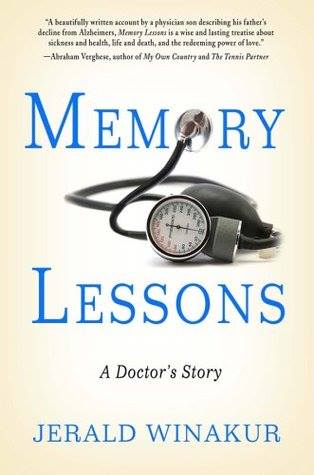
“Memory Lessons” – Jerald Winakur: Book Review and Recommendation for Caregivers

Going Gentle Into That Good Night Book Review and RecommendationMemory Lessons: A Doctor’s Story by Jerald Winakur is a must-read for all us who are caregivers for loved ones with dementias and Alzheimer’s Disease. Going Gentle Into That Good Night cannot recommend it highly enough.

This is my Goodreads review:

“What an incredible book! Dr. Winakur is a geriatric physician – old-school, steadfastly bucking against the managed care model of the for-profit companies that own medicine in the U.S. and Big Pharma, the for-profit companies who advertise magic-in-a-pill drugs directly to consumers and pay off medical providers to prescribe them – and is/was the son of aging parents, one of whom was his dad, who had dementia.

Dr. Winakur weaves the story of his philosophy as a doctor – do not harm, take the time to listen t0 and to think about each patient, we all forget, in devaluing our elderly population and shuffling them off to care facilities because we’re too busy with our own lives and can’t be bothered, that not only do we owe them our turn in the circle of life, taking care of them when they need us most just as they took care of us when we needed them most, but one day, if we live long enough, we will be them and the examples we set with our own attitudes and behavior toward them are what our children see and what they will, in turn, do to us – with the story of his family and his parents.

It is refreshing, poignant, and from the heart.

A must read!”

This is great book for all of us as caregivers. He is a doctor and a caregiver for his parents. It’s interesting to see how he deals with the same dilemmas and decisions as a son, in spite of being a geriatric physician, that we do as sons, daughters, grandchildren, sons-in-law, daughters-in-law, and spouses of our loved ones.

The Power of Music and Memories in The Journey Through Dementias and Alzheimer’s Disease

Music Memories Dementia Alzheimer's DiseaseI’ve always tracked time through music. I can hear a song and go back with photographic accuracy and precision to the exact time, the exact place, the exact month, and the exact year that I either first heard it or when it made such an impact on me that I’ll never forget it.

Usually these jaunts will prompt me to walk back through other times and places in my life – perhaps to test my own cognition – to see if I still remember them with the same level of accuracy with regard to details and precision (even down to wallpaper and house layouts in each of the many houses we lived in growing up). So far, so good.

But yesterday afternoon I heard a song that took me back to almost five years ago – July 12, 2010, to be exact – and hit me with the same effect it did when I heard it that morning.

Unexpected tears began to fall as I relived that memory and the memory I relived that day that took me even further back in time, way before dementias and Alzheimer’s Disease came to take my mom and me through its journey together.

On Sunday, July 11, 2010, in the very wee hours of the morning, my mom had the psychotic meltdown that would land her in a geriatric psychiatric hospital for almost two weeks and that would give me the grim diagnosis that she was in the mid-to-late stages of vascular dementia and Alzheimer’s Disease.

When my phone rang at 7:15 a.m. that Sunday morning, I already knew it was about Mama. The week before had been insane – with wild and dramatic mood swings, mostly negative, with each one getting more dire, and out-of-the-ballpark suspicion and paranoia – so I knew we were coming to a point where something was going to break.

Quite frankly, I wasn’t sure it wasn’t going to be me first. I was restless, anxious, unable to sleep that Saturday night, and as I paced and prayed, I kept telling God He needed to do something because there was nothing left that I could do to help Mama.

And He answered those prayers. I wasn’t at all surprised when the voice on the other end of that early morning call identified herself as someone from one of the psychiatric hospitals in the area. She said that Mama had been brought into the emergency room around 3:30 that morning (Mama had called 911) and they had determined that she needed to go to the only geriatric psychiatric hospital in the area. 

The lady on the phone ask me if it was okay to involuntarily commit Mama. I said the only thing I knew to say at that point: “Absolutely.”

She then told me the procedure for going over and changing it to a voluntary commitment by me, told me what to pack for her, and told me that Mama would be there by early afternoon.

I hung up, surprised, but not surprised, my mind racing about what I needed to do that day and what I was looking at needing to do within the next couple of weeks. It was all a little overwhelming, but I tackled the tangible stuff first that I didn’t have to think about.

I went over to Mama’s apartment in the independent retirement community she had decided to move to, without ever discussing it with me, five years earlier. I opened the door and decided to pack the bag I needed for her, clean up, and make sure there was nothing pressing I needed to take care of.

I packed Mama’s bag, labeling all her clothes so that they wouldn’t disappear. Then I decided to clean the apartment, make her bed, and do a thorough inspection of everything.

In the midst of cleaning (the refrigerator, which I tried to keep an eye on, but which I’d not been able to since she had pretty much banned me from her apartment the last couple of weeks before that, made me wonder how she had not killed herself with some of the science experiments that were in there), I found a notebook that she’d accused me of stealing two days before, hidden behind the only place I did not look when searching for it the day she told me that I’d better leave because she’d called the police to come and arrest me.

I shook my head as tears rolled down my cheek for my mom. I found a couple of bills that needed to be paid, so I took them home to pay. I knew even then that she would not be able to come back to that apartment to live, so I got on her computer and sent emails to her friends and let them know she wouldn’t be back on (no details), then unplugged the cable modem (I had been paying for her internet service) to take back to the cable company the next day.

Once everything was clean, I got Mama’s bag and her purse and the important papers I needed, and anything else valuable to take with me, and left to do the rest of what needed to be done that day.

The next morning, Monday, April 12, 2010, I began the day’s to-do list with returning the cable modem and stopping the service for Mama and having that taken off my bill. Everything was still surreal, although I was going through the motions, taking care of the things I could before the first visit I could have with Mama at noon.

On the way back from the cable company, I turned on the radio and this song came on:

Immediately, my mind went back to when I was little and Mama had the radio on all the time and we heard this song in the mix of the music that was played. I thought of those carefree days and when Mama was healthy and then all the music and summer days we’d had since then played like a movie through my memory.

Then I got to the present and I was sobbing. Not only for the past, but for the reality of the knowledge that we’d never be able to go back there again. I was crying for what we’d lost for good.

That was the song I heard yesterday. It took me right back to being in that car face-to-face with a new reality for Mama and me, reminding me again of that trip down memory lane that I had taken (and which I took again yesterday). And unexpected tears streamed down my face again.

I’ve had a hard time listening to “Mama” songs since her death. For the most part, I’ve avoided them like the plague because they evoke such a strong emotional/memory response in me and my mind and my heart get consumed with a grief I can’t stop and I can’t contain.

I don’t know exactly why this song prompted and prompts such a strong emotional reaction in me. There are no concrete, specific memories, other than the one five years ago, attached to it.

There are many other songs that I do have concrete and specific memories of Mama and me attached to: U2’s “In God’s Country,” The Commodores’ “Easy,” and Kenny Rogers’ “Lucille” are among them.

Maybe “Chrystal Blue Persuasion” is just a demarcation song for me and that is why it is so powerful. It encapsulates a childhood I miss, a mom who was at the top of her game, and a world and a time I’ll never have in again in this life. Maybe that’s all it is. And maybe that’s enough.

My advice? Embrace the music. Embrace the memories. And embrace the tears.

Because that means you had – and have – love.

And that is most precious thing we take, not just through, but beyond, this journey we walk through with our loved ones.


Profiles in Dementia: Zelda Fitzgerald (1900-1948)

Profiles in Dementia Zelda Fitzgerald Going Gentle Into That Good NightI recently finished reading Sometimes Madness is Wisdom: Zelda and Scott Fitzgerald – A Marriage. I highly recommend it, although it’s a harrowing book in so many ways.

Two of those harrowing aspects are Scott’s alcoholism and how he deliberately and consciously broke Zelda, who had her own demons and a genetic predisposition toward mental illness, for good.

A third harrowing aspect of this book is the barbaric state of psychiatry – diagnosis and treatment – in the 1930’s and 1940’s.

Zelda, who was diagnosed in 1930 with schizophrenia (most likely an inaccurate diagnosis, since it’s highly unusual for schizophrenic’s first symptoms to not appear during adolescence), was repeatedly subjected to three types of treatment routinely used for schizophrenia.

Not only did they, in many ways, exacerbate Zelda’s mental illness as well as qualify for legalized torture, but two of them eventually caused irreversible neurological damage, including cognitive impairment and memory loss consistent with all forms of dementia.

The first of these that Zelda endured over the course of 18 years was insulin coma therapy. Begun accidentally by Viennese physician Manfred Sakel, it involved giving large doses of insulin hourly daily for several weeks to keep the patients in a comatose state. It was believed that this gave the brain a chance to rest and heal itself.

Of course, other than the obvious risks of not being able to bring patients out of the comas (happened regularly) or death (also happened regularly), the high doses of insulin produced a prolonged state of hypoglycemia, resulting in permanent neurological damage.

The second treatment that Zelda was routinely given was chemically induced seizures. This treatment, based on very iffy logic at best, was pioneered by Hungarian pathologist Ladislas Joseph von Meduna.

Zelda Sayre Fitzgerald 16 Years Old Going Gentle Into That Good Nightvon Meduna made the unscientific leap with his observation that because people diagnosed with epilepsy rarely were diagnosed with schizophrenia. Therefore, he concluded that the epileptic seizures – and their aftereffects, which to von Meduna’s mind seemed to indicate blissful happiness – must be the reason for rare schizophrenic diagnoses. von Meduna then concluded that the seizures could cure schizophrenia.

By the time Zelda was subjected to chemically induced seizures, the original substances used to induce seizures – strychnine, absinthe, caffeine, and camphor – had been abandoned in favor of the drug Metrazol.

Given to schizophrenics in a regimen of 30-40 injections, with the injection rate of two to three times a week, the first injection produced such a powerful seizure within a minute of injection that torn muscles and fractured bones were not uncommon.

Beyond the high physical risks of violent injury, Metrazol also caused permanent memory loss.

Zelda died in a tragic fire at Highland Hospital, a psychiatric hospital, in Asheville, North Carolina in March of 1948, during the latest of on-and-off commitments to the facility she had from 1936 onward.

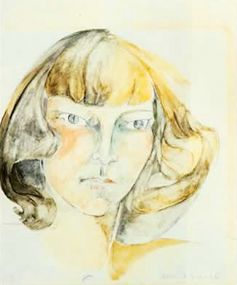
Zelda Fitzgerald Self-Portrait 1940's Going Gentle Into That Good NightHowever, in many ways, Zelda was gone years before the fire took her physical life. Zelda spent the last several years of her life devoid of memory, devoid of personality, and devoid of any sort of intellectual spark. 

Zelda’s physical appearance was so drastically changed that friends and acquaintances had a hard time recognizing her. 

Even in her hometown of Montgomery, Alabama, where she lived with her mother when she wasn’t at Highland Hospital, Zelda was unrecognizable to people who’d know her and her family all their lives. 

Zelda spent the majority of the daylight hours in Montgomery restlessly and aimlessly wandering around town in old, ragged, dirty clothes with no evidence of any care for personal grooming until her mother would find her and get her home before darkness fell.

It was a sad end of days for Zelda Fitzgerald.

Profiles in Dementia: Bill Guthridge (1937 – 2015)

Bill Guthridge UNC-Chapel Hill Basketball Coach 1997-2000On May 13, 2015, former University of North Carolina – Chapel Hill basketball coach Bill Guthridge died from heart failure. However, it was Coach Guthridge’s incurable heart condition that led to his development of vascular dementia, and with its progression, his placement for the last several years in a Chapel Hill assisted living facility. 

If Bill Guthridge doesn’t look familiar to you as a UNC-Chapel Hill head basketball coach, there’s a very good reason for that. He was and has been overshadowed and a bit lost in the shuffle of UNC basketball coaches by his lifelong friend, former UNC head coach Dean Smith (1961 to 1997), and current UNC head coach Roy Williams, who was an assistant coach along with Guthridge at UNC from 1978 to 1988.

However, Coach Guthridge served as the perfect replacement as head basketball coach when Coach Smith unexpectantly announced his retirement from the University of North Carolina at Chapel Hill in 1997.

UNC Coach Dean Smith and UNC Coach Bill Guthridge 1970'sCoach Guthridge had been Coach Smith’s assistant coach at UNC for 30 years, so he knew Coach Smith’s style, plays, and strategies inside and out. Coach Guthridge was the right choice to lead the transition to another, younger leader of the famed basketball program at the University of North Carolina.

Unfortunately, it took UNC two tries to find that leader.

The university made a huge misstep when it hired former UNC player, Matt Doherty, a young, untested coach in the league of the Atlantic Coast Conference (ACC) and a 180-degree change from the coaching styles of Coach Smith and Coach Guthridge, as its head basketball coach in 2000, when Coach Guthridge retired.

University of North Carolina Chapel Hill Head Coach Roy WilliamsAfter a three-year disastrous tenure under Doherty, the University of North Carolina hired Roy Williams from Kansas and got the leadership and gravitas that had characterized the UNC basketball program under Coach Smith and Coach Guthridge.

After Coach Guthridge’s retirement in 2003, he and Coach Smith stayed in close contact, visiting each other frequently. Ironically, both coaches developed dementia along the way (Coach Smith died in January 2015 of complications from dementia).

Coach Smith began showing signs of cognitive impairment before Coach Guthridge did. It was profoundly hard for Coach Guthridge to watch his lifetime friend become forgetful and lose the memories they shared together, not just as the architects of a fantastic and highly-ethical college basketball program, but as friends who regarded each other and their respective families as their own.

Coach Guthridge Early Years as UNC Assistant CoachWhen Coach Smith died, Coach Guthridge knew that his friend was gone, but he quickly moved back to their time together when they were younger and dementia had not knocked on their doors yet.

My guess is that Coach Guthridge probably never came back from that place after Coach Smith’s death and I would speculate that Coach Smith’s death may have been the final straw of an increasingly-unfamiliar and disconnected life for Coach Guthridge. Perhaps, at last, somewhere in his mind, Coach Guthridge finally made the decision to retire from this physical life.

Perhaps, at last, somewhere in his mind, Coach Guthridge finally made the decision it was time for him to retire from this physical life.

Coach Guthridge made his retirement official on May 13, 2015. 


Profiles in Dementia: Woody Guthrie (1912 – 1967)

Woody Guthrie as a Young ManWoody Guthrie was born into a troubled life and family in Okemah, Oklahoma. From an early age, life was harsh and unsettled and the instability affected Guthrie in profound ways and probably was responsible for his lifelong wanderlust.

Guthrie’s father, Charles, was, according to Guthrie, a member of the Ku Klux Klan and was personally involved in the 1911 lynching of Laura and L. D. Nelson.

His mother, Nora, suffered from Huntington’s Disease, an inherited neurodegenerative disorder that eventually includes dementia among its late-stage symptoms. Nora is believed to be responsible for setting two house fires: the first killing her 7-year-old daughter, Clara, and the second severely burning her husband, Charles. After the second fire, Nora was committed to the Oklahoma House for the Insane where she died in 1930.

Guthrie married his first wife at the age of 19, but soon headed out to California during the Dust Bowl to try to find work to support his family. He began writing songs about the plight of the midwesterners he joined in the labor camps out west. The wages were meager, the living conditions awful, and the work hard and back-breaking.

In the late 1930’s, Guthrie finally broke into radio in California and was able to make a living to support his growing family (it appears he got back home just often enough to help create another child, and then was back out on the road again). 

In the 1940’s, Guthrie moved to New York and it was there where he became famous. “This Land is Your Land” was written during this period as a response to Irving Berlin’s “God Bless America,” which Guthrie believed was an elitist song that wasn’t realistic for and applicable to the common man in America. 

The original lyrics are quite different from the sanitized version I heard growing up, so it might interest you to see how a protest song somehow got co-opted by America and became a standard in pro-American music. Guthrie, no doubt, had he been able, would have written an anti-“This Land is Your Land” in response.

It’s was also in the late-1940’s that Guthrie, already known for his fondness for alcohol, his general contrariness, his quick temper, and his scrappiness and eagerness for a fight, began to drink heavily. 

Guthrie’s behavior became increasingly erratic around the same time, with the singer either not showing up for performances or when he did show up, often not being able to remember all the lyrics or music.

The memory loss was initially attributed to Guthrie’s heavy drinking, but it soon became clear during the early 1950’s that something else was wrong, as Guthrie began losing muscle coordination and he had trouble playing even basic melodies on his guitar.

In 1952, Guthrie was diagnosed with Huntington’s Disease, which he had inherited from his mother. By 1956, Guthrie’s condition had deteriorated to the point where he required permanent care placement.

After 11 years of hospitalization, as everyone but his closest family disappeared from Guthrie’s life because of the toll that Huntington’s Disease exacted on his brain, making Guthrie almost impossible to be around, Woody Guthrie died in 1967.

Woody Guthrie 1960'sGuthrie married three times and had seven children.

Two children died in car accidents.

Two children from Guthrie’s first marriage developed Huntington’s Disease and both died at the age of 41.

Guthrie’s three remaining children, of whom one is Arlo of “Alice’s Restaurant” fame, to date have not developed any symptoms of Huntington’s Disease.


Profiles in Dementia: B. B. King (1925 – 2015)

B. B. King 2014The blues were born in the Mississippi Delta shortly before the dawn of the 20th Century. The genre, known for its stories of hard times and suffering, originated with African-American sharecroppers who endured long, hot and hard labor picking cotton in the sweltering heat of the summer sun, lived in squalid conditions, and were kept in manipulated indentureship and perpetual debt by never quite making enough money to pay off their bills at local merchants.

While a few blues artists – Robert Johnson, W.C. Handy, Bessie Smith, and Billie Holiday – brought the sound of the blues into the mainstream of music during the first half of the 20th Century, it was not until the late 1940’s and early 1950’s that blues blossomed and hit its stride as a bona fide genre of American music.

Among now-familiar names like Lead Belly, Howlin’ Wolf, John Lee Hooker, Elmore James, and Willie Dixon emerged a young Mississippi Delta bluesman named B. B. King

An accomplished guitarist with an one-of-a-kind voice that wrung out every bit of pain, sorrow, and pragmatism that the blues had to offer, King, in many ways, became the face of the blues for a lot of America.

While blues artists had a profound influence on rock – British artists of the 1960’s drew heavily on their influence and vast body of work and groups like the Yardbirds, Cream, and Derek and the Dominos, fronted by Eric Clapton, were the crossroads where blues and rock met and married, producing generations of rock-blues musicians that continue today (listen to Nirvana’s haunting acoustic version of “Where Did You Sleep Last Night?,” and it’s as though you can hear Lead Belly singing along in the background) – in general, they continued to exist, much like jazz musicians, in a popular, but tightly-defined, niche in the landscape of popular American music.

Except for B. B. King. With his famously-named guitar – Lucille – and his showmanship as a guitarist, along with highly-accessible songs, including his eponymous “The Thrill Is Gone,” King managed to gain a large popular audience. 

Young B. B. King B. B. King stayed on the music circuit, performing along the way with artists like Clapton, The Rolling Stones (King opened for them on their 1969 tour), and U2, despite battling diabetes and high blood pressure for decades.

In the last few years, blues fans have consistently pointed out that B. B. King’s performances were erratic at best: King missed musical cues, forgot lyrics, and often went into long, rambling, and random soliloquies while onstage.

B. B. King’s last performance was on October 3, 2014 in Chicago. However, the performance had to be cut short because King wasn’t feeling well enough to continue. He was hospitalized with dehydration and exhaustion.

On May 1, 2015, after two hospitalizations due to complications from diabetes and blood pressure, B. B. King’s website announced that King had entered hospice care at his home in Las Vegas.

On May 14, 2015, B. B. King died. The official cause of King’s death was complications from dementia (vascular dementia).

Sadly, B. B. King’s family has already begun the legal fight over who will control his estate (there are allegations that King’s long-time manager, Laverne Toney, whom King appointed as his power of attorney, mishandled King’s care and money).

It’s a tragic footnote to an incredible life.