The Second Anniversary of Mama’s Death (8-14-14)

Today is the second anniversary of my mama’s death.

I miss her. But my love, care, and concern for her well-being outweighs my own pain and loss. Because her journey through vascular dementia, Lewy Body dementia, Alzheimer’s Disease, and congestive heart failure is over and she sleeps peacefully, awaiting the promise of total healing in the resurrection.

For that, I’m thankful.

The Layperson’s Guide to Palliative Care for Our Loved Ones with Dementias and Alzheimer’s Disease

In the post “The Layperson’s Guide to Home Health Care for Our Loved Ones with Dementias and Alzheimer’s Disease,” we discussed what home health care is, when it should and can be used, and what services it provides.

In this post, we will discuss what palliative health care is, when and why it should and can be used, and what services it provides at home for our loved ones with dementias and Alzheimer’s Disease.

Although, as any caregiver can tell you, dementias and Alzheimer’s Disease are always on the radar with our loved ones who have these neurological diseases, there are often other health-related and age-related illnesses that our loved ones are also dealing with, especially if they’re elderly.

Home health care services are available – and should be used – when there is an acute medical condition that needs to be monitored and resolved (if possible) after our loved ones are discharge from a medical facility. Examples of acute medical conditions can include hard-to-manage/uncontrollable blood pressure, diabetes, life-threatening cardiac events, pneumonia, embolisms, strokes, and joint replacements.

As soon as the acute medical condition no longer exists, home health care services are no longer available. However, most home health care agencies have an intermediate health care option between home health care and hospice (end-of-life, with very specific criteria, which we’ll discuss in the next post) care.

That intermediate option is palliative health care at home.

Palliative health care provides home health care services when someone has a serious long-term or terminal illness, but death is not imminent or the prognosis is longer than six months. 

Palliative health care provides life-prolonging and curative treatments – just as home health care does – as well as providing pain management and symptomatic relief.

palliative health care layperson's guidePalliative health care offers the same interdisciplinary team and services that home health care offers: nurses (visits are usually one a week), physical therapists, occupational therapists, speech therapists, home care aides to help with daily activities like bathing, if necessary, and 24/7 nursing/medical support.

Like home health care, this palliative health care team’s manager is the nurse who coordinates and collaborates with the primary care physician and other palliative health care staff.

Palliative health care is an excellent bridge that gives us and our loved ones time to find, consider, and agree on options for care without being rushed into making a decision without having all the facts, discussing and understanding them, and being ready to live (or die) with them.

The goals of palliative health care are different than home health care. With the knowledge that death is the eventual outcome, the emphasis of palliative health care is in the following areas:

  • Comfort and relief from physical symptoms like pain, nausea, fluid retention, and shortness of breath
  • Communication and coordination of issues, treatments, and needs among doctors (although at this point, I’d personally recommend – and this is what Mom and I agreed to – just working with a primary care physician), other palliative health care staff, our loved ones with dementias and Alzheimer’s Disease and us
  • Time to pursue treatment options, if wanted, and time to prepare for death (discussing death, ensuring that all “loose ends” are tied up, meeting personal goals, and saying goodbye)

Since most home health care agencies have a palliative health care program, the transition is easy – either we and our loved ones or the home health care nurse will ask the primary care physician to write an order – and seamless – the same team of nurses and therapists continues throughout the palliative health care phase of care.

Some palliative health care programs have social workers and clergy on staff to help with any community-based services that may be needed in the home and to offer bereavement counseling.

The palliative health care program that Mom was in did not have those services, but we were self-sufficient in terms of a social worker and we had enough spiritual support from our close-knit group of long-time friends within our church family.

Palliative health care should be, at some point, a part of the care we ensure is in place for our loved ones with dementias and Alzheimer’s Disease.

Most people don’t even realize this option is available – and our loved ones do not have to have been receiving home health care services to receive palliative care – and that is one of the reasons I wanted to explain what it is, what is does, and why it’s a crucial part of the team approach to care that we lead for our loved ones.

In the next post, and the last one in this series, we’ll discuss hospice care.

The Layperson’s Guide to Home Health Care for Our Loved Ones with Dementias and Alzheimer’s Disease

Part of the caregiving team we will lead for our loved ones with dementias and Alzheimer’s Disease will – and should – include home health care, palliative care, and hospice. It is, therefore, important to understand what each of these services provides and under what circumstances.

Home health care is generally provided – if it is not offered, then we should request it as part of the discharge process – after our loved ones are hospitalized for an acute serious illness that is causing systemic problems (strokes, heart disease, hard-to-manage blood pressure, embolisms, and continuously low oxygen saturation levels are some examples of acute serious illnesses) or surgery that requires follow-up monitoring and wound care. 

What services are included in home health care?

Nurses, who function as case managers, will come to the home from one to three times a week (depending on the severity of need) to do a thorough examination of our loved ones, provide wound care (if applicable), and serve as the liaison with both the primary care provider for status updates and medication changes (if needed) and with other services included in home health care.

I strongly advise, especially for our loved ones with dementias and Alzheimer’s Disease, to request that the same nurse – if he or she is a good fit – do all the home visits to ensure continuity and to create comfort and trust for our loved ones. If the nurse is not a good fit, then we should request a change. Generally, it will be obvious on the first visit.

Physical therapy, occupational therapy and speech therapy are also services offered by home health care. At the very least, I would suggest taking advantage of physical therapy and occupational therapy. For our loved ones who have suffered strokes and are recovering, speech therapy should be included as well.

Hospitalizations always leave our loved ones weaker physically than they were before being admitted, because with acute illnesses and surgeries, they usually spend a lot of time lying in bed and are not as physically active. In the case of strokes, motor skills are usually severely affected on one side of the body, although in some cases both sides are affected (depending on where the stroke originated in the brain).

Physical therapy will begin in the hospital in some cases, such as with strokes or joint replacements, but most hospitalizations will not include this as part of treatment.

Therefore, it’s vital to our loved ones’ health to use the physical therapy services provided by home health care to regain strength and to keep them as mobile as possible for as long as possible. In the case of strokes, it’s imperative to continue physical therapy as part of the recovery at home.

Physical therapists will visit the home, on average, twice a week and will help us and our loved one with exercises and activities to do on a daily basis to continue strengthening and improving balance, mobility and motor skills. They will also order any mobility equipment – if we don’t have it already – such as walkers and wheelchairs, if needed.

Occupational therapy helps identify what physical adaptions of the home need to be made to make daily activities easier and safer for our loved ones. These include things like grip bars near the toilet for ease of getting up (or a sturdy raised toilet seat with bars – my preference), grip bars in the shower or tub to prevent falls, and transfer seats for the tub to make getting in and out easier. They can also identify safety hazards – for example, throw rugs are very hazardous for elderly and those using walkers – in the home.

Additionally, occupational therapists can help our loved ones with functionally-appropriate ways to do everyday things. While our loved ones with dementias and Alzheimer’s Disease generally find their own unique adaptive ways with our help, occupational therapists are critical in the recovery or maintenance of people who have suffered strokes.

home-health-careSpeech therapy can be helpful for people who have suffered strokes. In the case of our loved ones with dementias and Alzheimer’s Disease, in general, speech therapy is not a viable option.

The nurse (case manager) will contact these therapists as warranted and set up the initial consultation appointments. Each therapist will then set up his or her own visitation schedule.

If additional assistance is needed with daily activities such as bathing, most home health care agencies have home health aides who will come at least twice a week to help with with those activities.

One of the best features of home health care is our access to 24/7 medical support. As anyone who has been a caregiver knows, the need for medical advice and/or assistance often occurs at night and on weekends. Without home health care, the only option is to take our loved ones to a hospital emergency room (nights) or an urgent care facility (on weekends).

Many of the medical issues that occur are easily treatable at home, so having to get our loved ones to a medical facility where they often have to wait for a considerable amount of time to be seen, treated and released is very stressful and hard on them.

With the 24/7 medical support of home health care, we can easily assist our loved ones at home without creating unnecessary stress and discomfort for them.

Home health care services are covered by health insurance (if under age 65) or, if 65 or older, by Medicare Part A (80%) and Part B Supplemental Insurance (20%) and should not incur any out-of-pocket costs for our loved ones with dementias and Alzheimer’s Disease.

We should be aware that most hospitals partner with a particular home health care agency in the area (most of the corporations that own hospitals have a home health care agency as a business unit in their corporate structure), but we should research – the best (and worst) referrals come from other people who’ve used an agency’s service – all the home health care agencies in the area we live in and choose the one that best suits the needs of our loved ones with dementias and Alzheimer’s Disease.

All home health care agencies are not created equal. Some provide excellent care and service and some do not.

When our loved ones are discharged from the hospital, a discharge coordinator will be involved and he or she will initiate our request for home health care (again, they will not always offer it, but we should always request it). If we don’t have a preference, he or she will use the home health care agency the hospital partners with. If we do have a preference, we should state that. Then he or she will contact that home health care agency to provide follow-up care in the home.

It’s important to be aware as well that we have the right to fire a home health care agency and, going through our loved ones’ primary care providers, get a referral to another home health care agency that we choose.

We should not and do not have to accept poor or inadequate care for our loved ones, nor do we have to accept a situation where the attitude of the staff is poor or indifferent and where the staff does not treat our loved ones with respect, kindness, dignity, and gentleness.

If the home health care agency providing care for our loved ones with dementias and Alzheimer’s Disease is not satisfactory, for whatever reason, then today is the day to make the change to another home health care agency. We owe our loved ones the best, the most professional, and the most respectful medical care available. Never settle for anything less than that.

In the next post, we’ll look at the option of palliative care and when it is used and what services it offers.


Promotional Video for “You Oughta Know: Acknowledging, Recognizing, and Responding to the Steps in the Journey Through Dementias and Alzheimer’s Disease”

The promotional video for You Oughta Know: Acknowledging, Recognizing, and Responding to the Steps in the Journey Through Dementias and Alzheimer’s Disease (published in April 2014) gives the background of why I wrote this book and gives a brief summary of each of the chapters in the book.

As someone who experienced this journey first-hand with my mom and who, since her death, has been actively involved in providing support, counseling, and information, as well as just listening, to many people who are on this journey themselves or with loved ones, I discovered the need for a book like this.

It’s personal. It’s accessible. And it’s practical. There is no other book on the market like it.

If you don’t read another book on dementias and Alzheimer’s Disease, you should read You Oughta Know: Acknowledging, Recognizing, and Responding to the Steps in the Journey Through Dementias and Alzheimer’s Disease (available on Amazon in both paperback and Kindle versions). It will be an invaluable resource that will help you and your loved ones tremendously as you walk the steps of this journey together.

Medical, Financial, and Legal Advocacy and Help: What Happens If You Can’t Advocate For and Help Yourself?

All of us need to be preparing in advance for the possibility that something – whether it’s Alzheimer’s Disease, dementias, other life-threatening illnesses, or simply time and chance – could suddenly and dramatically or slowly and insidiously render us incapable of taking care of our own affairs.

It seems to me that the very thing we try most to avoid thinking about, talking about, planning for is the very thing that will eventually happen to us all. And that is death.

Denial is, in my opinion, stronger and more pervasive in this area of life than in any other. “If I don’t think about it, then it isn’t real” seems to be the underlying thinking of this denial. I’m here to tell you that all the denial in the world won’t take away its inevitability of happening.

None of us, except those who chose to usurp God’s will and end their own lives, know how or when we’re going to die.

I believe most of us assume it will be quick and instantaneously, but the reality is that, in all likelihood, most of us will probably have a period of decline in which we will need help handling our financial, legal, and medical affairs before we take our last breaths.

And, after we take our last breaths, someone will have to take care of getting us buried and ending our financial, legal, and medical status among the living.

Who would that be for you? Yes, you, the one who is reading this post. Do you know? Does that person know? If that person knows, have you made this as easy as possible for him or her by doing your part and making sure he or she has everything he or she needs to do what needs to be done?

Or, because you don’t want to think about it or talk about, will that person have the burdensome responsibility of trying to figure it out all on his or her own?

We say we don’t want to be burdens to our loved ones. By taking care of this, you and I – we – have taken a big step toward easing the magnitude of that burden that, if we live long enough, will be shouldered by our loved ones.

I did my first will and living will shortly after I turned 21. I had just graduated from college, but not before having a very serious car accident (one that I miraculously survived with some significant injuries, but nothing like what I should have suffered) just before I graduated.

I’d never been that close to being face-to-face with death before, but it made me realize that I needed to make sure that my affairs – and they were paltry in those days but even then I had life insurance – were in order for the ones I’d leave behind.

From that point on, I have been meticulous about keeping my will up-to-date, the beneficiaries on my insurance policies up-to-date, and all the information my executor will need to take care of things up-to-date. I added a DNR to my medical wishes about 20 years ago, I got my cemetery plot 15 years ago, and I wrote out my funeral service and burial wishes about 10 years ago. 

Additionally, my executor has updated access and account information to everything online and offline to finish up my earthly affairs when I’m gone.

preparation-death-alzheimer's-disease-dementias-age-related-illnessesThis, in my opinion, is the last act of kindness I can do in this physical life. It is also one of the greatest.

Mama used to worry that something would happen to me (i.e., that I would die before she did) and then about what would happen to her. There were times in our lives together that could have been a possibility, but I always reassured her that I’d be there with her to the end. And I was by the grace of God.

Of my parents, Daddy was a paradox when it came to this subject. On the one hand, he had life insurance that would take care of Mama after his death and he insisted, in the year before his death, that Mama get her own checking and savings accounts and get credit cards in her name only.

On the other hand, there were other areas in which he had great difficulty facing his mortality. I remember Mama suggesting that they start getting rid of clothes and other things they weren’t wearing or using anymore and Daddy’s response: “the girls can take care of that.”

The will that Daddy had in effect, until shortly before his death, was the one that he had drawn up just after he and Mama adopted us. None of the information was pertinent or relevant anymore.

After much and extended (I’m talking a couple of years) discussion between Mama and him, they finally went to a lawyer, about six weeks before he died, to have a current will drawn up.

Mama was just the opposite. Somehow, I think all the deaths of close and beloved relatives in her early years made the inevitability of death more real to her. She, primarily, during our growing up years, talked on a regular basis about what would happen to us if she and Daddy died and how we needed to take care of each other and be good kids so the road without them would be easier for us.

Not long after Daddy died, she and I sat down together (I was now checking in daily and helping her navigate through some of the things that Daddy had done and offering advice and assistance as she needed it) and she told me what she wanted – and didn’t want – as far as end-of-life wishes.

We went to an attorney together and she did a will (which she later changed to a revocable living trust), living will, and all the POA paperwork. I had copies, she had copies, and she put copies in a safety deposit box at the bank.

At that time, I didn’t need or want knowledge or access to her financial accounts, but as time went on, she needed more of my help in dealing with them, so she gave me access to get into the accounts and help her (we always sat down and did this together until she wasn’t able to anymore) keep up with bills and what she had. 

By doing this with me, Mama made things much easier for me when the time came that I had to step in because she couldn’t do it.

I can’t thank Mama enough for her foresight with this gift. Instead of having to focus on everything brand new coming at me at once, I could focus on what was most important, and that was Mama: loving her, caring for her, being there for her as her advocate on all fronts, including in legal, medical, and financial affairs.

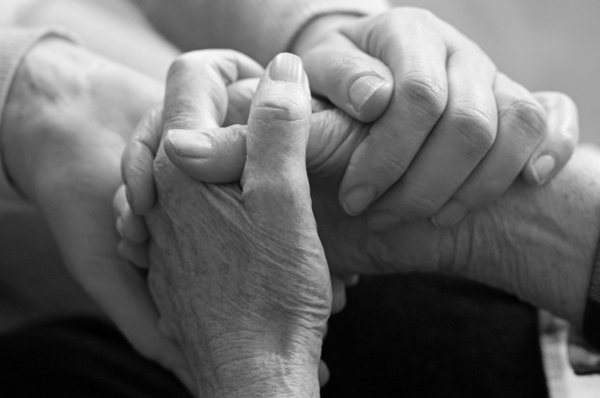
The last couple of months Mama was alive, we’d be sitting close, holding hands, and talking and suddenly she’d say “I don’t want be a burden on you,” with tears rolling down her cheeks. I’d squeeze her hands and pull her closer in a hug, kissing the tears away from her cheeks, saying, “Mama, you’re not a burden to me. I love you unconditionally. I wouldn’t be anywhere else doing anything else but right here doing this with you.”

Mama would relax in my embrace and I would hold her tighter as I said these words because they were true and we both recognized that they were true, but most of all, I recognized how easy Mama had made things for me by equipping me with what I needed to step in easily and take care of the routine things so that I could save my energy, my focus, and my love for taking care of her.

Remembering What Would Have Been Daddy’s and Mama’s 58th Wedding Anniversary in the Fields of Gold: A Love Story Soundtrack of Our Lives

Today would have been my parents’ 58th wedding anniversary. I miss them both.

fieldsofgoldbk's avatarFields of Gold: A Love Story - The Book

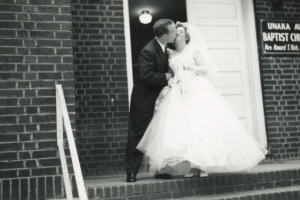
fields of gold: a love story mama and daddy wedding day 6-9-56Today would  have been Daddy’s and Mama’s 58th wedding anniversary. Their meeting in Durham, NC when they both were at Duke University – Daddy teaching physical therapy and Mama studying medical technology – was nothing less than a miracle.

Daddy had other job offers but he wanted, after his stint in the Army during the Korean War, as all of us Tarheels long to at some point, go home. Mama was originally supposed to go to Vanderbilt University for her training, but she didn’t have a prerequisite course she needed to get into their program. Mama had all the prerequisites for Duke’s program, so she changed her plans and went there instead.

One of our family jokes was that Daddy picked Mama up on a street corner. In fact, that’s essentially true. Mama waiting at the corner of her street each morning for the bus that would pick her up…

View original post 570 more words

Mother’s Day 2014

mama mother's dayToday is the second Mother’s Day since Mama’s death. Grief still lingers and hovers over me, punctuated even more by packing up for the impending sale of my house and subsequent move.

Because packing has brought the inevitable sifting and sorting, which entails opening boxes, containers, and drawers that have sat unopened for a while. And I’ve come across a lot of memories in the process and the tears that they are just memories now have fallen quite frequently.

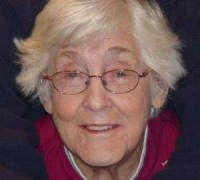
While some who read this blog knew my mama, most of you don’t. So in honor of Mother’s Day 2014, I would like to briefly introduce you to this wonderful and beautiful lady that I’m honored to have known as “Mama.”

Mama was one of the most intelligent people I’ve ever known. Though beset by a hearing loss – that worsened with time – all her life, she was an excellent student and she loved learning.

Although Mama had completed medical technology training shortly after she and Daddy married, she yearned to go back to college and get more education. At 48, she did just that, ending up with a bachelors of science degree in biology and a bachelor of arts  degree in English. Her cumulative GPA was 3.5, despite the fact that she struggled through two required, but dreaded, math courses. We – she and I – worked together and got her through both of them with a C.

Almost right up until the time of her triple-dementia – vascular dementia, Lewy Body dementia, and Alzheimer’s Disease – diagnosis, Mama was taking classes of some kind. Her last formal classes were sign language classes, which Mama persuaded me to join so that we could learn and practice together.

Mama was also a voracious reader. When Mama was in elementary school, she’d spend every Saturday at the public library in Greenville, SC where she made the pronouncement to the librarians there that she was going to “read every book in the world.” They laughed, but Mama never gave up on that unattainable goal.

Mama, in spite of all the odds against her, was, as an adult, hopeful and optimistic about life. She enjoyed life and made the most of her time on this earth.

Mama had a whole lot of love and she generously poured it out on everybody who intersected with her life and who responded to it. I’m not sure Mama ever met a stranger; of the five of us, she was, even more so than Daddy, the most likely to introduce herself to someone and make them feel welcome in any setting.

Mama cared very deeply about humanity and often cried tears for the most vulnerable among us – children and the elderly – when she learned of hurts, sorrows, and oppressions that had befallen them.

Mama also loved all the four-legged friends that accompanied her and us as a family throughout her lifetime. She also cried tears for them when it was time for her and us to say goodbye to them.

Mama was the enthusiastic cheerleader in our family. Whenever any of us expressed a desire to do or try something, Mama was right behind us encouraging us to go for it, assuring us that she’d be with us all the way.

Sometimes if we were too reluctant or refused to do something and Mama believed it was something we needed to do, she’d give us an “or else” ultimatum. My only jump ever, tear-laden though it was, off a diving board into the deep end of a swimming pool when I was 9 was the result of one of Mama’s ultimatums. 🙂

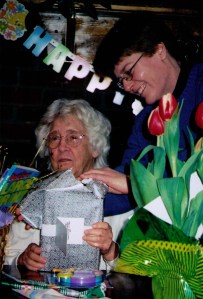
mama-entertaining-bday-2003Mama had a fantastic sense of humor that always had the edge of mischief around it. She laughed easily and often and her blue eyes sparkled with joy most of the time, although dementias and Alzheimer’s Disease took more than their fair share of that away as they progressed.

Mama was always up for adventures with her family and her friends. When she and I were both in college at the same time, we arranged our schedules so that our Tuesday and Thursday classes were done by noon.

At least once a week, we’d go to lunch together, then go to Baskin-Robbin’s and get three-scoop sundaes to take to the movie theater to eat while we caught the afternoon matinee of whatever new movie was out.

On days we didn’t go to the movies, we’d either spend the afternoon walking and talking out at Wrightsville Beach (North Carolina) or Fort Fisher or in downtown Wilmington or we would go bowling or go to shoot pool (Mama never quite mastered the technique of shooting pool, but she was a pretty decent bowler back in the day).

I cannot tell you how much I treasure those memories, nor how much I miss those times. When we traveled together in subsequent years, we’d always spend a lot of time exploring together, until the last few years, when Mama’s energy and heart was winding down and she simply couldn’t manage long exploratory walks and strolls.

It broke my heart when it happened. I guess I believed she’d be enthusiastically keeping pace with me, taking two steps to every one of mine (her legs were shorter), until the day she died.

Mama was also a talented writer and storyteller. One of the memories I’ve encountered as I’ve been packing is the reminder of how much she wrote over the years of her life. 

One of those pieces of writing reminded me, though, that Mama experienced a lot of grief during her life, including the worst grief, I believe, of her life after Daddy’s death in October 1998.

She wrote these words six months after Daddy had died:

“This is the eve of the sixth month since my husband’s death. I have come a long way since that fatal day in October. I need to pause and take stock of where I’ve been and what I’ve learned since that time…

…At first the pain of my loss was indescribable and unrelenting. I was locked into my grief, unable to think or act on anything. When everyone [us kids] returned to their daily routine, I was in an abyss of hopelessness. The pain had even paralyzed my tear ducts…

…While sharing activities with others or hearing some interesting information, I could hardly wait to tell my husband and had the shock of realizing that would never again happen. When writing, I kept expecting him to knock on the office door and I’d look up and see that crooked grin and hear him say: ‘Just checking on you.’

I found myself talking to him about my problems and asking him how I’d ever solve them without him. I’d fuss at him for keeping every key he had ever possessed and I had no idea what they fit. Or I’d rage at him for saving every rubber band, paper clip, and ad infinitum.

I’d tell him he was right, I was the messiest person alive and I had to change, but I’d show him that I could. At night, I’d reach over to touch him, but only felt his robe that I left on his pillow. Those were the times the flood gates opened.”

Reading Mama’s words about her grief after Daddy’s death reminded me both of my grief after he died and my grief since her death. Somehow Mama’s words reflected much of what I’ve experienced since her death. It’s not in my face all the time, but it still hits me like a ton of bricks out of the blue more often than not.
mama-bday-2003I miss you, Mama, just like I miss Daddy. I’m a little lost at times with both of you gone and I’m often struggling with the idea of being all alone in the world, humanly-speaking.

This Mother’s Day will be bittersweet like last year’s was and all the ones in the future will be until I see you again. For you now, it is just the blink of an eye. For me, it’s a little bit longer than that.

I love you, Mama! Until we see other again, sleep well.
Seven Global Dementia Facts – Infographic

While doing research for the next rare dementia post I’m writing, I came across some interesting global statistics about dementia.

I decided to put what stood out to me into an infographic.

Feel free to share, but please include a link back to my blog (http://atomic-temporary-53681440.wpcomstaging.com) when you share.

going gentle into that good night dementia facts


You Oughta Know: Acknowledging, Recognizing, and Responding to the Steps in the Journey Through Dementias and Alzheimer’s Disease – the book is a finalist in the SeniorHomes.com Best Senior Living Awards 2014

Thank all of you who have voted so far for my book, “You Oughta Know: Acknowledging, Recognizing, and Responding to the Steps in the Journey Through Dementias and Alzheimer’s Disease” . It’s a finalist in the SeniorHomes.com Best Senior Living Awards 2014 books categories.

You Oughta Know: Recognizing, Acknowledging, and Responding to the Steps in the Journey Through Dementias and Alzheimer's DiseaseA panel of judges will determine the SeniorHomes.com expert winner, but your votes will determine the People’s Choice winner. Voting is open until May 12, 2014. So, if you haven’t had a chance to vote yet, I’d certainly appreciate you doing some research into my book and giving me a vote if you think it’s a good offering in this category.


You Oughta Know: Acknowledging, Recognizing, and Responding to the Steps in the Journey Through Dementias and Alzheimer’s Disease is a finalist in the SeniorHomes.com Best Senior Living Awards 2014.

Going Gentle Into That Good Night – The Book is a finalist in the SeniorHomes.com Best Senior Living Awards 2014

Thank all of you who have voted so far for my book, Going Gentle Into That Good Night BookI wanted to pass what I learned on, so I wrote Going Gentle Into That Good Night .

It’s a finalist in the SeniorHomes.com Best Senior Living Awards 2014 books categories.

A panel of judges will determine the SeniorHomes.com expert winner, but your votes will determine the People’s Choice winner. Voting is open until May 12, 2014. So, if you haven’t had a chance to vote yet, I’d certainly appreciate you doing some research into my book and giving me a vote if you think it’s a good offering in this category.

Going Gentle Into That Good Night – the book – is a finalist in the SeniorHomes.com Best Senior Living Awards 2014.