Tag Archive | Dementias

The Geopolitical Effect of Dementia: When A National Leader Has Dementia

King Salman Saudi Arabia dementia going gentle into that good nightI’ve read several news articles about the new king of Saudi Arabia, Salman bin Abdul-Aziz Al Saud, that confirm that he has dementia.

King Salman’s ascent to power is essentially a coup from rival family factions in Saudi Arabia. Alastair Crooke wrote a two-part insightful look into Saudi Arabia’s history in terms of the fundamentalism versus modern fight that has Islam as its backdrop: Part 1 and Part 2.

King Salman and his family (many of whom he has already put into power in direct opposition to King Abdullah’s express wishes for the new government) are much more closely tied to the very strict and fundamentalist Wahhabi sect of Sunni Islam than King Abdullah and his family.

These closer ties to Wahhabism could mean earthquake-like shifts in the geopolitical dynamic in the Middle East and with the West in very quick order.

But I cannot help but wonder how King Salam’s dementia will factor into the mix. My educated opinion is that King Salam will simply be a figurehead with the other people who’ve been brought to power making the actual policies and decisions.

And that’s very, very dangerous for everybody involved.

Ronald Reagan dementia 2nd term going gentle into that good nightAmericans don’t need to look too far back into their own history and Ronald Reagan’s presidency (it was clear to everyone who was around President Reagan a lot during his second term in office that he was suffering from dementia) to see this in action and how it began the continuing downhill slide of government and began the complete erosion of trust in and trustworthiness of anything related to government.

Will Saudi Arabia – and the world – experience an ever greater cataclysmic effect with another ruler with dementia at the helm?

Time will tell.

The Importance of Fitness and Exercise for Our Loved Ones with Dementias and Alzheimer’s Disease

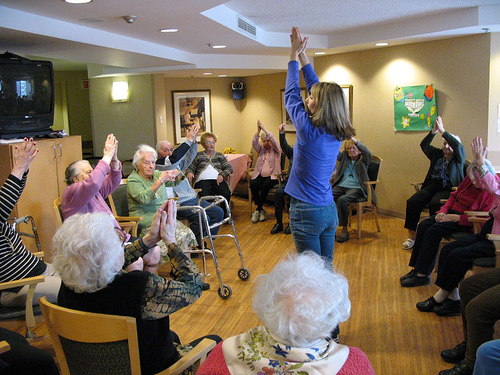
exercise and fitness for our loved ones with dementias and Alzheimer's DiseaseExercise and fitness are important aspects of life and are beneficial for everyone, but particularly for our loved ones with Alzheimer’s Disease and dementias.

There has been significant research that shows that leading a life that is physically active and includes regular exercise can have a positive impact on overall health and well-being.

People who exercise regularly have improved levels of general cardiovascular health, stronger bones and, therefore, a reduced risk of osteoporosis. They also tend to sleep better at night and have improved strength and balance, which can reduce the fall risks for our loved ones with dementias and Alzheimer’s Disease.

Exercise has other wonderful health benefits too. Any level of regular physical exercise can have a positive impact on emotional health.

Exercise may help alleviate some of the symptoms of depression, a common condition in our loved ones with dementias and Alzheimer’s Disease, particularly in the early steps of the journey through these diseases.

Exercise can be beneficial with depression symptoms because it releases endorphins and other mood-enhancing brain chemicals. And even if our loved ones have reduced mobility or are in the middle-to-late steps of the journey through dementias and Alzheimer’s Disease, there are still ways to incorporate regular exercise into their daily routines.

Listed below are a few simple exercises for our loved ones with dementias and Alzheimer’s Disease.

Exercises Using A Chair

Seated exercises are ideal for our loved ones with dementias and Alzheimer’s Disease since they tend to have stability issues. Additionally, chair exercises are a great way to begin getting more physically active if our loved ones haven’t been for a while.

Seated exercises can help to build and maintain essential muscle strength and balance, but they are much less strenuous than standing exercises and reduce the risk of falls and/or injuries.

It’s important to use a sturdy chair with a back (I would recommend one that’s roomy with arms to prevent our loved ones from falling off sideways) for seated exercises and for us to be close by to assist if need be.

With our loved ones with dementias and Alzheimer’s Disease, it’s important to take the time to do these exercises at their pace. This includes taking the extra time to patiently coach – without expecting perfection in execution or repetition, with “good enough” done safely being “great.”

It would be ideal to begin each exercise session by breathing in as deeply as possible and then breathing out gently (if our loved ones are able to lift their arms to the side while doing this, it will help increase lung capacity, but if not, that’s okay).

We may have to coach and show our loved ones how to do this, doing the breathing exercises with them to encourage them to follow our example. Repeat this up to a maximum of ten times.

1st exercise (shoulder rolls): Lift the left shoulder up, then take a deep breath in. Breathe out as the shoulder drops. Then, lift the right shoulder up, then take a deep breath in. Breathe out as the shoulder drops. Alternate between the left and right shoulder up to ten times.

2nd exercise (neck strength): In the same sitting position, tilt the head back. Following the same breathing pattern as before, breathe in as the head is tilted back, then breathe out the head moves forward. Then, breath in as the head is turned to the left and breath out as the head is turned to the right. Repeat, alternating between back and forth and left and right up to ten times.

3rd exercise (sitting march): Pace can be as slow or fast as is comfortable. Lift the right knee up and breathe in; put that same foot down and breathe out. Repeat the same process with your left leg. Alternate between left leg and right leg up to twenty times.

4th exercise (leg stretches): Extend the left leg fully, breathing in as it’s extended, and breathing out as it is bent. Repeat with right leg. Alternate between left and right legs up to ten times.

5th exercise (ankles): Cross the left leg over the right leg, and rotate the left foot. Then, cross the right leg over the left leg, and rotate the right foot. Alternate between left and right foot, breathing rhythmically throughout, up to ten times.

Exercising to Music

In the early steps of the journey through dementias and Alzheimer’s Disease, our loved ones may be able to do slightly more strenuous exercises around the home, such as gardening, walking up and down the stairs or even dancing.

Exercising to music can make the activity a much more enjoyable experience. Since listening to music can also be beneficial in many ways for our loved ones with dementias and Alzheimer’s Disease, incorporating music into daily activities like exercise makes perfect sense in our overall care strategy.

going gentle into that good night divider

This is a guest post by Helen Bowden, fitness trainer and nutritionist with experience in dementias and Alzheimer’s Disease 

United States Hospice Agency Report Card 2015

In “The Layperson’s Guide to Hospice Care for Our Loved Ones with Dementias and Alzheimer’s Disease,” I gave a comprehensive discussion about how to choose and what to look for in hospice agencies when the time comes that our loved hospice report card united states 2015ones with dementias and Alzheimer’s Disease need comfort care and gentle and compassionate assistance with the dying process.

The Huffington Post, on January 8, 2015, had this article, which includes interactive maps for each state in the United States where state inspection data was available, giving detailed report card information for American hospice agencies. 

Here Are the Hospices That Break the Most Rules” is a must-read.

Making Life a Little Easier in the Care of Our Loved Ones with Dementias and Alzheimer’s Disease – Part 2

mother daughter care love going gentle into that good nightThis is the second in a series of posts that discusses everyday practical needs that almost no one ever talks about in providing care and making life easier for both us as caregivers and the loved ones with dementias and Alzheimer’s Disease that we care for.

In the first post in this series, we looked at how to make things easier day-to-day for our loved ones in the areas of eating and incontinence.

In this post, we’ll look at the areas of personal grooming and bathing in the journey through dementias and Alzheimer’s Disease with our loved ones

The progressive neurological damage of these diseases can affect our loved ones in several ways in the areas of bathing and personal grooming, which may necessitate accommodations for them in these areas. 

Before we discuss those in detail, it is imperative that we always respect the dignity of our loved ones with dementias and Alzheimer’s Disease, and that we give them as much autonomy and independence in all areas of their lives, including these, as is safe.

Dignity is not negotiable. Our loved ones deserve that at all times and we owe them that at all times. Being more dependent and less able to take care of themselves is hard enough on our loved ones, but to not respect and maintain their dignity is humiliating and devastating.

Our loved ones with dementias and Alzheimer’s Disease have been and are being robbed of their quality of life by an unseen or several unseen thieves in their brains. We should not be adding insult to injury by robbing them of their dignity.

Independence is also critical to the well-being of our loved ones. Safety concerns will, at times, limit full independence. However, that should be the only reason we curtail independence in any way.

Being a lot slower at doing things, being less than perfect at doing things, or forgetting how to do something but trying anyway should never be reasons why we take independence away from our loved ones. If we do, shame on us. 

The requirements of making bathing – including washing hair -easier for our loved ones with dementias and Alzheimer’s Disease will change as these neurological diseases progress.

However, there are several things that we should be aware of throughout the course of these diseases:

  • Showering or a full bath every day is hard on and can damage the fragile skin of our elderly loved ones. A good rule of thumb is alternating showering or full bathing every other day with the equivalent of a sponge bath.

  • Harsh soaps and shampoos will also damage skin, including the scalp. Baby bath wash and baby shampoo is the gentlest option for bathing and shampooing hair.

  • Skin also dries out as our loved ones age – diuretics will make skin dryness even worse – so we should make sure our loved ones are lotioned up well each day with a good hydrating lotion.

  • Bathtubs for older folks are difficult to get in and out of and present a greater danger of falls.

    If you are reading this with younger loved ones you may be caring for in the future or even with yourself in mind, please make sure that a first-floor bathroom has a walk-in shower (ceramic or fiberglass frame – a metal frame can cut), which can be adapted for even greater safety using assistive devices.

    When staying in a hotel, be sure to request a handicapped room since these have walk-in showers (which are even wheelchair accessible, if needed).

  • Make sure the bathing area is the warmest room in the house. As our loved ones get older and as dementias and Alzheimer’s Disease progress, sensitivity to cold is even more pronounced.

    If there is no additional heater built into the bathroom, use a space heater. About 15 minutes before bathing time, turn the heater on and close the door. This will ensure that the bathroom is at a comfortable temperature by bath time.

  • Have everything you need for bathing, personal grooming, and dressing ready before starting the bathing process. 

    This makes the process go more smoothly and efficiently and it ensures that we don’t have to leave our loved ones unattended – with the possibility of falls and/or injury – during the process.

  • Water temperature is crucial and we must ensure that it’s not too hot or too cold. Run the shower (or sponge bath water) until it is on the warmer side of lukewarm as a general guideline. 

  • The sensation of water pouring down from a shower can sometimes be frightening for our loved ones with dementias and Alzheimer’s Disease as they approach the middle and late steps of these diseases.

    My personal theory is that it’s a combination of three things: a heightened sensitivity to change (resulting in confusion and anxiety), the suddenness of it, and the feeling of being wet.

    We will notice that some days showering is not an issue and other days it’s a huge issue.

    On the days that it’s a huge issue, it’s important that we don’t force our loved ones into a situation that is frightening for them, because this will increase fear, anxiety, confusion, and disruptive behavior.

    Instead, we should opt for a sponge bath or cleanup with adult washcloths and try again another day.

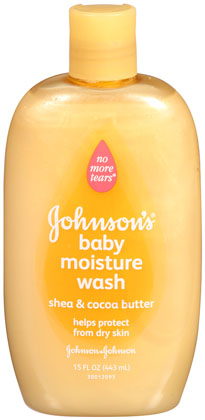
baby wash moisturizer going gentle into that good nightAs far as bathing and shampoo products go for shower days, I recommend Johnson’s Moisture Baby Wash and Johnson’s Baby Shampoo.

While there are generic brands of baby body washes and baby shampoos, I found the quality inferior (i.e., they were more watered down) to Johnson’s baby products. 

baby shampoo going gentle into that good nightSince these are designed for delicate skin, they meet the bathing and the shampooing needs of our older loved ones with dementias and Alzheimer’s Disease as well.

Additionally, the shampoo won’t irritate the eyes if it drips into them. Since following directions – such as keeping eyes closed – is harder for our loved ones to do or sustain if they are able to do it, this ensures that no harsh chemicals get into their eyes while washing their hair.

disposable premoistened adult washcloths going gentle into that good nightFor non-shower days, I recommend using disposable adult washcloths. Adult washcloths are large and premoistened, usually with aloe added, and can be used very effectively to clean up. They are not flushable.

Adult washcloths can be bought inexpensively in bulk at warehouse clubs like Sam’s Club, Costco, and BJ’s (online or in-store).

A product that many hospitals use for bathing that I do not recommend is no-rinse body wash/shampoo. One reason I don’t recommend no-rinse body wash/shampoo is that I don’t find that it does a good job of cleaning and it leaves a slight residue on skin and hair. The other reason I don’t recommend no-rinse body wash/shampoo is that it dries the skin and hair out, which makes the fragile skins of our elderly loved ones with dementias and Alzheimer’s Disease even more dry and fragile. 

There are several things that we’ll need to do to ensure the bathroom and shower is safe to prevent falls for our loved ones.

Most modern bathroom floors are either ceramic tile or linoleum. Both of these surfaces are very slippery when they’re wet, so we want to ensure that the floor has an adequate amount of non-skid covering to ensure the safety of our loved ones when they are wet.

Duck Brand Hold-It for Rugs non-skid tape going gentle into that good nightRugs and oversized bath mats are the easiest and least expensive way to cover the bathroom floor adequately. It’s also easy and inexpensive to ensure that they are non-skid by applying non-skid tape to the back of the rugs or bath mats. The best product I found for this is Duck® Brand Hold-It for Rugs™, which can be purchased through many venues online or at home supply stores.

Non-slip tub/shower mats with suction cups are the usual recommendation to keep our loved ones with dementias and Alzheimer’s Disease from slipping and falling in the shower. However, my personal experience with these is that with most shower floors, the suction cups don’t adhere well and the mat moves around easily.

non-skid safety tape shower tubSo I don’t recommend these for the shower floor. Instead, I recommend non-skid strips or tape designed specifically for the shower.

The entire floor of the shower does not need to be covered nor do the strips or pieces of tape have to be right up against each other (gaps between them are fine as long as they are not wide enough to cause a slip or fall) , but you do want the primary walking surface to have enough skid-resistant strips or tape in place to ensure safety.

Like the non-skid tape for the rugs, this is very inexpensive and provides the maximum safety for our loved ones and can be purchased online at Koffler Sales Company. There is no quality difference between the 3M™ and KSC brands, but because 3M™ is a more-recognizable brand, the price for their products is higher.

As far as the safety of our loved ones with dementias and Alzheimer’s Disease goes in the shower itself, there are two additions that I would highly recommend.

One addition is a safety grab bar. There are two kinds of grab bars for showers on the market. One kind requires no hardware to install it because it uses a suction-cup locking system. The other kind requires hardware to install it (and, if you’re not handy, may require a professional to install it).

safety grab bar shower hardware going gentle into that good nightAlthough the easy-to-install grab bar is less expensive overall, I don’t recommend it for our loved ones with dementias and Alzheimer’s Disease. Because it uses a suction cup to hold it to the shower wall, with enough weight or time, it could become detached and cause a fall.

Therefore, I recommend the grab bar that uses hardware to attach it to the shower wall.

Although this presents work and a possible upfront cost for installation, it gives our loved ones the extra measure of safety for fall prevention.

shower chair with back and no armsThe other addition that I recommend is a portable shower chair.

Built-in shower seats are often small and in one corner of the shower, which doesn’t facilitate easy showering.

However, the main concern with built-in shower seats for our loved ones is that they are slippery and the fall/injury potential is great.

Shower chairs allow our loved ones with dementias and Alzheimer’s Disease to sit either during the shower or when they get tired during the shower. 

For the most comfort, I recommend a shower chair with a back and without arms.

The shower chair should be placed in the shower near the grab bar.

We should be on hand while our loved ones are sitting in the chair and we should always assist them – directing them to use the grab bar to help – getting up and down out of the chair. While the shower chair’s feet have rubber grips, the chair will move when our loved ones are standing up or sitting down. 

In the next post in this series, we will look at how to make life easier in the areas of mobility and functionality/accessibility for our loved ones with dementias and Alzheimer’s.

Coping strategies with Alzheimer’s that invokes the feelings of guilt.

This is an excellent post…many of the things that I talk about in with regard to how we as caregivers respond to our loved ones in You Oughta Know: Acknowledging, Recognizing, and Responding to the Steps in the Journey Through Dementias and Alzheimer’s Disease are beautifully and eloquently stated here by someone who has Alzheimer’s Disease.

You know, for me, one of the greatest blessings in my life was the opportunity to be the caregiver for my mom. I got frustrated, at times, before I realized what was wrong, but the frustration was not with my mom, but with me because I didn’t know how to make things better for her.

But I didn’t take that frustration out on my mom. Instead, it provoked me to be even more protective, more gentle, more kind, more caring, and more loving toward her. Intuitively, I knew she was scared and because I knew how fear manifested itself with her, I did my best to make sure that she knew that she was safe and comfortable and that I would never leave her.

I also made sure that her dignity and independence (one of the chapters I cover in-depth in this book) were kept intact (independence was only modified when safety was an issue, but even then I was very careful to let Mom have as much as she could handle) to the end of her life.

The way I looked at caregiving was that I was fulfilling the circle of life for my mom. She did the same things for me when I could do nothing for myself, when I was helpless, completely dependent, kept her up all hours of the night, and was finicky and fussy. She didn’t leave me. She didn’t complain. She didn’t walk away. She did everything she could to show me love, care, and comfort.

And that she deserved from me when the time came that the roles were reversed.

Gill's avatarHandbagwarrior; verbal ramblings

There is this wonderful site by Ann Napoletan, who was a carer for her mother with Dementia. The site is packed full of information on the disease. Who can help, support for carers, support for those with the disease; what is Alzheimer’s with signposts to tests to check yourself.FUNNY-FUN-FUN.COM

One thing that struck me when I was browsing through it was that I need to address the fact that I have a reluctance to ‘acknowledge’ the trauma of caring for someone with dementia.

This is a tough thing for me to write about because I risk not meeting expectations, and of being too honest with my thoughts.

At first I thought it was a simple case of me feeling somehow angry that they spoke so loudly about the trauma of being a carer, (which I was told was my own coping mechanism), but then that made me feel really…

View original post 600 more words

Making Life a Little Easier in the Care of Our Loved Ones with Dementias and Alzheimer’s Disease – Part 1

loving caregivingThere are everyday practical needs that almost no one ever talks about in providing care and making life easier for both us as caregivers and the loved ones with dementias and Alzheimer’s Disease that we care for.

This next series of posts will discuss these needs, how to address them, and give resources that are invaluable to the care of our loved ones.

One of the needs that arises as we walk through the journey of dementias and Alzheimer’s Disease with our loved ones is keeping clothing clean during eating or drinking. The progressive neurological damage of these diseases affects not only spatial vision, but also the nervous system.

It is not unusual, especially as these diseases progress, for our loved ones to “miss their mouths” when eating and drinking and to develop tremors, both of which can lead to spills of food and drinks on their clothing.

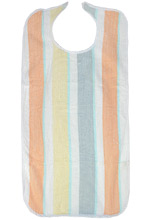
adult bib going gentle into that good nightA great aid to help keep clothing clean is an adult clothing protector.

These are primarily known as adult bibs. However, there is a dignity aspect to caregiving for our loved ones with dementias and Alzheimer’s Disease that is compromised with terms that are traditionally used in infant care. So I made it point with my own mom to not use the infant-related terms, but to use adult terms to refer to these helps and aids.

Therefore, throughout this post, I’ll give you the dignity term I used and ensure that you have the term used by suppliers of these items.

There are many different types of adult clothing protectors to choose from, but the most cost-effective (generally less than $6/clothing protector) and functional type is made with terry cloth and velcros around the neck in the back.

These adult clothing protectors are durable, machine-washable, and are easy to get on and off. My suggestion would be to purchase at least eight of them, so that you can also have a couple of clean ones on hand even when you are doing laundry.

A resource that has good quality and good prices on adult clothing protectors is Personal Touch Health Care Apparel.

Another issue that will, at some point, arise with our loved ones with dementias and Alzheimer’s Disease is incontinence (urinary, bowel, or both). Therefore, we’ll need to have an adequate stock of adult underwear (adult diapers) on hand at all times.

Not all adult underwear is created equal.

There are two types of adult underwear: tabbed and pull-up. The tabbed type of adult underwear is the preferred type for our loved ones who are bed-bound, because it makes changing the underwear easier.

If our loved ones with dementias and Alzheimer’s Disease are mobile to any degree, then the pull-up adult underwear is the best option.

Quality matters. Most of the brands of adult underwear available in stores like Walmart, Sam’s Club, Target, and Walgreens are not very high quality. They tear easily, usually don’t fit well, and often are not strong enough to handle any more than occasional incontinence problems.

Price matters. Buying adult underwear in bulk is the preferred method, since once our loved ones with dementias and Alzheimer’s Disease become incontinent, changes in underwear throughout the day (and, sometimes, at night) become frequent.

The brick-and-mortar retailers sell adult underwear in small quantities, so the cost of stocking up becomes financially prohibitive.

For quality, quantity, and price then, online companies are the best option for buying adult underwear for our loved ones with dementias and Alzheimer’s Disease.

Northshore Care Supply is the online company that I used to buy adult underwear from. They were excellent in price, quality, quantity, and short delivery times.

adult underwear going gentle into that good nightThe particular brand of adult underwear that worked best for us was Tranquility® Premium Pull-Ons (Overnight style). Because my mom began to experience urinary urge incontinence in her late 70’s and because she was on a daily dose of diuretics for congestive heart failure (which I had to increase temporarily when she had a 5-or-more pound weight gain in 24 hours, which meant fluid was collecting around her heart), this style and brand of adult underwear met all her needs.

It was not bulky and it was very comfortable for my mom to wear and neither of us had any complaints about them at all.

Other things that most likely will be needed in providing care for incontinence with our loved ones with dementias and Alzheimer’s Disease include disposal gloves, flushable cleansing wipes, rash cream, and protective pads for beds and cloth upholstery.

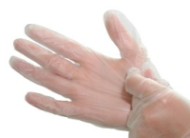
vinyl disposal glovesDisposable gloves should always be used when coming into contact with human waste. This helps protect both us as caregivers and our loved ones with dementias and Alzheimer’s Disease (I recommend keeping a small, plastic-lined covered trash can in the bathroom and emptying the trash can after each clean-up. This eliminates the possibility of contamination and keeps the bathroom clean and odor-free.) 

A 100-count box of disposal gloves (I recommend vinyl because they are both durable and the least expensive) is about the same price no matter where you purchase it, so there are plenty of options for buying them. However, I would recommend that you always have at least two boxes on hand.

flushable cleansing wipes going gentle into that good night

Flushable cleansing wipes can be purchased in bulk as well. Look for a brand that is for sensitive skin and that contains aloe. NorthShore Care Supply carries the Cottonelle brand in bulk and that is where I purchased mine. However, you can also check eBay (Amazon tends to be more expensive) for good pricing on bulk purchases as well.

At times, incontinence issues with our loved ones with dementias and Alzheimer’s Disease will lead to the development of rashes. This should be rare, because we as caregivers are responsible for keeping our loved ones changed and clean as adult rash creamoften as is necessary. However, because we’re dealing with aging skin and sensitive skin in our loved ones, rashes may develop from time to time.

The best rash product for adults that I found is Balmex Adult Care Rash Cream. It can be purchased either online or at stores like Walmart or Target.

The last item we’ll need to help our loved ones with dementias and Alzheimer’s Disease when they begin to experience incontinence is protective padding.

disposal-paddingIf our loved ones are bed-bound and immobile, then disposal protective pads for changing underwear and to protect bedding are the best option. I recommend a large size and the highest absorbency available, since these will be used overnight as well.

NorthShore Care Supply offers a lot of options for disposal protective pads, and they sell in bulk at very reasonable prices, so they are my recommendation for purchasing these.

If our loved ones with dementias and Alzheimer’s Disease, however, are mobile and dealing with incontinence, I suggest purchasing washable protective pads.

Although they cost more, because they are washable, they end up being a cost-efficient option. They are also more absorbent and they can be put on any surface (leather, cloth, bedding, etc.) to fully protect the surface.

washable protective pad going gentle into that good nightMy recommendation is to buy a medium-to-large size and to buy enough to cover surfaces that our loved ones will be sitting on (don’t forget vehicles) so that they don’t have to be moved each time our loved ones move.

In the next post, we’ll look at grooming and bathing assistance items that are helpful in caring for our loved ones with dementias and Alzheimer’s Disease.

Gratitude for Being Able to Care for Our Loved Ones with Dementias and Alzheimer’s Disease

gratitude care dementia Alzheimer's Disease loveChoosing to be the caregiver for our loved ones with dementias and Alzheimer’s Disease is a conscious, deliberate, and willing choice of sacrifice, selflessness, and, ultimately, love.

However, in the big scheme of things, this choice, this action on our parts is our acknowledgement that we are fulfilling the circle of life for parents – and, in some cases, grandparents – who made conscious, deliberate, and willing choices to make sacrifices in their own lives, to act selflessly, to love unconditionally when they brought us into their lives.

Like many of our loved ones become, if they live long enough with dementias and Alzheimer’s Disease, we were totally helpless, utterly dependent, and needed 24/7 care and attention, as well as love, soothing, and comfort.

There was no reticence, no holding back, no wavering in the commitment our loved ones made to us in those needy, weepy, sometimes trying, sometimes scary, sometimes exhausting beginning days, weeks, months, and years of our lives. 

thankfulness for being able to care for our loved onesInstead there was gratitude.

The sacrifices – and they made many, some deep and hard and of which we are totally unaware, sacrifices – along the way for us were worth whatever they were giving up.

The selflessness involved was never an issue because they loved us that much. It was always less about them than it was about us.

And that love was always unconditional. Even when we tried their patience without end. Even when we got into one thing after another, sometimes making little messes and sometimes making huge messes. Even when we unknowingly embarrassed them with unapologetic frequency in front of both strangers and friends. Even when we were, at best, a handful, and, at worst, out of control.

At the end of each day, we knew we were loved and that no matter what else happened, we always had a safe place in the world to count on, to come home to, to be comforted in.

Did they get tired? Yes.

Did they get frustrated? Yes.

Did they get angry? Yes.

Did they sometimes just want to throw their hands up in the air and say “Enough already?” You bet.

Did they handle everything with grace and perfection? Absolutely not.

Did they try? Absolutely.

Did they quit us, even when we had ripped the sleep out of their nights, the peace out of their formerly-tranquil lives, and the color out of their hair? No.

Why?

Because gratitude trumped all those temporary setbacks and disruptions. They saw us as gifts from God and they saw being able to love and care for us as an opportunity to thank God for the gifts He had given them.

And herein lies the reasons we should be thankful for the opportunity to take loving care of our loved ones with dementias and Alzheimer’s Disease.

Our loved ones have been and are gifts given to us by God. How best to show our gratitude to them and to our Creator than to love and care for our loved ones with dementias and Alzheimer’s Disease, as they did for us, when they need us most and depend on us most?

Caregiving is not easy. It is hard, demanding, and often thankless work that requires an unshakeable commitment to persevere in spite of obstacles, in spite of hurts, in spite of the numerous losses it will bring to our own lives.

Caregiving, then, is a gift that each of us has the opportunity and choice to accept or reject.

If we reject that gift, then we are rejecting an incredible opportunity to fully appreciate and to be eternally grateful for the sacrifices, the selflessness, the unconditional love that our loved ones and God Himself, through His Son, made, showed, and gave us, not because we asked for them, but simply because we mattered that much to them.

If we accept that gift, on the other hand, we are the beneficiaries in so many ways that far exceed the challenges we are also accepting.

With this gift, we become kinder people, gentler people, more empathetic people, more understanding people, more patient people, more long-suffering people, more merciful people, more self-controlled people, more humble people, and more loving people.

The gift of caregiving for our loved ones with dementias and Alzheimer’s Diseases also gives us the blessings of becoming more courageous, more comforting, more forgiving, stronger, more compassionate, and more sympathetic.

And finally the gift of caregiving increases our faith and our faithfulness: faithfulness to the commitments, physical and spiritual, that we make in our lives; and faith in God and His word and His promises that a time is coming when all things, including our loved ones with dementias and Alzheimer’s Disease as well as those of us who care for them with our limitations, our faults, our flaws, our mistakes, and our missteps, will be completely healed.

There is much to be grateful for as we love and care for our loved ones with dementias and Alzheimer’s Disease. I have not even scratched the surface of covering all the areas where we experience gratitude in this journey with our loved ones.

But my hope with this post is that each of us will think about and find the gratitude in our personal experiences that overshadows the pain, the sorrow, the losses, which temporarily sting and grieve us, but in the balance transform us in more mature and more thankful iterations of ourselves.


What a Long, Strange Trip It Is: Life, Death, and Memories in “Fields of Gold: A Love Story”

A post from my family memoir blog that belongs here as much as it belongs there.

The Layperson’s Guide to Home Health Care for Our Loved Ones with Dementias and Alzheimer’s Disease

Part of the caregiving team we will lead for our loved ones with dementias and Alzheimer’s Disease will – and should – include home health care, palliative care, and hospice. It is, therefore, important to understand what each of these services provides and under what circumstances.

Home health care is generally provided – if it is not offered, then we should request it as part of the discharge process – after our loved ones are hospitalized for an acute serious illness that is causing systemic problems (strokes, heart disease, hard-to-manage blood pressure, embolisms, and continuously low oxygen saturation levels are some examples of acute serious illnesses) or surgery that requires follow-up monitoring and wound care. 

What services are included in home health care?

Nurses, who function as case managers, will come to the home from one to three times a week (depending on the severity of need) to do a thorough examination of our loved ones, provide wound care (if applicable), and serve as the liaison with both the primary care provider for status updates and medication changes (if needed) and with other services included in home health care.

I strongly advise, especially for our loved ones with dementias and Alzheimer’s Disease, to request that the same nurse – if he or she is a good fit – do all the home visits to ensure continuity and to create comfort and trust for our loved ones. If the nurse is not a good fit, then we should request a change. Generally, it will be obvious on the first visit.

Physical therapy, occupational therapy and speech therapy are also services offered by home health care. At the very least, I would suggest taking advantage of physical therapy and occupational therapy. For our loved ones who have suffered strokes and are recovering, speech therapy should be included as well.

Hospitalizations always leave our loved ones weaker physically than they were before being admitted, because with acute illnesses and surgeries, they usually spend a lot of time lying in bed and are not as physically active. In the case of strokes, motor skills are usually severely affected on one side of the body, although in some cases both sides are affected (depending on where the stroke originated in the brain).

Physical therapy will begin in the hospital in some cases, such as with strokes or joint replacements, but most hospitalizations will not include this as part of treatment.

Therefore, it’s vital to our loved ones’ health to use the physical therapy services provided by home health care to regain strength and to keep them as mobile as possible for as long as possible. In the case of strokes, it’s imperative to continue physical therapy as part of the recovery at home.

Physical therapists will visit the home, on average, twice a week and will help us and our loved one with exercises and activities to do on a daily basis to continue strengthening and improving balance, mobility and motor skills. They will also order any mobility equipment – if we don’t have it already – such as walkers and wheelchairs, if needed.

Occupational therapy helps identify what physical adaptions of the home need to be made to make daily activities easier and safer for our loved ones. These include things like grip bars near the toilet for ease of getting up (or a sturdy raised toilet seat with bars – my preference), grip bars in the shower or tub to prevent falls, and transfer seats for the tub to make getting in and out easier. They can also identify safety hazards – for example, throw rugs are very hazardous for elderly and those using walkers – in the home.

Additionally, occupational therapists can help our loved ones with functionally-appropriate ways to do everyday things. While our loved ones with dementias and Alzheimer’s Disease generally find their own unique adaptive ways with our help, occupational therapists are critical in the recovery or maintenance of people who have suffered strokes.

home-health-careSpeech therapy can be helpful for people who have suffered strokes. In the case of our loved ones with dementias and Alzheimer’s Disease, in general, speech therapy is not a viable option.

The nurse (case manager) will contact these therapists as warranted and set up the initial consultation appointments. Each therapist will then set up his or her own visitation schedule.

If additional assistance is needed with daily activities such as bathing, most home health care agencies have home health aides who will come at least twice a week to help with with those activities.

One of the best features of home health care is our access to 24/7 medical support. As anyone who has been a caregiver knows, the need for medical advice and/or assistance often occurs at night and on weekends. Without home health care, the only option is to take our loved ones to a hospital emergency room (nights) or an urgent care facility (on weekends).

Many of the medical issues that occur are easily treatable at home, so having to get our loved ones to a medical facility where they often have to wait for a considerable amount of time to be seen, treated and released is very stressful and hard on them.

With the 24/7 medical support of home health care, we can easily assist our loved ones at home without creating unnecessary stress and discomfort for them.

Home health care services are covered by health insurance (if under age 65) or, if 65 or older, by Medicare Part A (80%) and Part B Supplemental Insurance (20%) and should not incur any out-of-pocket costs for our loved ones with dementias and Alzheimer’s Disease.

We should be aware that most hospitals partner with a particular home health care agency in the area (most of the corporations that own hospitals have a home health care agency as a business unit in their corporate structure), but we should research – the best (and worst) referrals come from other people who’ve used an agency’s service – all the home health care agencies in the area we live in and choose the one that best suits the needs of our loved ones with dementias and Alzheimer’s Disease.

All home health care agencies are not created equal. Some provide excellent care and service and some do not.

When our loved ones are discharged from the hospital, a discharge coordinator will be involved and he or she will initiate our request for home health care (again, they will not always offer it, but we should always request it). If we don’t have a preference, he or she will use the home health care agency the hospital partners with. If we do have a preference, we should state that. Then he or she will contact that home health care agency to provide follow-up care in the home.

It’s important to be aware as well that we have the right to fire a home health care agency and, going through our loved ones’ primary care providers, get a referral to another home health care agency that we choose.

We should not and do not have to accept poor or inadequate care for our loved ones, nor do we have to accept a situation where the attitude of the staff is poor or indifferent and where the staff does not treat our loved ones with respect, kindness, dignity, and gentleness.

If the home health care agency providing care for our loved ones with dementias and Alzheimer’s Disease is not satisfactory, for whatever reason, then today is the day to make the change to another home health care agency. We owe our loved ones the best, the most professional, and the most respectful medical care available. Never settle for anything less than that.

In the next post, we’ll look at the option of palliative care and when it is used and what services it offers.


Promotional Video for “You Oughta Know: Acknowledging, Recognizing, and Responding to the Steps in the Journey Through Dementias and Alzheimer’s Disease”

The promotional video for You Oughta Know: Acknowledging, Recognizing, and Responding to the Steps in the Journey Through Dementias and Alzheimer’s Disease (published in April 2014) gives the background of why I wrote this book and gives a brief summary of each of the chapters in the book.

As someone who experienced this journey first-hand with my mom and who, since her death, has been actively involved in providing support, counseling, and information, as well as just listening, to many people who are on this journey themselves or with loved ones, I discovered the need for a book like this.

It’s personal. It’s accessible. And it’s practical. There is no other book on the market like it.

If you don’t read another book on dementias and Alzheimer’s Disease, you should read You Oughta Know: Acknowledging, Recognizing, and Responding to the Steps in the Journey Through Dementias and Alzheimer’s Disease (available on Amazon in both paperback and Kindle versions). It will be an invaluable resource that will help you and your loved ones tremendously as you walk the steps of this journey together.