Tag Archive | Lewy Body dementia

The Power of Music: Soothing, Calming and Connecting with Our Loved Ones with Alzheimer’s Disease and Dementias

“And so it was, whenever the spirit from God was upon Saul, that David would take a harp and play it with his hand. Then Saul would become refreshed and well, and the distressing spirit would depart from him.”
I Samuel 16:23 (NKJV)

Music universally touches the soul. There is abundant evidence of how effectively music calms, soothes, and relieves the frustration and anxiety of those loved ones among us who, because of neurology and/or biology, are unable to always fully verbalize their needs and responses to our desire to meet them.

We grew up in home filled with music. Although neither of my parents was a musician – and they had only a 33% success rate of their children becoming musicians – they loved music. They had an eclectic and surprising, at times, range of tastes and genres. So from our earliest memories, music became the a mainstay of our lives.

My mom was the musical adventurer in our family, embracing and exposing us kids to a rich landscape that remains for us even though Mom and Dad are gone. I think I was the inheritor of Mom’s legacy, though, because my musical journey has always looked and looks much like hers in its breadth and diversity.

I will never forget a little road trip that Mom and I took just after U2’s The Joshua Tree was released. I loved U2’s 1983 album, War, but had been disappointed with everything before and after that until the release of The Joshua Tree. I was playing it and Mom asked me to turn it up.

I turned it up loudly enough so that she could hear the music and the words – and handed her the liner notes so she could read the lyrics – and as she listened and read, she smiled and said “I like this. It reminds me of the music I heard growing up.”

As I thought about it, I realized she was right about the striking similarity in tone and content between The Joshua Tree and the Depression-era music she’d grown up with that juxtaposed the discouragement with the harsh reality of life then with the hope and optimism of faith and belief in God and I understood that we both appreciated the album for the same reasons in different time periods.

One of her favorite tracks was “In God’s Country:”

As Mom’s vascular dementia, Lewy Body dementia and Alzheimer’s Disease progressed, I turned back to music for her to calm her, to comfort her, and to bring back happier times and memories of her life. And, as Mom took her last journey out of this life, I also turned to the same music for the same reasons.

(Ironically, so far, it is really hard for me to listen to all of Mom’s music yet without a lot of sorrow except in small bits and pieces here and there where I don’t have the opportunity to linger over it and have the flood of memories of our life through the years come over me like a tsunami wave.)

With technology, building a customized musical library for our loved ones suffering from Alzheimer’s Disease and dementias have never been easier. I will list a few low-cost and free options for building these databases for playback at any time.

spotify music application for PC and tabletsSpotify has one of the largest musical databases around and is an excellent choice. An unlimited subscription is only $4.99 a month and provides unlimited play time with no commercials (the free version gives you 10 hours of playback a month with a lot of commercials). The “shuffle” feature works well with mixing the music up and making each playback unique.

While Mom was alive, I had the unlimited subscription. I created several playlists for her that we listened to a quite a bit during the last year of her life. A lot of times I’d play them softly during her naps, which became more frequent and lengthy during the year.

But when she was awake, we’d talk about the music and occasionally, we’d sing along if we both knew the words or I would sing to her and she’d smile watching and listening to me.

If you’d rather build your own musical database, the easiest way is to convert YouTube videos to MP3 files and download them to your computer (I’d suggest storing them in your Music folder in the respective folders you’ll need to create for different types of music or artists to keep them organized and easily accessible), where they can be played back with Windows Media Player.

The steps to do this are fairly simple:

  1. Copy the YouTube video link you want to convert to an MP3 file
  2. Go to listentoyoutube.com and paste the link
    listentoyoutube-graphic
  3. Follow the directions for downloading the converted file
  4. Double-click on the file to play it in Windows Media Player

Once you’ve got Windows Media Player open, you can create playlists there and drag the MP3 files from your Music folders into each playlist. Then the next time you want to listen to a playlist, simply open Windows Media Player and click on the playlist. Windows Media Player also has a shuffle feature, which I would suggest using just to keep the order fresh and different each time a playlist is played.

So, if we haven’t already tried music as a comforting and soothing part of caring for our loved ones with Alzheimer’s Disease and dementias, then we need to implement it today. The benefits are not just to those we love because this is a wonderful way to connect and spend time together and intersperse some happy memories for us to carry with us when our loved ones are gone.

Guide to In-Home Medical Care Options for Our Loved Ones Suffering from Alzheimer’s Disease and Dementias

This post discusses home health care, palliative care, and hospice care options. Included in the video below are descriptions of each of these options and recommendations and advice, from my personal experience as a loving caregiver for my mom, about each one.

To begin the video, simply click on the “Play” arrow and the video will play (there is no sound).

Please continue to give me feedback on topics you’d like to see discussed here. This is our blog and, while I’ve got content that I’ve prepared and am preparing, I would also like to address any topics, concerns, and questions you have about providing loving caregiving to our loved ones with Alzheimer’s Disease and dementias. 

Same Day-Different Name

Excellent post on the benefits of being a caregiver. I know I’m thankful for the opportunity I had to be Mama’s primary caregiver and I’m grateful for the time we had together. I learned a lot of valuable lessons and I learned a lot about myself in ways that would have been impossible in any other situation.

It was a gift from her to me, although neither of us realized it at the time. The day is coming when we’ll both be able to look back and I’ll be able to thank her. Soon I hope.

Ray Burow's avatarNavigating Alzheimer's Disease

“For everything there is a season.” From the book of Ecclesiastes, there is “…a time for every activity under heaven“. This is true, but for caregivers, time seems to stand still. Day after day, month after month, season after season nothing much changes. Our lives seem to drift slowly away, dissipating with the time we spend caring for those we love. The tasks are heavy and each twenty-four hours is, the same day with a different name. Our experience is similar to those of actor Bill Murray’s character in the movie, “Groundhog Day”?  Murray was doomed to live the same predictable day, over and over again until he got it right. He was stuck for days in the same town, doing the same thing day after, livelong day. It made for a humorous movie, but for caregivers of Alzheimer’s patients, perpetual, predictable days are the norm…

View original post 456 more words

Sundowning and the Sleep Conundrum of Dementias and Alzheimer’s Disease

Today’s post will discuss how dementias and Alzheimer’s Disease affect circadian rhythms and sleep, as well as some tips to help manage sleep disruptions effectively.

There are a lot of factors that make up our sleep behavior. I first want to discuss the biology of sleep and how, even if there are no other sleep disorders, dementias and Alzheimer’s Disease disrupt the biological sleep cycle.

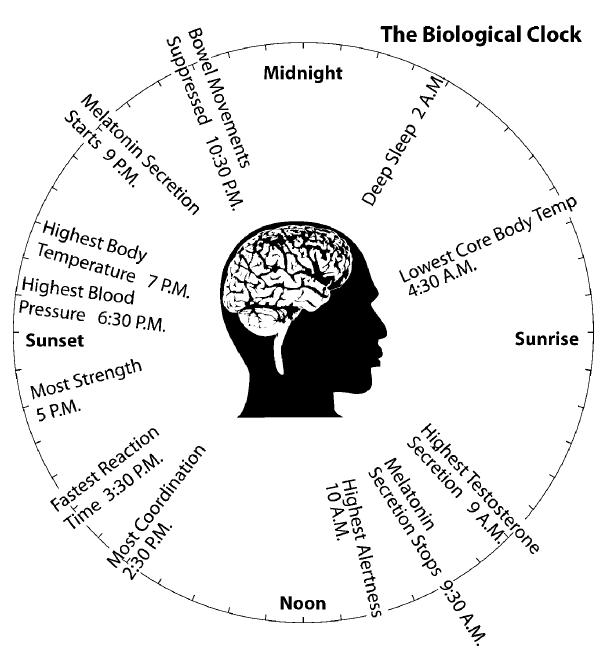
Normal Circadian RhythmHumans have an internal 24-hour clock that is synchronized with daytime and nighttime (light has a profound impact on this clock). This clock is referred to as our circadian rhythm.

As people age, this clock changes so that they normally tend to go to sleep earlier and wake up earlier. Sleep disorders like insomnia and sleep apnea are more common in older people as well. But their circadian rhythms are still primarily based on light (the more light, the more wakefulness; the less light, the more sleepiness) and time of day.

However, in our loved ones suffering from dementias and Alzheimer’s Disease, circadian rhythms go out the window because the diseases impair the brain’s ability to tell time and to distinguish between light and dark as indicators of when to sleep and when to awaken. It is sometimes helpful, in the early stages, to get a 24-hour clock to help our loved ones distinguish between A.M. hours and P.M. hours, but eventually that will be a casualty of the diseases.

The most common circadian rhythm disorder associated with dementias and Alzheimer’s Disease is a phenomenon known as “sundowning.” It occurs in the late afternoon and early evening.

It is characterized by speech and behavior repetition, constant pacing , excessive restlessness, wandering, disorientation to time and place, and agitation or aggression towards others.

Wandering is especially dangerous because if our loved ones get outside, they can walk long distances with limited vision because of the sun going down, sometimes on crowded roadways, and are susceptible to being the victims of crime and vehicular death.

One probable cause of sundowning is that there is damage to the part ofSleep/Wake Patterns Circadian Rhythm the brain that produces melatonin (the sleep hormone) and the reduced production causes an irregular sleep-wake rhythm

Another theory on the cause of sundowning is related to the energy levels of our loved ones with dementias and Alzheimer’s Disease . At the end of the day they are likely tired from the day’s activities.

This can aggravate the symptoms of the diseases, making them more anxious and stressed. Before the onset of these diseases, this time of day would have typically been the busiest for them. They would be getting home from work, getting ready for dinner, doing household chores, and going to bed. Now that they’re unable to do those things, they have little to do at a time that was the busiest of the day for them.

The most common sleep disorder that occurs with dementias and Alzheimer’s Disease is an irregular sleep-wake rhythm. You can see in the graph above how disruptive this rhythm is and why our loved ones with dementias and Alzheimer’s can be so tired, in general, all the time.

However, I believe the most damaging effect of this sleep pattern is that it actually prevents the restorative/repair functions that occur during a normal sleep rhythm, which exacerbates the neurological damage that dementias and Alzheimer’s Disease do to the brain. In short, this sleep pattern makes the diseases worse.

The most effective – and safe – way to try to minimize an irregular sleep-wake rhythm is to add melatonin to nighttime medications. As I’ve said before, up to 12 mg of melatonin is considered safe, but start with a low dose (3 mg or 5 mg) and give it time to see if that gives our loved ones more continuous and restful sleep. The goal is to keep them asleep at night and keep them awake during the day. Too much melatonin can have them sleeping all the time.

I would also suggest keeping our loved ones active and busy – as they are able – during the day (I will talk more about this in another post, but will briefly touch on it here). Up until the last week and a half of my mom’s life, when she’d had the major heart attack and just couldn’t do much with me, I had her help me with the household chores that she could like making the bed, folding laundry, preparing meals, and helping me with the dishes.

I didn’t care whether it was perfect or not (initially a big challenge to my normal OCD about those kinds of things), but I found that the more she did, the better she felt and the better she slept.

There is a sleep disorder that is specific to Lewy Body dementia and is one of the primary symptoms of that form of dementia. It is called R.E.M. sleep behavior disorder.

R.E.M. sleep behavior disorder is impossible to miss. Anytime a sufferer is asleep, they are in motion acting out their dreams and, at least in my mom’s case, having sometimes understandable and sometimes not in-depth conversations. It is also characterized by “picking” at clothing or bedclothes while asleep.

On the one hand, at least for me, it was quite fascinating to watch Mom dream and act out her dreams. Apparently – and I’ve seen this with other Lewy Body dementia sufferers, so it must be common for all of us to dream about – she dreamed quite often about food, because she’d often make the motion of either eating with a utensil or with her hands to her mouth. That was usually when she was napping during the day. 

Most of her conversations occurred at night, although occasionally she’d say a line or two during a daytime nap. And they’d last all night sometimes.

Her nightime dreams also included a lot of moving around and possibly a version of restless legs syndrome (not uncommon for R.E.M. sleep behavior disorder).

While I know this had a detrimental effect on her quality of sleep, it was disruptive for me too. I have always been a light sleeper and have had my own issues all my life with not sleeping much (and sometimes not sleeping at all for a day or two) and not getting quality sleep (waking up a lot or being wide awake in the early morning hours and not being able to go back to sleep for an hour or two). With Mom talking and moving around all night, it made sleep that much more difficult for me.

An increase in melatonin helped with this as well. I bumped her up to 7 mg each night (she was at 5 mg before) and it was just enough to keep most of the symptoms at bay. There were still some nights when it was noticeable, but the worst of the symptoms seemed to be alleviated. And because she slept better, she felt better and did better during the daytime.

I hope this brief overview helps. If you have any questions or any topics you would like to see discussed here, leave me a comment or email me at goinggentleintothatgoodnight.com. If I don’t know the answer, I’ll do my best to try to find it.

You’re not alone and my intent and goal is to keep reminding you of that and help you as much as I am able.

“Fields of Gold: A Love Story” Published and Available for Purchase

My memoir about my parents – who were both orphaned at very young ages – and their life together, which included adopting my sisters and me, and then Mama’s journey to the end last August, Fields of Gold: A Love Story, has been published and is now available for purchase.

Watch the publication announcement video to put some faces with the posts I write here, including that of my beautiful Mama.

I wrote this memoir in about six weeks just after Mama died, first to preserve our family stories for my sisters and me and her grandchildren, but then it evolved into a full-length book that chronicled our lives from beginning to end – at least for my parents – and I hope will live on as a tribute to their legacy and a reminder to each of us of the legacy we are now responsible for carrying on and passing on to the next generations.

The Layperson’s Guide to Medications and Vitamins Relating to Dementias and Alzheimer’s Disease

This post will be a comprehensive list – in one place – of the prescription medications and vitamins that may be prescribed for our loved ones suffering from dementias and Alzheimer’s Disease.

My main purpose in doing this is so that caregivers, as medical advocates for our loved ones, have the information needed about the common medications and vitamins used to treat the symptoms of these diseases. 

Currently there is a lot of information on the internet about these, but it’s so scattered and oftentimes so clinically-written that it’s impossible to pull it all together and make wise decisions as to accepting or rejecting medication proposals from primary care physicians and psychiatrists.

And the preceding paragraph has some information caregivers need to know, exercise, and require for their loved ones.

First, both a primary care physician and a psychiatrist need to be involved in medical care for our loved ones. One of the first requests that should be made to the primary care physician after a dementias and/or Alzheimer Disease diagnoses should be a referral to a geriatric psychiatrist.

The reason caregivers need to do this is because geriatric psychiatrists specialize in treating elderly patients and they also have access to the latest research in the treatment of the symptoms of dementias and Alzheimer’s Disease.

Primary care physicians are not specialists. This includes internists. They know a little bit about a lot of things, which is exactly what they were trained for (and that’s not a bad thing), but they don’t have the time nor the resources to be experts in any one thing.

Therefore, a geriatric psychiatrist is an absolute necessity to ensure our loved ones get the best care possible to treat the symptoms of these diseases.

Second, you have the right to refuse medication. For example, one of the medications that Mom’s primary care physician wanted to give her as the Lewy Body dementia symptoms worsened was Abilify. No doubt you’ve all seen the commercials touting Abilify as a “booster” for use with anti-depressants to relieve chronic depression.

This is an “off-label” use of the drug. So is prescribing it for our loved ones with dementias and Alzheimer’s Disease (a lot of the mood and psychosis-managing drugs prescribed for people suffering from dementias and Alzheimer’s Disease are “off-label” uses of those drugs).

I did the homework on it before I filled the prescription. Ability was created to treat schizophrenia. That would have probably been okay, but then I saw the warning that “ABILIFY (aripiprazole) is not approved for the treatment of people with dementia-related psychosis.”

In addition, by then I knew Mom also had Lewy Body dementia in addition to vascular dementia and Alzheimer’s Disease and I knew about the increased neuroleptic sensitivity associated with Lewy Body dementia, so I didn’t fill the prescription.

Prescriptions Dementia Alzheimer's DiseaseThe first category of prescription medications is the cognitive enhancers. These drugs are designed to maintain mental health and may improve memory, awareness and the ability of our loved ones to go about their daily activities by boosting the function of existing neurotransmitters involved in memory and judgment in the brain. They will not reverse nor stop the neurological course of the diseases. They are:

  • Aricept – Approved for all stages of dementias and Alzheimer’s Disease, but most effective in mild to moderate stages
  • Razadyne – Mild to moderate stages of dementias and Alzheimer’s Disease
  • Excelon – Mild to moderate stages of dementias and Alzheimer’s Disease
  • Namenda – Moderate to severe stages of dementias and Alzheimer’s Disease

The second category of prescription medications treats the mood and psychosis symptoms of dementias and Alzheimer’s Disease.

These medications need to be closely monitored and carefully dosed.

The optimal result of these medications is mood stabilization and no psychosis. If your loved ones are “knocked out” by this category of medications, the doses are too high. If your loved ones are “out of control,” the doses are too low. This is another reason you want a psychiatrist involved.

There are many possible combinations of this category of drugs. All the anti-psychotic drugs have possible side effects and extreme caution should be exercised, because of the high sensitivity to neuroleptics,  in using these with our loved ones with Lewy Body dementia. Some of the most commonly-used medications are:

  • SeroquelXR – anti-psychotic (possible side effects of neuroleptic sensitivity and tardive dyskinesia in Lewy Body dementia)
  • Citalopram – anti-depressant
  • Clonazepam – anti-anxiety

Anti-anxiety medications seem to be the most frequently mismanaged in this category of drugs. My advice is to advocate with our loved ones’ psychiatrists for low dosages and have them prescribe it to be taken as-needed instead of as part of the daily medication regimen.

The medication, Halcyon, by the way, should be avoided at all costs in people suffering from dementias and Alzheimer’s Disease. It really wreaks havoc and it has a very long half-life! The most likely place this would be given is during hospitalizations, so be sure to let all the hospital staff you come in contact with know that our loved ones should not be given Halcyon for anxiety and/or sleep.

vitamins for dementia and Alzheimer's DiseaseVitamin supplements may be added to address some of the functioning difficulties brought on by dementias and Alzheimer’s Disease. In my personal experience, I really don’t believe they’re all that effective after the fact of diagnosis. However, we all should make sure we have plenty of this in our own diets now to protect ourselves.

The most common are:

  • Folic acid – helps memory and mental processing speed
  • Vitamin D3 – protects the brain by controlling neurotransmitters and clearing amyloid plaques (found in Alzheimer’s Disease)
  • Vitamin C – protects cells from the effects of free radicals
  • Melatonin – facilitates sleep

Please be careful to work with your loved one’s primary care physician on vitamin supplementation. In many instances, these brain diseases are not the only health issues our loved ones are dealing with and some of the vitamins that might address dementia and Alzheimer’s Disease symptoms could negatively interact with other prescription medication for other health problems.

Our job as loving caregivers is to give the best care we are able to our loved ones, advocating for them, protecting them, making sure that everything that is being done is in their best interests.

We are there because we love them.

All the other participants in the caregiving journey are there for other reasons and those reasons may, intentionally or unintentionally, not consider what is best for our loved ones.

So it’s our job to make sure that we are the gatekeepers to the best care we are able to provide for the people we love. It’s a big responsibility, but, in my opinion, there is no greater gift we can give or be given in this life than to do this.

The Layperson’s Guide to Lewy Body Dementia

Today’s post will discuss Lewy Body dementia: what it is, some of the hallmark features of it, and medications that can help, unless there are severe side effects, and some alternatives to deal with those cases in which the most-often prescribed medications may not work.

Lewy Body dementia is diagnosed during life by its symptoms. The only way to Lewy Body Proteinconfirm it medically is by doing an autopsy on the brain after death. However, the symptoms are obvious enough that it can easily be diagnosed while our loved ones are alive.

This history of  discovering the source of Lewy Body dementia began with Frederick Lewy in 1912. While doing autopsies on the brains of people who’d been diagnosed with Parkinson’s Disease (Lewy Body dementia and Parkinson’s Disease share many motor systems characteristics), Lewy discovered tiny – and abnormal – protein deposits in deteriorating nerve cells of the mid-brain. These proteins became known as Lewy Bodies. Their presence in the mid-brain always leads to a diagnosis of Parkinson’s Disease.

It wasn’t until fifty-plus years later that scientific researchers discovered these same abnormal protein deposits in the cortex (the “gray matter”) region of the brain in patients who had suffered from dementia.

Someone with Lewy Body dementia will have these abnormal protein deposits in both the mid-brain and the cortex. 

The symptoms that differentiate Lewy Body dementia from Parkinson’s Disease are:

  • Vivid and recurring hallucinations and delusions early on when the inkling that something’s going wrong starts.
  • REM sleep behavior disorder
  • Mild to moderate motor skills impairment, most notably with balance, muscle stiffness, and the tendency to fall frequently. A shuffling gait when walking is usually noticeable as the disease progresses.
  • Strong and dramatic fluctuations in cognitive function and alertness.

With my mom, although Lewy Body dementia wasn’t officially diagnosed (I did the research on what I was seeing and realized that’s what it was) until near the end of her life, all three of these symptoms were present early on when I realized something was wrong. She had progressively-worse balance problems the last six years of her life, with those becoming a front-and-center issue in 2010 when she began falling a lot.

Her hallucinations and delusions became a centerpiece issue in 2010 as well. There were also some fluctuations in her cognitive function in 2010, but the strong and dramatic fluctuations in both cognitive function and alertness did not begin until December of 2011. Even then, they were sporadic, but fairly quickly became more of a mainstay until her death in August 2012.

One the medications that she was given during her psychiatric hospitalization in 2010 was SeroquelXR.

This is one of the drugs you’ll have to make a judgment call on, since there are risks and potentially dangerous side effects to use this medication for an “off-label” use in treating the symptoms of dementias and Alzheimer’s Disease.

SeroquelXR is an anti-psychotic (neuroleptic) medication specifically developed for bipolar disorder. It carries a warning that it is not be used in elderly patients with dementia. Additionally, among our loved ones suffering from Lewy Body dementia, about 50% have adverse reactions to neuroleptic medications.

However, for Mom, it worked very well for about sixteen months in controlling the hallucinations and the delusions. In late November 2011, Mom woke up one morning and her whole body was uncontrollably, but rhythmically spasming. She wasn’t in any pain, but she was scared, so I had EMS get her to the emergency room so we could find out what was going on. What she experienced was late-stage neuroleptic-induced tardive dyskinesia.

The SeroquelXR was the culprit, so the neurologist discontinued that during her hospital stay and the spasms stopped within a few days. I was concerned about the mood aspect of not having the SeroquelXR, so the neurologist and Mom and I discussed options, since she was on anti-anxiety medication already.

The best and most workable solution was Depakote, a medication typically prescribed for epilepsy sufferers. It would work on both mood and spasms, but the neurologist said the hallucinations and delusions were going to come back.

And within a month, they did, but they were not scary to Mom and they were always a surprise to me, even though I expected them, but not unpleasant and not unmanageable.

But I came to realize that the SeroquelXR had effectively controlled a lot of the Lewy Body dementia symptoms the longer that Mom was off of it, because after the SeroquelXR was discontinued, the Lewy Body dementia symptoms gradually increased and worsened.

So SeroquexXR can be very effective in treating the symptoms as long as our loved ones can tolerate it and don’t have the kind of problems Mom experienced with tardive dyskinesia.

And that is an important point to make. A lot of this becomes a judgment call on our part as advocates and caregivers for our loved ones. If I knew back in 2010 (I wasn’t involved in the prescription part when Mom was critical and hospitalized) what I know now about SeroquelXR, I would have agreed to it. Because for sixteen months, it gave Mom a pretty decent quality of life in the dementias and Alzheimer’s Disease realm.

There is no known cause for Lewy Body protein deposits occurring in the mid-brain and cortical regions of the brain, so there’s nothing health-wise or lifestyle-wise that can be done to prevent it.

But, if we can understand what it looks like, then we can help keep our loved ones more comfortable and safe and perhaps keep ourselves a little saner and a little calmer. The more we know, the better we can love and serve them.

I’ll end this post with a progressive-over-time brain scan image of Lewy Body dementia (the source is http://www.neurology.org/). A picture sometimes is worth one thousand words, especially when I consider the fact that my mom had vascular dementia, Lewy Body dementia, and Alzheimer’s Disease and this picture shows the damage to the brain from just one of those three diseases. What an uphill battle her last few years were and she fought it bravely and well right up to the end.

Progression of Lewy Body Dementia

You Will Never Be the Same Again

Caring for a loved one with dementias and Alzheimer’s Disease changes us. This, I believe, is one of the most unrecognized aspects of going through the journey of these diseases with loved ones.

I know with my mom, who had vascular dementia, Lewy Body dementia, and Alzheimer’s Disease as well as suffering from congestive heart failure, I changed throughout the course of our journey together, perhaps as much or more, in different ways, as she did. 

And now that she’s gone, it’s difficult for me to imagine that person that I was before all this started. That person in that configuration is gone. In some ways, that’s good, because that previous iteration of me had some flaws that needed mending, ideas that needed changing, and attitudes that needed correction.

In other ways, though, it’s challenging. Caregiving is a 24/7 job, especially as the diseases progress and the changes become more rapid and more intense, requiring every bit of time, effort, and diligence on our parts to ensure our loved ones are safe and comfortable.

Because of the nature of dementias and Alzheimer’s Disease, this is a long, extended high-alert, always-alert, always-ready position for caregivers. It becomes who we are and it reflects the tenor of our lives.

And then one day, it suddenly stops. Adjusting to that abrupt and radical change is, in my opinion, of all the things caregivers do in the course of taking care of loved ones, the hardest part.

I think of it as being in a car going from 120 mph to a dead stop within the time it takes to snap your finger. In some ways, it’s like the aftermath of a high-impact car crash that you walk away from.

I have learned, though, that unless you’ve walked in the shoes of caregiving day in and day out for someone you love with dementias and/or Alzheimer’s Disease, it’s very hard to relate to what the now-defunct caregiver is going through in this post-caregiving phase. It’s not that other people don’t want to understand. It’s just that they can’t really if they haven’t been through it.

There is a tremendous sense of being lost. Because loving caregiving requires such a high investment all the way around, when that ends, there’s a sense of purpose, usefulness, and worth that ends with it.

There’s a sense of wandering around aimlessly while the rest of the world around you is going on as it always has. There is a sense of not belonging anywhere, to any time, or any place. It seems like no matter what you do after that, it’s meaningless, compared to what you were able to give your loved one.

My guess is that will be something we carry somewhere inside us the rest of our lives. It’s just part of the change.

Another change will be that you’re more observant and helpful, especially around elderly folks. Not long ago, I volunteered to help during a cookout at a rehabilitation hospital. One of the things I was doing was helping people to the tables, some of which were on concrete and some of which were on grass.

There was an elderly woman with a walker who clearly had balance issues, and although there were staff members around, no one seemed to realize that as she was walking on the sidewalk toward a table in the grass, she was precariously close to the curb and all it would have taken is just a second for her to have lost her balance, fallen and hurt herself. Visions of Mom flashed in my brain and I ran over to help make sure she got where she was going safely.

Greater compassion toward and protectiveness of those who are vulnerable, as our loved ones suffering from dementias and Alzheimer’s Disease are, will be another change that occurs.

A friend of mine who works as a beautician in a senior care facility wrote on FacebookChange the other day about getting cursed out by an 88-year-old woman who didn’t want the shampoo rinsed out of her hair.

Almost immediately, the insensitive and disrespectful comments started. One person said that she would have sprayed the elderly lady in the face if she had cursed at her.

I got very angry. That could have been my mama they were talking about. I sent a private message to my friend explaining that the lady probably had some form of dementia and/or Alzheimer’s Disease and didn’t even know what she was doing and would have probably, given her age, never done that in her right mind. 

And the biggest change will be that your life will never be the same. You will never look at anything the way you looked at it before you embarked on the caregiving journey with your loved one. At a core level, you’ve changed.

And your biggest challenge will be figuring out what to do with that to go forward, to make the experience count, not just for your loved one, but everyone else, in whatever small way you can, that your life intersects with until the day that you draw your last breath.

And you’ll find it’s a very solitary, lonely journey. But like all the journeys you’ve been on up until now, it’s a necessary one. It will take a lot of patience and gentleness with yourself. It will take time. Most of it will be arduous.

But the most important thing I can pass on to you is not to quit and keep putting one foot in front of the other, even if for long stretches it seems you’re walking in place. Sooner or later, as long as you’re moving, eventually it will be in forward motion.