Tag Archive | love

Where are you? stings more now

Early on in Mama’s dementias and Alzheimer’s Disease – as I was grappling with understanding and accepting what was happening to her mind – it occurred to me that all humans go through an initial incline, a longer period of plateau, and then a final decline.

The decline mimics childhood in reverse, until if we live long enough we end up being like a newborn, totally helpless, totally dependent, unable to express ourselves except through the most primal language we humans have: laughter and tears.

I always told Mama that I’d do everything possible to make sure her second childhood was better than her first one. I did my best, making mistakes along the way (just like there are no instruction manuals for the day-in, day-out parenting of a child, there are no instruction manuals for becoming a parent to your parent, so you learn as you go), but assured that the one place I did not fail Mama was in making sure she knew she was loved, she was wanted, and I wasn’t going to leave her.

My hope is that in our simultaneous and shared journey of her taking two steps back and one step up and me taking two steps up and one step back that, in the end, my love, my care, my concern, my devotion, and my commitment was enough to make up for all the things I didn’t know, didn’t understand, and sometimes screwed up because of my own ignorance and ineptness.

This is not a journey for the faint-hearted. Once committed, even though no one ever really knows what they’re getting into, it requires a lot of tenacity and a lot of prayer. But it also requires unconditional love, abundant mercy, infinite patience, persistent gentleness, and unfailing kindness.

These are the life and character lessons parents learn from raising their kids. For those of us fortunate enough to complete the circle of life for our parents as they go gentle into that good night, we get the opportunity to learn these same life and character lessons.

It is a priceless gift and one I’m thankful to have received.

Kay H. Bransford's avatarDealing with Dementia

spiralstair A year a half ago, I posted an article entitled “Where are you?”  — and I’m still feeling the same guilt — only magnified. At least the last time I went through this stage and wrote about it (it is a recurring issue) my Dad was there with my Mom. Now I know my Mom is by herself. I also know based on my visits and from the staff reports that she is not doing very well in the community.

I get a call two hours after I visited asking me where I am and when I will be arriving and there is something frenetic in her tone.

She will go through these cycles. I imagine her decline is much like a child’s development, but in reverse. When my son was 4, someone shared that kids develop in an upward spiral — two steps forward, one step back. In my…

View original post 267 more words

Beauty in the Breakdown – You Sure?

This resonated deeply with me. Music is such a powerful force in our lives. Since Mama died, there is much music that we shared throughout our time together that I simply can’t listen to without tears flooding my eyes as memories run their movies, crisp, clear, and vivid through my mind.

Unlike Kay, I’m not a big fan of techno-pop, preferring alternative, indie, and grunge, but I listen mainly to Radio Paradise, an internet music station that plays the most diverse range of music that I’ve been able to find, and they have played “Beauty in the Breakdown” by Frou Frou.

Ironically, it caught my attention the first time I heard it as well. I immediately saw the double meaning in my own life.

Mama’s breakdown. There was no beauty to that to be sure. However, there were beautiful moments throughout the journey. Two are prominent in my mind, when in the middle of all the chaos, confusion, and pain, Mama was delightfully Mama again. I’ve never been able to explain the timing, however, because both were just before big changes. One was the Saturday morning before Mama’s breakdown several hours later and the other was the Saturday and Sunday morning before Mama went into her death sleep in the early hours of that Sunday afternoon.

My own breakdown after Mama’s death. Beauty? It certainly doesn’t seem to be true on the surface.

I’ve never been a visibly emotional person. I worked hard, diligently, painstakingly at “controlling” my emotions all my life. I have always been very deeply affected by things and people and situations, but I found ways to keep a tight lid on that so it never showed and built fortresses around myself to protect myself.

Those fortresses began to crack after Daddy died. I never knew how deeply, how long, and how hard grief could be. I also never knew that the hole left in a heart from losing someone you love never heals completely. But I had Mama to take care of so it helped me move on quickly, burying, I think, much of what I was trying to come to grips with, and get back to the business at hand. She needed me, and that was more important.

But when Mama died, the very foundations of those fortresses seemed to have collapsed. It seems that every emotion I suppressed, hid, buried, ignored decided it was time to deal with it. All at once. In an overwhelming flood that has been difficult, to say the least, to try to sort through, make sense of, and get past.

These days, it seems I can barely speak a sentence without my voice cracking and tears welling up in my eyes. It seems as though everything is right beneath the surface waiting to just spill out without warning. I have cried rivers of tears and yet there seems to be no end to how many rivers are left. I keep thinking at some point there just can’t be any more tears, and then they come again.

But although right now I seem to be drowning in this ocean of tears, I recognize the beauty in it. Because there is some healing in the process. I’ve learned that sometimes to fix something that’s not working right or well, you have to take it completely apart, and put it back together the right way, piece by piece. And that takes time.

And, like Kay, I do recognize this about myself: “I recognize that I’m a much kinder, gentler version of my former self. For that I’m grateful.”

Kay H. Bransford's avatarDealing with Dementia

letgo Music uplifts my mood. It helps me focus and makes me happy. I will typically be listening to techno-pop — it’s better than caffeine if I want a pick-me-up.

I first heard Let Go by Frou Frou when watching Garden State (I thought it was on at the closing of an episode of Gray’s Anatomy — a show I never really watched, but Internet sources won’t validate my recollective memory on that point). It’s been in my head, but never on my iPod, so I finally downloaded it last week. I like the tune and the focus on “letting go and jumping in.”

However, today this song brought me to tears as the words hit me very differently. For a few weeks I’ve noticed a decline in my Mom. When I arrive at her community she is in the living room playing bridge with a new group of residents. Now…

View original post 362 more words

If You Needed Help, Does Anyone Have What They Need From You to Step Up to the Plate?

Kay Bransford and I seem to be on the same page a lot these days, but I see that we seem to be the only ones willing to tackle these subjects, so I guess we will keep sounding the drums that all of us need to be preparing in advance for the possibility that something – whether it’s Alzheimer’s Disease, dementias, other life-threatening illnesses, or simply time and chance – could suddenly and dramatically or slowly and insidiously render us incapable of taking care of our own affairs.

It seems to me that the very thing we try most to avoid thinking about, talking about, planning for is the very thing that will eventually happen to us all. And that is death.

Denial is, in my opinion, stronger and more pervasive in this area of life than in any other. “If I don’t think about it, then it isn’t real” seems to be the underlying thinking of this denial. I’m here to tell you that all the denial in the world won’t take away its inevitability of happening.

None of us, except those who chose to usurp God’s will and end their own lives, know how or when we’re going to die.

I believe most of us assume it will be quick and instantaneously, but the reality is that, in all likelihood, most of us will probably have a period of decline in which we will need help handling our financial, legal, and medical affairs before we take our last breaths.

And, after we take our last breaths, someone will have to take care of getting us buried and ending our financial, legal, and medical status among the living.

Who would that be for you? Yes, you, the one who is reading this post. Do you know? Does that person know? If that person knows, have you made this as easy as possible for him or her by doing your part and making sure he or she has everything he or she needs to do what needs to be done?

Or, because you don’t want to think about it or talk about, will that person have the burdensome responsibility of trying to figure it out all on his or her own?

We say we don’t want to be burdens to our loved ones. By taking care of this, you and I – we – have taken a big step toward easing the magnitude of that burden that, if we live long enough, will be shouldered by our loved ones.

I did my first will and living will shortly after I turned 21. I had just graduated from college, but not before having a very serious car accident (one that I miraculously survived with some significant injuries, but nothing like what I should have suffered) just before I graduated.

I’d never been that close to being face-to-face with death before, but it made me realize that I needed to make sure that my affairs – and they were paltry in those days but even then I had life insurance – were in order for the ones I’d leave behind.

From that point on, I have been meticulous about keeping my will up-to-date, the beneficiaries on my insurance policies up-to-date, and all the information my executor will need to take care of things up-to-date. I added a DNR to my medical wishes about 20 years ago, I got my cemetery plot 15 years ago, and I wrote out my funeral service and burial wishes about 10 years ago. 

Additionally, my executor has updated access and account information to everything online and offline to finish up my earthly affairs when I’m gone.
preparation-death-alzheimer's-disease-dementias-age-related-illnessesThis, in my opinion, is the last act of kindness I can do in this physical life. It is also one of the greatest.

Mama used to worry that something would happen to me (i.e., that I would die before she did) and then about what would happen to her. There were times in our lives together that could have been a possibility, but I always reassured her that I’d be there with her to the end. And I was by the grace of God.

Of my parents, Daddy was a paradox when it came to this subject. On the one hand, he had life insurance that would take care of Mama after his death and he insisted, in the year before his death, that Mama get her own checking and savings accounts and get credit cards in her name only.

On the other hand, there were other areas in which he had great difficulty facing his mortality. I remember Mama suggesting that they start getting rid of clothes and other things they weren’t wearing or using anymore and Daddy’s response: “the girls can take care of that.”

The will that Daddy had in effect, until shortly before his death, was the one that he had drawn up just after he and Mama adopted us. None of the information was pertinent or relevant anymore.

After much and extended (I’m talking a couple of years) discussion between Mama and him, they finally went to a lawyer, about six weeks before he died, to have a current will drawn up.

Mama was just the opposite. Somehow, I think all the deaths of close and beloved relatives in her early years made the inevitability of death more real to her. She, primarily, during our growing up years, talked on a regular basis about what would happen to us if she and Daddy died and how we needed to take care of each other and be good kids so the road without them would be easier for us.

Not long after Daddy died, she and I sat down together (I was now checking in daily and helping her navigate through some of the things that Daddy had done and offering advice and assistance as she needed it) and she told me what she wanted – and didn’t want – as far as end-of-life wishes.

We went to an attorney together and she did a will (which she later changed to a revocable living trust), living will, and all the POA paperwork. I had copies, she had copies, and she put copies in a safety deposit box at the bank.

At that time, I didn’t need or want knowledge or access to her financial accounts, but as time went on, she needed more of my help in dealing with them, so she gave me access to get into the accounts and help her (we always sat down and did this together until she wasn’t able to anymore) keep up with bills and what she had. 

By doing this with me, Mama made things much easier for me when the time came that I had to step in because she couldn’t do it.

I can’t thank Mama enough for her foresight with this gift. Instead of having to focus on everything brand new coming at me at once, I could focus on what was most important, and that was Mama: loving her, caring for her, being there for her.

The last couple of months Mama was alive, we’d be sitting close, holding hands, and talking and suddenly she’d say “I don’t want be a burden on you,” with tears rolling down her cheeks. I’d squeeze her hands and pull her closer in a hug, kissing the tears away from her cheeks, saying, “Mama, you’re not a burden to me. I love you unconditionally. I wouldn’t be anywhere else doing anything else but right here doing this with you.”

Mama would relax in my embrace and I would hold her tighter as I said these words because they were true and we both recognized that they were true, but most of all, I recognized how easy Mama had made things for me by equipping me with what I needed to step in easily and take care of the routine things so that I could save my energy, my focus, and my love for taking care of her.

The Implicit Agreement We Enter Into As Caregivers for Our Loved Ones with Dementias and Alzheimer’s Disease

For many of us as caregivers for our loved ones with dementias and Alzheimer’s Disease, we choose to enter into the agreement to care for them willingly, without any compensation (we don’t expect it), aware that, in the majority of situations, we will carry the responsibility with little to no help from others and that it’s a lifetime 24/7 obligation that we’re inextricably bound to until our loved ones die. 

trust honesty integrity alzheimer's disease dementiaWe also enter into an implicit ethical agreement with our loved ones when we assume responsibility for their care. We promise implicitly that we will be honest and trustworthy, that we will be supportive, that we will be comforting, that we will be loving, and that our loved ones will want for nothing.

As our loved ones with dementias and Alzheimer’s Disease – parents, grandparents, etc. – did for us when we were babies and children, we promise that, with as much equanimity as possible, we will bear the burdens, carry the worries, handle the vacillations of change, and never abandon them. 

The way I always look at this is that our loved ones (our caregivers) when we were babies and children didn’t know what they were getting into. They could not have possibly imagined or dreamed the things we would say, we would do, and sometimes the trouble and mischief we could find without even trying.

And, yet, for most of us, they hung in there with us, even though it was sometimes hard, sometimes maddening, sometimes frustrating, and sometimes almost unbearable (especially in the teenage years). They didn’t put us away some place, complain about the fact that no one in their families was helping out, or scream and rant and rave about us to other people (well, maybe they did to our friends’ parents when they were alone and traded horror stories about all of us, but we never saw any of evidence of that in their treatment of us).

By agreeing to be caregivers for our loved ones with dementias and Alzheimer’s Disease, we agree to do for them what they did for us. To complete the circle of life as we switch roles with them as they begin their exit from the stage of life.

How well are we living up to our agreement in all the areas that we agreed to?

love dementia alzheimer's diseaseSometimes it’s necessary to just step back and evaluate the agreement we made, why we made it, and whether we are fulfilling the terms that we agreed to.

I know these diseases take a heavy toll on more than just our loved ones. I walked this journey side-by-side with my mama for several years, at first not realizing fully what Mama was experiencing, and then once I did, dealing with it and Mama according to the terms I’d agreed to.

I had my moments of anger, frustration, impatience, and fear, but overwhelmingly what I experienced was fierce protectiveness, deep compassion, strong empathy, and unconditional love. No matter what I was going through, I knew what Mama was going through was worse. The more fragile her own position became, the stronger mine became to be her comfort, her safety, and her rock – even if, at times along the way, she wasn’t, because her brain was betraying her, able to recognize that.

It was never about me. It was always about Mama. Keeping that at the front of my mind and heart at all times helped me be there 100% all the time to do whatever needed to be done to help her.

This is an imperative mindset for us as caregivers. It’s a rare mindset because it has largely disappeared in the general population that has wholeheartedly embraced the “it’s all about me” mindset.

We live in a society that has become increasingly self-absorbed, self-centered, selfish, and whiney when even the littlest of things don’t go our way. We live in a society that is easily offended and gets hurt feelings on the turn of a dime, that is quick to give up on things and people when the going gets a little rough, that is all too ready to walk away from anything that poses a threat to our comfort zone or might require a little extra work to sustain. (The irony is that this same society expects from us the things it is unwilling to be, do, or give.)

selflessness dementia alzheimer's diseaseBut, as caregivers, we have chosen to take the road far less traveled by. The one that says we’re in it for the long haul. The one that says our skins are thick enough that we learn not to take the effects that our loved ones with dementias and Alzheimer’s Disease exhibit personally. The one that says we love and we care to the end. The one that says we never walk away.

It’s not a road that many are willing or able to walk. But for those of us who have walked it and are walking it to the end, we find that the rewards and the lessons and the love we acquire as part of the journey are priceless. And our loved ones find in us relentless champions, unsung heroes, faithful friends, and beloved spouses, children, grandchildren, nieces and nephews who show them we love them by who we are and what we do.

So let’s never forget the promises we made, the pledges that we made, the trust, integrity, and honesty that we committed to be worthy of when we chose to care for our loved ones. Always remember that they are counting on us to honor those and if we fail them, then who will step in and fill the gap?

Do Extroverts Outlive Introverts?

Like Kay, I am also an introvert (on the extreme end of the spectrum). I very much enjoy one-on-one or small-group interactions with deep and meaningful conversations, but even those suck up a lot of energy and I need recharge time afterwards.

Big groups of people, especially in non-business settings (for some reason, I can handle that better because it doesn’t require anything but me being a SME [subject matter expert], which doesn’t tax my energy reserves because what I need is automatically there and doesn’t require a great deal of effort] just overwhelm me – too much going on, too much noise, too much of everything. I get zapped quickly and easily and just want to find a quiet corner to regroup and be invisible in.

I also highly recommend Susan Cain’s book. There were points reading this where I suddenly felt tears running down my face because I realized that she was accurately describing me and that it didn’t mean I was crazy, odd, weird, or any of the other negative descriptors that the western world, which places a high value on extroversion, while considering introversion to be undesirable and abnormal – and changeable (it is not!) – ascribes to introverts.

Ironically, introverts understand extroverts (even if they drive us crazy), but extroverts, through no fault of their own other than temperament and personality, are pretty clueless about introverts. In their cluelessness, they can often be insensitive, offensive, and abrasive. Introverts will take all of that deeply to heart for life sometimes while extroverts (a) don’t even realize what they’ve done and (b) forget it as soon as they’ve done it and move on to the next energizing thing that catches their attention.

This book will help both extroverts who want to understand introverts and will help introverts understand themselves better.

To Kay’s question, I’d venture to say “yes” as long as they have an active social network and excluding all other health/life factors. Mama was more of an extrovert (although she had some introverted tendencies at times) and I’m glad she was able to have a big social network as long as she was able to handle it. However, too much of noise, people, activity as her vascular dementia, Lewy Body dementia, and Alzheimer’s Disease progressed as well as becoming even more hard-of-hearing made a lot of social activity way too overwhelming and confusing for her.

As an introvert, will I have a shorter life? If so, no complaints from me. The quality of whatever life I have left and the character I develop with God’s help is all that’s important to me, not a bunch of Ecclesiastes 12 years.

Kay H. Bransford's avatarDealing with Dementia

quietMy Mom is calling me up to six times daily now and we have a varied conversation about the mail. On one call she will say in a disgusted voice “I’ve only gotten two letters about Dad’s passing” and then a half-hour later she’s adamant that “I’m not getting ANY mail.” Each time I direct her back to where I stacked all the letters I found dispersed throughout her apartment. Sometimes, it takes several attempts for her to find the drawer where we put the stacked the letters together. On each call, as patient as I can be, I work on finding out what specifically is troubling her as I previously discussed in the Question Behind the Question.

Today, when I asked her who she was expecting letters from she said she hasn’t gotten any letters from her girlfriends. I dug a little deeper and asked her which ones?…

View original post 268 more words

Is It Ever Okay to Be Dishonest With Our Loved Ones Suffering With Dementias and Alzheimer’s Disease?

I’m actively involved in several online support groups for caregivers and sufferers of dementias and Alzheimer’s Disease.

Again and again, when caregivers post about issues and problems they are having in their roles as caregivers for loved ones who have dementias and Alzheimer’s Disease, I see in the responses, from other caregivers, the overwhelming advice to tell “fiblets” to handle the tough issues or problems.

I have noted that none of the dementias and Alzheimer’s Dementia sufferers in these groups offer this advice. Instead, they stress telling the truth at all times because as loved ones who are suffering with these diseases, they want to know the people they’ve entrusted their care to are being honest with them.

It is only the caregivers who suggest being dishonest and deceitful.

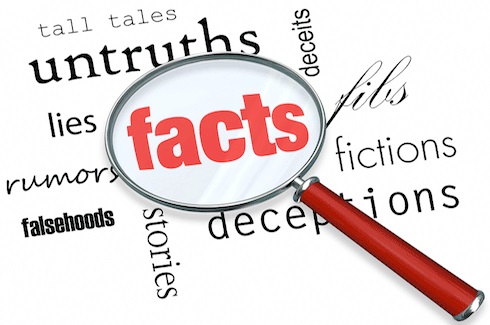
I’d never heard the term “fiblets” until I joined these support groups, but I know what that means morally and ethically. It is a synonymous term for an equally ubiquitous term in the general population: “little white lie.” (Lies, by the way, are lies. All the minimizing adjectives in the world do not change the bottom line of being dishonest and deceitful.)

lies deception fiction alzheimer's disease dementia caregivingEach time I see the word fiblet, I physically and mentally cringe. Partly because of the “it’s okay” mentality of those suggesting being dishonest by a labyrinth of excuses and justifications that, in the end, ring hollow.

And I cringe partly because of my own internal rejection of the morality and the ethics of being dishonest with anyone, no matter what his or her current neurological/mental/physical state. Beyond my foundation of absolute right and wrong that says that all dishonesty is wrong, I see the practical and detrimental effects of this practice in the relationships involved.

If I, as a caregiver for a loved one suffering from dementias and Alzheimer’s Disease, am willing to be dishonest about routine matters (e.g., “Dad left the house,” when Dad is actually there or Dad is dead, “I called the doctor,” when in fact no call was made, or “your brother/son was here yesterday,” when he was not or is dead) with my loved one(s), then how can I be trusted, in a general sense, and by my loved one and everyone else in my life, to be honest about anything else?

I destroy my credibility one lie at a time. And I create, in my own mind, each time I am dishonest, a myth that it’s okay, that it’s the easiest way, and that it’s necessary. And, I also am creating a habit that will automatically default to dishonesty any time I face a difficult situation in life. At some point, down the road, I won’t be able myself to know what is true and what is not because of all the lies I’ve told before.

So, not only have I broken the trust of my loved one(s) who’ve entrusted their care and their lives to me, but I have also broken the trust of everyone else in my life.

So, is it ever okay to be dishonest with our loved ones suffering from dementias and Alzheimer’s Disease?

The unequivocal answer is “No!”

Where Have You Been?

This is an incredibly poignant post about the history behind the song, “Where Have You Been?,” recorded by Kathy Mattea. This song was written by Jon Vezner about his grandparents. His grandmother suffered from some form of dementia.

What makes this personally poignant to me is that this was the exact question that Mom joyfully and buoyantly asked my twin sister and me upon waking on her “last rally” day (she went into her death sleep the next day, then died two days after that).

It was the first time in about a week and a half that she knew who I was, although we were living together and I was her primary caregiver throughout her suffering with vascular dementia, Lewy Body dementia, and Alzheimer’s Disease, and that she knew I was there with her.

I am very thankful for that day.

Precious Story About the Circle of Life of Caregiving for Our Loved Ones With Dementias and Alzheimer’s Disease

Momma and Me had a wonderful story today about bedtime kisses. And how the circle of life has the daughter kissing her mama goodnight, then comforting her with further kisses throughout the night to allay her fears, to calm her back to sleep, awakening at all hours to make sure her mama feels safe enough to go back to sleep. She draws the parallel between this and her own childhood when her mama did the same for her.

It’s a poignant post as I imagine the many nights Mama got up with us, especially as babies and small children, to make sure we were calm, unfearful, and safe enough to go back to sleep. And I did the same for her as her days came to an end.

I’ve always been a light and up-and-down sleeper. I suspect Mama spent more time trying to get me back to sleep in my early years (as I grew older, I just stayed in bed awake, only getting up if I heard her up with one of her migraines pacing the halls, and then – now – as an adult, just getting up and often doing the same pacing she did) than I spent in her later years doing the same with her.

I wasn’t afraid of anything. I simply have never had a good sleep rhythm or pattern and that continues to this day. But, as I became Mama’s sleep comfort over the years, I realize that was a blessing that I was able to give her when she needed it.

As Mama did with me when I was small, I was able to return a lot of kisses to Mama as our roles reversed. I never put her to bed or back to bed without a kiss, a hug, and an “I love you.” When the nights were filled with the symptoms of Lewy Body Disease, I’d lie beside her and with one arm around her, hold her hand with my other free hand. It never failed to help, even if it didn’t completely stop it.

It’s the little things that make the difference. With babies and small children. With loved ones suffering from dementia and Alzheimer’s Disease. They don’t cost anything but time and patience. This taught me about love in action. 

I’m thankful I had Mama and Daddy to model this for me as a child so it came naturally to me as an adult.

Remember the gifts your parents gave you, the sacrifices they made for you, the love they surrounded you with as they grow old and need the very same things from you. Life is a circle and those of us who are younger – well, everything in the universe in counting on us to complete it.

Steps On The Path – From “Momma and Me Our Journey Through Lewy Body Dementia” blog

As I read this post tonight on Momma and Me Our Journey through Lewy Body Dementia, tears filled my eyes as I remembered a similar moment with my mom a week before she died.

Mom didn’t know who I was most of that last week, but she knew I was someone she could trust. At least after she cried out to God as I put her into bed the Monday of the week before she died and said the words that cut me to the very inner recesses of my heart: “Oh, God, she’s trying to kill me!”

Mom’s mobility was so limited after the major heart attack she suffered on August 2, 2012, that it took all my strength and effort for everything that required movement for her and with her. I was as gentle as I could be with her, and, in some ways, sacrificed my own body, to ensure that Mom was okay, safe, and not taxed any more physically than was necessary. Mom was worth it.

Azheimer's Disease Dementia Steps and Stairs Toward The EndEarly in the morning the Tuesday a week before Mom died, she was in the hospital bed I’d had delivered on Monday and I was in the recliner where she’d slept since we’d come home from visiting my twin sister in May (sleeping in a reclining position eased what I now realized were chest pains from her congestive heart failure).

I was in my usual half-awake/half-asleep nightly ritual when a severe leg cramp forced me out of the chair and onto my feet. As I stood up, I saw that Mom was awake, but the leg cramp was so bad, I knew I had to deal with it first before I could deal with her.

I have an old ankle injury (from a serious car accident when I was in college in which my foot got wrapped around the brake) in the leg that was cramping – which is also the leg that I’ve had three reconstructive, repair, and replacement surgeries on my knee – so I’ve learned over the years that I have to be careful not to pop the ankle when I’m trying to walk out leg cramps in that leg.

Walking wasn’t helping, so I sat in a chair and tried to massage the cramp out. It took about 15 minutes, but I was finally able to stop the cramping enough to go to Mom.

I walked over to Mom and took her into my arms and leaned down to talk into her good ear and ask if she was okay. She took me in her arms and held me close to her, returning my embrace fully, and said “I know I’m not going to get out of here, but you can, so as soon as you get well, promise me you’ll leave.”

I promised Mom that I would and we held each other, for me, as mother and daughter, tightly for several minutes. I kissed Mom and told her I loved her always and unconditionally, and she pulled me closer and squeezed me tighter to her chest and then fell asleep.

Other than Mom’s rally the following Saturday, this is one of the most precious memories I have of my last days with Mom. Even if she didn’t know who I was in a conscious way, somewhere deep inside she knew. She remembered. She loved me. She was looking out for me.

In Alzheimer’s Disease and dementia, there’s not a lot left for us to take away as the diseases destroy our connections to our loved ones. I’m thankful for each one that I have, no matter how thin, how temporary, how distant. Because I know behind each of those is my mom and our bond.

It promises me that some things can’t be broken. Ever. For that I’m grateful and thankful.

Mama: March 2, 1929 – August 14, 2012