Archives

VA Assisted Living Benefit (Aid & Attendance) for Military Veterans and Their Spouses

va aid & attendance Alzheimer's Disease Dementia CaregivingI discuss this benefit in great detail in my book, Going Gentle Into That Good Night, as far as what’s needed to apply, some caveats with regard to obtaining military records, how to expedite the process, as well as how to calculate the full cost of care.

But, I wanted to at least mention here that a Veteran’s Affairs benefit for military veterans and their spouses for help with assisted living costs is available if the veteran served during a war (WWII, Korea, Vietnam, etc.).

To take advantage of it for our loved ones with dementias, Alzheimer’s Disease, and other age-related illnesses if they are eligible by going to the VA’s Aid and Attendance page.

Alzheimer’s: It’s Not Contagious

This is a compelling post by Ann Napoletan, a fellow Alzheimer’s Disease and dementia caregiving blogger and a friend, about something that all of us who’ve been on or are on this journey have witnessed and experienced firsthand.

We’ve seen it with our loved ones and we seen it with other people suffering from dementias and Alzheimer’s Disease who, before all this were loved ones to somebody or somebodies, but who ceased to exist, it seems, once the diseases set in and took hold.

This quote is a good summary:

“Is it the fear of being asked for help? Is it too difficult for them to see? Do they just not want to be bothered? Or do they think the person is already gone so there’s no sense in visiting?

Not many would admit to most of these, though I have had a few people tell me it was just ‘too hard’ for them to see my mom ‘that way.’

One can only imagine how egocentric that sounds to a caregiver who faces the tremendously harsh reality of Alzheimer’s every day. I think all caregivers will agree it’s no picnic for us to watch a loved one slowly drift away into the world of Alzheimer’s, but we weren’t given a choice in the matter. However, every moment we spend with them is ultimately a beautiful blessing.”

Ann Napoletan's avatarThe Long and Winding Road...

Sunday evening snuggle nap...I saw a picture a few days ago, and it’s been on my mind ever since. The image was that of an older woman sitting alone on a bench looking off into the distance. The caption said, “Alzheimer’s isn’t contagious.”

As advocates, we place a great deal of emphasis on funding for research – we think a lot about the future – hopefully one without Alzheimer’s. And all of that is tremendously important. However, the image of that lonely woman reminds us we must also focus on those living with the disease today.

Lonely Days

How many dementia patients sit alone in a facility, day after day, month after month, and year after year? One might argue that technically they aren’t alone; there are people around, the hustle and bustle of daily goings on, shower time, mealtime, and an occasional balloon volleyball game.

Don’t fool yourself –…

View original post 644 more words

God and Alzheimer’s

mama-october-2010
This is a very personal and interesting article. I know my strengthening faith and God’s intervention, profound and miraculous at just the right time, guided me through this journey with Mama and I also know that Mama’s very strong faith guided her in the journey as well.

There wasn’t a day when the 5th commandment, which I call the “bridge” commandment because it applies to both our physical parents and to our Father in heaven, didn’t present itself prominently in my mind. I have always told God that I don’t want a long life (the promise of the 5th commandment obeyed), because a long life is no guarantee of a quality life, but that I want a life that eventually reflects Him completely.

Although I made my mistakes, had my shortcomings, and let Mama down at times along the course of her time and my time together as mother and daughter, just as I’ve made and make my mistakes, have my shortcomings, and have and do let God down at times as He and I have walked and walk together on our journey as Father and daughter, my hope is that the sum total of the balance sheet shows that I took (and still take) the 5th commandment seriously and  there’s a positive balance at the end of my time on this earth.

Managing a Visit with Someone Who Has Dementia

Kay Bransford has some excellent “do’s” and “don’ts” for visitors – especially those who can’t or don’t visit often – on how to successfully manage your visits to a friend or family member suffering from dementia and/or Alzheimer’s Disease. This list is a list of love, care, and concern.

Kay H. Bransford's avatarDealing with Dementia

dosdon'tsDementia changes people in different ways, but there are a few things I found that will make a visit with an old friend easier to manage. My Dad was quieter, but my Mom is feistier.

Research has confirmed that dementia doesn’t magnify traits, but in general can create wholesale personality changes. Don’t be surprised to find the person you are visiting is different than you remember. I hope you will continue to visit, dementia is isolating to those suffering from this disease.

DO’s

  1. Begin with introductions. With a warm smile and relaxed posture, share a personal connection. Some suggestions that are helpful: “Hi FRIEND, It’s good to see you. You were one of the first people to welcome me into this community and it’s been a while since I’ve seen you”  or “Hi FRIEND. It’s a pleasure to see you today. I was thinking about all the fun we had…

View original post 351 more words

John Hopkins Free Online Course for Dementia Care Begins 10-14-13

holding handsA quick reminder that this free, five-week online course on dementia care begins this week. Simply follow the link below to sign up:

https://www.coursera.org/course/dementiacare

For a downloadable copy of the syllabus, go to the Caregivers – Alzheimer’s Disease, Dementia, and Other Age-Related Illnesses group page on Facebook.

Medical Advocacy and Support and Dementias and Alzheimer’s Disease

Author’s note: I originally posted this in June 2013, but I will now be reposting this every month, because it is one of the most important ways in which we can help and support our loved ones with dementias, Alzheimer’s Disease, and other age-related illnesses (“Going Gentle Into That Good Night: A Practical and Informative Guide For Fulfilling the Circle of Life For Our Loved Ones with Dementias and Alzheimer’s Disease” offers a more comprehensive list of the areas in which we can offer help and support to our loved ones).

*****

Today’s post will discuss our role as medical advocates and medical support for our loved ones suffering from dementias and Alzheimer’s disease. Here I will provide practical advice and suggestions, from my own experience, in managing the medical aspect as easy, as straightforward, and as  un-disruptive for our loved ones as possible.

The very first thing we need to do as caregivers is to make sure medical wishes and medical legal authority – medical power of attorney – are documented and authorized (primary care physicians can do this; I suggest getting them notarized as well). Hopefully, these have been discussed enough so that either our loved ones have already taken care of them or we know what they want and are able to execute them ourselves.

For anyone reading this who is not a caregiver or suffering from dementias and Alzheimer’s Disease, now is the time to think about these because time and chance happen to us all. For those of us who are caregivers, these are documents we need to locate and keep in one place.

A medical power of attorney document designates who will make decisions when the person drawing up the document is unable to.
Living willA living will essentially specifies whether a person wants everything done possible to keep them alive, no matter how long, how futile, and how expensive or whether only comfort care is given when it’s clear that the end of life is at hand.
DNR (Do Not Resuscitate)A DNR (Do Not Resuscitate) document states that the person does not want to be resuscitated if he or she stops breathing.

I suggest getting a briefcase or backpack to keep all the documents related to the medical care for our loved ones in. The briefcase or backpack should be accessible at all times, so it goes everywhere we and our loved ones go.

The medical power of attorney, living will, and DNR should be kept together in a folder in the briefcase or backpack. The other items in this backpack should include medical history documents and an up-to-date list of of medications (I’ve attached a sample Excel spreadsheet you can download and for this). Get an inexpensive wallet to put a photo id and Medicare Part A and Part B cards in and keep that in the briefcase or backpack as well. Always have something (electronic or pen and paper) to take notes with.

It is important to remember that we caretakers have a responsibility to advocate for our loved ones with dementias and Alzheimer’s Disease with all medical professionals (primary care physicians, psychiatrists, nurses, dentists, hospital staff, home health staff, and hospice staff). However, it is equally important to remember that, unless our loved ones are in the dying process and, therefore, unresponsive, that we need to include them in all conversations, explain to them what is being discussed and why, and make sure the medical personnel include them as well.

While our loved ones may not understand everything, we must not treat nor let anyone else treat them as if they are invisible. This is probably one of the greatest gifts of love and respect we can show them.

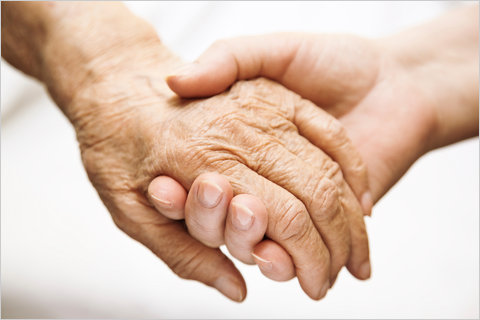
We have to usually initiate this by stopping the conversation the medical professional is having with us, turn to our loved ones and hold their hands, make eye contact, and explain. Eventually, the medical professional will make eye contact with both us and our loved ones.

The reality is that we don’t really know how much our loved ones comprehend or understand. It’s my personal belief that they understand more than the diseases allow them to respond to. I also know that touch and inclusion are two basic needs we all share as humans, so it’s essential that our loved ones never feel excluded or unloved.

Hospitalizations are hard on elderly people. I don’t know all the reasons why, so I wouldn’t begin to speculate (although I have some opinions about it) as to why. For our loved ones with dementias and Alzheimer’s Disease, hospitalizations are not just hard, but extremely traumatic because of unfamiliarity of everything: people, place, and routine. Going into a hospitalization, we as caregivers must be aware that it will be a setback for our loved ones when they come home.

hospitalizationBecause of the traumatic effect of hospitalizations on our loved ones, it is critical that we as caregivers stay with them as much as we’re able during the hospitalizations. We are, even if some of the time they don’t know who we are, familiar. And our presence can help neutralize some of the fear and anxiety that often occurs during hospitalizations. 

Always have a “hospital bag” with clothes, toiletries, and other things our loved ones need packed. That bag goes every time we take our loved ones to the ER or with us as we follow an EMS transport. (It is imperative to be sure to wash the clothes from the hospital stay immediately and separately from any other laundry when we get home.)

Spend the night for as long as our loved ones are hospitalized. I know, because I’ve spent way more nights than I could ever count with my mom – even before her dementias and Alzheimer’s Disease diagnoses because I didn’t want her to be all alone – in the hospital, that there’s iffy sleep, awful coffee, and not-so-great food. But our loved ones are worth it. 

But spending the night has an additional, and equally-important, benefit. Most doctors make rounds between 7 pm and 8 pm in the evening and between 6 am and 8 am in the morning, so by spending the night we’re always there when the doctors are there so we can be current on what’s going on with our loved ones. I’ve found that, in general, hospital nurses either don’t know much or are too busy to take the time to give you real updates, so the only in-depth information you’re going to get will be from the doctors.

The other benefit of staying with our loved ones is that we can make sure they get the quality care and attention they need. It’s been my experience that most hospitals simply to don’t have enough staff to provide much personalized care, so if there is no one there with the patient, the patient just has to wait until someone gets around to him or her. By us being there, we can ensure that our loved ones are clean, taken care of, and not uncomfortable in any way physically. That’s one of the best ways we can serve them.

As I mentioned, expect a setback after hospitalization. It can last anywhere from a few days to a couple of weeks. Recovery will eventually occur, but it’s important to know that it will never return to the pre-hospitalization state. That’s just the nature of these diseases.

It’s important to be patient, loving, kind, gentle, and tender no matter what. It’s my opinion that most of the behavior is a way of expressing fear, so it’s important that we allay those fears and help our loved ones feel safe again. It takes time and a lot of deep breaths sometimes, but this is another way we show them how much we love them.


Dying Wishes – The Discussion Everyone Needs to Have with Their Loved Ones Long Before They Need to Be Honored

Ellen Goodman is one of my favorite essayists and authors. My first exposure to her writing was an essay entitled “The Company Man.” Even though I was just 16 years old when I read it in my AP English class, it had a profound impact on me. I still often think of it when the days and nights of life get long, hectic, and overwhelming and it helps me to step back and do, if nothing else, a little reset to get my priorities realigned.

Therefore, when I read her post on the living-or-dying decision-making (and second-guessing) she had to do for her mom when Alzheimer’s Disease had forced Ellen to be the decision-maker, I found it very interesting.

And familiar. Because even if you’ve had “the conversation” many, many times, I think second-guessing, especially toward the end of life when push comes to shove, is inevitable.

Mama and I had talked in-depth about her dying wishes for years and we had the documents and the paperwork done well in advance of her dementias, Alzheimer’s Disease, and congestive heart failure diagnoses.

Living will - dying wishesShe had a living will with no extraordinary measures, as I do. And she decided on a DNR after Daddy died without one and she saw first-hand the effects of futile life support that he had to go through in that last hour of his life because he didn’t have a DNR.

Even though Mama was a medical professional, as was Daddy, I believe the impact of seeing her soul mate and best friend go through being kept artificially alive even for that short period of time was profound and life-altering for her.

We talked about it a lot right after Daddy died, and I told her I had a DNR and had gotten itDNR (Do Not Resuscitate) in my early 20’s and I told her why I had (and still have) it. It made sense to her and we had her doctor draw it up and certify it.

As Mama’s heart health declined, we continued to have conversations about what she wanted and didn’t want as far as quality of life versus quantity of life.

We were so much alike in our very strong views that quality of life was what was important and not quantity (and this really is the core issue that must be addressed and resolved as part of the dying wishes conversation) that we never disagreed on care, treatment, and outcomes.

But it was because we had these heart-to-heart talks a lot in the last years of Mama’s life and we openly and frankly discussed death as the inevitable outcome and how Mama wanted that to be, as much as was within her control. 

When Mama told me she didn’t want to go to the hospital anymore for treatment for her congestive heart failure, I honored that wish, despite the frantic response about liability from the nurse on the phone when I called to have Mama’s doctor give us a prescription for the medicine (Lasix and potassium) and a schedule so that I could treat Mama for it at home.

The doctor ended up calling me himself and he got Mama in the next day to the office and gave me the prescriptions and schedule to do at home with a follow-up visit within the week with him. And we continued to do this at home until Mama’s death. That’s what she wanted and I was determined to make sure that her dying wishes were honored.

The issue came up again three months later when, on her birthday, Mama started throwing up in the afternoon and had chills and sweating. I wasn’t sure whether the symptoms were heart-related or not, so I took Mama to the ER. She had a gall bladder infection and after we were transferred to a bigger hospital early the next morning, a gastrointestinal surgeon came in and tried to talk us into putting Mama under general anesthesia to remove her gall bladder.

I refused that because I knew with Mama’s weakened heart, she wouldn’t survive it and told him we needed a Plan B. He reluctantly said they could put a drain in with local anesthesia to drain the infection out, but that reinfection was likely within a year. I realized even then that Mama’s health was such that it was unlikely that she would live long enough for a reinfection to occur, so after she and I discussed it, we agreed to the drain, which was successful in removing the infection.

It wasn’t until the very end of Mama’s life that I did any second-guessing. I knew logically and intellectually what she wanted and I was committed to honoring that. And I did.

But most of my second-guessing came in the form of wanting to be sure that I wasn’t overreacting as death approached and that once it was clear that Mama was in the dying process, I wanted to be sure she wasn’t suffering and I didn’t know how to gauge that (she wasn’t and I know that now, but it was paramount on my mind then).

The reality is that, with appropriate comfort care during the dying process, it’s harder to watch someone die than it is for them to actually die. Because we watch our loved ones die with all our senses intact, all our systemic functions intact, and all our alertness intact and it’s almost impossible to not project our intact selves into the process.

And that is why having the dying wishes conversation with our loved ones long before we have to honor it is so important. Most people seem to be very uncomfortable with this conversation – and the subsequent similar conversations that will and should follow it.

But let me ask you a question that shows why we need to get comfortable with it.

What if something with a life-ending outcome looming happened to you today and you’d never discussed and formalized your dying wishes with your loved ones and they were suddenly thrust into the position of having to decide whether to postpone the inevitable or let you go with no intervention in God’s timing?

Would you want your loved ones to be in that position? Would you want to be in that position? Think about it. And have the conversation. As soon as possible. 

Jigsaw Puzzles – Activities We Can Do With Our Loved Ones With Alzheimer’s Disease and Dementias

I will be posting from time to time on activities that we can do with our loved ones with Alzheimer’s Disease and dementias, so today I decided to start with jigsaw puzzles.

I remember as we were growing up that Mom would start a 1000-piece jigsaw puzzle, putting it on the end of our incredibly long kitchen table, two or three times a year, and we, as a family, would work on it, sometimes together and sometimes one at a time, for several days until it was finished.

Those puzzles became the focal point of concentrated time together, no matter what else what happening in our lives. Even if – as was often the case as the three of us kids crashed at the same time into adolescence – we were all out of sorts in one way or another with each other, those puzzles would bring us together. And even if we weren’t talking or we were sulking or stewing or whatever else the teenage years brings with it, we’d all sit down and work together for a little while.

I have often marveled at Mom’s wisdom in doing this. She could be the hardest of us, at times, to get “unmad,” but somewhere along the way, she realized doing jigsaw puzzles was a way to rebuild bridges among us and reestablish lines of communication.

Once we kids left home, I don’t remember Mom ever doing a jigsaw puzzle again. It wasn’t something that Dad ever did with us, so when the time came that it was just the two of them again, they found other things they enjoyed doing together.

But after Dad died and Mom moved into a senior living community she chose, Mom started working on jigsaw puzzles again. The “ladies” had a table in the community living room where they’d work on a puzzle. Because I was there every day, Mom would often ask me to come down and work on the current puzzle with her and we’d spend an hour or two working on it together.

As Mom’s vascular dementia and Alzheimer’s Disease became evident and were progressing, I looked for things we could do together that would keep her mind active and not frustrate her. I discovered that jigsaw puzzles were one of the activities that we could do.

But not just any jigsaw puzzles. Because Mom’s eyesight was getting worse as well and because her ability to identify shapes was declining, I found that large-format, 300-piece jigsaw puzzles were the best fit for our need. 

Buffalo Games and Ravensburger make the best-quality large-format 300-piece jigsaw puzzles. It’s best to stick with their jigsaw puzzles that don’t have a ton of detail (like the city jigsaw puzzles) to put these together with our loved ones with Alzheimer’s Disease and dementia. Too much detail is too confusing and frustrating.

There are several online stores that offer large-format, 300-piece jigsaw puzzles. The two that I used most often were Bits and Pieces and Puzzle Warehouse.

Jigsaw puzzles, interestingly, can give us a lot of insights about how the brains of our loved ones are functioning and the progression of dementias and Alzheimer’s Disease.

I always had Mom pick out the border pieces. As her dementias and Alzheimer’s Disease progressed, this was more problematic for her. The day we started our last jigsaw puzzle together in May 2012, she picked out some border pieces, but most of the pieces were just random.

The last jigsaw puzzle we completed together, a month or so before, I noticed how frustrating it was for her to do, even though she wanted to do it,  and knew somewhere in the back of my mind that was probably the last one we would do together.

The strangest thing I noticed all along, though, was that she would always go for the interior parts that were a solid color. Like the sky. Rationally, I knew that would be the hardest part to do because it was all one color and, yet, that’s what she would start on. I would try to get her to help me find pieces for more doable parts of the jigsaw puzzle and most of the time that worked. But inevitably, Mom would always go back to the solid colors. I’m not sure why, but it always fascinated me.

I’m thankful we had the opportunities to do jigsaw puzzles together. It gave us quality time together away from the day-to-day medical stuff and “have-to-do” stuff that can get in the way, if we allow it to, of our relationships as family, as friends, as parent and child. When we were working on jigsaw puzzles, we were able to capture the essence of who we were to each and other and together before all of that and who we were to each other and together in spite of all of that. 

We created good memories that I’ll carry with me the rest of my life. I’m including some of the jigsaw puzzles that Mama and I did together.

Precious Story About the Circle of Life of Caregiving for Our Loved Ones With Dementias and Alzheimer’s Disease

Momma and Me had a wonderful story today about bedtime kisses. And how the circle of life has the daughter kissing her mama goodnight, then comforting her with further kisses throughout the night to allay her fears, to calm her back to sleep, awakening at all hours to make sure her mama feels safe enough to go back to sleep. She draws the parallel between this and her own childhood when her mama did the same for her.

It’s a poignant post as I imagine the many nights Mama got up with us, especially as babies and small children, to make sure we were calm, unfearful, and safe enough to go back to sleep. And I did the same for her as her days came to an end.

I’ve always been a light and up-and-down sleeper. I suspect Mama spent more time trying to get me back to sleep in my early years (as I grew older, I just stayed in bed awake, only getting up if I heard her up with one of her migraines pacing the halls, and then – now – as an adult, just getting up and often doing the same pacing she did) than I spent in her later years doing the same with her.

I wasn’t afraid of anything. I simply have never had a good sleep rhythm or pattern and that continues to this day. But, as I became Mama’s sleep comfort over the years, I realize that was a blessing that I was able to give her when she needed it.

As Mama did with me when I was small, I was able to return a lot of kisses to Mama as our roles reversed. I never put her to bed or back to bed without a kiss, a hug, and an “I love you.” When the nights were filled with the symptoms of Lewy Body Disease, I’d lie beside her and with one arm around her, hold her hand with my other free hand. It never failed to help, even if it didn’t completely stop it.

It’s the little things that make the difference. With babies and small children. With loved ones suffering from dementia and Alzheimer’s Disease. They don’t cost anything but time and patience. This taught me about love in action. 

I’m thankful I had Mama and Daddy to model this for me as a child so it came naturally to me as an adult.

Remember the gifts your parents gave you, the sacrifices they made for you, the love they surrounded you with as they grow old and need the very same things from you. Life is a circle and those of us who are younger – well, everything in the universe in counting on us to complete it.

Medical Advocacy and Support and Dementias and Alzheimer’s Disease

Author’s note: I originally posted this in June 2013, but I will now be reposting this every month, because it is one of the most important ways in which we can help and support our loved ones with dementias, Alzheimer’s Disease, and other age-related illnesses (“Going Gentle Into That Good Night: A Practical and Informative Guide For Fulfilling the Circle of Life For Our Loved Ones with Dementias and Alzheimer’s Disease” offers a more comprehensive list of the areas in which we can offer help and support to our loved ones).

*****

Today’s post will discuss our role as medical advocates and medical support for our loved ones suffering from dementias and Alzheimer’s disease. Here I will provide practical advice and suggestions, from my own experience, in managing the medical aspect as easy, as straightforward, and as  un-disruptive for our loved ones as possible.

The very first thing we need to do as caregivers is to make sure medical wishes and medical legal authority – medical power of attorney – are documented and authorized (primary care physicians can do this; I suggest getting them notarized as well). Hopefully, these have been discussed enough so that either our loved ones have already taken care of them or we know what they want and are able to execute them ourselves.

For anyone reading this who is not a caregiver or suffering from dementias and Alzheimer’s Disease, now is the time to think about these because time and chance happen to us all. For those of us who are caregivers, these are documents we need to locate and keep in one place.

A medical power of attorney document designates who will make decisions when the person drawing up the document is unable to.

Living willA living will essentially specifies whether a person wants everything done possible to keep them alive, no matter how long, how futile, and how expensive or whether only comfort care is given when it’s clear that the end of life is at hand.

DNR (Do Not Resuscitate)A DNR (Do Not Resuscitate) document states that the person does not want to be resuscitated if he or she stops breathing.

I suggest getting a briefcase or backpack to keep all the documents related to the medical care for our loved ones in. The briefcase or backpack should be accessible at all times, so it goes everywhere we and our loved ones go.

The medical power of attorney, living will, and DNR should be kept together in a folder in the briefcase or backpack. The other items in this backpack should include medical history documents and an up-to-date list of of medications (I’ve attached a sample Excel spreadsheet you can download and for this). Get an inexpensive wallet to put a photo id and Medicare Part A and Part B cards in and keep that in the briefcase or backpack as well. Always have something (electronic or pen and paper) to take notes with.

It is important to remember that we caretakers have a responsibility to advocate for our loved ones with dementias and Alzheimer’s Disease with all medical professionals (primary care physicians, psychiatrists, nurses, dentists, hospital staff, home health staff, and hospice staff). However, it is equally important to remember that, unless our loved ones are in the dying process and, therefore, unresponsive, that we need to include them in all conversations, explain to them what is being discussed and why, and make sure the medical personnel include them as well.

While our loved ones may not understand everything, we must not treat nor let anyone else treat them as if they are invisible. This is probably one of the greatest gifts of love and respect we can show them.

We have to usually initiate this by stopping the conversation the medical professional is having with us, turn to our loved ones and hold their hands, make eye contact, and explain. Eventually, the medical professional will make eye contact with both us and our loved ones.

The reality is that we don’t really know how much our loved ones comprehend or understand. It’s my personal belief that they understand more than the diseases allow them to respond to. I also know that touch and inclusion are two basic needs we all share as humans, so it’s essential that our loved ones never feel excluded or unloved.

Hospitalizations are hard on elderly people. I don’t know all the reasons why, so I wouldn’t begin to speculate (although I have some opinions about it) as to why. For our loved ones with dementias and Alzheimer’s Disease, hospitalizations are not just hard, but extremely traumatic because of unfamiliarity of everything: people, place, and routine. Going into a hospitalization, we as caregivers must be aware that it will be a setback for our loved ones when they come home.

hospitalizationBecause of the traumatic effect of hospitalizations on our loved ones, it is critical that we as caregivers stay with them as much as we’re able during the hospitalizations. We are, even if some of the time they don’t know who we are, familiar. And our presence can help neutralize some of the fear and anxiety that often occurs during hospitalizations. 

Always have a “hospital bag” with clothes, toiletries, and other things our loved ones need packed. That bag goes every time we take our loved ones to the ER or with us as we follow an EMS transport. (It is imperative to be sure to wash the clothes from the hospital stay immediately and separately from any other laundry when we get home.)

Spend the night for as long as our loved ones are hospitalized. I know, because I’ve spent way more nights than I could ever count with my mom – even before her dementias and Alzheimer’s Disease diagnoses because I didn’t want her to be all alone – in the hospital, that there’s iffy sleep, awful coffee, and not-so-great food. But our loved ones are worth it. 

But spending the night has an additional, and equally-important, benefit. Most doctors make rounds between 7 pm and 8 pm in the evening and between 6 am and 8 am in the morning, so by spending the night we’re always there when the doctors are there so we can be current on what’s going on with our loved ones. I’ve found that, in general, hospital nurses either don’t know much or are too busy to take the time to give you real updates, so the only in-depth information you’re going to get will be from the doctors.

The other benefit of staying with our loved ones is that we can make sure they get the quality care and attention they need. It’s been my experience that most hospitals simply to don’t have enough staff to provide much personalized care, so if there is no one there with the patient, the patient just has to wait until someone gets around to him or her. By us being there, we can ensure that our loved ones are clean, taken care of, and not uncomfortable in any way physically. That’s one of the best ways we can serve them.

As I mentioned, expect a setback after hospitalization. It can last anywhere from a few days to a couple of weeks. Recovery will eventually occur, but it’s important to know that it will never return to the pre-hospitalization state. That’s just the nature of these diseases.

It’s important to be patient, loving, kind, gentle, and tender no matter what. It’s my opinion that most of the behavior is a way of expressing fear, so it’s important that we allay those fears and help our loved ones feel safe again. It takes time and a lot of deep breaths sometimes, but this is another way we show them how much we love them.