Technology and Neurology – A Perfect Storm For A Lifestyle Dementia

Technology can have devastating effects on the brainIn my book review of The End of Absence by Michael Harris, we see how an increasingly constant interaction with, reliance on, and addiction to technology is creating devastating effects on us neurologically.

Among these effects are dementia-like symptoms: loss of short-term memory, easy distraction, lack of focus, loss of critical thinking skills, and loss of executive functions.

These effects are happening to people all around us just like you and me. The effects don’t discriminate: even the very young are affected just as profoundly as others of varying ages.

In Nicholas Carr’s The Shallows: What the Internet is Doing to Our Brains, a book everybody should read, the discussion centers on the neurological effects of 24/7 technology connection in the actual composition of the brain.

The research and the science is sobering, especially in light of how it points to the emergence of another lifestyle dementia that is already beginning to affect people, and will increasingly affect vast numbers of people at earlier and earlier ages.

Lifestyle dementias are dementias we choose because we adopt or don’t control or eliminate the lifestyle factors that cause the dementias.

Alcohol abuse and addiction is one of those lifestyle choices. How we treat our bodies (food, exercise, etc.) is another lifestyle choice. The quality and quantity of our sleep is yet another lifestyle choice.

And our relationship with technology presents even one more lifestyle choice. A recent Pew Research Center survey revealed that 20% of Americans report that they are online almost constantly.

That is 1 in every 5 people here in the United States. It is not surprising to me, but it is disturbing to me for many reasons. 

Because my whole career has been intricately involved with technology, I’m uniquely qualified to discuss this since I’ve always made choices to limit my exposure, instinctively, I suppose, realizing the dangers, and I continue to do so because my brain, for better or worse, is the best asset I have and I don’t want my choices to be the reason I lose any functionality it has.

The neuroplasticity of the brain is negatively changed by overexposure to technologyOverexposure to technology completely rewires our brains (neuroplasticity) and not in positive ways. It literally changes our neural pathways, eliminating the ones we don’t use and creating new ones.

Different parts of the brain are stimulated with how we receive information.

Images light up a different area of the brain than words do. Technology lights up a totally different area of the brain than either images or words do.

Which area of our brains get lit up the most often is the part of the brain that becomes dominant and we use the other parts less and less.

Brain cells (neurons) that don't get used die permanently.With disuse, those parts we don’t use begin to die at the cellular level, eventually creating the same kinds of synaptic gaps that are common among dementias.

The brain is the only organ in which there is no cellular regenation. Once the cells in the brain die, they’re gone for good. With time, this cellular death becomes widespread and we experience dementia.

The problem with our increasing interaction exclusively with technology (smart phones and tablets have definitely made this easier) is that technology is purposefully designed to stimulate the part of the brain that deals with emotions.

Because of the emotional stimulation that technology elicits, it consistently bypasses logical, analytic processing of information and the desire and ability to discern between what’s true and false, what’s right and wrong, and what’s valuable and what’s not.

The effect on us is that we are unaware of what’s happening tethered-to-technology-going-gentle-into-that-good-nightbehind the scenes to our brains as we’re tethered to technology, so we don’t realize we’re not logically and analytically processing information coming in and that we’re rapidly losing the desire and ability to discern between what is true and false, what is right and wrong, and what is valuable and what is not.

It is simply disappearing without our awareness that we’re losing the very things that make us unique as humans and which are the most precious gifts we have been given.

The end result is that in the short term we become shallow (gullible, unthinking, ignorant, and imprisoned in a shrinking world that is simply a mirrored reflection of our narcissistic selves) and in the long term that we lose our cognitive abilities altogether.

It’s not to late for most of us to turn this around and do everything in our power to make choices that will stave off this lifestyle dementia. 

But each of us has to make the choice for ourselves. Some of us won’t. Some of us don’t believe this is happening. Some of us don’t care.

However, for those that will, that do believe this is happening, and that do care, here are a few ways to get started:

  1. Unplug from everything at a set time every day and stick to it. Replace the time that you would have spent with technology with an activity that involves the other parts of your brain. These can include hobbies, reading, putting together jigsaw puzzles, playing board games or cards with other people, crossword puzzles, sudoku, and other types of brain-intensive puzzles.
  2. Don’t stay plugged in all day. Do what you need to do (check social media, email, texts, etc.) at set time-delimited times each day (I generally check mine early morning, noon, and 6 pm, giving myself 15 minutes each time and no more). Otherwise, I’m off the grid and working on other productive things.
  3. Unplug completely for 24 hours each week. No phone, no internet, no social media, no nothing. And do something else entirely away from it all. This may, especially if we’re addicted to technology, be quite uncomfortable and unsettling at first (generations before us lived this way and they not only survived just fine, but I suspect they were happier and better off), but eventually you will absolutely crave your unplugged 24 hours and it may lead you to more complete unplugging than that in time.

We only get one brain in our lives. Everything we do supports it or destroys it. Once destruction happens, it’s permanent and it can’t be undone.

Let’s make sure we’re doing everything in our power with our choices to support our brains and not destroy them.

Profiles in Dementia: Woodrow Wilson (1856 – 1924)

President Wilson had suffered from arteriosclerosis since 1906 and was showing signs of vascular dementia by 1917.I have been, over the last couple of months, reading a lot of books about the history of World War I – before, during, and after – and the last book I’ve read in this series so far gave intimate and detailed portraits of the four world leaders who were ultimately responsible for the Treaty of Versailles, which may have been the most-poorly and ignorantly (in some cases, deliberately) constructed end-of-war agreement ever made. Continue reading

The Fallacy of “Silver Bullet” Solutions to Dementias and Alzheimer’s Disease

There are no silver bullet solutions for dementias and Alzheimer's Disease. Believing otherwise is both ignorant and dangerous.There are no “silver bullet” solutions to the growing epidemic of dementias and Alzheimer’s Disease among the human population

Almost daily, there are reports – from the internet, which is a numbers game in terms of reliability and accuracy of information (the more hits a site gets, the higher it appears in the search engines), not an indicator of expertise and factual information – of “silver bullet” solutions to these neurological diseases.

I suppose, because of the devastating effects of the journey through dementias and Alzheimer’s Disease that our loved ones experience and we, as caregivers, intimately deal with as we go through the journey with them, that we all our susceptible to a measure of magical thinking that leads us to even remotely consider or believe the most outlandish – and patently false – claims that a solution will reverse or cure these irreversible and incurable neurogically degenerative diseases.

What makes me angry about the “silver bullet” solutions that keep cropping up is that they prey on the vulnerable (and that includes us, as caregivers), giving false hope and, often, reaping a huge monetary reward (if they’re selling the “silver bullet” solution) at our expense.

This conduct is shameful. This conduct is cruel.

How can we as caregivers avoid falling into the “silver bullet” solutions trap?

We must thorough educate ourselves about dementia and what's true and what's not.First, we must educate ourselves and study diligently to learn and know the facts about dementias and Alzheimer’s Disease. We must understand the physiology, neurology, and neuroscience of the brain.

Going Gentle Into That Good Night has many, many articles that detail, from a layperson’s point of view, each of the dementias, including Alzheimer’s Disease, as well as factors in their development and the prominent indicators of each type of dementia.

you-ought-know-dementia-going-gentle-into-that-good-night-book-coverSecond, we must understand dementias and Alzheimer’s Disease in terms of their steps and what to expect in each stage and how to walk with our loved ones with these neurological diseases through each step

This is not the oversimplified stage progression that the Alzheimer’s Association (which does not include details of exactly what happens in a detailed and sequential way and nor what and how we caregivers successfully navigation through the journey of these diseases).

Without a deep and thorough understanding of how dementias and Alzheimer’s Disease begin (often decades before any overt symptoms appear), progress, and end, we will be susceptible to the false information and misinformation of “silver bullet” solutions, which will do neither our loved ones or us any good, and will only add additional unnecessary suffering to our journeys through these neurological diseases.

Ignoring or avoiding this aspect of our educational process will not make the development of the development and progression of dementias and Alzheimer’s Disease go away. Instead, it will only make the journey for our loved ones and us as caregivers harder, more painful, and more sorrowful than they should be or need to be. The choice is ours.

Discern between credible information and uncredible information about dementias and Alzheimer's DiseaseThird, we need to become experts at discerning credibility and balderdash in the information coming at us.

I see articles all the time (not in just discussing dementias and Alzheimer’s Disease, but everywhere in life) from websites that are clearly not credible – look at the website name first and that will give you good insights into the quality of the information source – (and the information is misleading, at best, and totally false, at worst) presented and endorsed by a surprisingly high number of people as “truth.”

That is because of profound, and in many cases, willing ignorance. We, as caregivers for our loved ones with dementias and Alzheimer’s Disease, cannot afford to be ignorant about these neurological diseases.

There are plenty of snake oil propagators and sales people on the web. They want you to believe them either because they want to make a name for themselves or they want your money. Or both.

It’s that simple. We must be vigilant to not fall for the snake oil propagators and the snake oil sales people. We – and our loved ones with dementias and Alzheimer’s Disease – will be the losers in this equation. Always.

Humans have an unbelievable capacity for magical thinking in spite of the facts and evidence to the contrary right in front of them.And, fourth, we have to recognize our own capacity for magical thinking. Even as children, we have an innate capacity to believe things that are unrealistic or untrue, but they are how we want them to be.

That is part of being human. While there is an aspect of this ability that feeds imagination and creativity productively, the majority of it leads us to the unhappiness of disappointment, disillusionment, and denial of what’s right in front of our faces.

That does us no good and it does our loved ones with dementias and Alzheimer’s Disease no good. In fact, it does us all a lot of harm in the long run.

We must be willing to confront these neurological diseases head-on, realistically, without the blinders of illusions and false hopes hindering our competent, compassionate, and loving care for our loved ones with dementias and Alzheimer’s Disease.

Our loved ones are depending on us to do this. They deserve our best and most-well-informed efforts on their behalf because they’ve placed their trust and their lives in our hands.

What will we do?


Profiles in Dementia: Norman Rockwell (1894 – 1978)

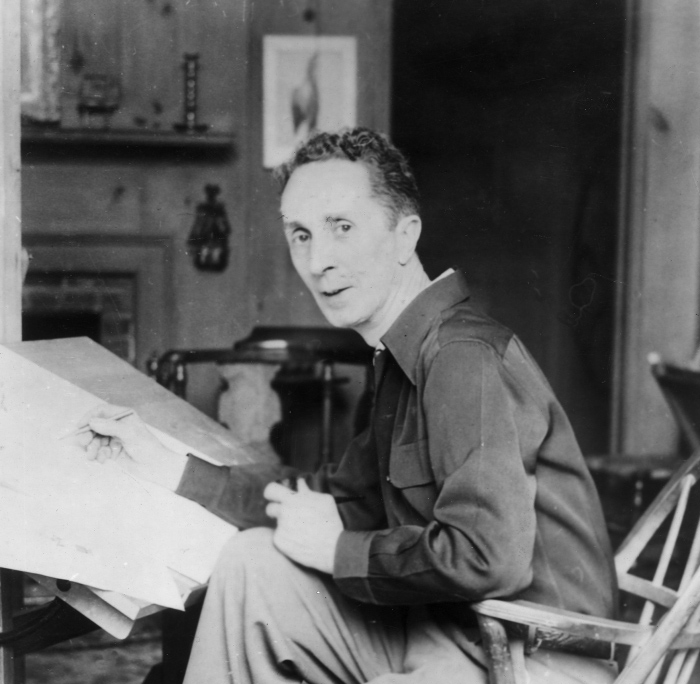
1945 Photo of Norman RockwellNormal Rockwell’s artistic creations are an entrenched part of Americana. He captured everyday life with a unique emotional component that seemed and seems to touch the American soul deeply.

Rockwell is best known for the 47 years that his iconic cover illustrations graced The Saturday Evening Post, but his body of work also included other magazines, several books, and prints for both the common man and collectors.

Norman Rockwell: Artist and Illustrator BookGrowing up, I remember frequently picking up the oversized, hardcover edition of Norman Rockwell: Artist and Illustrator that my parents had purchased and immersing myself in a thoughtful journey through the large body of his work. There were some that stand out in my mind still. A sampling of those include:

But the four-part Freedoms From… illustrations that Rockwell did in 1943 (during World War II to shore up and promote American involvement in the war) are probably the ones that tug, even today, at American heartstrings.

In part, I believe, the Norman Rockwell - Freedom from Want (1943)reason is they represent an ideal that we all wish existed, but which, in fact, never did and never will in our lifetimes.

They invoke a nostalgia for our imagined past as a nation, as families, as people. And I suppose that we want to be those people is a good thing, but the reality that we’re not is, for me, quite disheartening.

But I still love the pictures even in my discouragement at how far we all fall short of the ideals they portray. My hope lies in a better fulfillment in another life, while my despair comes from knowing it won’t be this one.

Rockwell struggled with severe depressive episodes, as it seems most creative people do, throughout his life, but it rarely, if at all, is seen in his art, which is, frankly, amazing and admirable.

In the last decade of his life, Rockwell developed dementia and for the last six years of his life lost the ability completely to do any artwork or illustrations at all.

Rockwell died in 1978 at the age of 84 from emphysema. 

Grief

Grief is unique and the grieving process is different for everyoneRecently in one of my caregivers’ support groups, I was asked by of the members if I could give her recommendations on books she could read on how to cope with/get over the intense grief she is still experiencing several months after the death of her grandmother (who had dementia).

My response was that I didn’t know that a book would help her because grief and the grieving process is unique to each of us, especially in the case of dementias because we lose our loved ones with dementias and Alzheimer’s twice: first while they’re still living and then again when they die.

Grief is sometimes very complicated. We all grieve differently, based on our relationships, our personalities, our temperaments, and our experiences in life.

The reality is that no two people ever grieve exactly the same way.

And this is one of those areas of life where people can cause a lot of irreparable damage – and layer even more pain on top of the pain of grieving – by imposing their ideas about grieving (how long, how much, how deeply, etc.) onto those grieving in the form of criticism for and impatience with the process as it unfolds.

None of us can get inside the grief of another human being. We’re not them. We haven’t walked in their shoes. We don’t know everything about them and we don’t know everything they know.

To assume that we do and to turn those assumptions into lectures about how we have been where they have been and we know what they’re going through and we know they’re not “doing it” right is the height of ignorance and arrogance.

Having had several friends in the last couple of months lose a parent and walking through the valley of the shadow of impending death with someone else who is losing a parent right now has brought the grieving process, which I’m still in to one degree or another with both of my parents, and its winding road that it is continuing to carve out in my life, back to the forefront of my mind.

The reality is that grief never really leaves us (it changes over time and it changes us over time, but it also comes right back in full force at you in the oddest moments even after a lot of time has passed).

In the end, grief is the price of love. It’s a high price, but I know that none of us would ever choose not to pay it.

I can’t imagine not having ever had my parents in my life, so even though their deaths have left gaping, sometimes acutely oozing, sometimes intensely aching holes in my heart that will never be repaired in this life, having them both for as long as I was blessed to have them makes this worth it.

Even in those moments when the pain is so strong that I can’t remember it for that instance.

So, for all of us who are somewhere on that continuum of the grieving process, know that grief after death means we loved in life. It doesn’t have a playbook nor does it have a time limit. It will get easier to do over time, but it will be a constant companion for the rest of our lives. 

And, when it’s all said and done, that is a very, very good thing. Never forget that.

Profiles in Dementia: Rita Hayworth (1918 – 1987)

Rita Hayworth Alzheimer's Disease Alcohol-Related DementiaRita Hayworth was an American actress whose career peaked in the 1940’s as Columbia Pictures’ most lucrative female lead, with a career that included 61 movies over a 37-year span.

One of Hayworth’s most acclaimed performances was in 1946’s Gilda, starring opposite leading man Glenn Ford. Hayworth also starred in two movies with Fred Astaire, who said she was his favorite dancing partner on screen.

However, fame and fortune could not stave off Hayworth’s personal demons, one of which was alcoholism.

By the late 1950’s, Hayworth’s chronic abuse of alcohol had ravaged the beauty of her younger years and had aged her considerably, making her no longer as attractive to Columbia as a leading lady even though she wasn’t 40 years old yet.

Alcoholism also created havoc in Hayworth’s personal life – she married and divorced five times (to men who in their own rights were not good choices).

By the 1970’s, when Hayworth was in her mid-50’s, the ravages of years of alcohol abuse began to also affect her brain. From 1972 until her death 1987, Hayworth’s cognitive impairment, memory loss, and repetitive outrageous behavior were what kept her name in the news headlines.

Rita Hayworth as an older womanHayworth died in February 1987 at the age of 68. Although she was the first public face of Alzheimer’s Disease (then a relatively-unheard-of form of dementia), there is absolutely no doubt that Hayworth also had alcohol-related dementia (also in 1987, mixed dementias and the many types of dementia were relatively unheard of as well), which probably hastened both her neurological decline and her death.

How Big Pharma Controls Medication Costs and Availability

Big Pharma Calls the Shots in MedicineBig Pharma has more control over how medicine is practiced in the United States than most of us probably realize. The big pharmaceutical companies have deep pockets – filled by American consumers – and big muscles to exert extreme influence over what gets manufactured (patented or generic medications), how much those medications cost, and how often those medications get prescribed.

Big Pharma has also found back channel ways to keep generic forms, which are less costly, of their patented medications off the market longer and to keep the high prices of those patented medications.

As the end of the exclusive right to be the sole manufacturer of patented medication with no competition nears – 12 years in the United States – on popular medications, pharmaceutical companies begin the race to create generic prescription versions of those medications. The cost to make generic prescription drugs is much less, because the formula is already available and there is no investment cost to develop the medication.

Eventually, many generic prescription medications transition to being available over the counter without a prescription.

There is a lot of money being made, no matter how the medications end up being sold, but the most money can be made on patented prescription medications.

Because of that, the pharmaceutical companies can – and do – charge whatever they want for the medications they hold patents for and the consumer often ends up bearing the brunt of the cost as insurance companies refuse to pay the full cost, or as in the case with Medicare Part D, they don’t pay anything at all while senior citizens are in the “donut hole.”

One of the angles that Big Pharma is using to make more money is that they are creating new, patented medications that combine generic and/or over-the-counter (OTC) medications, which if purchased in their separate generic and/or over-the-counter forms wouldn’t cost very much (compared to the patented medication cost).

An example is Horizon Pharma’s patented pain relief medication, Duexis. Duexis combines two older generic forms of Motrin and Pepcid.

The cost for buying the generic forms of Motrin and Pepcid (over-the-counter) separately for a month would probably be less than $50. Duexis, on the other hand, is $1500 for a month’s prescription.

Since there are generic, over-the-counter forms of Motrin and Pepsid (which insurance doesn’t have to pay for), insurance companies, understandably, don’t want to pay for Duexin.

Paradoxically, though, the sales of Duexin are accelerating rapidly.

How and why?

It turns out Horizon Pharma has joined the trend among pharmaceutical companies to partner with a mail-order specialty pharmacy to ostensibly make filling prescriptions easier for everyone.

Doctors are encouraged (they get reimbursed when they prescribe Duexis or any other patented medication) to submit prescriptions directly to the specialty pharmacy instead of sending the patient to the corner drug store with the prescription.

The pharmacy reimburses doctors and mails the medication to the patient and it deals with getting paid by the insurance companies, most of the time very successfully.

The problem for patients who use Duexis – and any other patented medications – is that their insurance costs and deductibles will increase because of the high cost of Duexis (in many parts of the United States, $1500 is in the higher range of a monthly mortgage payment), so the patients end up paying more on the back end.

Under the table deals between pharmaceutical companiesAnother way that pharmaceutical companies are controlling the price and the availability of prescription medications is to pay competitors – known as reverse settlement payments or pay-to-delay deals – to not create generic versions of their patented medications when the company’s 12-year exclusive rights to manufacture the medication ends.

This has become a common practice in the pharmaceutical industry, where everybody winks and turns a blind eye to the practice, and the courts seem to be unable to find anything illegal about the monopolistic effect of this for consumers who have no options but the original patented medication and who end up paying whatever the pharmaceutical company wants to charge for it.

A third way that pharmaceutical companies control what kinds of prescription medications are available as well as the prices is by both generating a consumer demand for the prescription big-pharma-pay-medical-providers-to-prescribe-medicationsmedications (prescription medications rival cars in paid advertising in all form of media) and by giving incentives – monetary and non-monetary – to medical providers to prescribe their medications.

Essentially, this amounts to the pharmaceutical companies creating the market from both sides of the equation for their medications. Not only is this also illegal, but, once again, consumers – you and me – end up carrying the financial brunt of this well-entrenched system in American healthcare.

Most profoundly affected – and what makes the injustice of this burn inside me – by these practices are are also the most vulnerable, healthwise, in our society: the elderly (with and without dementias) and the chronically-ill (diabetes, hypertension, and many neurological and autoimmune diseases).

These two groups of people, then, are often left with the black and white choice of whether to go broke (and lose everything, in some cases) to treat their health problems or to forego treatment altogether to try to stay financially solvent and hang on to what little they have.

This is pure greed, which is why these pharmaceutical companies are in business. They don’t care about the health of anyone. All they care about is a nice, fat bottom line and big payouts to their shareholders and to their executives.

And they have the control, so they can do whatever they want and you and I, either for ourselves or for our loved ones, have to make the choice to dance with them or not.


The Layperson’s Guide to Neural Disorders That Often Lead to Neurodegeneration and Dementia

Normal brain cellMost dementias – Lewy Body dementia, vascular dementia, early-onset dementias, alcohol-related dementia, and Alzheimer’s Disease among them – appear seemingly suddenly as primary and distinct neurodegenerative processes without definitive causes (except in the case of genetic inheritance, which primarily occurs in rare dementias like Corticobasal Degeneration, Progressive Supranuclear Palsy, and Fatal Familial Insomnia and some of the early-onset dementias).

However, there are a group of neural disorders, which are caused by the same genetic mutation that affects lipid storage in the body, that often have dementia as a secondary symptom as the diseases progress.  

Structure of cell membraneThese neural disorders (all these have sphingolipid metabolism dysfunction in common) – which include Niemann-Pick disease, Tay Sachs disease, and Gaucher disease – are characterized by by increased levels of a particular type of sphingolipid.

There is no cure for these neural disorders and they are all fatal (in many cases, during childhood).

Anatomy of a sphingolipidSpingolipids are the biological product of a chemical process that creates a protective layer on nerve cell membranes and ensures proper – and protective – cell signaling and are critical to optimal brain function.

The genesis of sphingolipids are long-chain – also known as sphingoid – bases that normally have a length of 18 carbons, although they can also have lengths of 16 or 20 carbons. The length of long-chain bases is determined by serine palmitoyltransferase (STP), a multiprotein enzyme.

Chemistry of sphingolipidIn neural disorders like Niemann-Pick disease, Tay Sachs disease, and Gaucher disease, a mutation (known as Stellar) in one of the proteins that makes up STP creates an abnormally high number of 20 carbon long-chain bases, which dramatically interferes with sphingolipid metabolism.

This causes neurodegeneration to occur. In all these neural disorders, much of the neurodegeneration begins soon after birth.

In Tay Sachs disease, neurodegeneration of the brain and spinal cord begins at about six months of age. The average lifespan is four years.

Gaucher disease has three subtypes.

In Type 1 Gaucher disease, symptoms, which include anemia, bone deterioration, and liver and spleen impairment, are non-neurological and do not materialize until middle age. The average life expectancy for Type 1 is 68 years.

Type 2 and Type 3 Gaucher disease are both neuropathic forms of the disease.  Neurodegenerative symptoms include abnormal eye movements, seizures, and systemic brain damage.

In Type 2 Gaucher disease, the onset of symptoms is within three to six months of age. Deterioration is rapid; the average life expectancy is about two years of age.

 Type 3 Gaucher disease is a slower onset and involving version of Type 2. The average onset of neurological involvement is late childhood into adolescence. Life expectancy ranges from the mid-twenties to, in extremely rare cases, the early forties.

Niemann-Pick disease has four types: Type A, Type B, Type C1 and Type C2.

Niemann-Pick disease Type A occurs in infants. Symptoms include enlargement of the liver and spleen (around three months of age) and a failure to thrive during the first year of life. At one year, widespread damage to the lungs occurs, and there is a progressive loss of neurological and motor function.

A cherry red spot on the macula is a common denominator in Tay Sachs Disease and Niemann Pick disease Type 1Along with Tay Sachs disease, Niemann-Pick disease Type A also has a common eye deformity consistent with neurometabolic disease, known as a cherry spot, that occurs within the macula and is often what initially identifies the two neural disorders.

While most children born with Niemann-Pick disease Type A die in infancy, a few may live as long as four years.

Niemann-Pick disease Type B includes most of the same symptoms as Type A (motor skills are not usually affected), but the onset of symptoms is during adolescence. Most people with Niemann-Pick disease Type B survive into adulthood, but mortality rates climb dramatically between twenty and thirty years of age.

Niemann-Pick disease Type C (C1 and C2 are caused by different gene mutations, but the symptoms are the same) is characterized by severe liver disease, severe pulmonary infections, progressive neurodegeneration, and increasing difficulty with speech and swallowing that deteriorates completely over time.

The onset of Niemann-Pick disease Type C can be at any age, but it is most commonly seen by the age of five. The life expectancy with this type is under twenty years of age when symptoms appear in childhood. When symptoms appear later, the life expectancy is ten to twenty years after symptoms begin.


Profiles In Dementia: Winston Churchill (1874-1965)

Winston Churchill Vascular DementiaWinston Churchill had a health profile most of his adult life that pointed to the inevitability of cognitive impairment in his later years.

Churchill was an alcoholic (during War War I and II, when the British needed strategic decisions to be made in the middle of the night, an inebriated Churchill was in the thick of things because even drunk he apparently was a better strategist than most of his sober peers).

Churchill also had chronic and worsening hypertension, in part from stress and in part from an unrestrained diet of much rich and artery-clogging food.

As early as 1947, Churchill’s physician, who was complicit in the lies about Churchill’s health all the years he held public office and who propped him up with amphetamines and calmed him down with depressants, noted in his diary that “[Churchill] is no longer fertile in ideas…his once-teeming mind has run dry.”

Beginning in 1948, Churchill began to regularly experience TIA’s in different parts of his brain. Accompanying the mini-strokes, at times, was temporary numbness on one or the other sides of his body, which resolved in a few hours or a few days.

Churchill would also experience the temporary dysphasia in the 30 minutes to an hour afterward that is characteristic of TIA’s, but the language center of his brain was spared permanent damage until his last major stroke in 1953.

With amphetamines and carefully scripted speeches, therefore, Churchill was able, at least from a verbal aspect, to hide the neurological damage and the cognitive decline that those closest to him were aware was progressing rapidly.

But the signs were everywhere in retrospect. Churchill’s speeches and governing were rooted in the first and second world wars. He was glaringly oblivious to post World-War-II politics, issues, and legislation.

He was literally in the-all-too-common vascular dementia time warp of the past and increasingly unaware of the present and had no concept of the future.

With his doctors and his staff carefully concealing his progressing dementia from the public, Churchill managed to limp along in office through continuous TIA’s and three major strokes, until 1955, when he finally resigned because his cognitive impairment and the physical effects of the strokes and dementia were impossible to conceal anymore.

Churchill lived for 10 more years, but vascular dementia was his constant companion and as it progressed, he retreated and regressed until he remembered no one and nothing and it was impossible to see the man he’d been at the zenith of his life.


Believe Half of What You See and None of What You Hear (or Read): Navigating Dementias Information Online

The Internet Is Not Reliable - We Must Prove or Disprove EverythingWe humans are a very gullible bunch. We are also capable of the most incredible leaps of faith in tying the most disparate and thinly-threaded information together while we routinely disbelieve proven facts and credible information backed by proof, analysis, and critical thinking.

Why is that we go to the outermost reaches of implausible information to build our internal knowledgebases on instead of doing real, credible – yes, it takes time, it takes effort, it takes analysis, it takes critical thinking, it takes patience, and it takes commitment – research to understand the various kinds of dementa (Alzheimer’s is just one kind of dementia), to understand what the scientific process – and effects are – and to understand how we as caregivers can love and support our loved ones with honor and dignity?

Going Gentle Into That Good Night is a comprehensive resource for factual, well-researched, and practical information on dementias. The information is free for everybody. Yet routinely I see the most outlandish and untrue information on dementias on social media.

Silver bullet cures (there are no cures). Unproven links to other diseases based on an infinitesimally small test sample (no real scientist or pathologist would hang their careers on samplings this small to announce a finding). Claims that this or that “natural” thing will reverse or improve a brain already neurologically compromised.

It sounds wonderful. But it is misinformation, disinformation, and, in many cases, completely dishonest.

For a lot of these things, the motive is to get us to spend a lot of our hard-earned money on a pipe dream while the people getting rich on our backs are laughing all the way to the bank. For the other things, it is simply a matter of hacks or inferior scientists, doctors, etc. trying to get their 15 minutes of fame.

All at our expense and at the expense of our loved ones with dementias and Alzheimer’s Disease. Not only is there a monetary expense, but there is also an emotional expense, a psychological expense, and a physical expense.

All of these areas can be significantly drained and irreparably damaged in the process.

Little Women author Louisa May Alcott died prematurely because of mercury poisoningAn example of this insanity in the pre-information age was in the widespread usage of mercury as a cure-all during the 18th and 19th centuries. Mercury, it turns out, is incredibly toxic and rapidly leads to premature death (Louisa May Alcott, author of Little Women, died an early death from mercury, which was prescribed for her various physical ailments, poisoning).

It is easy to think, “Duh!” now, but the same kind of misinformation, disinformation, and outright lies are even more rampant and accessible today because of technology.

If you want to believe something – even something unproven, outrageous, dead wrong, and possibly life-threatening – the internet offers you the backup and the “proof” you need to justify whatever it is you want to believe.

The internet is full of hacks. It is full of wannabes. It is full of misinformation, disinformation, and lies. About dementias. And about everything else.

Do not believe anything that you cannot prove yourself beyond a shadow of a doubt. Do not trust anything just because it looks like somebody credible (a doctor, perhaps) said it. 

I implore you not to check your critical thinking, your BS meter (we all have one, I hope), your logic, your reason, and your common sense at the door when you enter the wild and wacky world of the internet.

Here’s the most important thing to remember. Most disinformation, misinformation, and outright lies have a tiny grain of truth in them. That is always the hook. Always.

However one grain of truth surrounded by countless grains of not truth still makes the information as a whole untrue. Do not fall for the hook because once you do, then you are moving as far and as fast away from the truth as possible.

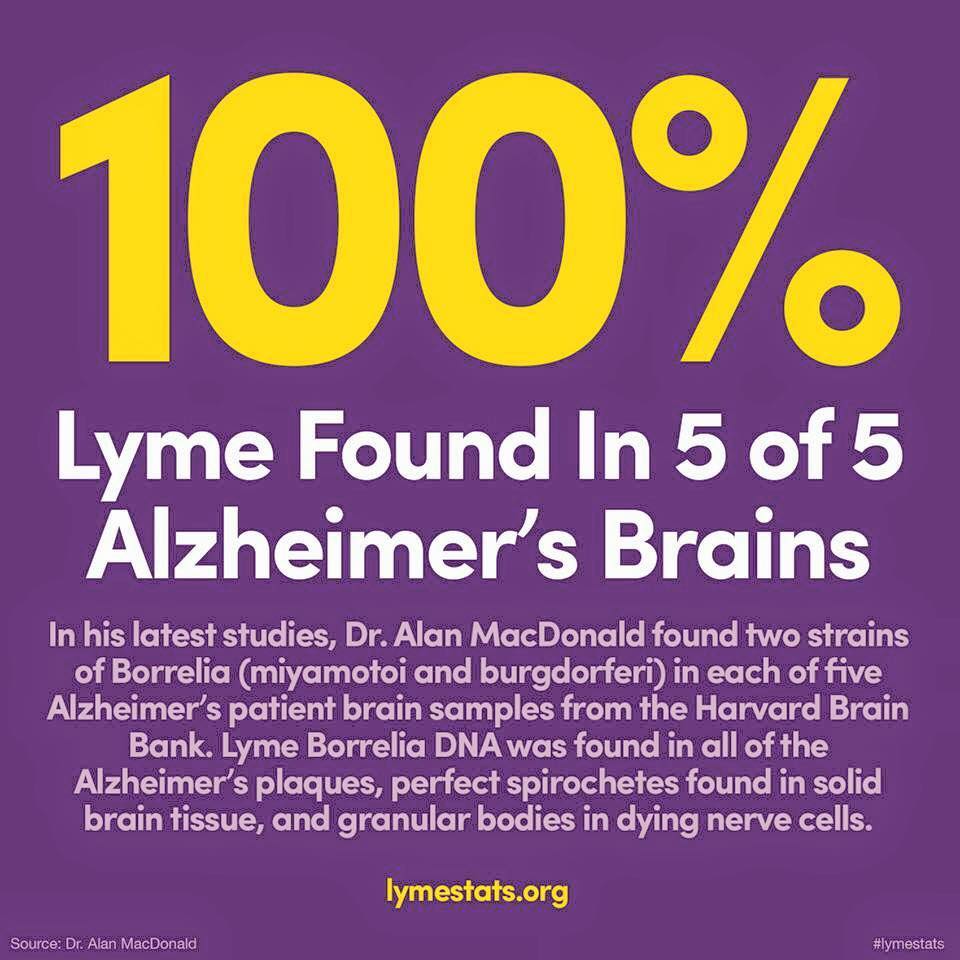
Misinformation on Alzheimer's DiseaseAn example related directly to dementias is the supposition that shows up over and over that Lyme Disease is the cause of Alzheimer’s Disease.

This is sensational disinformation and misinformation. A healthy dose of common sense with thoughtful, careful, and diligent research, analysis, and critical thinking would prove or disprove this bombshell claim.

Common sense brings the “5 in 5 brains” into focus. Five brains out of the millions of people who have had and who have some form of dementia is not a credible sampling of the population affected.

I could very easily go out and find five random people who have the same auburn hair that I do and declare that I have turned genetics upside down and found that auburn hair is a dominant trait (it is recessive).

This is common sense and logic and we must bring these to the table when we’re looking at any and all information. Applied to this graphic, we should automatically mistrust this information.

But that’s not enough to prove it wrong. We actually have to go and do some research. This microstudy was done by McDonald in 2006. The opening statement of the abstract tells us key information through which to view McDonald’s microstudy: “Here is hypothesized a truly revolutionary notion…”

A hypothesis is not fact. It is a theory, a guess, an imagination that remains to be proved or disproved. The infographic, then, presents the information as already being proved, which is misinformation.

That the study was done almost 10 years ago also raises the eyebrows of doubt because much has been done in the research and causes of dementias and Alzheimer’s Disease in those intervening years.

In fact, with some research on the possible link between Lyme Disease and Alzheimer’s Disease, we find a study from 2014 (eight years after McDonald’s microstudy) that definitively repudiates the existence of a link between the two diseases.

To not verify and prove anything and everything is not only lazy, but in many ways, ignorant. Why would we not want to get all the facts instead of trying to support some pet theory that we believe? I don’t understand that.

Too few of us, to our discredit, actually go through this process and that is what I am begging each of you and imploring each of you to do. Know why you know what you know. Know why you believe what you believe. Know why you do what you do.

Never, ever accept anybody else’s word for anything. Prove it. Disprove it. But never just accept it.

Ever. If not for ourselves, for our loved ones. They’ve entrusted their lives to us. We owe it to them to be rigorously honest and apply that everywhere in our lives and to not fall for gimmicks, misinformation, disinformation, and outright lies.

The cost of not doing this is high to everyone.

To us in terms of our character and our credibility (if we perpetuate disinformation, misinformation, and erroneous information, then we are leading people astray and away from the truth).

To our loved ones in terms of their care and their lives (we can cause much harm and much suffering by believing things that are not true and not proven).

A huge part of true love is the continuous hard work it requires us to put into living it, being it, showing it consistently and continually.

Is our love real or is it not? How do we know?