Remembering a Quintessential Leader: UNC Basketball Coach Dean Smith (1931-2015)

Coach Dean Smith had dementia the last several years of his life and as he made the inevitable slide into deep cognitive impairment, there were very few of his players and coaches that he remembered during the last couple of years.

One occasional exception was Bill Guthridge, his long-time assistant coach who became head coach after Coach Smith’s retirement. Bill Guthridge, it has recently been revealed, is going through the journey of vascular dementia.

This was my tribute to Coach Smith on my leadership blog and it deserves a place here because he has gone gentle into that good night.

The Quintessential Leader's avatarThe Quintessential Leader

Coach Dean Smith UNC quintessential leaderCoach Dean Smith, who led the University of North Carolina basketball program for 36 years, died on February 7, 2015 after a long battle with dementia. Throughout his coaching career and his life after coaching, Coach Smith embodied many of the characteristics of quintessential leadership.

He was not a perfect man, but none of us can claim perfection either. There were times when he wasn’t a quintessential leader, just as there are times we are not quintessential leaders.

But when Coach Smith’s life as a whole, both on the basketball court and off, is considered (and that’s the only way to consider anyone’s life, including our own, because no one – including each of us – gets it right every single time), it’s clear that his goal was to be a quintessential leader. And the results of his commitment to that goal are evident to this day.

I grew up…

View original post 1,608 more words

Part 1 – “The End of Absence” (Michael Harris) Book Review

internet going gentle into that good night neurological changesThis is the first of a multipart series of reviews that I will write on The End of Absence: Reclaiming What We’ve Lost in a World of Constant Connection written by Michael Harris in 2014.

I have written on the main point of Harris’ book in “Dementia of the Preoccupied: How Multitasking and Being Attached to Technology 24/7 is Creating A Dementia Effect on Society” and “The Quintessential Leader Perspective On the Art – and Beauty – of Silence,” which everybody should take some time now to read.
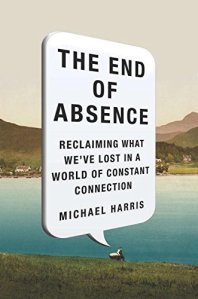
The End of Absence: Reclaiming What We've Lost in a World of Constant Connection by Michael HarrisI would also highly recommend that everyone read The End of Absence: Reclaiming What We’ve Lost in a World of Constant Connection. At about 200 pages, it is completely doable for the shorter attention spans (one of the side effects, as I’ve noted and Harris notes, of a life immersed in digital technology).

Michael Harris and I, it turns out, are, completely independently of each other, raising the same red flags about the brain that morphs (or is born into) into an existence that resides primarily or solely in a digital, always-connected world.

This post will look at some of the research, statistics, and ideas presented in the first quarter of the book, along with my commentary on them.

Reading should ignite an intense interaction in us that includes questioning, testing, proving, thinking deeply about, and making connections with experience and information we already have in our neurological repository of neurons, interconnected lobes, and synaptic networks.

Reading should challenge us, educate us, and give us a broad and rich knowledge base from which we can glean wisdom and understanding. 

Reading should also spark creativity and original thinking that moves us mentally, emotionally, and even spiritually beyond where we were to begin with.

I seldom see this anywhere anymore.

I think that is directly related to how and what in terms of quality and content we’re reading, if, in fact, we’re reading at all (based on my research and observations, it appears the overwhelming majority of us are either on a steady junk-food diet or we’re starving ourselves in this area of life).

Instead, it seems we become the masters of copying and sharing hackneyed and trite little sayings in glancing blows that neither we nor anyone else even pauses at or pays attention to.

This is a result of the end of absence, and it has made us, future generations, and humanity in general poorer. We’ve become slaves to the machines and given up being the captains of our own destinies. In other words, we’ve capitulated to being controlled by technology without even putting up a fight.

I have, over the past couple of years, gradually pulled back from even a semblance of constant connection (I never have been completely connected because I value and need peace and quiet and solitude – all things that “absence” gives us – too much to allow myself to be enslaved by a master that will destroy all that).

I have accelerated that even more in the last few months because I realized I couldn’t function well mentally with the constant and loud cocaphony that it seemed I could never get away from and of all those things that were contributors, this was the one I had complete control over. 

Although I tend to be a Type-A, naturally intense (mainly because I do think pretty seriously all the time and I’ve always found it almost impossible to relax and not be either looking for answers to the questions my thinking brings or for new ways to approach existing problems and dilemmas to resolve or get past them) person, I have seen one source of stress significantly lessen.

And that has helped me clear out some much-needed room in my brain to work on important things, oh, like, life. Even if the answers aren’t here yet and all the problems aren’t solved or behind me yet, at least life in that area is quieter because I’ve consciously and purposefully made it much quieter and much more peaceful.

Peace and quiet can never be overrated.

Before I go further, we need to put digital technology in its proper big-picture perspective. Essentially that is why I write about the dangers and why Harris has written this book. Because there is no proper perspective and no balance. It’s all or nothing and that’s the danger.

But technology is not the source of that danger. We – you and I – are the source of danger. Human beings tend to be polar in their thinking and their behavior by default. If a little of something is good, then nothing but that must be sheer nirvana.

Paper In Fire John MellencampTo quote a line from a John Mellencamp song that resonated with me as much in my very early adulthood as it does today “…we keep no check on our appetites” nor do we recognize that overindulgence in any and all corporeal things will first make us sick, then increasingly unhealthy over time, until at last it finally destroys us.

And that lack of self-control and balance is at the crux of my posts on this subject (as well as the subject of lifestyle dementias) and The End of Absence: Reclaiming What We’ve Lost in a World of Constant Connection.

And I’m very qualified to discuss this because my entire career has been in technology. There are incredibly effective and efficient (in terms of usability, financial feasibility, and operational streamlining – in other words, maximizing value while minimizing overhead) uses for technology and I continually endorse, support, and advocate for those.

One area that I see where technology is best in increasing value and reducing costs is in routine brick-and-mortar operations and organizations.

These include companies that don’t sell tangible products, organizations that don’t promote or support tangible products, governmental regulatory departments (local, state, and federal), and educational institutions.

brick-and-mortar business organizationsBrick-and-mortar operations are extremely costly and offer little in the way of value when considered in the light of new technologies that allow people to connect remotely – as if they were in the same room – face-to-face to meet and do business or get an education.

Buildings cost money. Maintaining them costs money. Furnishing them costs money. Supplying them with utilities and office expendables and technology costs money. Expanding them costs money.

People filling the chairs in-house cost way more than people working remotely (both to the organization and to the employees in terms of transportation, food, clothing, childcare, and time lost with families). 

brick and mortar educational institutionThis is such an inefficient and costly way to work for everybody involved. The benefits are miniscule compared to the costs, which never end and will always encompass the bulk of brick-and-mortar operating capital. 

And here’s the irony that most brick-and-mortar institutions don’t realize or recognize: the true success of any service, business, support, or educational organization is doing more and better in both meeting existing needs and anticipating and growing toward potential needs.

Greater success, progress, and innovation is where the most money should be invested (in other words, a growth model). Instead, most of the money is invested in treading water and going nowhere and having nothing but a lot of unnecessary costs to show for it.

No sane business model would support this, and yet, at least here in the U.S., this is still primarily how most organizations set themselves up.

For someone like me who knows that in most cases this isn’t necessary (and for a fraction of the brick-and-mortar costs, offering better wages and better benefits encourage the best talent), it doesn’t make any sense and I have little patience for all the “oh, we can’t afford that” or “oh, we need more money” when they’re bleeding it out left and right in archaic-based waste.

Another reality of this brick-and-mortar structure is the endless meetings that accomplish next to nothing, but seem to take up the bulk of time. The truth is that most in-house meetings are a waste of time, but remote meetings where participants fly in are both a colossal waste of money and time.

However, there are very few people who want to give up flying somewhere for a few days and “doing business” for a fraction of the time they are there, while spending the bulk of time and money on socializing and entertainment. That’s so antiquated, so ineffective and so incredibly inefficient when compared to its cost and what actually gets accomplished to move forward.

However, some things lend themselves to brick-and-mortar. These are smaller operations that either sell perishable goods (bakeries are a good example) or goods that require an in-person visit to get it right the first time (shoes and clothing are good examples). These, however, are exceptions to the general rule.

Because I’ve been intimately involved with technology all my adult life, I have always been acutely aware of the dangers of constant connection and how it changes the brain.

I will never forget the one and only time that I, in an effort to combat a sleepless night, decided that playing a computer game with lots of motion, flashing lights, and noises at 2 a.m. would be just the thing to make me sleepy and calm me down.

I got sleepy after an hour or so, but every time I closed my eyes, all I could hear was noise and all I could see was flashes of light, and I never got to sleep that night. And I never made that mistake again.

Because of my knowledge and experience, I’ve always been consciously careful to make sure to maintain an offline life and an online life as balanced as possible because I have always recognized that I need both of them equally in my life.

One of the things that Harris talks about in his book is the divide between those of us born before 1985, who knew a world of solitude, peace, quiet, boredom, disconnection for extended periods of time, and the resulting creativity and problem-solving associated with that, and those born after 1985 who came of age in a digital world and have known nothing else.

There were two quotes from Harris’ book that struck me as I considered this divide:

“Every revolution in communication technology – from papyrus to the printing press to Twitter – is as much an opportunity to be drawn away from something as it is to be drawn toward something.”

“As we embrace technology’s gifts, we usually fail to consider what they ask from us in return – the subtle, hardly noticeable payments we make in exchange for their marvelous service.”

For those of us who knew a world at one time that was mostly offline and have transitioned full-tilt into an online world, we should ask ourselves what worthy and healthy things we have sacrificed to do so. 

It has never ceased to amaze me that people can’t go anywhere, even into a church service or funeral, without their cell phones (being on).

Our parents didn’t have cell phones (they didn’t even have answering machines until we were teenagers, if then). If there was an emergency while they were in church services or at funerals (most cell phone calls and texts, by the way, are not emergencies, despite the fact that we’ve elevated the mundane to a level of importance it doesn’t deserve), they didn’t know until hours later when they were home and could answer the phone or play the answering machine.

The world didn’t end with that lapse of time. So what has changed that we think it will now?

We’ve changed. Technology and being constantly connected to a digital world has given us a distorted and unrealistic, but frenetic and immediate, view of the natural rhythm and flow of communication, of life, and, even, of death. 

We’ve surrendered the beauty and serenity of an offline life that we had more control over to a 24/7 online life that controls us 100% of the time. We’ve become mere puppets to a puppetmaster that is constantly pulling our strings in every which way but loose.

Harris’ book urges us to bring back the offline life we knew and find a balance between it and our online life, because what we’ve given up by surrendering our offline lives is costing us dearly and in ways we don’t even realize.

As I’ve been reading this book, 1984 by George Orwell just kept going parallel in my mind because we’ve become the society that Orwell describes in that novel.

Those of us few who are aware of the danger are like Winston Smith, the novel’s protagonist, and the outcome for us is as grim as it was for him: either we will eventually and under great duress and pressure capitulate and become mere shells of our former selves or we will be destroyed because of the threat we pose.

We’ve surrendered our entire lives to technology. We’re not even aware that this has happened. But, as Harris says, “the sheer volume of time we devote to our devices means we are carving ‘expendable’ time away from other parts of our lives.” In other words, instead of enhancing our lives, technology instead becomes our lives and our experiences.

“Ceci tuera cela.” This line from Victor Hugo’s The Hunchback of Notre Dame is apt for the impact of technology on humanity in terms of absence: “This will kill that.”

smartphone-text-messagingHere are a couple – at least for me – of surprising statistics just about kids and adults and text messages.

Kids send and receive an average of 4000 texts a month.

Adults send and receive an average of 746 texts a month. (I was not surprised that I’m not even close to being an average adult here, since I can count the average number of texts I send and receive in a month on less than one hand).

The volume boggles my mind for both kids and adults. Who has that kind of time? And who’s got that much to say? It’s beyond my comprehension.

But what happens neurologically is even more drastic. We become more comfortable with technology than we do with each other. Texting simplifies and reduces the quality of our relationships and increases our emotional distance.

Friends are replaced with contacts. We pretend that complete strangers are our new best friends and the people in our lives who choose less technological connection or are unable to have it fall off of our radars for good.

In other words, we abandon something for nothing.

And our brains form new neural pathways that make this not only okay, but the new normal for how we live.

It is very similar to the same mechanism – and the overarching demand it exerts – that is behind addiction: we crave “quick hits” and “fast fixes” and our lives are consumed with getting the next one.

Anything that requires investment, focus, concentrated attention, and thinking we ignore and turn away from.

It is the same reaction that an addict who doesn’t want to stop using has when they are confronted with rehab.

Neurologically, this becomes totally acceptable for us as technology literally changes the way our brains are connected and what our brains expect.

The changes to the brain, though, go even deeper than connections and expectations. Constant connection causes us to either abandon our memories (based on our actual existences) or subdue them in favor of what we come to believe are memories (stored in brain) but are actually reminiscences (found in an external source).

In other words, our brains are totally reprogrammed in terms of information: how we get it, whether we have to keep it, and whether it means anything or not.

It becomes a simple passive action of processing something outside us and our experiences, instead of the active action of finding, keeping, doing that builds unique records of our actual experiences in our brains.

An example of a reminiscence is doing a Google search for something we should know the answer to. If we don’t remember the answer, we Google it instead of taking the time to work with our brains to search and find the answer and all the original ancillary information and memories that are associated with that answer.

So let’s look a little more closely at what happens in the brain, where it happens, and what the implications are with constant connection to technology.

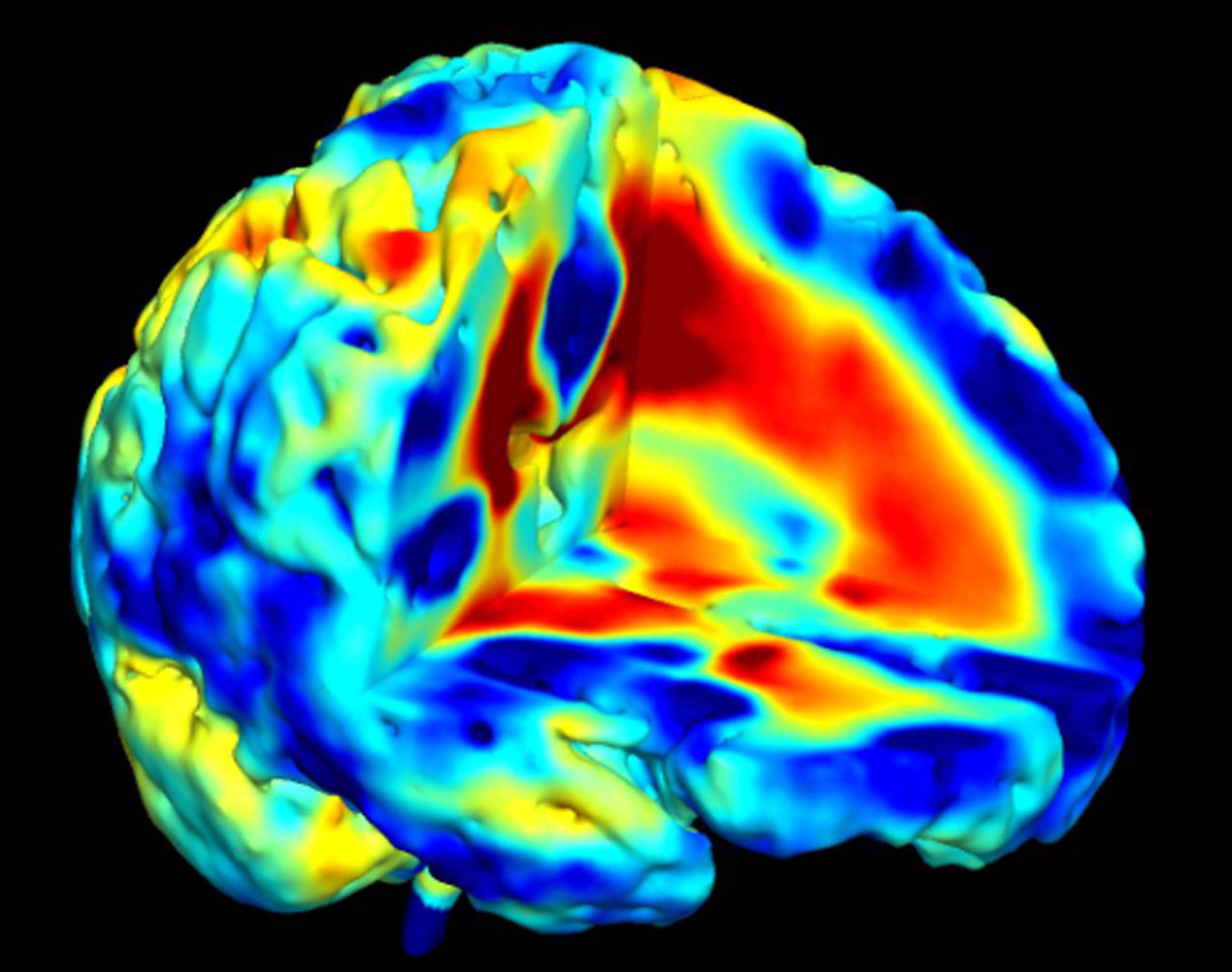
Digital technology reorganizes the brain. Because the frontal lobe of the brain (which handles decision making, problem solving, control of purposeful behaviors, consciousness, and emotions) is primarily involved in response to digital technology, new neural pathways get formed there.

Changes become evident (much in the same way as frontotemperal dementia) in areas of executive functioning. We become more fragmented, more unorganized, more unfocused, and more easily distracted and bored.
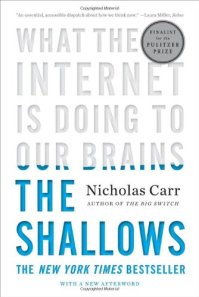
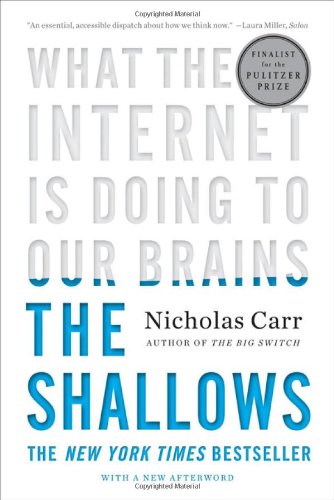
What the Internet is Doing to Our Brains: The Shallows by Nicholas CarrThe thinking process changes as well. We become what Nicholas Carr has described in The Shallows: more capable of “shallow” thinking and less capable of “deep” thinking. Therefore our interests turn to things that don’t require us to think and we studiously and consciously avoid things that would give us no choice but to think.

As thinking is disrupted continually and systematically within the brain, eventually it becomes altogether too difficult, and we abandon it completely.

This is where we become completely vulnerable and susceptible to external programming (whether that comes through people or technology), much like the society that Orwell describes in 1984.

We parrot opinions, beliefs, ideas that are fed to us, but we don’t have any knowledge, proof, or investment neurologically behind them to back them up. In other words, we become simply somebody’s “yes” people.

If we’re looking carefully, we’ll see the world around us is pretty much already like this. Thinking has become too hard and too time-consuming in the face of constant digital connection where we don’t have to think because all the answers are already there when we need them and the answers are right because Google said so, so what’s the point?

And yet that is the point. I would far rather have somebody who’s thinking deeply disagree with me and tell me why so we can put our heads together and reach a more comprehensive understanding or perspective on something (even if we still disagree on some aspects, which is okay) than to be surrounded by “yes” people who don’t have a clue or people who just don’t care.

And, quite frankly, I’ve observed, as Harris has observed in his book as well, that the latter two – the no-cluers and the don’t-carers – are the majority now.

And that’s tragic for humanity on a personal level, on a community level, and on a species level.

We are quickly disintegrating into a unconscious and complete embrace of in-and-out emotional processing (which is not reason and thinking based on logic, knowledge, and facts) and total abandonment of the gifts that are unique to us – that make us human.

These gifts are the ability to reason, to critically think, to test everything, to prove everything, to know because we’ve done the time-and-labor intensive personal work of testing and proving what is true and what is not. What is right and what is wrong. What is good and what is bad.

We will not be able to have any kind of meaningful life without these gifts. Without a framework, without a moral compass, without the ability to think, we will simply exist, unhappily, in increasing fear as well as mental, emotional, and spiritual poverty until we don’t.

No one in their right mind would bring children into this kind of bleak existence, so if time goes on long enough, we as a species will simply die out, if we’re don’t all destroy each other first.

In the next post on The End of Absence: Reclaiming What We’ve Lost in a World of Constant Connection, we will look at the next section of the book and see if Harris is any more hopeful than I am in anticipating what the future of humanity left to its own devices and constant connection looks like.


Facts About the Flu for Our Loved Ones with Dementias and Alzheimer’s Disease

Our loved ones with dementias and Alzheimer’s Disease are much more susceptible to getting the flu than the general population, including senior citizens in general (the overwhelming majority of deaths from the flu each year occur in people over the age of 65).

With the peak of flu season upon us, it would be a good idea to review some basics about the flu. Click on the infographic below to see the full article.


Source: Fix.com

The Rare Dementias: Fatal Familial Insomnia

familial fatal insomnia going gentle into that good nightFatal familial insomnia (FFI) is one of the rarest – the dominant gene that causes this type of dementia has been identified in only 28 families worldwide since its discovery in 1990 – dementias that have been identified so far.

Its first identifiable symptom occurs typically between the ages of 40 and 60 with a sudden increase in trouble falling asleep that quickly progresses to a greater inability to sleep and then just as quickly degenerates into total – and fatal – insomnia. The lifespan of a person once symptoms emerge is very short (around one year).

FFI is in a class of neurological diseases caused by prions ((Creutzfeldt-Jakob disease and its bovine equivalent, Mad Cow disease are other examples). Prions are abnormal pathogens that can be transmitted (in both humans and animals). They cause abnormal folding of prion proteins (normal cellular proteins that are found most abundantly in the brain). Prions are caused by a mutation of the PRNP gene on chromosome 20.

Prion diseases fall into three categories: sporadic, acquired, and genetic.

Sporadic prion diseases are random occurrences of these neurological diseases in people without any known risks or genetic mutations that could cause them. To date, the only prion disease that has sporadic incidences is Creutzfeldt-Jakob disease.

Acquired prion diseases occur because of exposure to the abnormal prion protein. These account for less than 1% of all prion diseases.

Genetic prion diseases are the most common form of prion diseases. FFI, along with Creutzfeldt-Jakob disease and Gerstmann-Sträussler-Scheinker Syndrome (GSS), fall into this type of prion disease.

Since the mutated gene that causes FFI is a dominant gene, if only one parent has the mutated gene, the likelihood of his or her children having the mutated gene is 50%. If both parents have the mutated gene, then all their children will have it as well.

familial fatal insomniaThe areas of the brain most severely affected by FFI include the thalamus, the frontal cortex, and the central nervous system.

Because the first symptoms of FFI usually occur at or near the end of childbearing years, parents aren’t even aware that they are passing the defective gene on to their children. However, a diagnostic test has been developed to test for the mutated gene.

FFI has four discrete and degenerative stages.

In the first stage of FFI, the onset of sudden and unexplained persistent insomnia leads to panic attacks and irrational phobias. This stage lasts approximately four months.

During the second stage of FFI, continued sleep deprivation increases the number and severity of panic attacks and hallucinations become pervasive. This stage lasts approximately five months.

In the third stage of FFI, total insomnia occurs, resulting in rapid weight loss and very limited mental functioning. This stage can last for up to three months.

During the fourth and final stage of FFI, dementia and unresponsiveness occur. This stage can last up to six months.

There is no treatment or cure for FFI, and the mortality rate is 100%.

The Atlantic has an very interesting article on FFI that involves a 30-year-old woman whose mother died of FFI at age 52. The daughter is now working and hoping to find a way to intercept and neutralize the genetic mutation before she reaches the age where her symptoms begin. It’s a intriguing story, which I highly recommend.

For an in-depth look at the biology of prions, an excellent reference book is The Family That Couldn’t Sleep.

The Best-Laid Plans Can Be Wrecked By Family Dynamics

wills-families-family-dynamicsThis blog has talked a lot about the need for each of us to take immediate action to get our life affairs in order because the reality is that for any of us death could be just one breath away. We just don’t know.

But one thing that has not been discussed is the wild card of family dynamics that can wreck even the most-meticulously-thought-out and best-laid plans that we have made for those we leave behind.

Robin Williams, before his suicide last year, had put all his affairs in order spelling out how his estate was to be dispersed in exact detail. Nevertheless, his family members are now in a bitter contest over his estate.

So this post is not about end-of-life planning, but instead about while-you’re-still-alive fixing.

Each of us is limited to what we personally can fix in our family relationships, but, when it’s all said and done, the real fixes that each of us needs to make are within ourselves.

There has not been a non-dysfunctional family since Adam and Eve, so the first thing we need to do is reset our expectations of being surrounded all our lives by perfect people who do all the right things all the time.

And we should recognize that we wouldn’t survive being surrounded by perfect people because none of us is perfect.

Here’s a reality check for all of us. People screw up. People make mistakes. People fall way short of any semblance of perfection.

I know this will be shocking to read, but guess what? So do you. And so do I. 

And the three things within family dynamics that throw monkey wrenches into the best-laid plans for death are related to our imperfections as human beings. They are attitudes and mindsets that only each of us can change within ourselves.

The three monkey wrenches are grudges, greed, and grievousness. They are likely already at work in our families and family dynamics and have been for some time. Death and all that goes with it will just take them to a whole new level that will break everything wide open.

grudges monkey wrench family dynamicsGrudges are things that we believe have been done to us by other people to harm us and hurt us. The attitude and mindset of grudges is that we hold these real or perceived wrongs against those people for as long as we live and we refuse to forgive them. 

Grudges are extant in families and in family dynamics. And it shows up in the reactions to how stuff – the material things – get dispersed (or taken without anyone else knowing long before a death).

When family members believe they were cheated out of something they deserved or were entitled to (the truth is we’re owed nothing and we’re entitled to nothing because we didn’t do anything to acquire the stuff that’s in dispute), their complaints are a litany of all the grudges they hold against every other family member (and these can go back almost to birth).

Family members with grudges like to enlist company, so they actively work to divide the family by trying get other family members to agree with them (validate their grudges) and turn on family members who don’t agree.

This will rip the family apart. And, many times, the tear is so extensive that it cannot be put back together at all.

greed families family dynamicsThe second monkey wrench is greed. When stuff and material things matter more than anything else on earth, then greed is the attitude and mindset at work. Greed wants everything and wants to share nothing with anyone else.

Greed also is present in families and family dynamics. Look around at the members of your family. Look at yourself.

Which of your family members cares the most about appearances of affluence? Which ones are always on a mission to have the best stuff, the most expensive stuff, the latest stuff, and the most stuff?

Are there competitions under the surface – or right out there in the open – between family members to outdo each other in the stuff department? Are you one of those family members?

I can guarantee it’s somewhere in every family. Wherever it is, greed is the attitude and mindset. And it will take over when it’s time for estates to get settled (many times it starts long before then) and it will also rip the family apart. And that will likely be irreparable.

The last monkey wrench is grievousness. Grievousness is anything that is intentionally done or said to inflict pain and cause grief to other people. It too is an attitude and a mindset.

causing pain and grief going gentle into that good nightGrievousness also is replete within families and family dynamics. It seems that there is always at least one family member who is determined to intentionally cause pain and grief to the rest of the family members. They seem to get a perverse satisfaction out of the pain and the grief they cause, often crowing over it and recounting it as a glorious thing again and again for anyone who will listen.

Grievousness is vindictiveness and vengefulness. The attitude and mindset reflects a desire to crush other people for the fun of it and also to bask in the “victory” of how much damage was done.

If we want to change our family dynamics and remove the monkey wrenches of grudges, greed, and grievousness, we have to change our attitudes and mindsets.

Grudges need to be forgiven. Holding something (real or imagined) against a family member for life and not letting it go (it doesn’t mean you forget and you’re not aware if it’s real, but you let go of the hurt and the anger about it) says more about us than it does about the other members of our family.

It shows that we are unforgiving and that if anyone else in our lives does or says something that we perceive as wronging us or hurting us, they will not be forgiven either.

Being a grudge-holder drives people away because nobody wants to be in a position where there is no forgiveness when they screw up, because we all do.

Grudge-holders tend to have a series of short-lived really-hot-then-suddenly-cold relationships as a pattern in their lives. The pattern looks like this: as soon as they develop a grudge against someone, they drop the person as if they never existed, and they move on to someone new, until that person screws up, and on and on.

If we’re grudge-holders, then we need to change. We need to forgive and we need to let our families know – we don’t have to say anything, because our actions will show it – that we’ve forgiven all the things we were holding against them.

Greed needs to be eliminated by putting life into perspective. Stuff is just stuff. It can’t hold you, it can’t love you, it can’t care about you. All it can do is wear out, break down, and eventually end up on a garbage heap.

It’s ironic that in families where there is greed among its members that all the stuff that they’re so desperate to acquire at the risk of everything else eventually ends up in boxes or basements or attics where it is never touched again.

We need to let go of our intense attachments to stuff and work on rebuilding our attachments to the people we love, who in the long run, are our only physical saving graces. When those people are gone, they’re gone, and no amount of stuff will ever take their place or fill the void they’ve left behind.

Grievousness needs to be replaced with gentleness and kindness. Hurting other people intentionally and reveling in the fact that we’ve caused people pain and grief is a reflection of our own mindset and attitude of hate.

This hate transfers all blame, responsibility, and accountability for our own words and actions – and we know those aren’t always perfect or good – onto the people we hurt and gloat about seeing in the grief and pain that follows.

I challenge each of us to look deeply and carefully and honestly at ourselves within the context of our families and our family dynamics and see if we personally have the attitudes and mindsets of grudges, greed, and grievousness.

And if we find any, some, or all of these within ourselves, then I give us the biggest challenge of all: to change them, starting today.

There’s an interesting phenomenon that happens when a person begins to change their attitudes and mindsets. The people with whom that person’s life intersects will start changing too.

Only you and I can decide whether that change will be for better or for worse.


Dementia of the Preoccupied: How Multitasking and Being Attached to Technology 24/7 is Creating A Dementia Effect on Society

lifestyle dementia technology multitaskingNeuroscientist and author Frances Jensen, in describing what normal life has become for most of society, calls what happens neurologically dementia of the preoccupied.

It’s an apt term. It’s also the brain mimicking dementia symptoms, because our brains aren’t wired to do continual rapid attention/task shifts nor is it wired to multitask.

Despite a lot of evidence that a 24/7 connection to technology (produces a neurological condition, which includes changes to the structure of the brain, known as digital dementia) and multitasking are not only damaging the brain long-term, but they also reduce productivity dramatically (the effect neurologically is exactly the same as staying awake for 24 hours or more or smoking marijuana), a 24/7 connection to technology and multitasking are still seen as badges of honor and are highly prized both professionally and personally.

The problem with multitasking is that we can’t really multitask. Neurologically, we are wired to focus all our attention on a single task and to complete it before moving on to something else. When we try to force our brains to do something they aren’t designed to do, we end up doing more harm to ourselves than good.

One harm is simply forgetting what we were doing, leaving it unfinished, or forgetting to do something we needed to do altogether.

smart phone dementia lifestyleAs a result, at the end of a day, which is when we finally put that phone down, turn the digital devices off, and turn off all the rest of the technology we have going (until we open our eyes the next morning), all we have is a random, disjointed mess of incompletion. In other words, we have little to nothing concrete or finished to show for being awake for 14-16 hours.

That increases anxiety, which is damaging to the brain. It also increases stress, which is damaging to the brain.

tablet dementia lifestyleAnd because we’re not getting anything accomplished, we’re constantly behind and getting further behind until we’re completely overwhelmed to the point of just quitting, so that most of what we set out to accomplish as far as things that actually mean something and are important never get done.

The modern world, if we choose to follow the crowd, is bad for our brains. I suspect that we will see more dementia-like symptoms emerging sooner in the general population in the not-too-distant future because of our addiction to multitasking and being connected 24/7 to technology.

I also expect the longer-term outcome of our multitasking and 24/7 connection to technology to be another kind of permanent lifestyle dementia among the general population.

But, as with all lifestyle dementias, we can make choices that can prevent dementia of the preoccupied, digital dementia, and the real possibility of early, permanent dementia.

But it means that we have to be willing to go in a different direction from the crowd of society, and most of us, it seems, get more short-term satisfaction from following the crowd and being part of it than we do from the conscious effort of taking care of ourselves and making changes and choices that are neurologically – and physically and emotionally – healthy.

We’re already paying dearly, in ways we may not be aware of, for the choices we’re making. The cost will only get steeper with time.

It will not only affect us in dramatic and negative ways, but also our loved ones who will end up either taking care of us because we are unable to take care of ourselves or will be forced to have someone else take care of us because they can’t meet the demands of caregiving.

We don’t have control over the external factors – and nobody really knows or will ever know what all of those are – that cause dementias and Alzheimer’s Disease. We don’t have control over genetic factors that give us a greater risk of developing these degenerative neurological diseases.

But we do have control over the choices we make in our lives that put us at greater risk for developing dementias and Alzheimer’s Disease.

It is my hope that we will all choose to take that control and use it wisely.


The Geopolitical Effect of Dementia: When A National Leader Has Dementia

King Salman Saudi Arabia dementia going gentle into that good nightI’ve read several news articles about the new king of Saudi Arabia, Salman bin Abdul-Aziz Al Saud, that confirm that he has dementia.

King Salman’s ascent to power is essentially a coup from rival family factions in Saudi Arabia. Alastair Crooke wrote a two-part insightful look into Saudi Arabia’s history in terms of the fundamentalism versus modern fight that has Islam as its backdrop: Part 1 and Part 2.

King Salman and his family (many of whom he has already put into power in direct opposition to King Abdullah’s express wishes for the new government) are much more closely tied to the very strict and fundamentalist Wahhabi sect of Sunni Islam than King Abdullah and his family.

These closer ties to Wahhabism could mean earthquake-like shifts in the geopolitical dynamic in the Middle East and with the West in very quick order.

But I cannot help but wonder how King Salam’s dementia will factor into the mix. My educated opinion is that King Salam will simply be a figurehead with the other people who’ve been brought to power making the actual policies and decisions.

And that’s very, very dangerous for everybody involved.

Ronald Reagan dementia 2nd term going gentle into that good nightAmericans don’t need to look too far back into their own history and Ronald Reagan’s presidency (it was clear to everyone who was around President Reagan a lot during his second term in office that he was suffering from dementia) to see this in action and how it began the continuing downhill slide of government and began the complete erosion of trust in and trustworthiness of anything related to government.

Will Saudi Arabia – and the world – experience an ever greater cataclysmic effect with another ruler with dementia at the helm?

Time will tell.

Will Poor Sleep and Sleep Deprivation Now Lead to a Lifestyle-Related Dementia Later?

restorative sleep dementias going gentle into that good nightThe answer is “probably.”

There have been several studies in the last two years on the effects – positive and negative – of sleep on the brain. They all agree on one point: to function optimally, the brain requires quality sleep and enough of it.

They also agree on another point: the way our modern society is structured, the majority of us are not getting enough sleep, and the little sleep we are getting is not quality sleep.

The fact that poor sleep and future dementia are linked is not new.

A sleep disorder known as REM sleep behavior disorder is a key characteristic of Lewy Body dementia, but the sleep disorder is often present decades before symptoms of Lewy Body dementia emerge.

In a study published in the The Journal of the American Medical Association in 2011, researchers showed a strong link between sleep apnea (sleep-disordered breathing) and dementia.

However, new research is now showing that even those of us without these two sleep disorders are getting less sleep and the sleep we do get is not quality sleep. New neurological research is showing us how important enough sleep and good sleep is for our present and future neurological help.

circadian-rhythm-sleepThe body has a natural circadian rhythm designed to promote and facilitate sleep as daylight turns into evening and then night and to promote and facilitate wakefulness as night turns into day.

Until the Industrial Revolution, which actually consists of two iterations (one in the late 18th century and the second, which was the more profound of the two, in the mid-19th century, the human race generally slept and awakened based on the body’s natural circadian rhythm.

After the second iteration of the Industrial Revolution, when crude ways to keep the lights on 24 hours a day, 7 days a week emerged, all that changed. Initially, the only segment of the population that it affected were those who were employed in factories, mines, and foundries.

factory work shift work sleep deprivation going gentle into that good nightAs textile factories, ore and mineral mines, and metal foundries remade the work day into two 11-hour shifts – generally, 7 am – 6 pm and 7 pm – 6 am – the second shift of workers were forced to ignore and work against their natural circadian rhythms to fuel the manufacturing boom, which was bolstered by a greater demand for manufactured goods throughout all strata of the population.

Although there was less concern about the workers – health, quality of life, and even death – then, there is still a significant amount of data from that period that shows most of horrific accidents (the majority of which were attributable to human error and resulted in both permanent disabilities and death) occurred during the later hours of the 2nd shift.

In the early 20th century, as manufacturing expanded into transportation, work days were again revised into three shifts – 7 am – 3 pm, 3 pm – 11 pm, and 11 pm to 7 am – with similar higher accident rates in the 2nd and 3rd shifts.

medical professionals shift work going gentle into that good nightMedical professionals in hospitals, nursing facilities, and emergency services work were the next group of people to be required to work in shifts. Additionally, of all the careers in which shift workers were employed, it was not unusual for many medical professionals to work double shifts (back-to-back shifts) to provide necessary services.

During World War II, almost all manufacturing facilities in the U.S. transitioned to 24/7 production and a 1st, 2nd, and 3rd shift to support the Allies’ efforts in the war. After World War II, as those factories transitioned back to civilian manufacturing, they kept 24/7 production and three shifts in place. 

As the Technological Revolution replaced the Industrial Revolution (also in two iterations, with the first one beginning after World War II, and the second one, which now affects every human on the planet, beginning in the late 1960’s) and the world became instantaneously and simultaneously intricately connected, the 24/7 workday began to affect almost everyone on the planet, white-color workers working late nights going gentle into that good nightincluding white-collar workers who saw their workdays – and nights – lengthened beginning in the late 1980’s.

As more and more people have been, by necessity, forced into living and working in a 24/7 environment, researchers have kept a close eye on how successful our efforts to work against our natural circadian rhythms have been.

The answer is we’re all pretty much failures at it and the results are poor quality sleep and sleep deprivation.

And like our ancestors in the Industrial Revolution, working late into the night or all night, whether in a medical facility, an emergency services department, a manufacturing facility, an office, or at home (because half the world’s awake when it’s time for people in the U.S. to go to bed), shows the same elevated risks of accidents and injuries (both work-related and non-work-related) when compared to working during daylight hours.

Here are a few statistics directly tied to shift work (if you’re an office jockey reading this, remember that this applies equally to you and all those late nights and overnights you’re working wherever you’re working them):

  • Work-related injuries increased to a little over 15% on the 2nd shift and almost 28% on the 3rd shift.
  • The longer the shift, the higher the risk of injuries: 13% higher on a 10-hour shift and almost 30% higher on a 12-hour shift. 
  • The more consecutive night shifts worked, the greater the risk of sustaining an injury (37% higher by the fourth consecutive night shift as opposed to 17% higher by the fourth consecutive day shift).
  • Almost 50% of the late-night (10 pm – 1 am) and early-morning (5 am – 8 am) car accidents – fatal and non-fatal – involve drivers who are driving to or from work.

Pretty scary, huh? And, yet, despite all the evidence that it’s a really bad idea, a dangerous idea, and a dumb idea, we, as a society, keep doing it. I won’t get in-depth into the reasons for that here, except to say that they are tied to greed and competitiveness, which are soul issues.

What is the biology behind the statistics above?

That we can answer. And I’ve had more jobs than not where I worked 10-12 hours on a Sunday-Thursday night schedule, where I’ve worked many late, late nights only to be back at my office first thing the next morning, and where I’ve pulled many all-nighters, so I’ve got a lot of firsthand experience to bring to the table.

The reality is that unless you’re physically exhausted – mental exhaustion actually keeps the brain in gear and is totally counterproductive – you can’t get any real quality sleep during the day. Melatonin production is off and all the hormones to keep you awake are in action, so trying to sleep well is a losing battle.

So while you may be able to get a few hours of restless sleep, you do not go through the normal sleep cycles associated with nighttime restorative sleep.

As a result, because your brain is “foggy” when you’re awake, your response times are sluggish, and, combined with the normal circadian rhythm of sleep kicking in at night – even if you’re awake – all of these are directly tied to the increased risks of accidents and injuries during work hours at night.

The later you work at night the more likely you will have an injury and/or accident because these are the normal hours when sleep is deepest and during which you’ll be fighting sleep the most.

But the long-term effects of poor sleep and sleep deprivation are just as serious with regard to neurological health.

In a series of studies on sleep published in late 2013, researchers discovered that good sleep and normal sleep (7-8 hours at night) enables the brain to clean out the toxins – including beta amyloid proteins, which are involved in the development and progression of Alzheimer’s Disease – that have accumulated in it during the day’s mental activities. This process is so energy-intensive that it can be done only during sleep, when the brain doesn’t have anything else to do.

And here’s the thing. Perpetually skimping on sleep, for a lot of us who don’t do shift work and don’t have careers that demand a lot of late, late nights and early, early mornings on a consistent basis, is a lifestyle choice.

Technically, however, all of these types of careers, except for manufacturing work, which puts food on the table and pays the bills for people who might not be able to do so otherwise, are lifestyle choices because anyone going into these careers know the demands before they choose the education and jobs that lead to them.

And that substantially increases your risk of developing a lifestyle dementia.

digital and electronic connectivity sleep deprivedWe, as a society, are very sleep-deprived. And that includes a lot of people who are not earning their living during the night.

Much of that, in my opinion, is because we are digitally and electronically connected all the time and that crowds out the time we allocate for sleep.

A few questions should help you know if this applies to you personally.

  1. Do you watch TV for several hours in bed or do you play video games before you go to sleep?
  2. Is your smart phone or tablet beside your bed so you can check email or keep up with social media? Do you check them during the night?
  3. Are you digitally and electronically connected last thing before you close your eyes at night and first then when you awaken in the morning?
  4. Do you remember what you did at night before you got digitally and electronically connected?

If the answer to the first three questions is “yes” and the answer to the last question is “no,” then you’re making a lifestyle choice, probably sacrificing sleep (it’s important to remember that all these digital and electronic things stimulate the brain, so their after-effects stay with you for quite some time after you turn them off, and that means it takes you longer to fall asleep), to stay connected all the time to a world, that quite frankly, isn’t all that important or real anyway.

And whatever is real or important about it can wait until tomorrow. Like it did when a lot of us were little kids and there was no cable tv, there was no public internet, there were no video games, there were no personal digital/electronic devices, and there were no cell phones.

The world didn’t end then, and it won’t end now if you put all these away early in the evening and give your brain a chance to relax by playing a game with your family, listening to music that soothes your soul, getting lost in a book, or simply being quiet for a little while, using that time to meditate and reflect on your day and make plans for tomorrow.

Even though since I was born I’ve always had trouble sleeping a lot and getting good sleep when I do, I purposely shut everything down early in the evening to engage in quieter and more reflective activities and I stay away from it until I’ve had some quality time in the morning to get ready to tackle it again.

One day each week – for me, it’s the weekly Sabbath – I disconnect completely for the 24 hours between sunset Friday and sunset Saturday, and I’ve begun to move away from being connected much on Sundays as well.

I rarely have my cell phone anywhere near me and even when I do, I rarely use it. I certainly don’t want it in my bedroom with me at night.

With my sleep history, I’m already behind in this game, so I make lifestyle choices to improve my odds the best I can. It may not be enough to stave off dementias, but at least I know the choices I’m making increase the odds that, if I live long enough (I always pray I don’t…we start dying the day we’re born, so it’s pretty much all downhill from that point on), they’re either mild or short and done.

For all of us who can read this today, now is the time to start making sure we’re doing everything in our power to get enough sleep and to get good sleep when we do. That’s a lifestyle choice that only you can make for you and that only I can make for me.

It may mean some hard choices. It may mean a career change. It may mean disconnecting during nighttime from technology. It may mean looking at our lives and figuring out what’s really important in the long-term, instead of buying into the pervasive idea that now is the only important time in our lives.

But in the end, from this moment on, at least in the realm of sleep, you can do something to help yourself, but you have to decide what you’re willing to trade off now and what you’re willing to live with in the future.


Making Life a Little Easier in the Care of Our Loved Ones with Dementias and Alzheimer’s Disease – Part 3

elderly father adult son caregiver dementia ADThis is the last in a series of posts that discusses everyday practical needs that almost no one ever talks about in providing care and making life easier for both us as caregivers and the loved ones with dementias and Alzheimer’s Disease that we care for.

In the first post in this series, we discussed how to make things easier day-to-day for our loved ones in the areas of eating and incontinence.

In the second post in this series, we discussed day-to-day helps in the areas of personal grooming and bathing in the journey through dementias and Alzheimer’s Disease with our loved ones

In this post, we’re going to discuss the other day-to-day areas where we can make care easier for ourselves and our loved ones in the journey through dementias and Alzheimer’s Disease.

The first area we’ll look it is how to effectively and safely address limited mobility and problematic mobility issues that arise both as a result of the progression of these degenerative neurological diseases and the aging process itself.

Because dementias and Alzheimer’s Disease affect the parts of the brain that control movement and balance, even our loved ones with no other health-related mobility limitations will eventually develop a shuffling gait and maintaining their balance when standing or walking will be difficult, increasing their risk of falls and injuries.

Our loved ones will also have a much harder time getting up and down from a seated position.

One of the most noticeable difficulties will be getting up from and sitting down on the toilet.

bedside commode going gentle into that good nightMany occupational therapists will recommend, as part of the home adaptive accessory purchases, buying a bedside commode for use when our loved ones are sick and unable to easily get to the bathroom or when – especially toward the end of life – if our loved ones aren’t completely immobile, walking any distance is too difficult.

A bedside commode will cost between $30-$40 out-of-pocket and can be purchased at a local medical supply store. However, with home health care or palliative health care, this will be covered by insurance (Medicare or other insurance) as part of the home health care or palliative health care services and equipment.

Occupational therapists will also recommend using the chair portion of the bedside commode over the bathroom toilet in the interim to facility easy standing and sitting.

This is not the best option.

The bedside commode chair is wide, and often won’t fit well, especially in smaller bathrooms, and securely enough over the toilet for this application.

Additionally, the distance between it and the toilet (even with the open guard that comes with most of them) makes keeping the toilet area clean and sanitary more difficult.

So I recommend, instead, a raised toilet seat with arms. 

raised toilet seat going gentle into that good nightA raised toilet seat will cost around $60 out-of-pocket and can be purchased at a local medical supply store. However, with home health care or palliative health care, this may also be covered by insurance (Medicare or other insurance) as part of the home health care or palliative health care services and equipment.

The advantage of a raised toilet seat with arms is that it attaches to the toilet, is more secure when standing and sitting, and is more comfortable than the bedside commode chair. It is also more sanitary and easier to keep clean.

Installation is quick and easy. With the toilet seat up, the raised toilet seat is placed directly on the bowl of the toilet where it attaches securely with a large plastic bolt to the inside of the bowl.

As our loved ones progress in their journeys through dementias and Alzheimer’s Disease, they will become more sedentary than active.

This will mean sitting for long periods of time. Motor skills become more muted with neurological degeneration and a lot of the automatic sensory information that the brain gets, processes, and responds to will disappear.

Therefore, it will become less automatic for our loved ones with dementias and Alzheimer’s Disease to feel the natural discomfort of sitting in one position or sitting still for a long period of time that, when we’re neurologically healthy, causes us to automatically move and shift weight frequently when we’re seated.

This results in the increased likelihood of pressure sores and pressure ulcers developing. Once the skin breaks down in this manner, treatment and healing are difficult at best. Because of this, infection and sepsis often follow leading to death.

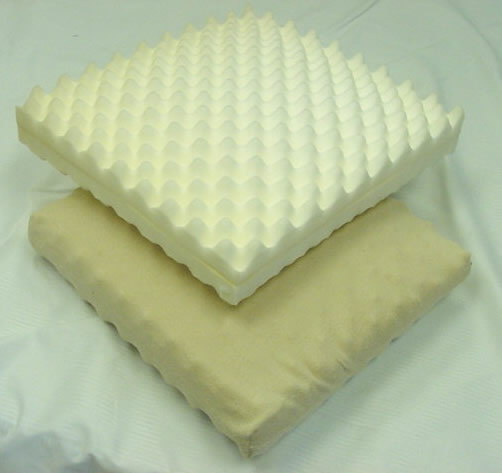
The most effective way to prevent pressure sores and pressure ulcers from sitting for long periods of time is to buy padding for chair foam pad going gentle into that good nightthe chair that distributes weight more evenly and that does the work of ensuring that automatic shifting of weight occurs.

The least expensive way (about $20) to do this is to put a thick (at least 4″) egg-crate-type foam pad (most come with a plastic covering to help with incontinence issues) in the chair that our loved ones with dementias and Alzheimer’s Disease spend most of their seated time in. 

These can be purchased at most big-box retail stores.

Another physiological change that occurs for our loved ones as dementias and Alzheimer’s Disease progress is difficulty swallowing (known as dysphagia). This difficulty includes liquids and solid foods, as well as medication.

Dysphagia presents two real dangers to our loved ones. One is choking. The other is aspirating food into the lungs, which can lead to the development of pneumonia. In fact, it is more common than not that pneumonia is the cause of death for our loved ones with dementias and Alzheimer’s Disease.

That’s how serious swallowing issues are for our loved ones.

However, we can help mitigate this risk by some very simple techniques that will facilitate easier swallowing and reduce the risks of choking and aspirating food into the lungs.

Let’s start with taking medication since this is usually where swallowing issues appear first in the journey through these neurological diseases.

However, before I discuss the technique that usually is helpful for our loved ones to more easily swallow medications, it is important to discuss the medications themselves and the form they are administered in.

pill cutter splitter going gentle into that good nightFirst, as caregivers, we should all have a pill cutter (also known as a pill splitter) as part of pharmacy stash. These can be pick up at any pharmacy very inexpensively.

This will come in handy when managing medications with varying dosages (such as diuretics or glucocorticoids like prednisone, which might be increased temporarily or gradually and then decreased the same way). 

However, I strongly advise against a pill crusher and crushing any medications (although assisted living facilities and nursing homes routinely ignore this when administering medications to residents with dysphagia). The reason is because there are medications that when crushed can cause serious side effects and become completely non-therapeutic.

unsweetened applesauce medication swallowing going gentle into that good nightWhen our loved ones with dementias and Alzheimer’s Disease begin to have problems swallowing medications with water or juice, the easiest and usually-most-effective way to help them be able to swallow the medication is to use applesauce (I recommend unsweetened).

Put the pill on about 2/3 teaspoon of applesauce, which goes down the throat more easily, and swallowing should be much easier.

If our loved ones have medication that come in a large pill form (potassium supplements are a good example and because they tend to dissolve in the mouth and are very bitter are not a good candidate for cutting in half), we should have our loved ones’ primary care providers (PCPs) prescribe a different form of the medication.

Some medications are available in a liquid form (potassium, for example, comes in a liquid form and can be mixed with applesauce).

Other medications are available in a sprinkle form (for example, Depakote, which is often used for mood balance in Lewy Body dementia because of the high sensitivity to anti-psychotics like SeroquelXR, is available in sprinkle form and can be mixed with food).

If a liquid or sprinkle form of the medication is not available, then we should work with the PCP to change to a smaller-pill alternative that will produce equivalent results.

As swallowing becomes even more difficult for our loved ones, liquids and solid food may need to be altered as well.

Sometimes this can be as simple as cutting up food (meat, for example, can be very hard to chew thoroughly in large pieces) into very small pieces and modifying or eliminating foods.

Easy foods to modify are vegetables. Raw vegetables and salads become difficult to chew and swallow for our loved ones as they reach this stage of dementias and Alzheimer’s Disease. Easy alternatives to ensure good nutrition are cooked beans and finely chopped vegetables, including pureed vegetables and beans dysphagiasome of the lettuces we normally use for raw salads (avoid kale and mustard greens – I use these for raw salads – because even cooked, they can be difficult to swallow).

You can also use these cooked beans and vegetables to make a creamy pureed soup. The key is to make the soup so that it approximates the texture of applesauce (not too thick and not too thin).

And I will pass this modification on as a personal note – if you want my recipe, email me at goinggentleintothatgoodnight@gmail.com – for cornbread. Crumbly, grainy, and textured breads and crackers are eliminated from our loved ones’ diets when swallowing everything becomes problematic. The reason is that they can choke and aspirate the little grains and crumbs into their lungs.

But my mama loved cornbread and I wanted to see if I could find a way to keep it in her diet. I had been doing some reading on healthy substitutions in baking (for oil, for sugar) prior to this ever being an issue, so I decided to try one of the healthy substitutions for oil – yogurt – in a batch of cornbread to see if it would change the texture from grainy to smooth. It worked perfectly (beautiful texture) and we were able to keep that in Mama’s diet (and any time we can find a way to do this, please go for it and try it!). 

Swallowing issues may advance to the point where the dysphagia diet levels need to be implemented. There are three levels in this diet, depending on badly swallowing is compromised. I have not personally used these, although I’m familiar with them.

However, this is something that a speech therapist with home health care or palliative health care is qualified to and can help and guide us through at this juncture with our loved ones with dementias and Alzheimer’s Disease.

I can’t emphasize enough how important it is for us as caregivers to have one or other of home health care or palliative health care on board as we provide care for our loved ones since they have resources, like speech therapists, who are available to walk us step-by-step through each phase or issue that we may encountered.

This is the last post in this series. If there are other day-to-day “in-the-moment” things related to caregiving for our loved ones with dementias and Alzheimer’s Disease that would make your life – and, no doubt, many others’ – easier that you would like to see discussed, leave a comment here and I’ll work with you to get you the answers and the help you need.

And please don’t forget to share this on social media. Dementias are more prevalent than ever – and will only increase from this point on – and more and more people are in the role of caregiving for their loved ones.

I often have people ask me what they can do to help and support other caregivers. All you have to do is share. I’ll do the hard lifting of research and writing. 🙂

Even if you don’t know all the people in your online networks, by sharing this information with them, you may be giving a lifeline to someone who is struggling, feeling overwhelmed, and completely alone on their journey.

We never know whose lives are crossing the path with ours. And this may be a random act of kindness that you’ll never even know you did. All you have to do it hit the Share buttons (and there is an email button for those who may not be on social media) for the social media forums you’re on to pass this information along to whoever may need it and can use it.

Thanks!

The Importance of Fitness and Exercise for Our Loved Ones with Dementias and Alzheimer’s Disease

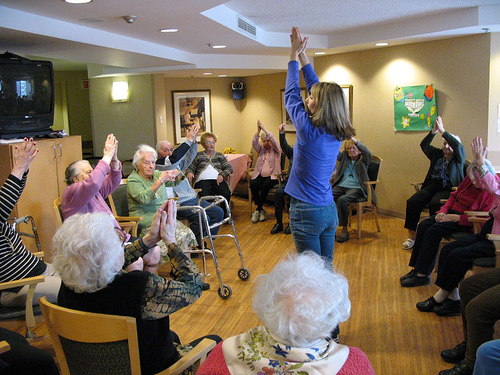
exercise and fitness for our loved ones with dementias and Alzheimer's DiseaseExercise and fitness are important aspects of life and are beneficial for everyone, but particularly for our loved ones with Alzheimer’s Disease and dementias.

There has been significant research that shows that leading a life that is physically active and includes regular exercise can have a positive impact on overall health and well-being.

People who exercise regularly have improved levels of general cardiovascular health, stronger bones and, therefore, a reduced risk of osteoporosis. They also tend to sleep better at night and have improved strength and balance, which can reduce the fall risks for our loved ones with dementias and Alzheimer’s Disease.

Exercise has other wonderful health benefits too. Any level of regular physical exercise can have a positive impact on emotional health.

Exercise may help alleviate some of the symptoms of depression, a common condition in our loved ones with dementias and Alzheimer’s Disease, particularly in the early steps of the journey through these diseases.

Exercise can be beneficial with depression symptoms because it releases endorphins and other mood-enhancing brain chemicals. And even if our loved ones have reduced mobility or are in the middle-to-late steps of the journey through dementias and Alzheimer’s Disease, there are still ways to incorporate regular exercise into their daily routines.

Listed below are a few simple exercises for our loved ones with dementias and Alzheimer’s Disease.

Exercises Using A Chair

Seated exercises are ideal for our loved ones with dementias and Alzheimer’s Disease since they tend to have stability issues. Additionally, chair exercises are a great way to begin getting more physically active if our loved ones haven’t been for a while.

Seated exercises can help to build and maintain essential muscle strength and balance, but they are much less strenuous than standing exercises and reduce the risk of falls and/or injuries.

It’s important to use a sturdy chair with a back (I would recommend one that’s roomy with arms to prevent our loved ones from falling off sideways) for seated exercises and for us to be close by to assist if need be.

With our loved ones with dementias and Alzheimer’s Disease, it’s important to take the time to do these exercises at their pace. This includes taking the extra time to patiently coach – without expecting perfection in execution or repetition, with “good enough” done safely being “great.”

It would be ideal to begin each exercise session by breathing in as deeply as possible and then breathing out gently (if our loved ones are able to lift their arms to the side while doing this, it will help increase lung capacity, but if not, that’s okay).

We may have to coach and show our loved ones how to do this, doing the breathing exercises with them to encourage them to follow our example. Repeat this up to a maximum of ten times.

1st exercise (shoulder rolls): Lift the left shoulder up, then take a deep breath in. Breathe out as the shoulder drops. Then, lift the right shoulder up, then take a deep breath in. Breathe out as the shoulder drops. Alternate between the left and right shoulder up to ten times.

2nd exercise (neck strength): In the same sitting position, tilt the head back. Following the same breathing pattern as before, breathe in as the head is tilted back, then breathe out the head moves forward. Then, breath in as the head is turned to the left and breath out as the head is turned to the right. Repeat, alternating between back and forth and left and right up to ten times.

3rd exercise (sitting march): Pace can be as slow or fast as is comfortable. Lift the right knee up and breathe in; put that same foot down and breathe out. Repeat the same process with your left leg. Alternate between left leg and right leg up to twenty times.

4th exercise (leg stretches): Extend the left leg fully, breathing in as it’s extended, and breathing out as it is bent. Repeat with right leg. Alternate between left and right legs up to ten times.

5th exercise (ankles): Cross the left leg over the right leg, and rotate the left foot. Then, cross the right leg over the left leg, and rotate the right foot. Alternate between left and right foot, breathing rhythmically throughout, up to ten times.

Exercising to Music

In the early steps of the journey through dementias and Alzheimer’s Disease, our loved ones may be able to do slightly more strenuous exercises around the home, such as gardening, walking up and down the stairs or even dancing.

Exercising to music can make the activity a much more enjoyable experience. Since listening to music can also be beneficial in many ways for our loved ones with dementias and Alzheimer’s Disease, incorporating music into daily activities like exercise makes perfect sense in our overall care strategy.

going gentle into that good night divider

This is a guest post by Helen Bowden, fitness trainer and nutritionist with experience in dementias and Alzheimer’s Disease