Making Life a Little Easier in the Care of Our Loved Ones with Dementias and Alzheimer’s Disease – Part 1

loving caregivingThere are everyday practical needs that almost no one ever talks about in providing care and making life easier for both us as caregivers and the loved ones with dementias and Alzheimer’s Disease that we care for.

This next series of posts will discuss these needs, how to address them, and give resources that are invaluable to the care of our loved ones.

One of the needs that arises as we walk through the journey of dementias and Alzheimer’s Disease with our loved ones is keeping clothing clean during eating or drinking. The progressive neurological damage of these diseases affects not only spatial vision, but also the nervous system.

It is not unusual, especially as these diseases progress, for our loved ones to “miss their mouths” when eating and drinking and to develop tremors, both of which can lead to spills of food and drinks on their clothing.

adult bib going gentle into that good nightA great aid to help keep clothing clean is an adult clothing protector.

These are primarily known as adult bibs. However, there is a dignity aspect to caregiving for our loved ones with dementias and Alzheimer’s Disease that is compromised with terms that are traditionally used in infant care. So I made it point with my own mom to not use the infant-related terms, but to use adult terms to refer to these helps and aids.

Therefore, throughout this post, I’ll give you the dignity term I used and ensure that you have the term used by suppliers of these items.

There are many different types of adult clothing protectors to choose from, but the most cost-effective (generally less than $6/clothing protector) and functional type is made with terry cloth and velcros around the neck in the back.

These adult clothing protectors are durable, machine-washable, and are easy to get on and off. My suggestion would be to purchase at least eight of them, so that you can also have a couple of clean ones on hand even when you are doing laundry.

A resource that has good quality and good prices on adult clothing protectors is Personal Touch Health Care Apparel.

Another issue that will, at some point, arise with our loved ones with dementias and Alzheimer’s Disease is incontinence (urinary, bowel, or both). Therefore, we’ll need to have an adequate stock of adult underwear (adult diapers) on hand at all times.

Not all adult underwear is created equal.

There are two types of adult underwear: tabbed and pull-up. The tabbed type of adult underwear is the preferred type for our loved ones who are bed-bound, because it makes changing the underwear easier.

If our loved ones with dementias and Alzheimer’s Disease are mobile to any degree, then the pull-up adult underwear is the best option.

Quality matters. Most of the brands of adult underwear available in stores like Walmart, Sam’s Club, Target, and Walgreens are not very high quality. They tear easily, usually don’t fit well, and often are not strong enough to handle any more than occasional incontinence problems.

Price matters. Buying adult underwear in bulk is the preferred method, since once our loved ones with dementias and Alzheimer’s Disease become incontinent, changes in underwear throughout the day (and, sometimes, at night) become frequent.

The brick-and-mortar retailers sell adult underwear in small quantities, so the cost of stocking up becomes financially prohibitive.

For quality, quantity, and price then, online companies are the best option for buying adult underwear for our loved ones with dementias and Alzheimer’s Disease.

Northshore Care Supply is the online company that I used to buy adult underwear from. They were excellent in price, quality, quantity, and short delivery times.

adult underwear going gentle into that good nightThe particular brand of adult underwear that worked best for us was Tranquility® Premium Pull-Ons (Overnight style). Because my mom began to experience urinary urge incontinence in her late 70’s and because she was on a daily dose of diuretics for congestive heart failure (which I had to increase temporarily when she had a 5-or-more pound weight gain in 24 hours, which meant fluid was collecting around her heart), this style and brand of adult underwear met all her needs.

It was not bulky and it was very comfortable for my mom to wear and neither of us had any complaints about them at all.

Other things that most likely will be needed in providing care for incontinence with our loved ones with dementias and Alzheimer’s Disease include disposal gloves, flushable cleansing wipes, rash cream, and protective pads for beds and cloth upholstery.

vinyl disposal glovesDisposable gloves should always be used when coming into contact with human waste. This helps protect both us as caregivers and our loved ones with dementias and Alzheimer’s Disease (I recommend keeping a small, plastic-lined covered trash can in the bathroom and emptying the trash can after each clean-up. This eliminates the possibility of contamination and keeps the bathroom clean and odor-free.) 

A 100-count box of disposal gloves (I recommend vinyl because they are both durable and the least expensive) is about the same price no matter where you purchase it, so there are plenty of options for buying them. However, I would recommend that you always have at least two boxes on hand.

flushable cleansing wipes going gentle into that good night

Flushable cleansing wipes can be purchased in bulk as well. Look for a brand that is for sensitive skin and that contains aloe. NorthShore Care Supply carries the Cottonelle brand in bulk and that is where I purchased mine. However, you can also check eBay (Amazon tends to be more expensive) for good pricing on bulk purchases as well.

At times, incontinence issues with our loved ones with dementias and Alzheimer’s Disease will lead to the development of rashes. This should be rare, because we as caregivers are responsible for keeping our loved ones changed and clean as adult rash creamoften as is necessary. However, because we’re dealing with aging skin and sensitive skin in our loved ones, rashes may develop from time to time.

The best rash product for adults that I found is Balmex Adult Care Rash Cream. It can be purchased either online or at stores like Walmart or Target.

The last item we’ll need to help our loved ones with dementias and Alzheimer’s Disease when they begin to experience incontinence is protective padding.

disposal-paddingIf our loved ones are bed-bound and immobile, then disposal protective pads for changing underwear and to protect bedding are the best option. I recommend a large size and the highest absorbency available, since these will be used overnight as well.

NorthShore Care Supply offers a lot of options for disposal protective pads, and they sell in bulk at very reasonable prices, so they are my recommendation for purchasing these.

If our loved ones with dementias and Alzheimer’s Disease, however, are mobile and dealing with incontinence, I suggest purchasing washable protective pads.

Although they cost more, because they are washable, they end up being a cost-efficient option. They are also more absorbent and they can be put on any surface (leather, cloth, bedding, etc.) to fully protect the surface.

washable protective pad going gentle into that good nightMy recommendation is to buy a medium-to-large size and to buy enough to cover surfaces that our loved ones will be sitting on (don’t forget vehicles) so that they don’t have to be moved each time our loved ones move.

In the next post, we’ll look at grooming and bathing assistance items that are helpful in caring for our loved ones with dementias and Alzheimer’s Disease.

Gratitude for Being Able to Care for Our Loved Ones with Dementias and Alzheimer’s Disease

gratitude care dementia Alzheimer's Disease loveChoosing to be the caregiver for our loved ones with dementias and Alzheimer’s Disease is a conscious, deliberate, and willing choice of sacrifice, selflessness, and, ultimately, love.

However, in the big scheme of things, this choice, this action on our parts is our acknowledgement that we are fulfilling the circle of life for parents – and, in some cases, grandparents – who made conscious, deliberate, and willing choices to make sacrifices in their own lives, to act selflessly, to love unconditionally when they brought us into their lives.

Like many of our loved ones become, if they live long enough with dementias and Alzheimer’s Disease, we were totally helpless, utterly dependent, and needed 24/7 care and attention, as well as love, soothing, and comfort.

There was no reticence, no holding back, no wavering in the commitment our loved ones made to us in those needy, weepy, sometimes trying, sometimes scary, sometimes exhausting beginning days, weeks, months, and years of our lives. 

thankfulness for being able to care for our loved onesInstead there was gratitude.

The sacrifices – and they made many, some deep and hard and of which we are totally unaware, sacrifices – along the way for us were worth whatever they were giving up.

The selflessness involved was never an issue because they loved us that much. It was always less about them than it was about us.

And that love was always unconditional. Even when we tried their patience without end. Even when we got into one thing after another, sometimes making little messes and sometimes making huge messes. Even when we unknowingly embarrassed them with unapologetic frequency in front of both strangers and friends. Even when we were, at best, a handful, and, at worst, out of control.

At the end of each day, we knew we were loved and that no matter what else happened, we always had a safe place in the world to count on, to come home to, to be comforted in.

Did they get tired? Yes.

Did they get frustrated? Yes.

Did they get angry? Yes.

Did they sometimes just want to throw their hands up in the air and say “Enough already?” You bet.

Did they handle everything with grace and perfection? Absolutely not.

Did they try? Absolutely.

Did they quit us, even when we had ripped the sleep out of their nights, the peace out of their formerly-tranquil lives, and the color out of their hair? No.

Why?

Because gratitude trumped all those temporary setbacks and disruptions. They saw us as gifts from God and they saw being able to love and care for us as an opportunity to thank God for the gifts He had given them.

And herein lies the reasons we should be thankful for the opportunity to take loving care of our loved ones with dementias and Alzheimer’s Disease.

Our loved ones have been and are gifts given to us by God. How best to show our gratitude to them and to our Creator than to love and care for our loved ones with dementias and Alzheimer’s Disease, as they did for us, when they need us most and depend on us most?

Caregiving is not easy. It is hard, demanding, and often thankless work that requires an unshakeable commitment to persevere in spite of obstacles, in spite of hurts, in spite of the numerous losses it will bring to our own lives.

Caregiving, then, is a gift that each of us has the opportunity and choice to accept or reject.

If we reject that gift, then we are rejecting an incredible opportunity to fully appreciate and to be eternally grateful for the sacrifices, the selflessness, the unconditional love that our loved ones and God Himself, through His Son, made, showed, and gave us, not because we asked for them, but simply because we mattered that much to them.

If we accept that gift, on the other hand, we are the beneficiaries in so many ways that far exceed the challenges we are also accepting.

With this gift, we become kinder people, gentler people, more empathetic people, more understanding people, more patient people, more long-suffering people, more merciful people, more self-controlled people, more humble people, and more loving people.

The gift of caregiving for our loved ones with dementias and Alzheimer’s Diseases also gives us the blessings of becoming more courageous, more comforting, more forgiving, stronger, more compassionate, and more sympathetic.

And finally the gift of caregiving increases our faith and our faithfulness: faithfulness to the commitments, physical and spiritual, that we make in our lives; and faith in God and His word and His promises that a time is coming when all things, including our loved ones with dementias and Alzheimer’s Disease as well as those of us who care for them with our limitations, our faults, our flaws, our mistakes, and our missteps, will be completely healed.

There is much to be grateful for as we love and care for our loved ones with dementias and Alzheimer’s Disease. I have not even scratched the surface of covering all the areas where we experience gratitude in this journey with our loved ones.

But my hope with this post is that each of us will think about and find the gratitude in our personal experiences that overshadows the pain, the sorrow, the losses, which temporarily sting and grieve us, but in the balance transform us in more mature and more thankful iterations of ourselves.


Alcohol-Related Dementia: A Lifestyle Dementia

pouring-shots-alcohol-related-dementia

In “Lifestyle Dementia: Underdiscussed, Overlooked, But a Very Real and Present Danger,” and “Is the Precipitous Rise in Dementias and Alzheimer’s Disease Over the Last Twenty to Thirty Years Linked to Lifestyle?,” we see that certain lifestyle factors and choices can make the likelihood of developing dementias and Alzheimer’s Disease more probable.

Two lifestyle factors that can contribute to the development of dementias and Alzheimer’s Disease – and the onset of these is usually before age 65 – are chronic, long-term alcohol abuse and alcoholism. This type of dementia is called alcohol-related dementia and can manifest itself in various forms.

This post will take a look at how chronic, long-term alcohol abuse and alcoholism affects the brain and what the behaviors and symptoms of the dementia looks like.

We all know that drinking enough alcohol at one time impairs the brain. Common symptoms include slurring words, exhibiting general motor impairment, including stumbling and walking off-balance, making poor decisions (like driving, for example), being less able to hear sound at a normal volume, experiencing vision problems, and being unable to think clearly. 

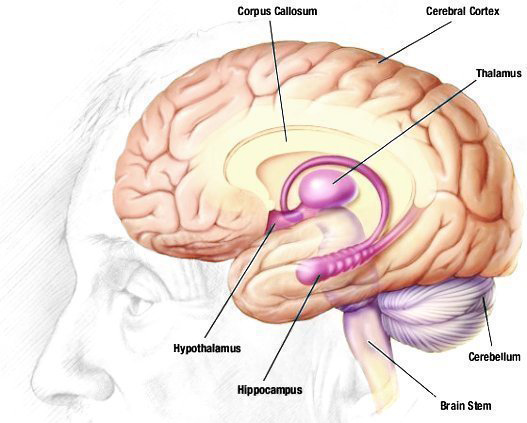
These behaviors occur because alcohol depresses the central nervous system , causing it to slow down its responses and reactions. The brain stem (made up of the Pons, Medulla, and Midbrain), which regulates breathing, heart rate, lifestyle dementia alcohol related going gentle into that good nightand consciousness, as well all other areas of the brain are affected by alcohol:

  • Frontal – involved in movement, problem-solving, concentrating, thinking, mood, behavior, and personality
  • Temporal – involved in hearing, language, and memory
  • Parietal – involved in sensation awareness, language, perception, attention, and body awareness 
  • Occipital – involved in vision and perception
  • Cerebellum – involved in posture, balance, and coordination of movement

Chronic, long-term alcohol abuse and alcoholism have even more devastating – and permanent – effects on the brain, eventually leading to alcohol-related dementia.

Usually the first noticeable symptoms of chronic, long-term alcohol abuse and alcoholism are cognitive. Memory loss is common, but a unique feature of memory loss with people who are chronic, long-term alcohol abusers or alcoholics is confabulation.

Confabulation occurs when, instead of recalling accurate memories because of the damage to the brain, the person distorts, makes up, and misinterprets memories about themselves, others, and the world around them.

As difficult as it is to believe for those on the receiving end of confabulation, there is no conscious intent to be dishonest. It is simply the result of extensive neurological damage.

One of the most challenging aspects of people who confabulate is that although they are giving blatantly false information, the information can appear to be coherent, internally consistent, and relatively normal.

People who confabulate have incorrect memories that run the gambit from slight, almost imperceptible changes to the most outlandish made-up stories you can imagine.

The maddening thing about this is that they generally very confident – to the point of arguing down anyone (because they know the memory is fabricated) who tries to correct or challenge them – about their recollections, despite overwhelming concrete evidence that contradicts them.

Other signs of alcohol-related dementia emerge as:

  1. Inappropriate behavior, including words and actions
  2. Loss of executive function, including organizing and planning
  3. Slowed thinking, reactions, and speaking
  4. Garbled speech
  5. Trouble executing basic skills functions like adding, subtracting, multiplying, and dividing
  6. Decreased ability to concentrate
  7. Decreased ability to complete tasks
  8. Trouble with balance
  9. Diminished hearing

With alcohol-related dementia, as with all other dementias, the person who has alcohol-related dementia loses the self-awareness that anything is wrong, both neurologically and behaviorally.

Most cases of alcohol-related dementia involve global neurological deterioration. Everything is affected.

However, two very specific types of alcohol-related dementia, Wernicke encephalopathy and Korsakoff syndrome (known together as Wernicke-Korsakoff Syndrome), which are the result of a vitamin B1 (thiamine) deficiency, have key features specific to them. There can be some reversal of symptoms with B1 (thiamine) therapy, but there is still permanent neurological damage and concurrent alcohol-related dementia.

Wernicke encephalopathy (commonly known as “wet brain”) causes damage in the thalamus and hypothalamus. Its symptoms include:

  • alcohol-related dementia Wernicke encephalopathy going gentle into that good nightSevere confusion and decreased mental activity that can lead to comas and death
  • Loss of muscle coordination (ataxia) that can cause tremors in the legs
  • Vision deterioration including abnormal eye movements, drooping eyelids, and persistent double vision

As symptoms of Wernicke encephalopathy disappear, Korsakoff syndrome symptoms appear. These include:

  • Loss of ability to form new memories
  • Moderate to severe loss of all memories
  • Confabulation
  • Visual and auditory hallucinations  

Malcolm Young, the 61-year-old co-founder and guitarist for the band AC/DC, has been moved to a nursing home and his family has confirmed this week that he has dementia (he’s unable to remember any of the band’s songs).

Young’s addiction to alcohol is well-known. Although he sought rehabilitation treatment for alcoholism during the band’s tour in 1988, it appears that he malcolm young ac/dc dementia going gentle into that good nightrelapsed (the statistics on the efficacy of alcohol rehab are grim: from 50 to 90% of people who’ve been through treatment relapse, often, over a period of time, habitually consuming even more alcohol than they did before entering treatment) and never sought treatment again.

In April of this year, Young was hospitalized with what was described to the media as a stroke (chronic alcohol abuse has very detrimental effects on blood, including causing the platelets to clump together and form clots, and these clots, when they travel to the brain are responsible for strokes), so this would be entirely consistent with what we know about Young’s lifestyle. 

There are systemic physiological effects of chronic, long-term alcohol abuse and alcoholism, including nerve damage in the arms and legs (peripheral neuropathy), liver damage (cirrhosis), heart damage, and kidney damage.

Concurrent with all of that is the irreversible neurological damage to the brain that results in alcohol-related dementia, which can emerge as early as 30 years of age, but more commonly begins emerging after the age of 50 in chronic, long-term alcohol abusers and alcoholics.

Drinking alcohol in moderation is fine. But I urge you to take an honest look at your drinking patterns and behavior. If you find that you are a chronic, long-term alcohol abuser or an alcoholic, then it’s time today to find a way to stop drinking alcohol for good.

But no one else can do that for you. Only you can make the choice to stop drinking alcohol and then follow through with actually doing it for the rest of your life. 

And here’s the key: until the rest of your life becomes more important than alcohol, you will be unsuccessful at choosing and taking action to stop drinking alcohol.

Because you are the only one who can take the action, every time you drink alcohol, as a chronic, long-term alcohol abuser or an alcoholic, you show yourself and the rest of the world the choice you’re making and you show yourself and the rest of the world what the most important thing in your life is.

And no one can change that but you.

The Layperson’s Guide to Hospice Care for Our Loved Ones with Dementias and Alzheimer’s Disease

hospice care for our loved ones with dementias and alzheimer's diseaseThis is the last installment in a series that Going Gentle Into That Good Night has presented to discuss, in clear, practical, and informative language, the on-going health care options in the home that are available for our loved ones with dementias and Alzheimer’s Disease.
In the first post, “The Layperson’s Guide to Home Health Care for Our Loved Ones with Dementias and Alzheimer’s Disease,” we discussed the home health care option.

In the second post, “The Layperson’s Guide to Palliative Care for Our Loved Ones with Dementias and Alzheimer’s Disease,” we discussed the relatively-unknown and highly-underutilized option of palliative care, which all caregivers at home should have in place for their loved ones in the long journey between acute health crises and death.

In this post, we will discuss the hospice care option. I will talk about the requirements to be admitted to hospice care and what it means for our loved ones with dementias and Alzheimer’s Disease in terms of the kind of care they can receive.

I will also discuss how hospice care works in a home setting (there is a hospital hospice option, but we will not discuss that in this post which is geared toward caregiving for our loved ones at home).

I will also walk you through the end-of-life process and how hospice is designed to support our loved ones and provide assistance to caregivers in the immediate aftermath of the death of our loved ones with dementias and Alzheimer’s Disease.

And, finally, I will frankly and honestly talk about the good, the bad, and the ugly that the hospice experience can be and I will provide you guidance on how to handle that at a time when mentally and emotionally this can be the toughest decision we make in caring for our loved ones with dementias and Alzheimer’s Disease.

Hospice care, in general, is available to our loved ones only when they are in the terminal (six months or less until death) stage of an illness.

The difference between hospice care and home health or palliative care is that while home health and palliative care are curative (treatment to stabilize and/or improve to extend life), hospice care is comfort (treatment to provide physical comfort while the terminal disease takes its natural course to death without intervention).

The requirements for admission to hospice care under a dementias/Alzheimer’s Disease diagnosis are essentially that our loved ones have already knocked on death’s door and the door is slightly ajar:

Must exhibit two of the following:

  • Ability to speak is limited to 6 words or fewer
  • Ambulatory ability is lost
  • Cannot sit up without assistance
  • Loss of ability to smile
  • Cannot hold up head

Must exhibit all of the following:

  • Inability to ambulate independently
  • Inability to dress unassisted
  • Inability to bathe properly
  • Incontinence of urine and stool
  • Inability to speak or communicate meaningfully

Failure to thrive in the following areas:

Clinical:

  • Progression of disease documented by symptoms or test results
  • Decline in Karnofsky Performance Score
  • Weight loss supported by decreasing albumin or cholesterol

Dependence in two or more of the following:

  • Feeding
  • Ambulation
  • Continence
  • Transfers
  • Bathing and dressing
  • Dysphagia (difficulty swallowing) leading to inadequate nutritional intake or recurrent aspiration
  • Increasing emergency visits, hospitalizations, or physician follow-ups related to their primary medical diagnosis
  • A score of 6 or 7 in the Functional Assessment Staging Test (FAST) for dementia
  • Progressive stage 3-4 pressure ulcers in spite of care

Because of the prevalence of comorbid diseases – such as heart disease, unmanageable high blood pressure/strokes, diabetes, and organ failure (kidney failure is quite common in these three diseases because they affect the kidneys directly either in the disease itself or in the treatment of the disease) – that exist, especially in our elderly loved ones, alongside of dementias and Alzheimer’s Disease, it is very likely that admission to hospice care will be for one of the comorbid diseases instead of because of dementias and Alzheimer’s Disease.

In my mom’s case, we transitioned to hospice care under heart disease when Mama was having chest pain regularly. The palliative care nurse suggested that we go to the emergency room one morning when the pain was particularly acute and Mama said “No,” and I backed her up (Mama and I had, a few months earlier, according to her wishes, agreed on no more hospitals). Mama had the major heart attack that would, 12 days later, result in her death the following night of the day after she was admitted to hospice.

When our loved ones with dementias and Alzheimer’s Disease are admitted to hospice care at home, several things are supposed to happen (I will talk later about researching and deciding on hospice care before you need it since you do not have to use the hospice care of the care agency providing home health and palliative care).

hospice care kit going gentle into that good nightThe first thing is that a comfort kit is overnighted to the home for administration when needed (and if a hospice nurse is not immediately available to provide the care). Included in the comfort kit are basics like liquid morphine (hospice will provide more if needed), mouth swabs (keeps saliva from collecting mouth and throat),  and Atropine drops or Levsin (minimizes wet respiration).

Hospice also has a two-week supply of all medications that our loved ones with dementias and Alzheimer’s Disease are taking specifically for the disease they are admitted under overnighted to the home.

A care team consisting of nurses, a social worker, a chaplain, volunteers to sit with our loved ones if we need to get groceries, and certified nurse assistants (CNAs) to help with daily hygiene care is also put in place to assist in supporting our loved ones and their families along the journey to death.

Our loved ones and we can chose which of these non-medical care team members to utilize. In Mama’s case, for example, we had a spiritual inner circle of longtime friends-who-were-family who provided, along with God, our sole spiritual support. We also took care of daily hygiene on our own.

Our experience was less than optimal in the other areas (including nursing until a home health nurse happened to fill in for the hospice nurse the last few days of Mama’s life).

In fact, our experience was so bad that I had decided to switch to another hospice care agency two days before Mama went into her death sleep (for my readers in the Tri-Cities, Tennessee, area, please email me at goinggentleintothatgoodnight@gmail.com for details on the various hospice providers in the area and which one I was going to change to on the recommendation of home health nurses I trusted).

Nursing visits should be frequent, but will increase to daily as death for our loved ones with dementias and Alzheimer’s Disease draws closer.

After death, the hospice nurse will be our first contact. They will notify the funeral home, clean up and dress (you can choose to assist or not in this process – I assisted with Mama because it was a way that I could show her respect and maintain her dignity) our loved ones, and take care of the paperwork for the death certificate.

After the funeral home picks up our loved ones, the hospice nurse will, with our assistance, document, dispose of and destroy all the medications provided by hospice, including any remaining comfort care medications.

comfort-hospice-going-gentle-into-that-good-nightLogic would seem to indicate that hospice care team members are sensitive, gentle, and supportive. However, in many cases, none of those things are true.

I did my homework on hospices before Mama needed hospice care. I asked friends of mine who were nurses involved in elderly care for their recommendations since they dealt with all the hospice agencies in the area.

However, one of the caveats I found is that hospice agencies can deal differently with medical professionals (i.e., better) than with family members of loved ones who are in need of hospice.

When I talked to the first hospice agency that had been recommended to me, the first words out of the director’s mouth, before I’d said much more than my name, were “We’re not a babysitting service!”

The nastiness in her tone and what she said took me totally aback. Even looking into hospice care as an option is emotionally and mentally tough because it means we realize that time for our loved ones with dementias and Alzheimer’s Disease is short and finite and we’ve accepted the reality of rapidly-approaching death.

Even though there’s a rational, logical, objective component in that realization, the emotional and mental component of wrapping our heads around it isn’t so cut and dry, and a little empathy, compassion, and gentleness in the recognition by a hospice care agency is not unreasonable to expect.

The reason is that the first contact we as caregivers and advocates for our loved ones make to a hospice care agency leaves an impression on us as to the kind of care that agency will provide for our loved ones. If they treat us badly, then it’s safe to assume that is the quality of care that our loved ones with dementias and Alzheimer’s Disease will receive.

I crossed the first hospice care agency off my list simply because of those first words out of the director’s mouth to me.

The hospice care agency that Mama and I ended up with was not the one I wanted because I’d had a similar bad first contact with its director. However, the hospice care unit was in the same provider that we had received home health care and were receiving palliative care from and the hospice care director showed up with the palliative care nurse on the day that Mama was having acute chest pains.

The director of hospice care said it was time to admit Mama to hospice for heart disease and I knew at that point that I didn’t have the luxury of time to get another hospice care agency lined up and on board, so I did what we needed to do for Mama, despite my strongly negative impression from my first meeting with the hospice care director.

For the first eight days Mama was under hospice care, she and I were pretty much on our own. The only real support we got was through a couple of phone calls to the 24/7 medical line.

It was not until a home health care nurse (I knew he was a home health care nurse and he confirmed it when I asked him – the night and day difference in care for Mama and support for me was that obvious) from the agency filled in for the hospice nurse who was finally supposed to visit Mama showed up four days before Mama died that I had any confidence that I had made the right decision by switching Mama to hospice care.

I share this personal experience because it’s not as unusual as you might think. I’ve heard similar stories from other people with other hospice care agencies in other parts of the United States and the world. 

That’s why you need to know that, if our loved ones with dementias and Alzheimer’s Disease have a longer time frame to death than my mom had, you have the ability and the choice to fire a hospice agency that is not working, whatever the reason(s).

Hospice care is designed to be comfort care – and that includes good support for caregivers and the family – and if that is not the outcome for our loved ones and us, then that is unacceptable and we have the freedom to switch to an agency who does provide what a hospice care agency is supposed to.

A Little Appreciation Expressed Goes A Long Way to Let You Know That Your Efforts Are Not For Nothing

very inspiring blogger award nomination going gentle into that good nightAs a dedicated and passionate educator, advocate, researcher, writer, counselor, supporter, encourager, and someone who has walked firsthand through the journey of dementias and Alzheimer’s Disease with a loved one who spends a lot of waking hours – as well as many hours when I should be sleeping – devoted to making sure there is no lack of practical and usable information and resources available to those who are currently going through or will be going through this journey with their loved ones, it can often seem, with very little tangible feedback (I know people are reading the blog), that I’m wasting my time and just talking to myself.

But every time I start wondering “What’s the point? Nobody cares anyway.,” I remind myself that it’s worth it if only one other person on the planet obtains the help, the information, the encouragement, the empathy, or the “one person besides me gets this” they need.

On the other hand, it is encouraging once in a while to have someone tell you that the work you’re doing is appreciated. It means as much to have a fellow blogger whose own work is appreciated to consider what you provide a source of inspiration.

(None of us is in this for recognition and praise. We’re doing it because we’ve been there and we know what you’re dealing with if you’re there now or what all of those of you who will be dealing with dementias and Alzheimer’s Disease in the future will face.

We know what it’s like to have no information, no support, no help, no nothing and to have to figure out on our own. Our efforts are to not waste the pain, but to pay it forward so that others don’t have to face what we faced.

This is a labor of love and service for the rest of the human race that we are dedicating to providing to each of you.)

I was nominated for the “Very Inspiring Blog Award” by Kay Bransford who blogs in Dealing with Dementia about the journeys with her dad (now deceased) and her mom (living and progressing) through dementias and Alzheimer’s Disease.

It’s nice to be appreciated and I would like to repay the compliment to several other bloggers. The rules are simple:

  • Thank and link to the amazing person who nominated you.
  • List the rules and display the award.
  • Share seven facts about yourself.
  • Nominate 15 other amazing blogs and comment on their posts to let them know they have been nominated.
  • Proudly display the award logo on your blog and follow the blogger who nominated you.

Seven facts about me:

  1. My parents were both in the medical field, and although I excelled in and loved the biological sciences (especially genetics), to my dad’s dismay, I didn’t choose the medical profession as my career. Armed with a humanities degree (with practical minors in math and accounting) and a concrete plan to start my career in technical writing, I morphed into a full and expansive career in information technology.
  2. My mom developed dementias (vascular and Lewy Body) and Alzheimer’s Disease right before my eyes, but I didn’t have the knowledge and the resources to put it all together until it was no longer undeniable. I don’t ever want there to be another person in the world who has to go through the rapid and, sometimes, hard catch up the way I did.
  3. I am thankful that I was able to fulfill the circle of life for my mom, even though I made mistakes along the way, and, to the best of my ability, I was able to fulfill my promise to her that I would do everything within my power and control to ensure that her “second childhood was better than her first childhood.”
  4. Being able to provide hands-on, side-by-side care for my mom – and to walk beside and with her every step of the way to the end – was a gift from God for which I am thankful. I’d do it all over again in a heartbeat.
  5. I learned things about myself I needed to know as I walked the journey through dementias and Alzheimer’s Disease with my mom. I learned lessons that I could not have learned any other way.
  6. In the course of the journey – and beyond – I changed and am continuing to change for the better and matured and continue to mature into a kinder, gentler, more patient, more forbearing, more forgiving, more understanding, and more compassionate version of myself. Although I still have miles to go before I sleep, this much-needed and long-overdue upgrade, with its fixes, patches, and, in some cases, start-from-scratch recoding put me further down this road of change than I was when I started.
  7. God gave me the gift of being able to write. If there’s praise to be given, it belongs to Him. I am responsible for using this gift in a manner that is worthy of the One who gave it to me. To the best of my ability, I strive to do that with every word that I write wherever I write it.

The blogs I nominate are:

My Neighbor Miss D – Miss D’s neighbor Nancy blogs about dementia, elder abuse, and the importance of neighbors caring for neighbors who are alone in their journeys through dementias and Alzheimer’s Disease

Lewy Body Dementia: Ten Plus Years of Care, Commentary, and Cleaning Up. – Joy Walker offers humorous and information commentary on caregiving and Lewy Body dementia

The Long and Winding Road: A Journey Through Alzheimer’s Disease – Ann Napoletan blogs about her journey as a caregiver with her mom through Alzheimer’s Disease and also works as an advocate for Alzheimer’s Disease research

Dementia and Dominoes – Pam Stephan gets two nods in my nominations and this is the first, where she shares memories of her dad, who has dementia, and caregiving challenges and solutions

Dining with Dementia – Pam Stephan’s blog with fast and easy recipes for dementia caregivers and their loved ones

The Daily Goodbyes – Cia blogs about her life with her father, who has Alzheimer’s Disease

D 4 Dementia – Beth Britton is a UK blogger providing advocacy and information for caregivers

My Demented Mom – Compelling blog that chronicles the author’s mother’s journey through dementia to death and offers great information for others on this journey

Momma and Me – Arlene shares the story of her mom’s journey through Lewy Body dementia with compassion, humor, and wisdom

Portrait of a Morbid Optimist – Katryna Ormiston’s beautiful blog – her tagline is perfect: “finding love in death” – about caring for her father through his journey with dementia

Let’s Talk About Family – Lori’s blog journals the ups and downs of family life as children become caregivers for their parents with dementia

Story & History – Theresa Hupp’s fascinating combination of her family’s, including dementia, and her journey through life and the history that accompanies it appeals to the history lover in me

Reflections on Dementia, Caregiving, and Life in General – Written by a caregiver in Singapore, this blogger offers a personal, yet international, perspective on dementia and caregiving as she goes through this journey with her mom

Creating life with words: Inspiration, love and truth – Kate Swaffer’s blog is a must-read blog on dementia, family, and hope

Memories From My Life – Pat White’s blog about caring for her mom since her Alzheimer’s Disease diagnosis in 2007 is a topical, heartfelt, and compassion story of their journey together

Thank you, Kay, for nominating me. I appreciate it, my friend and fellow traveler on the journey through dementias and Alzheimer’s Disease.



What a Long, Strange Trip It Is: Life, Death, and Memories in “Fields of Gold: A Love Story”

A post from my family memoir blog that belongs here as much as it belongs there.

Eliminate Behavioral and Verbal Hand Grenades in Our Relationships with Our Loved Ones with Dementias and Alzheimer’s Disease – Part 2

verbal and behavior communication hand grenades dementia Alzheimer's Disease human relationshipsIn “Eliminate Behavioral and Verbal Hand Grenades in Our Relationships with Our Loved Ones with Dementias and Alzheimer’s Disease – Part 1,” we looked at the first six of the 12 verbal and behavioral hand grenades that psychoanalyst Trevor Mumby has identified that hamper and inhibit communication with our loved ones with dementias and Alzheimer’s Disease.

As I stated in the first post, these 12 verbal and behavioral hand grenades should be eliminated from all our communication with all humans, because although our loved ones with dementias and Alzheimer’s Disease will visibly and negatively react to each of these hand grenades while non-neurologically-impaired people may not, we still damage and destroy relationships when we use them.

The last six verbal and behavioral hand grenades of communication that Dr. Mumby has identified follow below.

verbal behavior hand grenadeUndermining.

Slowly and insidiously tearing people down from the foundational level with regard to their abilities, their intelligence, their senses of self, their independence, and their character is devastating whether those people have dementias and Alzheimer’s Disease or not. It is literally the equivalent of ripping people apart one piece at a time until there is nothing whole left.

This verbal and behavioral hand grenade is especially destructive because it is thrown subtly at, in the shadows of, and behind the backs of its targets.

It is disguised in whispering about and frequently looking at the person it’s aimed at. It is disguised as joking with the person it’s aimed at, yet the words are always putdowns and the laughing is always at that person’s expense. It is disguised as help for the person it’s aimed at, but the tone and the words are anything but helpful.

For our loved ones with dementias and Alzheimer’s Disease, this hand grenade has an even more profound effect. Already aware of something being wrong, but not knowing what (I discuss this step of the journey in detail in Chapter 2 of You Oughta Know: Acknowledging, Recognizing, and Responding to the Steps in the Journey Through Dementias and Alzheimer’s Disease), our loved ones are especially sensitive to their deficits and undermining them verbally and behaviorally adds to the distress that they are already experiencing. This can lead to emotional outbursts, intense agitation, and even violent behavior.

Additionally, if our loved ones with dementias and Alzheimer’s Disease also are in the paranoia step of the journey (this step is thoroughly explained in Chapter 5 of You Oughta Know: Acknowledging, Recognizing, and Responding to the Steps in the Journey Through Dementias and Alzheimer’s Disease), undermining them verbally and behaviorally feeds that paranoia and can lead to escalated anger, fear, and physical confrontation.

verbal behavior hand grenadePessimism.

We all struggle with pessimism in our lives from time to time and it can be difficult, if not impossible, for it not to spill over into human relationships. That’s normal. However, pessimism that is always expressed verbally and behaviorally is a hand grenade.

People like me, who see the glass as always being half empty, struggle more than anyone else with this hand grenade. From my earliest memory, I have always expected the worst – because if you’re at the bottom, you don’t have anywhere to fall, but if you’re way up at the top, the fall to the bottom is going to hurt a lot, if you survive it – and if anything other than that happens, then so be it.

I’m a pragmatic person, so I tend to keep my emotional hedges low enough to the ground so that I don’t spend my whole life on a crazy roller coaster with huge ups and huge downs. I could not survive that.

I generally keep my pessimistic tendencies buried deep within because it’s my perspective and one that I don’t want to color anyone else’s perspective with. If someone’s happy or enthusiastic or even just okay, then who am I to spoil that? I don’t want to, so I make a conscious effort not to.

(The few times in my life when my pessimism has gotten bigger than me and spilled out into my other relationships, the responses have tended to be brutal in their condemnation or dismissal accompanied by unsolicited “expert” solutions that I’m apparently too stupid to see on my own.)

I will probably never lose my pessimistic perspective in this lifetime because it’s hardwired into who I am.

However, just because I naturally possess a verbal and behavioral hand grenade doesn’t mean that I have to use it. I work very hard not to use it and it’s one of the big battles of my life to put the brakes on something that is naturally part of the way I think and am, but I do it because I know it’s the right thing to do and because I don’t want to hurt and upset other people.

It can make me unknowable at times. I hide much, if not all, of what’s going on inside myself and I do my best to let people be where they are and express that without me ever saying anything negative. But I also share next to nothing about myself because that’s the only way to keep this hand grenade in check.

For our loved ones with dementias and Alzheimer’s disease, the verbal and behavioral hand grenade of pessimism can be even more potent than with people who don’t have these neurological diseases. It can lead to severe depression, a loss of all communication, and eventually a loss of the will to live.

verbal behavior hand grenadeIgnoring.

This verbal and behavioral hand grenade marginalizes people and eventually makes them invisible. It is characterized by not listening and non-responsiveness, either in vagueness or silence, in verbal communication. Behaviorally, it is manifested by acting as those someone who is in the room isn’t.

We’ve all been in situations where we’ve been ignored both verbally and behaviorally. It’s dehumanizing, it’s disrespectful, and it’s painful. Most of the time when we experience this hand grenade, we simply want to really disappear and get out of the situations where we’ve already become marginalized or invisible because we already aren’t there.

When our loved ones with dementias and Alzheimer’s Disease are ignored verbally and behaviorally, we are telling them that we don’t respect them, they’re already gone as far as we’re concerned, and, most importantly, that they don’t matter.

The most obvious manifestation with our loved ones will be people talking around them, making decisions for them, and not including them at all.

This is a dignity issue (Chapter 12 of You Oughta Know: Acknowledging, Recognizing, and Responding to the Steps in the Journey Through Dementias and Alzheimer’s Disease comprehensively covers dignity, independence, honor, and respect).

It is our responsibility as team leaders for our loved ones with dementias and Alzheimer’s Disease to ensure that they are not ignored by anyone. That means including them in all conversations and in all decision processes. That means listening to them with undivided attention and working to communicate with them (Chapter 3 of You Oughta Know: Acknowledging, Recognizing, and Responding to the Steps in the Journey Through Dementias and Alzheimer’s Disease is a must-read for maximizing back-and-forth communication) so that they are heard and understood.

verbal behavior hand grenadeNeed to control.

The right tenor of human relationships is to guide where we can, advise when we’re asked, and contribute our strengths, when we are invited, to decision processes. It is not to force (control) or insist (control) or make (control) anyone else do or say anything.

The verbal and behavioral hand grenade of needing to control everything and everybody comes from fear in the person doing it. The effects of someone who needs to control are never good.

For those of us without dementias and Alzheimer’s Disease, someone trying to control everything will be met with resistance, anger, rebellion, and, eventually, total disconnection. Taking choice away from people – which the need to control does – takes life itself away.

For our loved ones with dementias and Alzheimer’s Disease, someone who needs to control everything will bring the same responses, except that the behavior will be different. Emotional outbursts (anger, screaming, yelling, crying) will be continual. Agitation (pacing or restlessness) will be on steroids. Wandering will increase and “escapes” will be frequent.

Wandering and escapes are particularly scary because they present the risk of mortal danger to our loved ones. Therefore, if we struggle with this hand grenade, it might be fortuitous to understand that if we use it, we are potentially putting a live or lives at risk. I wouldn’t want that on my conscience.

verbal behavior hand grenadeQuestioning.

Have you ever had someone ask you repeatedly – after you’ve answered “Yes” – “Are you okay?” What was your response? Have you had someone ask so many questions that it seems invasive? What was your response?

Even though I just asked four questions, I crafted them in such a way to evoke you identifying with them, instead of getting annoyed by them (which is generally what our response to the two scenarios above would be).

Constant questions mean there’s a lot of uncertainty. For our loved ones with dementias and Alzheimer’s Disease, the reality is that there is already a lot of uncertainty in their own minds. A constant flow of questions will likely enhance that uncertainty and cause confusion, followed by irritation.

The other aspect of questioning as a verbal and behavioral hand grenade is that of someone questioning everything another person does. This is commonly known as “second-guessing.” 

What second-guessing says is that the person who is doing it has no trust, no confidence, no faith in anything the person they’re doing it to says or does. For those of us without these neurological diseases, this is a morale-killer, at best, and an anger-generator, at worst.

For our loved ones with dementias and Alzheimer’s Disease, the effect is even stronger. Already wrestling with confusion and a sense of not quite knowing things in context, second-guessing confirms their worst fears. The result is anger, more fear, increased hesitation, and eventually complete withdrawal.

verbal behavior hand grenadeBeing irritating.

This verbal and behavior hand grenade is doing and saying things that we are aware irritate other people, but we do and say them anyway.

This hand grenade is both disrespectful and selfish. People who use this hand grenade say things like “Well, that’s just me” or “Take me or leave me” when they are called out for using it. The implication is that they are not going to change anything about themselves to accommodate or make things easier for everyone else. It expresses the height of both self-conceit and self-importance.

This hand grenade can be even harder on our loved ones with dementias and Alzheimer’s Disease, since thoughtless words and actions are much more difficult to understand and process. Our loved ones will take things much more personally because they don’t have the neurological executive functioning to see them for what they are and to ignore them or recover from them quickly.

This can lead to anger and increased agitation, as well as withdrawal as a protective gesture.

I sincerely hope this series has been beneficial and helpful. We all can learn and change as we examine our own words and behavior to see which hand grenades we might have and not only will eliminating them improve our communication with our loved ones with dementias and Alzheimer’s Disease, but every other human relationship we have and will have.

It’s that important.

Eliminate Behavioral and Verbal Hand Grenades in Our Relationships with Our Loved Ones with Dementias and Alzheimer’s Disease – Part 1

verbal and behavioral hand grenades relationships dementias Alzheimer's DiseaseCommunication – verbal and behavioral – is the cornerstone of human relationships. It turns out, as all of us have no doubt discovered along the way, that we humans aren’t all that good at successfully communicating with each other all the time.

Admittedly, some of us are better – but not always – at communicating well and consistently with other humans than others of us are.

Our propensity toward communication difficulties leads to a lot of problems in the normal course of our relationships with others. Misunderstandings develop. Feelings get hurt. Relationships are ripped apart irreparably, at least for this lifetime.

However, for our loved ones with dementias and Alzheimer’s Disease, where executive function, cognition, and understanding are compromised by neurological deterioration, these communication difficulties are even more devastating and can often lead to extreme agitation, volcanic emotional outbursts, and inappropriate behavioral manifestations.

Psychoanalyst Trevor Mumby, who has spent his career looking for ways to communicate more effectively with those who have dementias and Alzheimer’s Disease, has identified twelve areas of communication that are verbal and behavior hand grenades that can create emotional havoc with our loved ones with dementias and Alzheimer’s Disease.

I submit that if we eliminated these communication hand grenades in all our relationships, we’d be taking a huge step forward in better communicating with other human beings.

In this post, we’ll look at the first six verbal and behavioral hand grenades of communication that we need to eliminate, and in the next post, we’ll look at the last six.

hand grenade dementia Alzheimer's DiseaseBeing opinionated.

Nothing gets emotional upheaval going in all of us like someone who is overbearing and knows everything about everything and will not stop pushing their opinions and their agendas over and over and over ad nauseum until everyone agrees (or just disappears by folding up within themselves and shutting down).

For our loved ones with dementias and Alzheimer’s Disease, this communication hand grenade will evoke strong negative emotional and behavioral responses, ranging anywhere from being emotionally inconsolable to being physically violent.

hand grenade dementia Alzheimer's DiseaseInterrupting.

Even in normal communication, constantly being interrupted or cut off while trying to express something completely is aggravating.

I tend to take longer, verbally, to express myself because I’m not a natural ad hoc speaker and it’s out of my realm of capability and temperament to think out loud, process and talk concurrently, and be engaged in unedited conversation.

I find myself frequently on the receiving end of being interrupted because I pause a lot to try to find the right word, tone, meaning before I say it. My response to interrupting is to stop talking and avoid verbal communication with people I know will interrupt me.

In this area, I have a strong affinity with and empathy for our loved ones with dementias and Alzheimer’s Disease who, because of often-extensive neurological damage to the speech and hearing pathways in the brain, struggle to understand what is being said and how to respond to it (I discuss understanding and successfully navigating communication difficulties comprehensively in Chapter 3 of my book, You Oughta Know: Acknowledging, Recognizing, and Responding to the Steps in the Journey Through Dementias and Alzheimer’s Disease).

As a result, exaggerated pauses in speaking occur and it’s almost second-nature to interrupt and fill in the missing words and/or thoughts we think our loved ones are trying to say. And this can create extreme agitation and emotional upset because we are likely wrong in what we conclude they are trying to communicate and because we’re both being disrespectful to and taking away independence from our loved ones with dementias and Alzheimer’s Disease.

hand grenade dementia Alzheimer's DiseaseProvoking.

This hand grenade can be both verbal and behavioral. Some people are unaware that they are provocating, while other people revel in it. My daddy, who didn’t like it any more than I do, used to call it “getting a rise out of someone.”

Verbal provocation is a conscious hand grenade. It is characterized by insistent, persistent, and increasingly abusive language toward someone else with the intended results being anger and fighting. Yep, there are actually people – and we all know them, unfortunately – who really enjoy doing this.

Behavioral provocation is usually an unconscious or unknown hand grenade. We all have things that we do and habits that we have that get on someone else’s last nerve, but oftentimes we have no idea that we’re provoking them in the process.

For our loved ones with dementias and Alzheimer’s Disease, verbal and behavioral provocation can be a communication powder keg. We need to remember that the neurological damage in these diseases affects perception, reasoning, and understanding profoundly. We also need to remember that having dementias and Alzheimer’s Disease increases the fearfulness of our loved ones.

Therefore, verbal provocation, which can be threatening and scary to those of us who do not have dementias and Alzheimer’s Disease, can create terror in our loved ones who do. And we all know that fear generates that adrenaline rush known as the “fight-or-flight” response.

Whichever of these gets triggered in our loved ones will be exaggerated. Evidence of this response can include frequent and uncontrollable agitation, constant pacing, increasing wandering with the intent of escape (outdoors), or fighting (hitting, biting, etc.) when they are provoked.

Behavioral provocation will most likely evoke anger and impatience in our loved ones with dementias and Alzheimer’s Disease. This can escalate to physical violence in an attempt to stop the provoking behavior.

hand grenade dementia Alzheimer's DiseaseContradicting.

Another hand grenade is the habit of disagreeing with, arguing with, and contradicting everything the other person says. Part of what is behind this verbal and behavioral hand grenade is the need to be right all the time (insecurity and/or inflated ego are at work).

We all know people like this and I personally steer clear of them as much as I’m able. When I have to be around them, I get quiet and stay quiet and try to escape them as quickly as possible.

However, the hand grenade of contradiction is very damaging to our relationships with our loved ones with dementias and Alzheimer’s Disease. Remember, these diseases, by their very nature, take sure knowledge away from our loved ones. It causes them to be tentative about everything because they don’t remember what they don’t remember.

Contradicting them on everything only adds to the tentativeness, the hesitation, the confusion and will eventually cause our loved ones to shut down and stop communicating altogether (you’ll note that this is not all that different than what I think most of us who don’t have dementias and Alzheimer’s Disease do only when we are around people who contradict us all the time) with everyone.

hand grenade dementia Alzheimer's DiseaseExpecting gratitude.

Let’s face it. Most of life is a pretty thankless task. However, part of human relationships is doing what you are able for others when you are able because it’s the right thing to do.

If we expect gratitude all the time, then the motive behind what we do is selfish and self-centered: we want recognition, we want praise, we want our egos stroked. In essence, our actions and words are all about us and never about those for whom we do or give them.

For people who expect the limelight all the time for all they do and say, we find that they will stop doing for and saying things to the people who don’t feed their egos with lavish praise and fawning gratitude. They basically just cut those people out of their lives.

Not expressing gratitude consistently among our loved ones with dementias and Alzheimer’s Disease is part of the neurological disease process. Remember that the brain is where the concept of thankfulness and gratitude are formed. As the brain deteriorates, concepts and ideas, which are high-level executive functioning, begin to disappear to one degree or another.

If we are expecting gratitude all the time, will we cut our loved ones out of our lives because they’re not meeting our expectations? Sad to say, this does happen. But shame on us if this is our motivation and our response.

hand grenade dementia Alzheimer's DiseaseTalking loudly.

Somehow all of us humans are innately wired to believe that if we just say something in a louder voice, it will be understood better by the person or people we are talking to.

Because my mom had a severe hearing loss most of her life, I saw this up close and personally with people who didn’t know her. Early in our childhoods, Mama explained that when people were talking to her she read their lips and that slowing down just a bit and enunciation, not volume, was the key to her being able to understand what was being said if she couldn’t hear it.

Even before her journey with dementias and Alzheimer’s Disease, she didn’t like to be around people who always talked loudly or people who talked loudly to her as a way of communicating with her.

And I’ve never been able to handle loud talkers either. It literally hurts my ears and I physically need to get away as quickly as I’m able when I’m around people who normally talk in a loud voice.

The same is true for our loved ones with dementias and Alzheimer’s Disease (I’ve often wondered how much the double whammy was for Mama to have both a profound hearing loss and vascular dementia, Lewy Body dementia, and Alzheimer’s Disease – I really can’t imagine).

Volume in speech will not help them understand more or better what our loved ones have already lost in understanding and comprehension because of dementias and Alzheimer’s Disease. What it is most likely to do instead is make them fearful because they know the noise is loud, but they don’t know why.

As we talked about before, fear can produce intense agitation, continuous pacing, frequent wandering to escape, and, at its worst, physical violence in our loved ones with dementias and Alzheimer’s Disease.

These are the first six verbal and behavioral hand grenades that we need to eliminate in our relationships with our loved ones with dementias and Alzheimer’s Disease. The reality, though, is that we need to eliminate them in all our human relationships, so everybody on the planet could benefit from reading this series.

In the next post, we’ll discuss the last six verbal and behavioral hand grenades we need to eliminate.


If You Needed Help, Does Anyone Have What They Need From You to Step Up to the Plate?

financial legal medical documents power of attorney going gentle into that good nightI went to a metropolitan senior center as an observer for an Alzheimer’s Association class today that was eye-opening as far as how few of the seniors in the class knew and understood what legal, medical, and financial documents they needed to have in place in the event that they needed help or could not take care of their own affairs in this area.

The questions they asked, which I was able to help answer, reminded me that I can’t overemphasize the explanations of these documents, the reasons why they are needed, and that the time is now for everybody, regardless of your age and health, to have these in place.

All of us need to be preparing in advance for the possibility that something – whether it’s Alzheimer’s Disease, dementias, other life-threatening illnesses, or simply time and chance – could suddenly and dramatically or slowly and insidiously render us incapable of taking care of our own affairs.

It seems to me that the very thing we try most to avoid thinking about, talking about, planning for is the very thing that will eventually happen to us all. And that is death.

Denial is, in my opinion, stronger and more pervasive in this area of life than in any other. “If I don’t think about it, then it isn’t real” seems to be the underlying thinking of this denial. I’m here to tell you that all the denial in the world won’t take away its inevitability of happening.

None of us, except those who chose to usurp God’s will and end their own lives, know how or when we’re going to die.

I believe most of us assume it will be quick and instantaneously, but the reality is that, in all likelihood, most of us will probably have a period of decline in which we will need help handling our financial, legal, and medical affairs before we take our last breaths.

And, after we take our last breaths, someone will have to take care of getting us buried and ending our financial, legal, and medical status among the living.

Who would that be for you? Yes, you, the one who is reading this post. Do you know? Does that person know? If that person knows, have you made this as easy as possible for him or her by doing your part and making sure he or she has everything he or she needs to do what needs to be done?

Or, because you don’t want to think about it or talk about, will that person have the burdensome responsibility of trying to figure it out all on his or her own?

We say we don’t want to be burdens to our loved ones. By taking care of this, you and I – we – have taken a big step toward easing the magnitude of that burden that, if we live long enough, will be shouldered by our loved ones.

I did my first will and living will shortly after I turned 21. I had just graduated from college, but not before having a very serious car accident (one that I miraculously survived with some significant injuries, but nothing like what I should have suffered) just before I graduated.

I’d never been that close to being face-to-face with death before, but it made me realize that I needed to make sure that my affairs – and they were paltry in those days but even then I had life insurance – were in order for the ones I’d leave behind.

From that point on, I have been meticulous about keeping my will up-to-date, the beneficiaries on my insurance policies up-to-date, and all the information my executor will need to take care of things up-to-date. I added a DNR to my medical wishes about 20 years ago, I got my cemetery plot 15 years ago, and I wrote out my funeral service and burial wishes about 10 years ago. 

Additionally, my executor has updated access and account information to everything online and offline to finish up my earthly affairs when I’m gone.

preparation-death-alzheimer's-disease-dementias-age-related-illnessesThis, in my opinion, is the last act of kindness I can do in this physical life. It is also one of the greatest.

Mama used to worry that something would happen to me (i.e., that I would die before she did) and then about what would happen to her. There were times in our lives together that could have been a possibility, but I always reassured her that I’d be there with her to the end. And I was by the grace of God.

Of my parents, Daddy was a paradox when it came to this subject. On the one hand, he had life insurance that would take care of Mama after his death and he insisted, in the year before his death, that Mama get her own checking and savings accounts and get credit cards in her name only.

On the other hand, there were other areas in which he had great difficulty facing his mortality. I remember Mama suggesting that they start getting rid of clothes and other things they weren’t wearing or using anymore and Daddy’s response: “the girls can take care of that.”

The will that Daddy had in effect, until shortly before his death, was the one that he had drawn up just after he and Mama adopted us. None of the information was pertinent or relevant anymore.

After much and extended (I’m talking a couple of years) discussion between Mama and him, they finally went to a lawyer, about six weeks before he died, to have a current will drawn up.

Mama was just the opposite. Somehow, I think all the deaths of close and beloved relatives in her early years made the inevitability of death more real to her. She, primarily, during our growing up years, talked on a regular basis about what would happen to us if she and Daddy died and how we needed to take care of each other and be good kids so the road without them would be easier for us.

Not long after Daddy died, she and I sat down together (I was now checking in daily and helping her navigate through some of the things that Daddy had done and offering advice and assistance as she needed it) and she told me what she wanted – and didn’t want – as far as end-of-life wishes.

We went to an attorney together and she did a will (which she later changed to a revocable living trust), living will, and all the POA paperwork. I had copies, she had copies, and she put copies in a safety deposit box at the bank.

At that time, I didn’t need or want knowledge or access to her financial accounts, but as time went on, she needed more of my help in dealing with them, so she gave me access to get into the accounts and help her (we always sat down and did this together until she wasn’t able to anymore) keep up with bills and what she had. 

By doing this with me, Mama made things much easier for me when the time came that I had to step in because she couldn’t do it.

I can’t thank Mama enough for her foresight with this gift. Instead of having to focus on everything brand new coming at me at once, I could focus on what was most important, and that was Mama: loving her, caring for her, being there for her.

The last couple of months Mama was alive, we’d be sitting close, holding hands, and talking and suddenly she’d say “I don’t want be a burden on you,” with tears rolling down her cheeks. I’d squeeze her hands and pull her closer in a hug, kissing the tears away from her cheeks, saying, “Mama, you’re not a burden to me. I love you unconditionally. I wouldn’t be anywhere else doing anything else but right here doing this with you.”

Mama would relax in my embrace and I would hold her tighter as I said these words because they were true and we both recognized that they were true, but most of all, I recognized how easy Mama had made things for me by equipping me with what I needed to step in easily and take care of the routine things so that I could save my energy, my focus, and my love for taking care of her.

Verbal Abuse is Not Loving Caregiving for Loved Ones with Dementias and Alzheimer’s Disease

This article from Science Daily about verbal abuse and its negative influence on the quality of life among the elderly really struck a nerve in me. This is one of my soapbox issues about the care, the honor, the respect – and the increasingly appalling lack of it – we as a society give to the elderly among us.

The old adage “sticks and stones may break my bones, but words will never hurt me” is the one of the most pervasive lies that’s been perpetrated since it was first said in an old English nursery rhyme. The reality is that physical pain heals to one degree or another, but the pain of verbal abuse never heals. Words, once spoken, remain with us until we draw our last breaths.

Just because our loved ones may be experiencing dementias, Alzheimer’s Disease, or other age-related illnesses that impair them neurologically and/or physically does not mean they are oblivious or immune to the tone, the quality, and the veracity of our words.

That is why I wrote “Is It Ever Okay To Be Dishonest With Our Loved Ones Suffering With Dementias and Alzheimer’s Disease?” condemning ever being dishonest with our loved ones, a practice often advised when dealing with our loved ones with dementias and Alzheimer’s Disease.

I caught a lot of flak for that post and got a lot of excuses and justifications (just an FYI: if you have to make excuses and justify behavior, then it’s a good sign that it’s wrong and you know it’s wrong and you are consciously choosing to do what is wrong anyway) as to why being dishonest was okay.

going gentle into that good night verbal abuse elderly unacceptable behaviorIt did not and does not change my position and the reality that being dishonest is not okay ever. Dishonesty is a moral failing at its core (we should strive never to be dishonest with anyone about anything), but it is an equally unacceptable form of verbal abuse for our loved ones suffering with dementias and Alzheimer’s Disease.

Dishonesty is just as much verbal abuse as yelling, demeaning, cursing, and talking about our loved ones as if they weren’t there. Even if they don’t understand the full meaning (and really, who knows how much intuition and understanding is there, but inaccessible in terms of articulation?), our loved ones still react to and fear verbal abuse. Just like each of us does.

Be kind. Be gentle. Put yourself in their shoes and ask “how would I want to be treated if this was me?” Be honest, but do it with love and tenderness. Let your tone always be one that comforts them. It takes effort. It takes self-control.

Sometimes it takes deep breaths and counting to whatever number you have to until you’re ready. That’s on each of us. Because we know better and can do better, while our loved ones don’t and can’t, especially with neurological deterioration.

I’ve been in enough nursing homes and assisted living facilities to see a lot of verbal abuse up close and personally.

It triggers a protective nerve in me that makes me want to go up to those who are doing it and say “You want to pick on someone? Bring it on. But don’t you EVER speak to any of these people, who could be your father, mother, grandfather, or grandmother like this!”

If I could save everyone who has ever experienced this at the hands of a caregiver, I would.

I can’t. But I urge all of us make sure we’re not guilty.