Profiles in Dementia: Gene Wilder (1933 -2016)

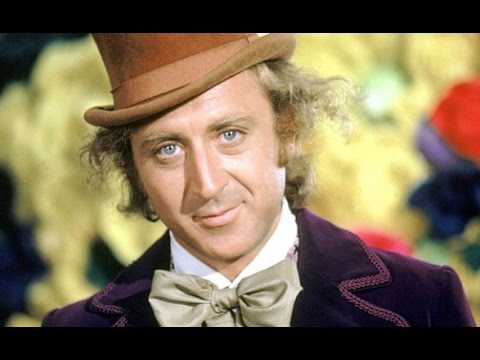
Gene Wilder as Willy WonkaGene Wilder was a comedic actor best known for his performances in movies such Willy Wonka and the Chocolate FactoryBlazing SaddlesStir CrazyYoung Frankenstein, and The Producers.

Wilder got his start in acting in 1961 in off-Broadway productions, but his acting career began to take off in 1967 when he landed a role in Bonnie and Clyde, which starred Warren Beatty and Faye Dunaway.

Wilder’s career peaked in the 1970’s, as he became a household name after masterfully capturing the essence of the title character in 1971’s Willy Wonka and the Chocolate Factory.

Wilder’s performance in Willy Wonka and the Chocolate Factory caught the attention of Mel Brooks, a filmmaker well-known for making movies that are farces or comedic parodies (perhaps because I’m too much on the serious side of things, I have never really gotten Brooks’ movies and don’t find them appealing, but they are very popular), and Wilder was featured in starring roles in the string of hit movies that Brooks made in the late 1960’s and throughout the 1970’s.

Wilder’s last movie role was in 1999, after which the actor began a more private life, with rare cameos in television shows and interviews (the last of which was in 2008 with Alec Baldwin in a Turner Classic Movie biography entitled Role Model).

According to statement from Wilder’s nephew, Wilder had been officially diagnosed with Alzheimer’s Disease in 2013, but had been showing increasingly more obvious behaviors and symptoms of the neurological disease for several years before that.

There have been many critics of Wilder’s desire to keep his diagnosis private because the critics believe that celebrities with a dementia diagnosis will bring more awareness about dementia and will spur more public and political action.

I strongly disagree with the critics and I support Wilder’s desire to keep his diagnosis private.

There is plenty of information – this blog and the books I’ve written with in-depth and practical information about dementia (what it looks like, how to travel through the journey day-to-day with our loved ones, and invaluable information on resources to best facilitate that journey), in addition to other blogs and books that focus on certain aspects of dementia or are devoted to a certain angle of dementia awareness – available to raise awareness.

I also believe that each person, and their families, should have the discretion to choose whether to make a dementia diagnosis and journey public or private.

In my mom’s case, while she was alive, I kept her diagnosis confined to a small group of people whom she and I were close to and who would want to know. I don’t really know what Mama would have chosen (it’s not a question you can really ask), but I knew I wanted to protect her and to maintain her dignity, so I made that choice with no regrets.

Gene Wilder Alzheimer's Disease

It was only after Mama’s death that I chose to make her dementia public, but only because I knew that our journey could help other people and that Mama would have supported that. I haven’t ever given all the details of our journey and I never will (some things just need to stay private).

Gene Wilder died at the age of 83 from complications of Alzheimer’s Disease on August 29, 2016.


Four Years Gone: Grief, Loss, and the Paradox of Time That Seems Both Immediate and Eternal

mama-october-2010Today (August 14, 2016) marks four years since Mama died. It was a Tuesday then. At 5:50 pm, Mama took her last breath.

She went into what would be her death sleep around 1 pm on Sunday, August 12, 2014, with her last words of “I guess they’re going to throw me out now,” suffering, I think, the final heart attack that led to her death.

I assured her that I was not throwing her out, that she was home, and I loved her. It took me several months and writing Fields of Gold: A Love Story before I realized that Mama was back at nursing school at East Tennessee State University, unable to follow all the instructions she was given because of a congenital hearing loss, about to be dismissed from the program because she could not hear the doctors when her back was turned to them (she compensated for her hearing impairment by masterfully reading lips, even with hearing aids, most of her life). Continue reading

Book Review of “When I Married My Mother: A Daughter’s Search for What Really Matters – And How She Found It Caring for Mama Jo” by Jo Maeder

When I Married My Mother: A Daughter's Search for What Really Matters - And How She Found It Caring for Mama JoWhen I Married My Mother: A Daughter’s Search for What Really Matters – And How She Found It Caring for Mama Jo by Jo Maeder
My rating: 5 of 5 stars

Reading this book this time of year with my dad’s birthday last week and the fourth anniversary of my mom’s death as our caregiving/receiving journey together ended was probably not the best idea I’ve ever had.
Continue reading

The Ever-Increasing Connection Between Diabetes and Dementia

3D Image of Brain in ColorGoing Gentle Into That Good Night has and will continue to discussed the connection between lifestyle choices and an increased risk of developing dementia. Some of these lifestyle choices include alcohol abuse and addiction, prescription drug use, abuse, and addiction, illegal drug use and addiction, and “smart drug” use and abuse.

So maybe you’re reading this and thinking, “Well, I don’t make any of those risky lifestyle choices, so I don’t have to worry about neurological damage and developing dementia.” And you would be wrong. Continue reading

Book Review of “The Glass Cage” by Nicholas Carr

The Glass Cage: How Our Computers Are Changing UsThe Glass Cage: How Our Computers Are Changing Us by Nicholas Carr
My rating: 5 of 5 stars

As with The Shallows: What the Internet is Doing to Our Brains, Nicholas Carr has brought the role of technology in our lives into focus with another aspect that I doubt many of us really understand in its pervasiveness in our everyday lives and what it is costing us, not just in obvious ways, but in ways that are fundamental to being human and be uniquely skilled to productively and expertly interact in and with the world of opportunity and possibilities we’ve been given.

The subtitle of this book is “Automation and Us,” and how automation has infiltrated every aspect of our lives and what we’re losing in the process is Carr’s subject in this book.

Automation, of and by itself, is not bad. It is the things we’ve automated and our relationship to automation (serving it instead of letting it serve us) that turns what could be a good thing into something that is destined to destroy us – our unique human abilities, skills, and talents – unless we take control and do something different.

One of the points that Carr makes in this book is that we have offloaded critical thinking skills, technical acumen, analysis, and creativity to technology. By doing this, we gradually lose the ability to operate successfully manually (without the technology) and use judgement, intuition, experience, and knowledge to navigate our lives and our professions.

Carr looks at the impact of automatic in the airline industry (specifically looking at how autopilot has degraded the skills of pilots to successfully deal with emergencies and crises when flying), in business (stock market, accounting, business decisions, human resources, hiring, etc., which have all been relegated to software to handle, with no human factors involved, resulting in the global financials messes we now deal with and with a loss of talent because there’s no human contact or intervention to recognize the talent), in medicine (with the advent of electronic medical records in most medical facilities, software is now making the decisions that doctors used to make and because the software adds procedures and tests, the costs, which were supposed to go lower, have actually increased exponentially) and in manufacturing.

He also looks at us and how we’ve turned over our brains to automation. We depend on social media to decide who and what we like (or don’t) and who we’re friends with (and who we’re not – anyone who chooses to limit this exposure disappears and becomes invisible because they simply don’t exist outside the virtual world) and we have chosen willing to live in this virtual world more than we actually interact with the real word.

We’ve given control of our lives to our electronic devices: to do lists, calendars, phone numbers, etc. We let our software do things we should be doing ourselves: spell-checking, grammar-checking, basic math functions, etc. We have fallen for the myth that automation gives us more power, when instead it erodes our power and our humanness.

As we don’t use our brains, we lose our brains, leading to the brain itself atrophying and dying. This sadly, is a lifestyle factor that will lead to dementia, unless we make the choice to stop it and reverse it. We already are more impacted than we realize.

But it is not too late for us to put our lives and our brains back on manual and let automation serve us in ways that don’t jeopardize the health of this wonderful brain we’ve been blessed with.

People are much more extreme in their polarization of love and hate (nothing in between) in an automated world. It often seems that empathy, compassion, care, concern and love – all unique human abilities – is absent in the presence of a world that is automated. We lose our ability to relate to each other in any kind of real way and, as a result, we lose our humanness, and we become programmed to polarized points of view that we simply pick up and accept by what and who we choose to listen to, follow, and expouse in the landscape of technology (cable, streaming, internet, etc.).

We are losing our life blood – our hearts, our souls, and our minds, because we serve the god of automation that lacks emotional richness, deep understanding, and caring concern. I hope we reverse this trend, but I also am realistic enough to realize that we probably won’t and it will probably get much worse before it gets better.

View all my reviews

Profiles in Dementia: Coach Pat Summitt (1952 – 2016)

Coach Emeritus Pat Summitt, University of Tennessee (Knoxville) Women's Basketball CoachCoach Pat Summitt, who coached the University of Tennessee (Knoxville) women’s basketball team for 38 years until her retirement in 2012 after she announced that she had been diagnosed with early-onset Alzheimer’s Disease, was known for her fair, but ethical, disciplined, and meticulous coaching that emphasize hard work saw Coach Summitt experience unparalleled success on and off the court, but more importantly, saw the efforts of her leadership and coaching develop in her basketball players the same kind of work ethic, fairness, ethics, discipline, and meticulousness.

In stark contrast to many players in men’s college basketball players who typically don’t graduate from college, but instead go to the NBA in their sophomore or junior years, Coach Summitt held a 100 percent graduation rate for all of her players who completed their eligibility at the University of Tennessee.

Continue reading

How War Damages and Destroys The Brain: Blast Wounds, PTSD, and Neurological Damage & Decline

Blast force wounds are common in modern warfare and leave long-term neurological and emotional damageWar is hell.General Sherman Tecumseh Sherman (1820-1891), who led Union forces through the South during the United States Civil War, made not only this insightful observation on the nature of fighting wars, but also added “War is cruelty, and you cannot refine it;…”

The ultimate purpose of war is malevolent: to maim, to injure, to destroy, and to kill to force one group of people to surrender to another group of people. Continue reading

Elder Abuse Awareness Day – June 15, 2016

Elder Abuse Awareness Day: June 15, 2016There are many forms of abuse that humans can inflict on other humans. We see these kinds of abuse – and sometimes experience them ourselves by being on the receiving end – in action on a daily basis in the world around us.

While you and I may be strong enough, savvy enough, knowledgeable enough, and aware enough to recognize and prevent (or avoid or remove ourselves from) these manifestations of abuse, the most vulnerable people in our human family – children and the elderly – are often the most susceptible to and unable to protect themselves from these kinds of abuse. Continue reading

Remembering What Would Have Been My Parents’ 60th Wedding Anniversary

mama-daddy-wedding-announcementSixty years ago today at 4 p.m. in Unaka Avenue Baptist Church in Johnson City, Tennessee, my parents, Ned Moses Ross and Muriel June Foster, in front of a few family and friends, took their vows of marriage to each other, for better or worse, for richer or poorer, in sickness and in health for as long as they both lived.

Although neither of them on that day could have imagined how their lives together would unfold, testing along the way the strength of the unconditional commitment they made to each other, my daddy and my mama were lovingly faithful throughout their union to their promise before God and their promise to each other.
Continue reading

Profiles in Dementia: Muhammad Ali (1942 – 2016)

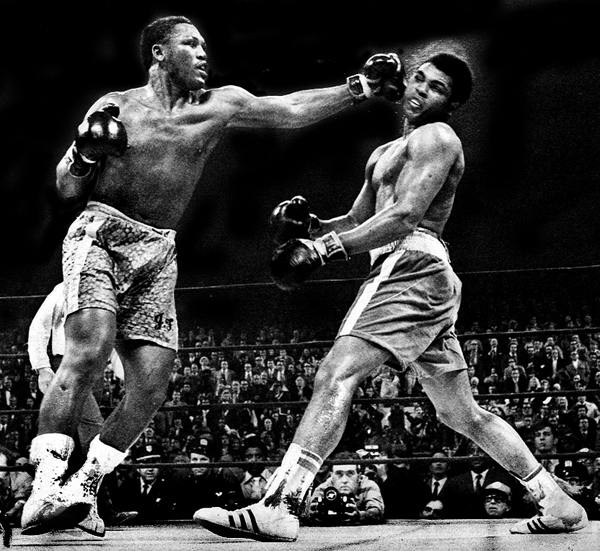
Muhammad Ali (1942-2016)Muhammad Ali is remembered as one of the greatest boxers of all time. His physical strength and abilities, his agile footwork in the ring, and his witty and intelligent – and sometimes boastful – running commentaries about himself and his opponents made Ali compelling and appealing to a much wider segment of the population than just those who liked to watch boxing.

But as Ishmael Reed so poignantly points out in his New York Times article about Ali, none of this came without a cost. A very high cost. An eventually fatal cost. Continue reading