Tag Archive | Dementia

Profiles in Dementia: Miss Daisy of “Driving Miss Daisy”

Driving Miss DaisyDriving Miss Daisy, the 1990 Academy Award-winning movie, is one of those rare movies that is both expansive and intimate as we take a journey through 25 years of the elderly life of Miss Daisy.

Miss Daisy, portrayed by one of the finest actresses I’ve ever seen, Jessica Tandy, is both a student and an educator (she’s a former schoolteacher) in this multilayered drama that takes her and us through the sweeping political and social changes in the three decades following the end of World War II.

The unlikely, and initially unwanted, relationship and friendship that develops between the 72-year-old lively and independent Miss Daisy and the calm and steady Hoke Colburn, portrayed by Morgan Freeman, who is hired by Miss Daisy’s son, Boolie, portrayed by Dan Akroyd, as Miss Daisy’s driver after she wrecks her car for a second time in a short time span is both poignant and endearing.

Although they come from completely different worlds in every sense of the word, they learn a lot from each other and they grow because of each other.

When Hoke comes in one morning after 23 years with Miss Daisy and finds her frantically running around the house because she believes she’s late for school to teach her students, he calls Boolie, who immediately puts Miss Daisy in a nursing home.

Hoke, who now depends on others to drive him around, isn’t able to visit Miss Daisy often, but he goes to see her in the nursing home when he gets the chance. 

Boolie has a mostly hands-off relationship with his mother: he loves her and takes care of the practical things she needs, but she’s mainly a nuisance who often gets in the way of the rest of his life.  Watching their interaction – and the lack of time Boolie has for Miss Daisy – is reminiscent of what many of us see in our own family dynamics with caregiving in general.

Hoke, on the other hand, is nurturing and compassionate and provides the time and the companionship that is missing from Boolie’s relationship with his mother.

We see the difference in these relationships with Miss Daisy, as well as the rapid decline of dementia, near the end of the movie when Boolie and Hoke go to see her in the nursing home on Thanksgiving Day.

Miss Daisy looks and acts like a shell of her former self. She is unable to communicate and doesn’t seem to recognize either Boolie or Hoke. 

Boolie makes quick contact and disappears, while Hoke goes in to the dining room to sit with Miss Daisy while she mostly doesn’t eat Thanksgiving dinner.

Hoke talks with her, both about the past and about his present life. He notices that a piece of pumpkin pie sits in front of Miss Daisy uneaten.

Miss Daisy dementiaSensing that Miss Daisy may not remember how to eat the pie, Hoke cuts it into pieces and feeds it to her. We see just the briefest of sparkles return to Miss Daisy’s eyes as she savors each bite and the brief glimpses of recognition Miss Daisy has for her old friend Hoke even through the mostly impenetrable walls of dementia that have enveloped her mind.

I highly recommend Driving Miss Daisy. It is a tear-jerker at unexpected places throughout the movie, so grab the tissues because you’re going to need them, but it’s well worth it. 


Profiles in Dementia: King George III (1738 – 1820)

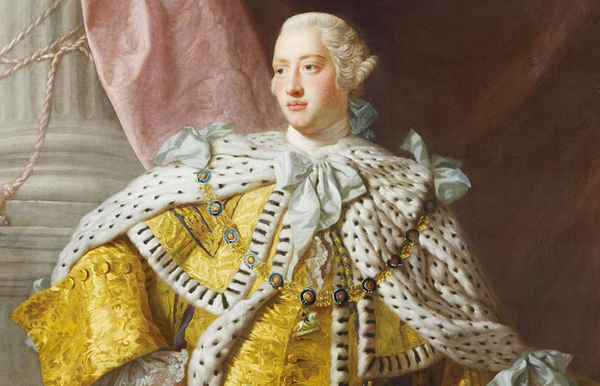
George IIIKing George III was the monarch of England from 1760 to 1801 and the first King of Great Britain and Ireland from 1801 until his death in 1820.

For the United States of America, King George III played a prominent role in both establishing colonies here and instituting the unpopular policies, particularly with regard to taxation, that caused the colonies to rebel, declare their independence from England in 1776, and led to the Revolutionary War that handed the British an unthinkable defeat.

He was known both in England and in the colonies as “Mad King George.”

King George III came to the throne in 1760 at the age of 22, but as early as 1765, he showed signs of cognitive impairment. Although his cognitive decline was gradual and his “mad” bouts were episodic for the next 30 years, King George III showed every sign of neurological decline associated with dementia, as the times when he was completely incapacitated increased and worsened during those 30 years.

King George III’s neurological condition was advanced enough by 1788 that Parliament passed a regency bill to be able to quickly and immediately hand the reins of government over to his son, George IV, at any time.

Although King George III managed to hold on to power in name only for another 23 years, his dementia was so pronounced by 1801 that he was largely unable to govern.

More likely than not, King George III had frontotemporal dementia (an early-onset dementia) and that was responsible for the erratic and irrational behavior that characterized his “madnesses” that are recorded in both the histories of England and the United States.

The damage appears to have been slower than most instances of frontotemperoral dementia, but it is easy to see the the progression of the journey he traveled through dementia.

It is also entirely possible that King George III had developed other types of dementia as he aged. Some of the historical accounts of his later years suggest that King George III also had vascular dementia and Alzheimer’s Disease.

One of the interesting things that occurred to me is the question of whether the United States of America would have ever existed as an independent country if King George III had not had frontotemporal dementia.

While it’s conceivable that at some point the United States would have sought independence as a nation in its own right, you can’t help but wonder if it might have been delayed for decades or even a century or more and it might have been under more peaceable conditions had King George III not been on the throne.

Dementias affect everything and dementias change everything.

For most of people, the sphere of influence affected and changed is relatively small.

In the case of King George III, it affected and changed the world.

Insights: How Temperament Factors Into Dementias and Alzheimer’s Disease

In previous posts, we’ve looked at how life experiences and personality, quirks, foibles, and flaws factor into dementias and Alzheimer’s Disease with our loved ones.

In this post, we’re going to discuss how temperament factors into these neurological diseases and how we as caregivers can respond effectively and lovingly to provide balance and still meet the basic needs that our loved ones’ temperaments require.

For the purpose of this discussion, we will look at the big picture of temperaments and the two most dominant categories that each of us falls into: extraversion and introversion.

Temperament Categories

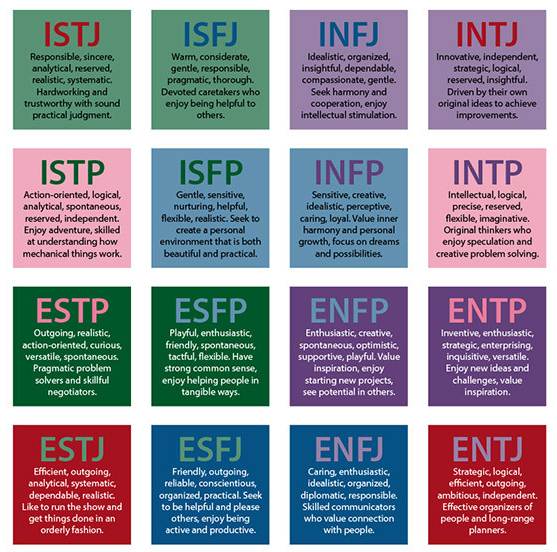
There are 16 distinct variations of these two temperaments (eight in extraversion and eight in introversion). (You can take free temperament test online to see which variation your temperament is.)
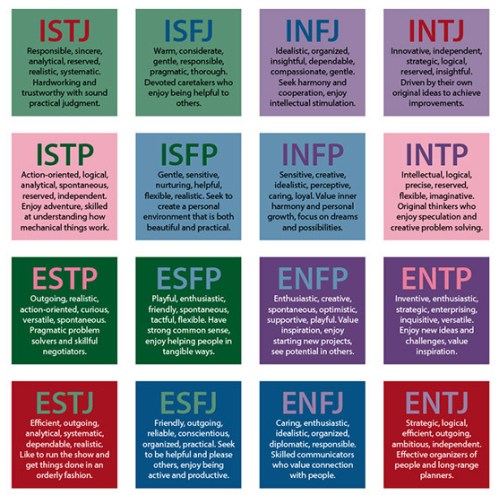
Sixteen Temperament Types

All of us fall into one of those 16 variations (for example, I have always and continue to test out as an INTJ). How we fall into them is what makes each of us unique (for example, I range between 92% and 100% for introversion every time I take the test and I suspect that variation depends on the amount of recharging solitude I have immediately had when I take the tests).

Temperaments are, in my view, a function of genetics. In other words, it’s hardwired in us before birth by DNA (nature).

Unlike other things about humans that are more fluid and can change over time, there is little to no effect from external influences that alters our temperaments.

Extroverts in a family that is more introverted don’t become more introverted, no matter how much pressure, spoken or unspoken, is applied to make them less social and more quiet.

By the same token, introverts born into a family (and into the Western world that places a very high value on extraversion) that is more extroverted don’t become more extroverted.

If anything, extroverts and introverts become even more extroverted or introverted because of the pressure applied because it conflicts with who they are at a very core level.

Whether our loved ones with dementias and Alzheimer’s are introverts or extroverts will be a factor in both behavior and socialization as they go through the journey of dementias and Alzheimer’s Disease as well.

But equally important is whether we as caregivers are introverts or extroverts and how we may need to step outside our natural dominant temperament characteristic to ensure the needs of our loved ones are met.

Extroverts with dementias and Alzheimer’s Disease will continue to crave being social and being with and around people on a regular basis. However, because as neurological changes progress, it is not uncommon to see increased conflicts in social situations (arguing, verbal fighting, anger, etc.) or exaggerated – and sometimes inappropriate – efforts to be the center of attention.

Introverts with dementias and Alzheimer’s Disease will become even more introverted as neurological damage progresses. They will tend to isolate themselves as completely as possible, become completely withdrawn, even from loved ones, and often become completely uncommunicative before they actually lose the ability to speak and communicate.

Neither of these scenarios is good for our loved ones, so it is incumbent upon us as caregivers to try to achieve and maintain as much of a healthy balance for them to meet their needs as is feasible and possible.

In my opinion, this is one of the hardest areas to negotiate effectively and well, and it also requires the most finesse and empathy.

This is especially true if our loved ones and we have different temperaments.

My mom and I were good examples of almost diametrically opposite temperaments. Mama was an ENFP and I am an INTJ. We both had intuition (N) in common, but we were total opposites in every other way, temperamentally.

From day one of our lives together, these differences in our temperaments were a constant source of clashes and contention between us, especially in the early years. Mama would push me continually to be more extroverted and I would push back equally or more tenaciously against it.

Mama would cajole, threaten (and usually follow through because punishment was a better option for me than doing something I could not abide the thought of doing), plead, try to reason, and try to entice me to be more extroverted in a social and a public sense. It never made sense to her that it was agony for me and it literally drained me of all energy and patience.

Ironically, neither my mom and dad (who was also more extroverted than I was, but was an INFJ, so he understood me somewhat better) stopped me at home when I would go off by myself to be by myself, just to get away from everyone else when I was younger and to read, draw, or write when I was older.

But they were both concerned about my lack of desire and enthusiasm to engage in group social activities and to spend a lot of time with other people doing “fun” things. I’m sure there were many bedtime discussions between my parents about me and whether this was normal or was cause for concern.

But eventually, we all sort of adapted (Mama never completely quit trying to push me toward a more extroverted temperament, but when I would finally have a meltdown of yelling and tears in frustration – and sometimes from too little solitude too often – Daddy would intervene and persuade Mama to give me some breathing room and let me regroup, which always worked) and we figured out how to live with and love each other in spite of our differences.

As Mama’s cognitive impairment worsened over the last eight years of her life, she continued to be social and seek social activities and environments. However, as the neurological damage deepened with her, the level and number of conflicts with other people increased. 

In the year and a half before Mama was diagnosed with mid-to-late stage vascular dementia and Alzheimer’s Disease, Mama’s relationships with everybody – including me – were much more contentious and much less harmonious.

On a daily basis, Mama would tell me about some dust-up with somebody. Mama had always been a bit on the scrappy side – not in a negative way, but she wasn’t afraid to take people on if they were wrong or she was protecting herself or her loved ones – but she also, because of her intuition, was able to see even the orniest of people objectively and still manage to interact in a positive way, for the most part, with them.

However, as Mama’s paranoia increased, her objectivity decreased and she began to see just about everyone in a more sinister light and as potential enemies. As a result, her social interactions, which she craved, became increasingly tense and hostile.

Just before Mama’s diagnoses and the medications that would balance out the most extreme aspects of the behaviors associated with dementias, Mama exhibited the behavior of an introvert like me.

With a profound hearing loss, Mama depended on hearing aids to connect with the world. Mama would always put her hearing aids on very soon after waking up in the morning so she didn’t miss anything.

In the few months before the inevitable crash that landed her in a geriatric psychiatric hospital, Mama often wouldn’t put her hearing aids in until late in the morning or early in the afternoon.

Mama also started isolating herself, spending the majority of the day in her apartment alone except for the time I spent with her each day.

As I went through her desk and computer when I was trying to make sense of where we were and what I needed to do when she hospitalized, I found that she’d spent a lot of time trying to write, either longhand or on the computer, and as I went through everything, I could see evidence everywhere of steep neurological decline.

It alarmed me to see the rapid progression over a few short months. I can only imagine how much more it must have frightened Mama because she didn’t know what was happening and yet she was aware that everything seemed to be quickly slipping away.

The right combination of medications brought Mama back to her true temperament and it was a relief to me and, I suspect, a relief to her as well.

She was once again involved in a lot of social activities during the day and not only did Mama thoroughly enjoy them, but other people thoroughly enjoyed her (she’d always been the life of the party and a welcome addition to any social gathering).

I made sure to encourage as much social interaction as Mama was up to and I made sure that whatever she needed to be a part of those activities she had. I would often join her in some of them, in spite of my natural aversion to that, because I knew Mama liked having me there with her and I knew that my being there made Mama feel safe.

When Mama came home to live with me, I had to continue to go outside my comfort zone to make sure she had enough social activity and interaction to thrive with her temperament. And, while it was hard at times on me, I never regretted doing that for her.

As the end of Mama’s life was drawing near and she began not knowing who I was on a regular basis and was often unable to recognize people she had known for a long time, I began to cocoon us.

The reasons were because it bothered Mama when she didn’t know people and, because they were strangers, Mama would get fearful (except for me – even when she didn’t know me, she wasn’t afraid of me and she felt safe with me).

So I began keeping the number of people with whom Mama and I interacted small and consistent so that the odds were good that Mama would remember them and so that she would not be scared.

To this day, I struggle with whether I did the right thing by Mama by doing this.

Logically, I know it was the absolute right decision because I didn’t want Mama to feel unsafe or scared.

But emotionally I question whether I should have taken the chance that Mama might have a good day and be glad to see longtime friends.

I still don’t know the answer. That will be just one more of those lingering questions that I’ll probably revisit with no resolution until the day I die.


Remembering Mama – August 14, 2015

Mama November 2011Three years ago today at 5:50 pm, my mama’s journey through dementias, Alzheimer’s Disease, and congestive heart failure ended.

With Mama’s death, like my daddy’s death almost 17 years ago, each anniversary seems like yesterday and forever at the same time.

But I’m thankful for the memories to help me try to cope with the permanent voids of their losses in my heart and in my life and I’m thankful for the hope that I’ll see them again whole and healed. 

I promised you and Daddy both that I’d be there. God’s willing and so am I. So even on the days when it feels like life is just unbearable torment I continue to put one foot in front of the other with God’s help, enduring, persevering, and continuing to grow in that faith and walking toward fulfilling that promise, even if it doesn’t look like it and nobody else can tell.

But you, Mama, and Daddy would know if you were here and you’ll know when I’m there. That’s often the only comfort I have these days. And maybe that’s all I need when I can see that comfort through the pain. I know it’s worth it because I watched you and Daddy and I learned from both of you.

So I’m remembering you publicly today, Mama, just like I do privately every day of my life. I love you. I’ll see you soon.

“The Tale of Dueling Neurosurgeons” by Sam Kean – Book Review and Recommendation

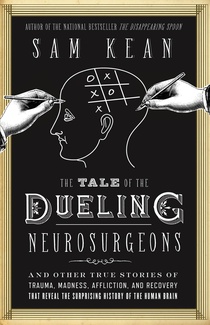
The Tale of Dueling Neurosurgeons by Sam KeanFor those of us who are dealing with the effects of cognitive impairment and physical neurological damage in our journeys through dementias and Alzheimer’s Disease either as caregivers of loved ones or as actual participants, The Tale of Dueling Neurosurgeons: The History of the Human Brain as Revealed by True Stories of Trauma, Madness, and Recovery by Sam Kean should be on our reading list.

Each chapter covers a section of the brain, its functions, and how defects change not only that section of the brain, but the behaviors associated with it.

Reading this will give us some excellent insights into the behaviors we see when dementias and Alzheimer’s Disease are present. I always believe that our ability to help and respond well and lovingly with any health issue, including neurological decline, is directly proportional to how well we understand what is happening and why.

My Goodreads review:

“Sam Kean has done a great job of not only showing the history of neurosurgery (all the way back to the 16th century) but also how a handful of people in the space of about 400 or so years discovered key basic biology and functionality of the brain.

Historically, brains have not been treated well and people with neurological defects (birth, genetic, or circumstantial) has fared even less well. Reading this, you can’t – unless you have no heart at all – feel anything but a whole lot of empathy for the people whose neurological defects gave us more understanding about how the brain works.

Except for the discussion of kuru in Papua New Guinea. If getting completely grossed out in detail is your thing – it still makes me shudder and I skimmed over the worst of it as soon as I read the first offending description – you probably won’t mind. I mind. A lot. It’s just too yuck for words.

Otherwise, a very well-written engaging and informative book. And it’s accessible and conversational.

As much as I love the study of neurology and neuroscience, as I actually do biology and medicine, I apparently, though, still have that little glitchy hangup with the dissection/surgery/”Ewwww…I have to touch THAT?” part that goes along with it.

That’s too bad, because except for that, this would have probably been my actual calling in life (there, Daddy, I said it…I’ll tell you in person when I see you again.)”

Insights: How Personality, Quirks, Foibles, and Flaws Factor Into Dementias and Alzheimer’s Disease

Personality - the way we consisting think, feel, behave in our lives is a factor in dementia behaviorsThis is the second post of a series that provides insights into the behaviors we often see in our loved ones as they – and we as caregivers along side them – walk through the journey of dementias and Alzheimer’s Disease.

In the first post in the series, we discussed how our loved ones’ life experiences factor into a lot of the behaviors we see as they travel the road through dementias and Alzheimer’s Disease.

In this post, we’ll take a look at how personality, quirks, foibles, and flaws thread their way through a lot of the behaviors we see in our loved ones with dementias and Alzheimer’s Disease. 

It’s important to understand this and to be able to recognize this because it can help us respond both more accurately and more compassionately and gently to the often baffling and frustrating behaviors that emerge as these neurological diseases progress. In other words, it gives us a context to both understand the behaviors and to minimize or eliminate, in some cases, the effects of the behaviors.

I group personality, quirks, foibles and flaws together because they’re so intertwined in what makes each of us the unique person that we are that to separate them would be like looking at a single piece of a puzzle instead of the whole puzzle.

They also represent both the positive and the negative, the humorous and not-so-humorous, the normal and the eccentric (spoiler alert: there is not a human being on the planet who doesn’t have eccentricities – some of us just hide them better than others), the sane and the not-so-sane aspects that make each of us human and each of us unique. 

All of these get exaggerated in one way or another with dementias and Alzheimer’s Disease.

Sometimes that’s okay. Sometimes that’s not.

If an endearing aspect of these gets more endearing, we tend not to appreciate it as much as we should.

However, if an annoying or obnoxious aspect of these gets more annoying or more obnoxious, we as caregivers will, at times, wonder if we will survive the journey we’re sharing with our loved ones intact and in one piece mentally and emotionally.

Personality is generally defined as the unique way each of us consistently thinks, feels, and behaves throughout the course of our lives.

Some aspects of our personalities are dynamic to some degree, changing as we mature and age or because the things we experience and encounter through the course of our lives, but the core of our personalities – the nuts and bolts of who we are at a stripped-down level – tend to be static.

Some of this core personality is genetic – nature – and some of it is early (first five years) environment/experience – nuture.

And this is the part that identifies us uniquely throughout our lives, because it is always there regardless of where we are, what what we’re doing, or who we are with.

Some of our core personality traits can be very good. If we tend to altruistic, optimistic, and malleable, those traits show up early and last even through the journey of dementias and Alzheimer’s Disease.

But even these positive personality traits can be a liability as neurological decline progresses.

If our loved ones tend to be generous and always doing for and giving to others, they very often might give away a lot of money or very valuable things to other people without understanding the financial hardship these losses may incur – and which are often unrectifiable – which may affect their own care. 

Additionally, these kind of traits can make our loved ones easy prey for unscrupulous people to take advantage of them and perhaps wipe them out financially.

Other of our core personality traits may present challenges to those around us all our lives. If we tend to be angry, stubborn, and self-centered, for example, these traits also get worse with the progression of dementias and Alzheimer’s Disease.

Unfortunately, it seems that most of us humans – and I will include myself in this (I’ve always said that if I ever develop dementia, they just need to put me down right after the diagnosis because I will be a gazillion times worse than any of the worst horror stories I have heard along the way about the negative side of dementia, and I don’t want anybody to have to deal with that) – have more negative core personality traits than we do positive.

When we have our full cognitive abilities, we have the ability – if we’re aware of these negative core traits and we don’t want them to have a detrimental impact on our relationships – to mute or override them in our interactions with other people.

However, once cognitive decline has progressed far enough to be seen behaviorally, the filters that we used to mute/override these negative core personality traits disappear as does the ability to know that we need to moderate them. And all bets are off.

Some of our core personality traits are so much a part of us that they are us. In other words, we can’t step back objectively and in clarity and self-awareness see them and remove or change them.

This is, in my opinion, just default programming (it may genetic  or environmental or both), but no matter how much we try – and some people don’t try (I am always trying to consciously avoid my own, but a lot of mine is already in play before I even know that I’m supposed to be avoiding it – it is one of the things about myself that drives me crazy) because they don’t know and/or they don’t care – it’s there anyway.

These things get exaggerated with the progression of dementias and Alzheimer’s Disease and they can be the some of the most taxing things we as caregivers can deal with because we don’t have the ability to neutralize them in our loved ones with logic, reason, and rational thinking. 

I have a very good friend whose father has vascular dementia. He is very demanding, always right, often the misunderstood victim, as obstinate as the day is long, and fighting against anything that takes away any of his independence.

My friend’s dad lost his driver’s license over two years ago when he was pulled over on the interstate for driving against traffic during the day. Fortunately, the police got him off the road before anything bad happened, but my friend’s dad has obsessed angrily about losing his license and not being able to drive since then.

His obsession with being allowed to drive ranges from conspiracy theories – the police, doctors, and his daughter have conspired unjustly against him to keep him from driving – to getting a new glasses prescription (“now they’ll give my license back”) to the humorously absurd (“everybody drives the wrong way down the interstate at least once”).

Additionally, because not being able to drive has made him more dependent on others, including his only daughter (who has a large and dependent family of her own), he expects everyone to drop everything they’re doing and take him where he wants to go when he wants to go and gets very angry if they can’t or won’t.

As his daughter and I were talking about his behavior, she said that her dad had always been narcissistic and demanding, even before any signs of cognitive decline. The world had always revolved around him so dementia has made this aspect of his core personality even worse as he loses ground neurologically.

Foibles, quirks, and flaws are, in many ways, extensions of personality.

Quirks makes us slightly off-kilter and can be cute or something joked aboutThe things that make us just slightly off-kilter (quirks) and perhaps are even “cute” or teasingly tolerated can really go off the rails quickly as dementias progress.

Foibles, which are inherent minor weaknesses, like the tendency to laugh at inappropriate times or to chatter incessantly, also become exaggerated during the journey Foibles are areas of minor weaknessthrough dementias and Alzheimer’s Disease. These also can be real testing points of our patience as caregivers because there are no boundaries around them for our loved ones as there were when there was no cognitive impairment.

And flaws (examples would be things like argumentativeness, impatience, quick temperedness, aggression, etc.) also become Flaws are the most serious personality aspects and potentially the most dangerous in dementiamore exaggerated as the journey through dementias and Alzheimer’s disease progresses and there are fewer and fewer inherent abilities for our loved ones to use to practice restraint.

Flaws are perhaps the most scary and the most dangerous aspects of personality that we as caregivers may have to deal with. Because the executive functions of reason and rational thinking are absent in our loved ones, so too is the absence of the understanding of consequences of actions (behavior), which is a restraint in normal cognitive functioning.

Therefore, for example, if our loved one has the flaw of being quick-tempered (which has the emotional component of lashing out either physically or verbally or both if not restrained), there is real possibility of physical injury or death (especially if anything that could be used as a weapon is within reach) by our loved one because they are only able to be in the moment and cannot foresee or even understand the long-term consequences of their actions.

This is why having the insight into the personalities, quirks, foibles, and flaws of our loved ones and how those are manifested in their behavior is so important for us as caregivers.

We can mitigate the possibilities of really tragic outcomes in the worst-case scenarios and we can also come up with effective strategies for neutralizing – it will be temporary at best and we’ll have to do it over and over (this can be a very frustrating part for us) – the behaviors in the moment to make them less disruptive for both our loved ones and for those of us around them. 

Do Good Grades and a Complex Career Lower the Risk of Developing Dementias?

Complex Careers Diminish Dementias Risks?A recent dementias study made the news with the assertion that it appears that people who make good grades in school and who have challenging and complex careers may have a lower risk of developing dementias.

I don’t agree with this at all.

I also think it gives false hope to all of us not yet showing signs of dementias.

Dementias are complex neurological diseases. Their development includes innumerable factors – most of which we don’t even know – that are involved in their genesis at the organic level (technology overload and addiction, which is rampant now, is definitely one of many lifestyle factors that are inorganic and not even included in the equation).

The reality is that I’ve known quite a few people in my life with dementias, including my mom.

Good Grades Diminish Dementias Risk?They were excellent students and had very complex and demanding careers, along with personal lives that were filled with learning new things and sharing them in a way to put those things into practice.

Application is the complex side of learning.

There are some people who learn for the sake of learning, but they never do anything with it or figure out how to actually apply it in their lives, so it quickly goes away.

The people who learn and then do something with that learning – application – retain the knowledge and grow in it.

Some of those people that I’ve known, including my mom, were scientists.

Some were multicultural historians and linguists (a study was done that suggested that being bilingual lowers the chances that you will develop dementias).

Some were teachers.

Some were accomplished musicians (there was a recent study that suggested that playing a musical instrument insulates you from dementias).

Some were engineers.

None of these people were slouches as students or in their careers.

In other words, the majority of the people I’ve known with dementias were at the top of their fields academically and professionally, and it didn’t make a difference.

We humans cling to false hope and what we want to be true because it’s easier than admitting how much we don’t know and how much uncertainty lies in not knowing. It’s a form of self-deception that we all are susceptible to.

The best we can do is educate ourselves about dementias. Then we do the hard part of applying that knowledge and making the changes we have control over (lifestyle is a huge factor) immediately to protect ourselves as well as we are able.

How do we do that in practical terms?

Education is the point of and the reason for this blog. I have developed and written and continue to develop and write posts so that this is an exhaustive and comprehensive educational resource on the types of dementia and on practical and in-the-moment caregiving.

There is not another blog out there that looks at these neurological diseases from a big picture aspect – covering all the dementias – and gives caregiving information that people can use today in appropriately responsive and loving caregiving for their loved ones.

Education is also the point of and the reason for the two books I’ve written on practical caregiving and practically understanding, walking through, and responding to the steps of the journey through dementias and Alzheimer’s Disease that we walk with our loved ones.

I urge all of us to know the facts and not get caught up in studies that promise things that are not provable or that are suspect.

Dementias are big-picture neurological diseases with a lot of unknowns that come into play for them to develop. Instead of focusing on a particular type of dementia, focus on what all dementias look like in real life.

Educate yourselves on real life caregiving and how to improve on being loving, kind, and gentle caregivers who also maintain the dignity and independence (as much as safety will allow independence) of your loved ones.

Educate yourselves on what steps you can take to eliminate some of the known factors in your own lives. Then apply that knowledge and eliminate them.

The reality is that the brain is the most complex system in the body and our insights into it have barely scratched the surface of what there is to learn about this incredible control center each of us have been given. The reality is that we will never understand it completely in a comprehensive way.

But Going Gentle Into That Good Night takes the comprehensive approach and, as much as can be understood about dementias from all the possible angles provides that information to you as a resource.

Take some time to read the posts listed on the right sidebar.

There is a search button at the top. Use it to search for topics you’re interested in.

If you don’t see a topic you’d like to see covered, send an email with the topic and, if it has merit, then it will be researched and discussed.

This is our blog. Your participation and input is valuable. I look forward to hearing from you.

Insights: How Life Experiences Factor Into Dementias and Alzheimer’s Disease

Life experiences are factors in dementias and Alzheimer's DiseaseThis post begins a series that provides us as caregivers a perspective into the behaviors of our loved ones with dementias and Alzheimer’s Disease that I’ve never seen discussed anywhere else. 

I’m a big-picture person. I believe that there are tangible connections among things for everything and everybody.

In other words, nothing is random, even if it appears that way. There’s a logic to everything and everybody. However, the only way to find the order and the logic is to back away from the immediate present and abandon the tendency to believe that it exists in a vacuum.

Nothing and nobody exists in the vacuum of a moment in time. Everything and everybody is the sum of their parts over a continuum of time.

By looking at the whole picture of our loved ones’ lives – life experience, temperament, and personality/quirks/flaws/foibles (which we all have, by the way) – we can gain insight into how those factor into the behaviors we see in their journeys through dementias and Alzheimer’s Disease.

Knowledge is power in this case. Because if we understand what factors of a lifetime are driving the behaviors we see, then we can find ways that are beneficial for us and for our loved ones to respond to those behaviors.

I will be the first to admit, from personal experience, getting our responses consistently right is not easy and, at times, because our own emotions (especially as children or grandchildren dealing with parents and grandparents where the landscape, even in the best of circumstances, is complex and complicated) are intimately involved, we will fail. We will fail miserably.

But, as with anything else in life, we have two choices after we fall flat on our faces. We can either quit in defeat or we can get up and try again with more resolve to move forward successfully.

It’s my opinion that a substantial part of the fatigue that we experience as caregivers for our loved ones with dementias and Alzheimer’s Disease is not physical, but instead emotional and mental.

And the resolve to not quit emotionally and mentally in going through this journey with our loved ones is a significant contributor to that fatigue.

Do it anyway. For them and for ourselves. Because when we stand alone at the end of this journey we will find out that we gained more than we lost.

We will know ourselves better than most of us probably really want to know ourselves.

We will find strengths that we didn’t know we had. We will be surprised at our endurance and the levels of adversity we had to persevere through.

But we will also find our weaknesses and we will see our shortcomings. A lot of these come to light in the years that follow the journey through dementias and Alzheimer’s Disease. They come to the forefront of minds slowly as we consider and reflect on the journey.

As painful as that is – and it is very painful – it is positive. Because once we see areas where we need to change, we have the opportunity to change. We have the opportunity to continue to reap the benefit of growth.

That’s why I personally advocate remembering, examining, and considering the journeys we’ve been through with our loved ones. Some people are not able to do that and that’s okay, but personally for me, it has been an unparalleled period of change and growth in my life.

Life experiences factor significantly into the behaviors of our loved ones with dementias and Alzheimer’s Disease. 

Because short-term memory is impacted more than long-term memory and the core of our perspectives on life are formed during the early years of our lives, the life experiences of the first twenty years of our loved ones lives seem to drive some of the behaviors we see.

For example, my mom’s mother died when she was three days old. Her 78-year-old grandmother and 80-year-old grandfather immediately took Mama and her dad – an absent binge drinker under stress (he disappeared for several days after his wife died while the maternal and paternal grandmothers fought over custody of his daughter) and a World War I veteran whose lungs had been permanently damaged in a mustard gas attack in France – into their lives.

Although Mama was loved, it was an unsettled start to life with constant moves and frequent absences of her father (hospitalizations at the VA hospital, drinking binges, and a few arrests for public drunkenness). 

Mama - 6 years oldWhen Mama was five, the fragile environment of love began to disintegrate.

Her grandfather, her best friend and trusty ally, died. A year later her father succumbed to pulmonary disease.

The memory that haunted her most of her life was the 30 minutes or so before her father died. He told Mama he wanted to talk with her, but she wanted to go outside and play with her cousins. Her father kissed her and said, “Go ahead.”

That was the last time Mama saw her father alive and her guilt over not knowing, because she was six years old, that he was dying and not staying with him when he wanted her to followed my mom all her life.

Shortly after her father’s death, Mama was sent away from the family she knew and loved to live with an aunt she didn’t know and who didn’t want her. For the next 12 years, Mama endured hell on earth. She was all alone in the world. She was mistreated, lied to, and stolen from.

Mama having fun with her grandkidsMama finally escaped and was able to overcome a lot of adversity to become an incredibly accomplished woman and the mother that I loved with all my heart, the wife that my dad cherished and was completely devoted to, and the friend that so many people loved and cherished.

But the road to becoming those people was strewn with a battle to overcome fear, anger, resentment, and bitterness, which Mama finally did in late middle-age. But the one thing Mama never completely overcame was her suspicion that people couldn’t be trusted and, given the opportunity, they’d take advantage of her.

When Mama’s dementias and Alzheimer’s Disease were in full bloom, those life experiences of her first 18 years were primary factors in her behaviors.

The loneliness came back. The fear came back. The anger came back. The bitterness came back. The resentment came back. In full force.

And her normal tendency toward being suspicious of everyone as a possible threat to take everything away from her blossomed into a full-throttle paranoia that I wouldn’t have believed unless I’d been the one who’d seen it and been on the receiving end of most of the time.

All of these things took me by surprise because they all came at once in high gear. I was overwhelmed and unprepared emotionally and mentally to deal with the onslaught.

At first I blamed myself. I kept wondering – and looking for – what I had done or said to trigger Mama’s behaviors. Every place I even thought there was a possibility that something I’d said or done was the trigger, I changed immediately.

But Mama’s behavior didn’t change. In fact, it got worse.

It was hard not to take it personally. There were many times when I’d walk away to defuse the situation and just sob because I didn’t know what to do and I couldn’t help Mama.

But I thought about the whys of Mama’s behavior day and night as I searched for answers and ways that I could help. And in the process, I found compassion, empathy, and patience.

Why? Because I realized my mom was that scared six-year-old little girl who had her whole life ripped apart and thought she was all alone in the world. And that six-year-old girl knew what lay ahead in the next 12 years of her life and she was determined not to let it happen this time because all of the emotions associated with that were front and center.

My understanding of how my mom’s life experiences were factors in her dementias and Alzheimer’s Disease gave me insights into why she was doing what she was doing and into ways that I could tangibly quiet her fears and soothe – not entirely – those raging emotions associated with the most disruptive time of her life.

So I urge all of us, as we’re able, to go back over our loved ones’ lives and see where the connections are, even as far back as early childhood, that factor into the behaviors we see as they walk the journey through dementias and Alzheimer’s disease.

I promise you that it will be worth it not only for us as caregivers but for our loved ones as well.


The Layperson’s Guide to Revocable Living Trusts, Guardianships, and Conservatorships

Contingency Planning End of Life Planning Elderly Parents and ChildrenWhen our loved ones with dementias and Alzheimer’s Disease reach the part of the journey through these neurological diseases where they are unable to handle their own financial and legal matters, we as caregivers have no option but to step in and act for them and in their best interests.

Here in the United States, there is an incomprehensible aversion to planning for the possibility of having to entrust our lives to someone else and for how we want to die

It’s as though we have this national collective mentality that if we don’t think about it, then it won’t happen.

The bad news? No matter what, it’s still going to happen.

And someone is going to be left holding the bag – maybe the person we would have designated or maybe someone we don’t want making decisions for us – to decide for us.

If it’s a person we trust, then they have the agony of trying to figure out what’s best and what we would have wanted. This is especially agonizing when dealing with end-of-life issues.

Too many people in this position of not knowing what we want, because we refused to talk about it, prolong our suffering and run up needless bills in the process, simply delaying what would have been the inevitable outcome anyway.

If it’s a person we don’t trust, all bets are off. And it is not going to be pretty.

The time to prepare for both of these inevitables – unless we die early and truly unexpectedly (I can’t help but laugh every time I see an obituary for a really elderly person that says they died unexpectedly: suddenly, perhaps; unexpectedly, no) – is when we have the ability to and can make sure what we want to happen happens.

A Revocable Living Trust is A Good Option for Ensuring Elderly and End-of-Life NeedsFrom the standpoint of appointing someone we trust to handle our financial and legal affairs (most of us do an okay job with medical powers of attorney, but even that gets ignored more than it should), a revocable living trust is probably the best and safest way to go.

The benefits of a revocable living trust are:

  • The person creating it retains control and can revoke control at any time as long as they are competent;
  • It can be set up with a small amount of money or a piece of property in the trust and the attorney’s fee (varies by state);
  • The person creating it designates the person/people they trust to handle their legal/financial affairs;
  • It eliminates the need for a will;
  • It cannot be legally contested;
  • The process of transferring control to the designated trustee in the case of incompetency requires a professional (psychiatric) letter with the diagnosis and evidence of incompetency;
  • It, with the professional letter declaring incompetency, is the only documentation needed for the designated trustee to handle finances and legal matters.

A revocable living trust is probably the easiest way to ensure what we want both in life if we can’t do it ourselves and in death after we’re gone.

However, it is of supreme importance to choose wisely and be absolutely convinced of the trustworthiness of the person we designate to be our trustee.

The bottom line? If we have any doubts as to whether we can trust someone completely, we do not choose them as our trustee.

It will not end well for us – in fact, it could end gruesomely and tragically – and all our careful planning will have been for nothing, to put it mildly.

But what if, as many Americans do, our loved ones with dementias and Alzheimer’s Disease reach the stage where they are not competent to handle their affairs without any legal documents in place?

There are two options, and by the time this is needed, it’s likely that the petitioner (us for our loved ones or our families for us) will need both of them granted.

Both options are very costly (much more expensive than the cost of powers of attorney and a revocable living trust), often take a long time to be granted, and, in many cases, set off a family war, which not only can delay a decision, but can also create irreparable rifts within the family.

One option is guardianship. Guardianships give the petitioner the legal authority to take physical care of the loved one who is incapacitated.

The process to obtaining guardianship begins with getting a professional letter confirming the person for whom guardianship is sought is incompetent to handle their own affairs.

That letter must be taken to an attorney to have a petition drawn up to submit with the letter to the court. The petitioner is responsible for all the attorney fees (general estimates are in the $2500 to $4000 range if the petition is uncontested) and court costs.

Petitioning for legal guardianship and conservatorship is a lengthy and costly processThe court will decide – slowly – whether to grant the guardianship and the entire process can take several months at the very least.

The second option is a conservatorship. A conservatorship gives the petitioner the legal authority to handle financial and estate matters for of the loved one who is incapacitated.

A conservatorship has the same legal requirements and process as a guardianship and has the same potential problems as well. That’s why if a petitioner has no other choice but to pursue these options, it’s prudent to do both of them at the same time.

There is an additional requirement for the petitioner who is granted a conservatorship for a loved one who is incapacitated. The petitioner will have to file a detailed annual financial report for the estate to the court for review to ensure that the estate is being managed as the court sees fit.

If the petitions for guardianship and conservatorship are uncontested, they will take a much longer time and much, much more money to obtain than having an attorney draw up a revocable living trust that settles everything.

If the guardianship and conservatorship petitions are contested by other family members, it’s conceivable that the legal fight could outlast the loved one who is incapacitated and the amount of money spent to fund the fight would be outrageously high.

We may have no choice in these matters with our loved ones that we are caregivers for, but I urge each of us to consider taking care of these things for ourselves now for our potential caregivers.

We need to tell our families what we want, carewise, for longterm care and at the end of our lives. We need to choose and discuss with the person we want to ensure that our wishes are carried out. We need to get the legal paperwork done and keep one copy in our home safe or a safety deposit box at the bank and give the other copy to the person we designate to carry out our wishes.

We never know when time and chance are going to happen. Today is the day to prepare for that. Tomorrow may be too late.


After Caregiving For Our Loved Ones with Dementias and Alzheimer’s Disease Ends

Caregiver and Loved One Holding HandsFor each of us who have been or are primary caregivers for our loved ones with dementias and Alzheimer’s Disease (along with comorbid age-related illnesses), we are firsthand witnesses to the physical, emotional, mental, and financial toll it can have on us the caregivers.

But at some point our role as caregivers ends. Dementias and Alzheimer’s Disease are ultimately fatal since the brain affects every part of the body and as the neurological damage of these diseases progress, the damage spreads to the rest of the body.

As I wrote in one of the very first posts I wrote for Going Gentle Into That Good Night, we will never be the same again after being caregivers for our loved ones with dementias and Alzheimer’s Disease and other age-related illnesses.

But it’s been my observation that the caregiver experience leads us in one of two polar opposite directions after our caregiving days are over.

For some caregivers, their path after caregiving leads them toward helping other caregivers who are or will be on the journey through dementias and Alzheimer’s Disease. They do this through blogs – like this one – and books and online and offline support groups.

This path gives an added benefit to the caregivers who choose it: it facilitates the healing process and it often provides a productive journey through the grieving process. 

However, for caregivers who choose this path, they learn along the way that there are some things that will never heal in this lifetime and grieving is not a finite process. 

The benefit, though, is perspective and acceptance, even in the deeper wounds that won’t quite close up and the unexpected tears that can show up anytime and anywhere no matter how much time has passed.

Dementias AD Caregiver Stats Going Gentle Into That Good NightFor other caregivers, though, the path after caregiving is to leave it behind and shut the door on it. In most cases, this is the result of a tremendous amount of pain and loss in their own lives while they were caregivers because of the huge physical, emotional, mental, and financial toll caregiving had on them.

They don’t want to be around anything having to do with caregiving anywhere in their lives: blogs, books, support groups, or even friends and family who are or will be caregivers.

You can literally see this group of caregivers shut down and mentally check out when anything related to caregiving comes up in their lives. They physically, mentally, and emotionally walk away and never look back.

None of us knows what path we’ll choose when our caregiving days for our loved ones with dementias, Alzheimer’s Disease, and age-related illnesses are over.

And what I hope we remember is that neither path, regardless of which we choose, makes us better or worse than those who chose the other path.

For all the similarities we humans share, we each are unique creations who walk unique paths through our lives. I don’t know the details of where or what you have been through and you don’t the details of where and what I’ve been through.

So I urge each of us to be kind, to be empathetic, to be respectful to every other person who has been, who is, who will be a caregiver for loved ones with dementias and Alzheimer’s Kindness Empathy UnderstandingDisease and age-related illness, regardless of which path they have chosen, choose, or will choose.

Let’s not forget that we’ve all shared the same experience and that creates a bond between us of understanding. We should also remember that, when it’s all said and done, being a caregiver is an incredible act of love that, sadly, in our society more and more people are not willing to make the sacrifice for.

So all of us who have been, who are, and who will be caregivers are incredibly loving people who made the sacrifice, just like the loved ones we care for did with us, at, sometimes, a huge personal cost to themselves for the rest of their lives.

The path we choose afterward is often self-protective and a path toward some sort of wholeness. And that’s okay, even if it’s not the path we chose, choose, or will choose.

There is no right or wrong in the path after caregiving. It depends on each one of us which direction we take. But let’s don’t attack, don’t condemn, don’t criticize our fellow travelers in this journey because they choose a different path than we did after the journey with our loved ones with dementias and Alzheimer’s Disease ends.