Tag Archive | Dementia

“Memory Lessons” – Jerald Winakur: Book Review and Recommendation for Caregivers

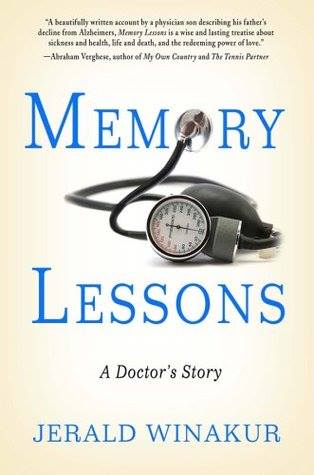
Going Gentle Into That Good Night Book Review and RecommendationMemory Lessons: A Doctor’s Story by Jerald Winakur is a must-read for all us who are caregivers for loved ones with dementias and Alzheimer’s Disease. Going Gentle Into That Good Night cannot recommend it highly enough.

This is my Goodreads review:

“What an incredible book! Dr. Winakur is a geriatric physician – old-school, steadfastly bucking against the managed care model of the for-profit companies that own medicine in the U.S. and Big Pharma, the for-profit companies who advertise magic-in-a-pill drugs directly to consumers and pay off medical providers to prescribe them – and is/was the son of aging parents, one of whom was his dad, who had dementia.

Dr. Winakur weaves the story of his philosophy as a doctor – do not harm, take the time to listen t0 and to think about each patient, we all forget, in devaluing our elderly population and shuffling them off to care facilities because we’re too busy with our own lives and can’t be bothered, that not only do we owe them our turn in the circle of life, taking care of them when they need us most just as they took care of us when we needed them most, but one day, if we live long enough, we will be them and the examples we set with our own attitudes and behavior toward them are what our children see and what they will, in turn, do to us – with the story of his family and his parents.

It is refreshing, poignant, and from the heart.

A must read!”

This is great book for all of us as caregivers. He is a doctor and a caregiver for his parents. It’s interesting to see how he deals with the same dilemmas and decisions as a son, in spite of being a geriatric physician, that we do as sons, daughters, grandchildren, sons-in-law, daughters-in-law, and spouses of our loved ones.

The Power of Music and Memories in The Journey Through Dementias and Alzheimer’s Disease

Music Memories Dementia Alzheimer's DiseaseI’ve always tracked time through music. I can hear a song and go back with photographic accuracy and precision to the exact time, the exact place, the exact month, and the exact year that I either first heard it or when it made such an impact on me that I’ll never forget it.

Usually these jaunts will prompt me to walk back through other times and places in my life – perhaps to test my own cognition – to see if I still remember them with the same level of accuracy with regard to details and precision (even down to wallpaper and house layouts in each of the many houses we lived in growing up). So far, so good.

But yesterday afternoon I heard a song that took me back to almost five years ago – July 12, 2010, to be exact – and hit me with the same effect it did when I heard it that morning.

Unexpected tears began to fall as I relived that memory and the memory I relived that day that took me even further back in time, way before dementias and Alzheimer’s Disease came to take my mom and me through its journey together.

On Sunday, July 11, 2010, in the very wee hours of the morning, my mom had the psychotic meltdown that would land her in a geriatric psychiatric hospital for almost two weeks and that would give me the grim diagnosis that she was in the mid-to-late stages of vascular dementia and Alzheimer’s Disease.

When my phone rang at 7:15 a.m. that Sunday morning, I already knew it was about Mama. The week before had been insane – with wild and dramatic mood swings, mostly negative, with each one getting more dire, and out-of-the-ballpark suspicion and paranoia – so I knew we were coming to a point where something was going to break.

Quite frankly, I wasn’t sure it wasn’t going to be me first. I was restless, anxious, unable to sleep that Saturday night, and as I paced and prayed, I kept telling God He needed to do something because there was nothing left that I could do to help Mama.

And He answered those prayers. I wasn’t at all surprised when the voice on the other end of that early morning call identified herself as someone from one of the psychiatric hospitals in the area. She said that Mama had been brought into the emergency room around 3:30 that morning (Mama had called 911) and they had determined that she needed to go to the only geriatric psychiatric hospital in the area. 

The lady on the phone ask me if it was okay to involuntarily commit Mama. I said the only thing I knew to say at that point: “Absolutely.”

She then told me the procedure for going over and changing it to a voluntary commitment by me, told me what to pack for her, and told me that Mama would be there by early afternoon.

I hung up, surprised, but not surprised, my mind racing about what I needed to do that day and what I was looking at needing to do within the next couple of weeks. It was all a little overwhelming, but I tackled the tangible stuff first that I didn’t have to think about.

I went over to Mama’s apartment in the independent retirement community she had decided to move to, without ever discussing it with me, five years earlier. I opened the door and decided to pack the bag I needed for her, clean up, and make sure there was nothing pressing I needed to take care of.

I packed Mama’s bag, labeling all her clothes so that they wouldn’t disappear. Then I decided to clean the apartment, make her bed, and do a thorough inspection of everything.

In the midst of cleaning (the refrigerator, which I tried to keep an eye on, but which I’d not been able to since she had pretty much banned me from her apartment the last couple of weeks before that, made me wonder how she had not killed herself with some of the science experiments that were in there), I found a notebook that she’d accused me of stealing two days before, hidden behind the only place I did not look when searching for it the day she told me that I’d better leave because she’d called the police to come and arrest me.

I shook my head as tears rolled down my cheek for my mom. I found a couple of bills that needed to be paid, so I took them home to pay. I knew even then that she would not be able to come back to that apartment to live, so I got on her computer and sent emails to her friends and let them know she wouldn’t be back on (no details), then unplugged the cable modem (I had been paying for her internet service) to take back to the cable company the next day.

Once everything was clean, I got Mama’s bag and her purse and the important papers I needed, and anything else valuable to take with me, and left to do the rest of what needed to be done that day.

The next morning, Monday, April 12, 2010, I began the day’s to-do list with returning the cable modem and stopping the service for Mama and having that taken off my bill. Everything was still surreal, although I was going through the motions, taking care of the things I could before the first visit I could have with Mama at noon.

On the way back from the cable company, I turned on the radio and this song came on:

Immediately, my mind went back to when I was little and Mama had the radio on all the time and we heard this song in the mix of the music that was played. I thought of those carefree days and when Mama was healthy and then all the music and summer days we’d had since then played like a movie through my memory.

Then I got to the present and I was sobbing. Not only for the past, but for the reality of the knowledge that we’d never be able to go back there again. I was crying for what we’d lost for good.

That was the song I heard yesterday. It took me right back to being in that car face-to-face with a new reality for Mama and me, reminding me again of that trip down memory lane that I had taken (and which I took again yesterday). And unexpected tears streamed down my face again.

I’ve had a hard time listening to “Mama” songs since her death. For the most part, I’ve avoided them like the plague because they evoke such a strong emotional/memory response in me and my mind and my heart get consumed with a grief I can’t stop and I can’t contain.

I don’t know exactly why this song prompted and prompts such a strong emotional reaction in me. There are no concrete, specific memories, other than the one five years ago, attached to it.

There are many other songs that I do have concrete and specific memories of Mama and me attached to: U2’s “In God’s Country,” The Commodores’ “Easy,” and Kenny Rogers’ “Lucille” are among them.

Maybe “Chrystal Blue Persuasion” is just a demarcation song for me and that is why it is so powerful. It encapsulates a childhood I miss, a mom who was at the top of her game, and a world and a time I’ll never have in again in this life. Maybe that’s all it is. And maybe that’s enough.

My advice? Embrace the music. Embrace the memories. And embrace the tears.

Because that means you had – and have – love.

And that is most precious thing we take, not just through, but beyond, this journey we walk through with our loved ones.


Profiles in Dementia: Zelda Fitzgerald (1900-1948)

Profiles in Dementia Zelda Fitzgerald Going Gentle Into That Good NightI recently finished reading Sometimes Madness is Wisdom: Zelda and Scott Fitzgerald – A Marriage. I highly recommend it, although it’s a harrowing book in so many ways.

Two of those harrowing aspects are Scott’s alcoholism and how he deliberately and consciously broke Zelda, who had her own demons and a genetic predisposition toward mental illness, for good.

A third harrowing aspect of this book is the barbaric state of psychiatry – diagnosis and treatment – in the 1930’s and 1940’s.

Zelda, who was diagnosed in 1930 with schizophrenia (most likely an inaccurate diagnosis, since it’s highly unusual for schizophrenic’s first symptoms to not appear during adolescence), was repeatedly subjected to three types of treatment routinely used for schizophrenia.

Not only did they, in many ways, exacerbate Zelda’s mental illness as well as qualify for legalized torture, but two of them eventually caused irreversible neurological damage, including cognitive impairment and memory loss consistent with all forms of dementia.

The first of these that Zelda endured over the course of 18 years was insulin coma therapy. Begun accidentally by Viennese physician Manfred Sakel, it involved giving large doses of insulin hourly daily for several weeks to keep the patients in a comatose state. It was believed that this gave the brain a chance to rest and heal itself.

Of course, other than the obvious risks of not being able to bring patients out of the comas (happened regularly) or death (also happened regularly), the high doses of insulin produced a prolonged state of hypoglycemia, resulting in permanent neurological damage.

The second treatment that Zelda was routinely given was chemically induced seizures. This treatment, based on very iffy logic at best, was pioneered by Hungarian pathologist Ladislas Joseph von Meduna.

Zelda Sayre Fitzgerald 16 Years Old Going Gentle Into That Good Nightvon Meduna made the unscientific leap with his observation that because people diagnosed with epilepsy rarely were diagnosed with schizophrenia. Therefore, he concluded that the epileptic seizures – and their aftereffects, which to von Meduna’s mind seemed to indicate blissful happiness – must be the reason for rare schizophrenic diagnoses. von Meduna then concluded that the seizures could cure schizophrenia.

By the time Zelda was subjected to chemically induced seizures, the original substances used to induce seizures – strychnine, absinthe, caffeine, and camphor – had been abandoned in favor of the drug Metrazol.

Given to schizophrenics in a regimen of 30-40 injections, with the injection rate of two to three times a week, the first injection produced such a powerful seizure within a minute of injection that torn muscles and fractured bones were not uncommon.

Beyond the high physical risks of violent injury, Metrazol also caused permanent memory loss.

Zelda died in a tragic fire at Highland Hospital, a psychiatric hospital, in Asheville, North Carolina in March of 1948, during the latest of on-and-off commitments to the facility she had from 1936 onward.

Zelda Fitzgerald Self-Portrait 1940's Going Gentle Into That Good NightHowever, in many ways, Zelda was gone years before the fire took her physical life. Zelda spent the last several years of her life devoid of memory, devoid of personality, and devoid of any sort of intellectual spark. 

Zelda’s physical appearance was so drastically changed that friends and acquaintances had a hard time recognizing her. 

Even in her hometown of Montgomery, Alabama, where she lived with her mother when she wasn’t at Highland Hospital, Zelda was unrecognizable to people who’d know her and her family all their lives. 

Zelda spent the majority of the daylight hours in Montgomery restlessly and aimlessly wandering around town in old, ragged, dirty clothes with no evidence of any care for personal grooming until her mother would find her and get her home before darkness fell.

It was a sad end of days for Zelda Fitzgerald.

Profiles in Dementia: B. B. King (1925 – 2015)

B. B. King 2014The blues were born in the Mississippi Delta shortly before the dawn of the 20th Century. The genre, known for its stories of hard times and suffering, originated with African-American sharecroppers who endured long, hot and hard labor picking cotton in the sweltering heat of the summer sun, lived in squalid conditions, and were kept in manipulated indentureship and perpetual debt by never quite making enough money to pay off their bills at local merchants.

While a few blues artists – Robert Johnson, W.C. Handy, Bessie Smith, and Billie Holiday – brought the sound of the blues into the mainstream of music during the first half of the 20th Century, it was not until the late 1940’s and early 1950’s that blues blossomed and hit its stride as a bona fide genre of American music.

Among now-familiar names like Lead Belly, Howlin’ Wolf, John Lee Hooker, Elmore James, and Willie Dixon emerged a young Mississippi Delta bluesman named B. B. King

An accomplished guitarist with an one-of-a-kind voice that wrung out every bit of pain, sorrow, and pragmatism that the blues had to offer, King, in many ways, became the face of the blues for a lot of America.

While blues artists had a profound influence on rock – British artists of the 1960’s drew heavily on their influence and vast body of work and groups like the Yardbirds, Cream, and Derek and the Dominos, fronted by Eric Clapton, were the crossroads where blues and rock met and married, producing generations of rock-blues musicians that continue today (listen to Nirvana’s haunting acoustic version of “Where Did You Sleep Last Night?,” and it’s as though you can hear Lead Belly singing along in the background) – in general, they continued to exist, much like jazz musicians, in a popular, but tightly-defined, niche in the landscape of popular American music.

Except for B. B. King. With his famously-named guitar – Lucille – and his showmanship as a guitarist, along with highly-accessible songs, including his eponymous “The Thrill Is Gone,” King managed to gain a large popular audience. 

Young B. B. King B. B. King stayed on the music circuit, performing along the way with artists like Clapton, The Rolling Stones (King opened for them on their 1969 tour), and U2, despite battling diabetes and high blood pressure for decades.

In the last few years, blues fans have consistently pointed out that B. B. King’s performances were erratic at best: King missed musical cues, forgot lyrics, and often went into long, rambling, and random soliloquies while onstage.

B. B. King’s last performance was on October 3, 2014 in Chicago. However, the performance had to be cut short because King wasn’t feeling well enough to continue. He was hospitalized with dehydration and exhaustion.

On May 1, 2015, after two hospitalizations due to complications from diabetes and blood pressure, B. B. King’s website announced that King had entered hospice care at his home in Las Vegas.

On May 14, 2015, B. B. King died. The official cause of King’s death was complications from dementia (vascular dementia).

Sadly, B. B. King’s family has already begun the legal fight over who will control his estate (there are allegations that King’s long-time manager, Laverne Toney, whom King appointed as his power of attorney, mishandled King’s care and money).

It’s a tragic footnote to an incredible life.


Profiles in Dementia: Muriel June Foster Ross (1929 – 2012) – My Beloved Mama

mama mother's dayWith Mother’s Day right around the corner, I decided to make this profile in dementia personal, and so I write about one of the heroes in my life, my mama, Muriel June Foster Ross.

Mama is the reason that I wrote Going Gentle Into That Good Night: A Practical and Informative Guide For Fulfilling the Circle of Life For Our Loved Ones with Dementias and Alzheimer’s Disease and You Oughta Know: Acknowledging, Recognizing, and Responding to the Steps in the Journey Through Dementias and Alzheimer’s Disease.

Mama is the reason the Going Gentle Into That Good Night blog exists.

And Mama is the reason why I created a Facebook support group for caregivers of loved ones with Alzheimer’s Disease, dementias, and other age-related illnesses.

My mama, Muriel June Foster Ross, was born March 2, 1929 in Erwin, Tennessee, a small town in the hollows of the Smokey Mountains in northeast Tennessee.

Fields of Gold: A Love StoryFrom the get-go, Mama had a life full of tragedy and triumph, successes and failures, bad times and good times, love and hate, deep-down sadness and uplifted-heart happiness and forgiving and forgetting, which I chronicled in the first book I wrote after her death, a memoir about my parents and us kids and our life together titled Fields of Gold: A Love Story

My mama was a most remarkable woman in so many ways, because no matter what came her way in life, she persevered, she overcame, and she prevailed.

Mama left me with an incredible legacy and some pretty big footsteps – ironically, because Mama was a lady whose physical foot size was 4.5W while my own foot size was almost twice that big and even wider – to follow in and I see continually how far I fall short of the example she left me.

However, even in my failures, I see Mama’s legacy of prevailing and not quitting. I’ve finally been able to see that even trying and failing is doing something and that beats not failing because I’m not trying to do something any day of the week.

It’s still hard for me to fail over and over, but I find myself rehearsing Mama’s life and all the places where it looked like failure and she could’ve quit but she didn’t. And, in the end, not quitting brought incredible meaning and blessings to Mama’s life.

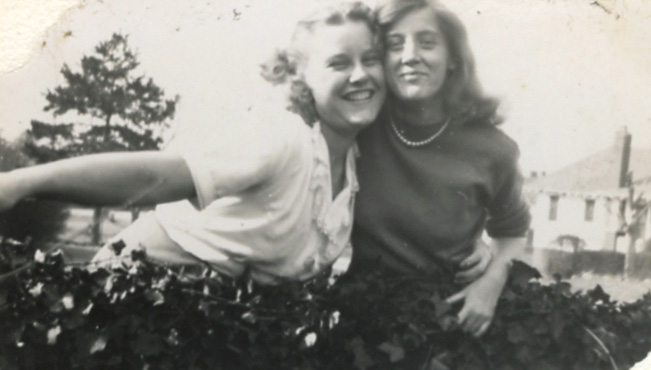
Mama and Ethel Pennell SparksMy mama was intelligent, curious, active, humorous, whimsical, outgoing, and loving. She had a lifelong love affair with learning anything and everything. Mama was a decent writer – she got her second Bachelor’s degree in English at the age of 54 – but she was an even better oral storyteller.

Mama’s twinkling blue eyes and her mischievous smile could light up even the darkest room. She had her dark moments, her fears, and her insecurities as well, but she reserved those for the people she loved and trusted the most: my daddy and us kids.

Mama’s journey with dementias (vascular and Lewy Body) and Azheimer’s Disease probably began in 2005. The real nuts and bolts of these neurological diseases didn’t really appear in full force and persistently until 2009. And the downhill slide was Mama and me dancing togetherpretty precipitous from that point forward until her death (related to congestive heart failure) on August 14, 2012.

But I had the blessing of being beside Mama throughout the journey and through the end. That’s priceless. I also had the blessing that Mama didn’t live long enough to become completely uncommunicative and bed-ridden. That would have killed both of us. The journey was no picnic, but the blessing was that we shared it, and I am thankful for that.

It seems that each Mother’s Day since Mama’s death has made me miss her more than the one before. On the one hand, I’m glad Mama’s not suffering anymore. But, on the other hand, I miss her.

And not just the Mama I remember before these neurological diseases, but the Mama I remember after they appeared. There Mama and Daddywere moments interspersed with the chaos, the uncertainty, and the tough stuff that were some of the softest and gentlest and most loving moments Mama and I ever shared and those are etched just as deeply in my heart, in my soul, and in my mind. 

Side by side with Daddy, Mama’s resting now in the peace that often eluded her in life until the Sun of Righteousness arises with healing in His wings

May that day come quickly for us all. I love you, Mama. See you and Daddy soon.


Profiles in Dementia: Katherine Anne Porter’s Granny Weatherall

The Jilting of Granny Weatherall Katherine Anne PorterIn 1930, Katherine Anne Porter wrote a short story entitled “The Jilting of Granny Weatherall” (click on the link to read the short story in a new window).  When I first read this short story in high school, I had never heard the term dementia (my mom’s grandma was senile in her old age, but she was the only person I ever heard of being senile based on firsthand knowledge).

I found Granny Weatherall, an elderly woman whose reverie drifted simultaneously between the past and present as if they had become merged, interesting, but heart-breaking. And as she relived her past like it was the present, her story gave full meaning to her surname of Weatherall.

However, it wasn’t until my own mom started intersplicing her past into the present during her journey with vascular dementia, Lewy Body dementia, and Alzheimer’s Disease that Granny Weatherall came back to the front of my mind. Upon rereading the story, I realized Granny Weatherall had some type of dementia. 

In my book detailing acknowledging, recognizing, and responding to the steps of the journey we take with our loved ones through dementias and Alzheimer’s Disease, I again had Granny Weatherall on my mind as I wrote Chapter 10.

It’s a story I highly recommend for all caregivers with loved ones who have dementias and/or Alzheimer’s Disease.

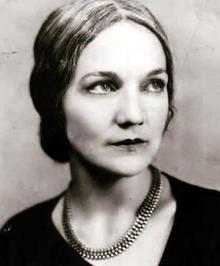
Katherine Anne Porter 1930How Porter had this kind of insight into the inner workings of how these neurological diseases manifested themselves internally – with Granny Weatherall – and externally – with her caregiving daughter – is a mystery, but Porter captures it perfectly and poignantly.

I think one of the things Granny Weatherall does for us as caregivers is that she reminds us that our loved ones were once vibrant, full of life, and they’ve seen a world of ups and downs that not only may we not be privy to, but that we can’t fully imagine or understand. 

I believe another thing that Granny Weatherall does is to remind us of the fragility, the humanity, and the dignity of our loved ones. Her internal indignation at her daughter’s well-meaning, but clueless caregiving makes us take stock of our own caregiving in relationship to our loved ones.

And the last thing that Granny Weatherall does is to remind us that death is part of the circle of life and it’s often harder on those it leaves behind than those it takes.

There a lot of good lessons here. I hope you take some time to read “The Jilting of Granny Weatherall.” Porter’s a good writer, so the story moves well, but it gives us as caregivers an inside look at our loved ones that we may not have considered or even been aware of before.

Profiles in Dementia: Jonathan Swift (1667 – 1745)

Gulliver's Travels - Jonathan SwiftThere aren’t many people who haven’t, at some point in their lives, read Jonathan Swift’s best-known work, Gulliver’s Travels.

While most of us read it when we were too young to appreciate it because it was considered a staple in classic children’s literature (I was eight the first time I read it), reading this book as an adult and understanding what Swift is really writing about puts a whole new, interesting – and, yes, even comical at times – light on his most famous work.

But Swift was a prolific writer and a brilliant satirist beyond Gulliver’s Travels and was heavily involved in politics in both Ireland and England. He is considered one of the leading voices of The Age of Reason.

Swift’s prodigious public writing ended with Drapier Letters in 1724, and by the time his wife, Stella, died in 1728, Swift was already showing signs of neurological decline.

A fastidious and highly-organized man, Swift became more and more whimsical and capricious in his daily living. He also developed obsessive paranoia and miserliness.

Profiles in Dementia - Jonathan SwiftAs he descended further into dementia, Swift still tried to maintain a semblance of private correspondence after 1728, but eventually was unable to write at all. 

In 1740, in a rare letter to his niece, Swift confessed “I hardly understand a word I write.” By 1742, guardians had to be appointed to care for Swift and maintain his estate because he was simply unable to.

Jonathan Swift died in 1745, when “he exchanged the sleep of idiocy for the sleep of death.”


Profiles in Dementia: Ralph Waldo Emerson (1803 – 1882)

Ralph Waldo Emerson and Concord, MA writersI recently read Susan Cheever’s American Bloomsbury, a compelling account of the interwoven lives of the Concord, MA literary giants of 19th Century literature and, with a notable exception (Nathaniel Hawthorne), the core members of both the Transcendental Movement and the Abolition Movement that saw John Brown as a heroic martyr.

This group of closely-interconnected writers included, among others (Edgar Allan Poe passed through as did Walt Whitman and Herman Melville), Emily Dickinson, Louisa May Alcott, Henry David Thoreau, Nathaniel Hawthorne, and Ralph Waldo Emerson.

Despite all my college studies in English Language and Literature, I have never been able to really like – or even endure – most 19th Century American literature. (Yes, I’m American and, yes, I really loathe this period of American literature for the most part.)

My three exceptions are the three writers in this Concord, MA conclave who never quite fit in with the mindset and the groupthink of the rest of the writers: Nathaniel Hawthorne, Edgar Allan Poe, and Emily Dickinson.

I won’t bore you with all the reasons – and there are many – why I like these three writers and don’t like the rest.  If in another lifetime I decide to start a literary analysis blog, a post with those reasons will definitely make its appearance there.

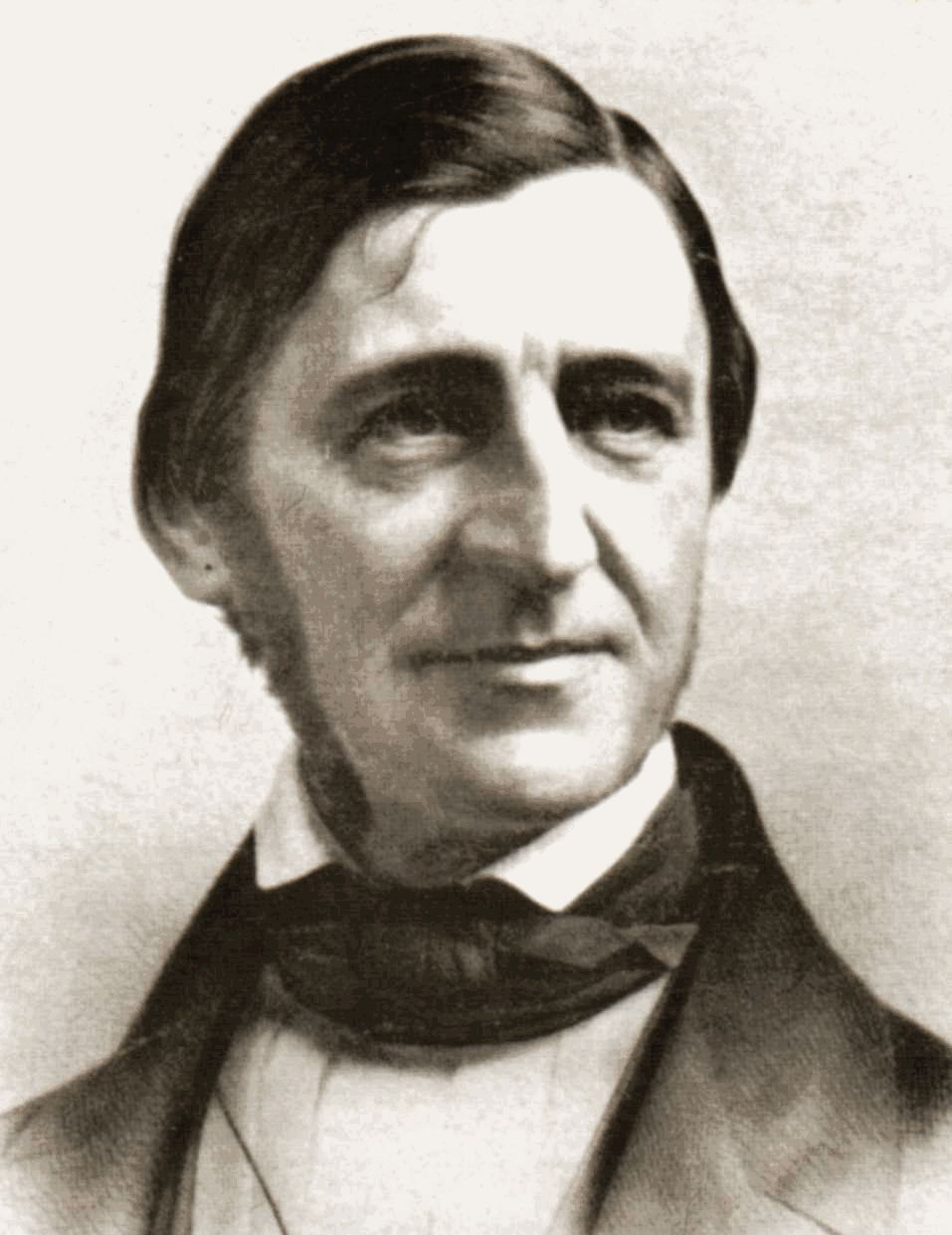
Ralph Waldo Emerson Dementia and AphasiaSo, although I read my required – and no more – share of Ralph Waldo Emerson, I didn’t know much about him as a person. This book shed a lot of light on that.

Emerson, it turns out, was the financial support for these writers and their families, some for all their lives (Henry David Thoreau) and some until they published successfully (Nathaniel Hawthorne and Louisa May Alcott).

Emerson was older than most of the other writers and was treated by them as a father figure and a mentor. Emerson was intelligent (a graduate of Harvard), thoughtful, and a practical intellectual who guided this group in both their literary endeavors and their personal lives.

So I was surprised to learn that Emerson developed dementia (Cheever, perhaps because she has not dealt with dementia in a more personal way, made the common mistake of calling it Alzheimer’s Disease, which is only one type of dementia), accompanied by aphasia during the last decade of his life.

Because aphasia was a key feature of Emerson’s neurological degeneration, it’s very possible that he suffered from vascular dementia, since aphasia is very often a feature of that type of dementia.

One of the devastating aspects of aphasia as it worsened for Emerson was that he had supported his family and, to one degree or another, many of the other Concord writers for decades by conducting a rigorous yearly schedule of paid speaking engagements around the country. Once his ability to communicate coherently was gone, Emerson’s income was gone as well.

In the last couple of years of Emerson’s life, he forgot most of the people and things around him in Concord, MA. Louisa May Alcott, whom Emerson had known for 42 years, watching her grow up from a nine-year-old spunky girl into an equally spunky woman, became a stranger to him, as did his family. 

The Forgetting PBSHowever, and this is fortunate, in the acclaimed PBS documentary, The Forgetting, Emerson is quoted as having remarked, when he was well into the disease, to a friend that, “I have lost my mental faculties but am perfectly well.”

I plan to make “Profiles in Dementia” a regular feature on this blog since I’ve got a lot of stories like these that I’d like to share and will give another dimension, in terms of personal interest, to this blog.

So, if you like this one and you like the idea, let me know by your likes and comments.

This blog’s for you, so you have a voice in what kinds of things are included here.

I appreciate you reading and hope that you will find the extensive body of information here helpful in your journey with dementias and Alzheimer’s Disease, whether that’s as a caregiver for loved ones or it’s you that’s walking the journey yourself.


The Steps Our Loved Ones Take in the Journey Through Dementias and Alzheimer’s Disease

Click below on the new infographic I created to see it in normal size.

dementia steps going gentle into that good night

Part 2 – “The End of Absence” (Michael Harris) Book Review

information superhighway going gentle into that good nightThis is the second of a three-part series of reviews that I am writing on The End of Absence: Reclaiming What We’ve Lost in a World of Constant Connection written by Michael Harris in 2014.
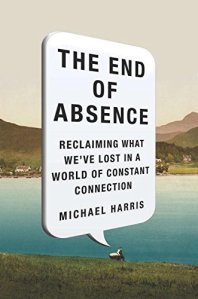
The End of Absence: Reclaiming What We've Lost in a World of Constant Connection by Michael HarrisIn “Part 1 – ‘The End of Absence’ (Michael Harris) Book Review,” we looked at the definition of absence and how it relates to our quality of life.

We discussed how absence gives rise to critical thinking, problem-solving, short-term and long-term planning, concentrated focus, and creativity.

We also discussed the physical, emotional, and mental benefits of absence.

And, finally, we discussed how absence has been eroded by our constant connection to technology to the point that it is virtually extinct in our current society.

We discussed how this has dumbed down society as a whole and how susceptible that makes us to being controlled, manipulated, and deceived by technology.

And, finally, we looked at how much technology and our constant connection to it mirrors the society that George Orwell described in 1984, coming to the conclusion that the frighteningly eerie similarities should compel each of us to consciously choose not to follow the crowd and intentionally limit our connection and ensure a healthy amount of absence exists in our lives individually.

In this post, we’ll take a behind-the-scenes look at what happens with all the data you’re willingly and freely putting into digital technology every time you text on your phone, go to a website, input anything onto social media (including the infamous “like” button on Facebook), do a Google search, buy something online, watch streaming video, and play internet video games.

We’ll also see how being constantly connected to digital technology brings that data back to us and shrinks our exposure to real and complete knowledge (Google infamously does this with their industry-standard data mining and predictive analysis processes, which narrow search results down to what we want to see, based on our input, rather than everything there is to see).

In effect, we are being shaped and manipulated in an endless loop of our own little world of preferences and beliefs with subtle changes and false ideas about value and credibility being implanted along the way.

Our constant connection to technology is literally rewiring and incorrectly programming our brains. This negatively affects – if not outright destroys – our value systems and belief systems.

Additionally, our ability to not only think for ourselves – and change our minds based on that – but also to critically and objectively think, as well as to think outside the boxes of what we know and are familiar with is rapidly being destroyed because we depend on technology to do our “thinking” for us.

Additionally, we’ll continue our look at how our constant connection to technology is essentially creating a virtual life (think the movie The Matrix) that we are being conned into believing is real life, while actual real life, which includes lack and absence, is rapidly disappearing for all but a few of us who are aware of what’s happening and refusing to let it happen to us.

Our lifestyles, which now center around technology, are creating a new kind of lifestyle dementia, and most of us don’t even realize it’s happening. That’s why you need to read this book and that’s why I’m spending so much time reviewing it.

don't surrender you're ability to think to anyone or anything elsePerhaps you think what is being described here is impossible and this is just an alarmist warning that you can blow off because “that’ll never happen.”

It’s already happened and it is happening. I know technology very well from a big-picture and a behind-the-scenes perspective, so I’m speaking as an insider and an expert who has worked and does work with this on a daily basis.

Here’s the reality. Whether you choose to ignore this is immaterial. It’s already well in motion and progressing rapidly and, if we choose to remain ignorant and we choose to continue our constant connection, we will be devastatingly changed in the process.

And the sad part is that, like the society that Orwell discusses in 1984, not only will we not be aware, but we will not care, even if it’s the most destructive thing that can happen to humanity.

One of the ways in which our constant connection to technology has changed us is that now our default choice is to use technology to interact with people and things rather than actually interact with people and things for real. 

Here’s a simple comparative survey of why our brains have been rewired to prefer technological interaction with people and things rather than real interaction with people and things.

With technology, we can ignore or eliminate or limit our time with anybody or anything we don’t want to have to deal with. This can include people and things we find challenging, who disagree with us, who don’t “tickle our fancy,” and who “make” our lives “harder” just by their presence.

With a click of a button, we can unfriend them or unfollow them and turn off their news feeds, or we can avoid those things altogether until they simply no longer exist to us.

What we end up with in the process is an artificial, virtual world that we create to make us feel good. It’s also a shallow and stagnant world that ends up being essentially us looking in a mirror and seeing nothing but our own image reflected, because the people and things that are left after our unfriending, unfollowing, and avoiding are those that never challenge us, always agree with us (even when we’re wrong), and boost our feel-good emotions (as we do theirs).

In real life, those people or things are right there with us and we have figure out the best way to deal with them whether we want to or not, even if that means putting up with our co-workers, friends, and relatives or all the tough things that exist in real life.

In other words, we can’t turn them off (and if we eliminate them, in the case of people, then we go to prison). So it forces us to find creative and workable ways to share the same space with them and it increases our relating-to-humanity-and-things skills and builds traits like patience, kindness, gentleness, understanding, empathy and mercy.

These are character-related traits that cannot be developed in the artificial, virtual world that constant connection to technology enables us to create in our own image.

And our artificial, virtual worlds make demands on us as well, although this dark side is seldom, if ever, on our minds or consciences. They demand our 24/7 attention and presence and because of our acquiescence to those demands, we lose absence. Solitude. Peace. Disconnection.

Absence gives us time alone with our thoughts, alone with ourselves, and alone with our ideas, our dreams, our hopes, and our imaginations. Absence also gives us the ability to regroup and recharge our brains and ourselves. It gives us a chance to get away from all the “noise” of life and have peace and quiet.

Here’s the irony. We need solitude as part of our mental, emotional, physical and spiritual health. There’s no other way to survive life.

Yet, even for those of us born before 1985, from the moment we’re born the emphasis is on socialization.

Society is so insistent on this – my parents often had to drag me kicking and screaming as a small child into social situations because I was always very uncomfortable with them, and as I got into my teenage years and could make my own choices, more often than not, I chose staying home over going somewhere either for a few hours or overnight – that most of us are uncomfortable being alone and being quiet, with nothing to entertain or distract us.

Technology and constant connection ensure that we don’t have to be uncomfortable, and it amplifies the illusion of constant company.

This, by the way, began before digital technology. Before there was the internet, there was television. And before television, there was radio. All of these technologies gave – and give – the illusion of constant company because of the noise and the distraction they provide.

And here’s the reality for humanity now. For those of us who remember absence, we have the constant choice of saying “yes” or “no” to constant connection. For those of us who came of age with constant connection as part of our normal lives, we don’t even know there is a choice. And that is truly sad.

Because our artificial, virtual worlds seem real to us because they’re replacing real life, our brains get rewired in additional ways by the illusion this creates.

One way is that we feel surrounded by people like us, so we feel free to say whatever we want to say however we want to say it. We don’t care how wrong it is, how hurtful it is, or how confessional it is. Constant connection, by subverting thinking, has removed the filtering that normally goes into thinking before we speak.

In this way, the words spewed out on the internet actually mimic one of the tell-tale signs of dementia: the loss of impulse control and ability to know what things to verbalize and what things to keep to ourselves. 

Another way that constant connection to technology rewires our brains is that it promotes the self all the time. With an artificial, virtual world that we have created and are the center of, we can continuously draw all the attention to ourselves.

This self-broadcasting, which shares many traits with narcissism, includes fervent self-documentation consisting of constant tweets, continual status updates, and a never-ending supply of selfies.

In effect, a constant connection to technology makes us incredibly self-centered, self-absorbed, selfish, and it reinforces our belief that “it’s all about me.”

So it’s no surprise that we’re less empathetic, less genuinely caring (caring for someone online takes little effort, engagement, involvement, and commitment while caring for someone in real life takes continual effort, engagement, involvement, and commitment, no matter what circumstances arise), less able to listen and hear what people are saying or trying to say, less understanding, and less able to provide authentic comfort, encouragement and support.

In other words, a constant connection to technology makes us less human.

So why do we do it? Because it’s rewarding online. The more attention we garner, the more we want. If everybody notices us and loves – or likes – us, that is very motivating to continue our self-tracking because it feeds our egos.

A constant connection to technology and self-broadcasting gives us the approval we crave just for living life and doing the mundane things it requires of all of us. Somehow, having a bunch of people like and praise some routine, ordinary thing we’ve done makes us feel extraordinary and accomplished.

It doesn’t happen like that in real life. Most of what we say and do goes completely unnoticed, even though we may say and do a lot and say and do a lot of good, but despite that reality, those of us who are invested in real life just keep going on and putting one foot in front of the other.

A constant connection to technology rewires our brains to stop doing our own thinking and shop it out the the public opinion of the internet.

This costs us far more than we are remotely aware of.

In choosing constant connection and public opinion to do our thinking and decision-making, we choose to abandon the most powerful workshop we have access to, which is our lone minds.

In our lone minds, which only solitude can give us, we can think objectively and critically through things. We can solve problems. We can fill in missing pieces of the puzzles that life inherently has. We can find connections between things that don’t look connected on the surface. And we can innovate and create scenarios and options that point us forward in our lives.

When we abandon our lone minds, we offer ourselves up to indiscriminate information from public opinion, much of which is conflicting, wrong, and worthless.

But because our brains are rewired to believe that’s a valid and real world, we accept all the input we’re given and make the erroneous assumption that it all has the same quality, the same value, and the same veracity.

And that will destroy us, because most of what we get is uninformed, uneducated, and unknowledgeable in the context of being “expert” information.

In addition to this and what most people don’t know is that public opinion is manipulated, especially on the organizational level.

For example, many organizations have people internal to the organization write a lot of positive reviews about whatever their products are to feed the search engines to give them a higher rating of satisfaction.

Data mining cannot analyze quality, only quantity. So the more times a search engine sees a name and sees positive input, the higher it ranks it organically. This is a driving force – and goal – in every organization with an online presence.

There are two types of search engine results, paid and organic.

paid organic search engine results PPC

Paid search engine results (the ones in the example above with AD to the left of the link) are those that organizations pay, often a lot of money, to the search engine for significant keywords to get top-of-the-page (or top-right-side-of-the-page), first-page placement.

This is known as pay-per-click (PPC) advertising. Each time someone clicks on the paid advertisement, whatever that keyword costs is what is charged to the organization. This can get really expensive really fast.

Organic search engine results (in the example above, below the faint gray line, starting with the Alzheimer’s Association’s link) are generated in order by how many times the keyword appears on the site and how much traffic (search engines don’t really care where the traffic comes from, only how much of it there is) goes to the site (this is where social media sharing has really taken center stage in driving traffic to sites). This doesn’t cost anything.

So, it should be obvious why organizations manipulate their data behind the scenes to get higher organic ranking. The most prevalent (and most dishonest) way has become social media sharing and having people internal to the organization physically go to the site as often as they can. More hits equals higher ranking in the organic search results.

What does that have to do with us and the end of absence and constant connection to technology? Everything!

We instinctively choose what’s listed first because we connect that with what must be the best. However, because what’s listed first is simply because of manipulation (which we are unaware of) and not because of proven and tested quality, we get duped in accepting things as “best,” “right,” or “most” when in fact there is no proof any of those things are true. It’s all an illusion.

google-logoBecause we have come to believe that Google is always right and if it’s on the internet then it must true and because the answers are alway immediate, we have abandoned the mental processes that time would allow – comparison, analysis, perspective, insight, and wisdom – so that we could be sure we were making the right and best choice. That’s the lack of absence that real life decision-making gives us.

instagram-logoAnd what do Google and Facebook do with all that data you share with Twitter, Facebook, Instagram, and Google (these are just a few – everything you do on the internet gets stored somewhere and is analyzed by software that gets a sense of who and what you are about using predictive analysis, so that what you ask for ends up being things that appeal to or interest you, not everything there is on the subject)?

The next time you do a Google search, log in to your Facebook account afterwards. Look at the right hand side of the screen where the ads are. Odds are good they will be for what you just searched for in Google.

twitter-logoPay attention when you share links on Facebook to that same right hand side of the screen. The odds are good that whatever the content is within the link you shared will be what the advertising is for.

facebook-logoThis is predictive analysis in your face. Most of it is not, but Facebook makes no secret that is what they are doing to try to get you to buy something.

Google’s method is invisible, but much more detrimental and dangerous.

Google uses what is known as a “filter bubble” to generate search results. This gets personalized for each person that uses Google and it is based on our preferences and our activities.

Google keeps meticulous track of our searching history, promoting the same results each time we repeat a search and further personalizing them based on which results we choose to follow through on by clicking on the links Google shows.

Each time we do the search, results are pared down to match our personalization preferences, which in effect means we get exposed to a narrower and narrower view of the universe.

Facebook uses this same algorithm in our newsfeeds. We might have 100 Facebook friends, but we interact with 10 or so almost constantly.

All the statuses of those 10 will always show up in our news feeds. The other 90 friends will randomly show up in our news feeds based on how much we interact with them and they interact with us.

The more interaction, the more likely the statuses will show up randomly – not always – in our news feeds. For friends with whom we have little interaction on Facebook, their statuses disappear from our news feeds altogether.

In other words, the internet is making our worlds smaller, not bigger.

And the personalization that makes our worlds smaller, not bigger has affected every part of our lives. The music we listen to. The suggested content for us to watch on live streaming. How and if we get employed by an organization.

And it seems that our brains are, with their constant connection rewiring, accepting this as being okay and we’ve adopted an “out of sight. out of mind” mentality toward anyone or anything we don’t see regularly or at all.

Here’s what we must understand and realize about how dangerous this is and how much we’re losing in the process.

Personalization is really just the glorification of our own tastes and our own opinions. It eliminates the big picture and a general, broad and comprehensive base of knowledge and understanding while embracing customization, specialization, and a singular viewpoint that takes nothing around it into account (no context).

Personalization cuts off our access to real learning and real knowledge. It cuts us off from the very things – and people – who could help us the most.

Because there is no “surprise” content to challenge us, to think about, to learn from, and to grow and mature in, we stagnate in life.

Stagnation is one step away from the regression to the kind of mindlessness that typified 1984‘s society as a whole. We are not that far from it ourselves.

In the next and last post reviewing The End of Absence: Reclaiming What We’ve Lost in a World of Constant Connection, we will look at the final third of the book, still looking for signs of hope, although the prospects of that are getting dimmer.