Tag Archive | Going Gentle Into That Good Night

The Layperson’s Guide to Home Health Care for Our Loved Ones with Dementias and Alzheimer’s Disease

Part of the caregiving team we will lead for our loved ones with dementias and Alzheimer’s Disease will – and should – include home health care, palliative care, and hospice. It is, therefore, important to understand what each of these services provides and under what circumstances.

Home health care is generally provided – if it is not offered, then we should request it as part of the discharge process – after our loved ones are hospitalized for an acute serious illness that is causing systemic problems (strokes, heart disease, hard-to-manage blood pressure, embolisms, and continuously low oxygen saturation levels are some examples of acute serious illnesses) or surgery that requires follow-up monitoring and wound care. 

What services are included in home health care?

Nurses, who function as case managers, will come to the home from one to three times a week (depending on the severity of need) to do a thorough examination of our loved ones, provide wound care (if applicable), and serve as the liaison with both the primary care provider for status updates and medication changes (if needed) and with other services included in home health care.

I strongly advise, especially for our loved ones with dementias and Alzheimer’s Disease, to request that the same nurse – if he or she is a good fit – do all the home visits to ensure continuity and to create comfort and trust for our loved ones. If the nurse is not a good fit, then we should request a change. Generally, it will be obvious on the first visit.

Physical therapy, occupational therapy and speech therapy are also services offered by home health care. At the very least, I would suggest taking advantage of physical therapy and occupational therapy. For our loved ones who have suffered strokes and are recovering, speech therapy should be included as well.

Hospitalizations always leave our loved ones weaker physically than they were before being admitted, because with acute illnesses and surgeries, they usually spend a lot of time lying in bed and are not as physically active. In the case of strokes, motor skills are usually severely affected on one side of the body, although in some cases both sides are affected (depending on where the stroke originated in the brain).

Physical therapy will begin in the hospital in some cases, such as with strokes or joint replacements, but most hospitalizations will not include this as part of treatment.

Therefore, it’s vital to our loved ones’ health to use the physical therapy services provided by home health care to regain strength and to keep them as mobile as possible for as long as possible. In the case of strokes, it’s imperative to continue physical therapy as part of the recovery at home.

Physical therapists will visit the home, on average, twice a week and will help us and our loved one with exercises and activities to do on a daily basis to continue strengthening and improving balance, mobility and motor skills. They will also order any mobility equipment – if we don’t have it already – such as walkers and wheelchairs, if needed.

Occupational therapy helps identify what physical adaptions of the home need to be made to make daily activities easier and safer for our loved ones. These include things like grip bars near the toilet for ease of getting up (or a sturdy raised toilet seat with bars – my preference), grip bars in the shower or tub to prevent falls, and transfer seats for the tub to make getting in and out easier. They can also identify safety hazards – for example, throw rugs are very hazardous for elderly and those using walkers – in the home.

Additionally, occupational therapists can help our loved ones with functionally-appropriate ways to do everyday things. While our loved ones with dementias and Alzheimer’s Disease generally find their own unique adaptive ways with our help, occupational therapists are critical in the recovery or maintenance of people who have suffered strokes.

home-health-careSpeech therapy can be helpful for people who have suffered strokes. In the case of our loved ones with dementias and Alzheimer’s Disease, in general, speech therapy is not a viable option.

The nurse (case manager) will contact these therapists as warranted and set up the initial consultation appointments. Each therapist will then set up his or her own visitation schedule.

If additional assistance is needed with daily activities such as bathing, most home health care agencies have home health aides who will come at least twice a week to help with with those activities.

One of the best features of home health care is our access to 24/7 medical support. As anyone who has been a caregiver knows, the need for medical advice and/or assistance often occurs at night and on weekends. Without home health care, the only option is to take our loved ones to a hospital emergency room (nights) or an urgent care facility (on weekends).

Many of the medical issues that occur are easily treatable at home, so having to get our loved ones to a medical facility where they often have to wait for a considerable amount of time to be seen, treated and released is very stressful and hard on them.

With the 24/7 medical support of home health care, we can easily assist our loved ones at home without creating unnecessary stress and discomfort for them.

Home health care services are covered by health insurance (if under age 65) or, if 65 or older, by Medicare Part A (80%) and Part B Supplemental Insurance (20%) and should not incur any out-of-pocket costs for our loved ones with dementias and Alzheimer’s Disease.

We should be aware that most hospitals partner with a particular home health care agency in the area (most of the corporations that own hospitals have a home health care agency as a business unit in their corporate structure), but we should research – the best (and worst) referrals come from other people who’ve used an agency’s service – all the home health care agencies in the area we live in and choose the one that best suits the needs of our loved ones with dementias and Alzheimer’s Disease.

All home health care agencies are not created equal. Some provide excellent care and service and some do not.

When our loved ones are discharged from the hospital, a discharge coordinator will be involved and he or she will initiate our request for home health care (again, they will not always offer it, but we should always request it). If we don’t have a preference, he or she will use the home health care agency the hospital partners with. If we do have a preference, we should state that. Then he or she will contact that home health care agency to provide follow-up care in the home.

It’s important to be aware as well that we have the right to fire a home health care agency and, going through our loved ones’ primary care providers, get a referral to another home health care agency that we choose.

We should not and do not have to accept poor or inadequate care for our loved ones, nor do we have to accept a situation where the attitude of the staff is poor or indifferent and where the staff does not treat our loved ones with respect, kindness, dignity, and gentleness.

If the home health care agency providing care for our loved ones with dementias and Alzheimer’s Disease is not satisfactory, for whatever reason, then today is the day to make the change to another home health care agency. We owe our loved ones the best, the most professional, and the most respectful medical care available. Never settle for anything less than that.

In the next post, we’ll look at the option of palliative care and when it is used and what services it offers.

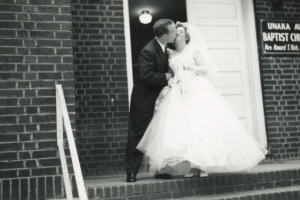
 

Remembering What Would Have Been Daddy’s and Mama’s 58th Wedding Anniversary in the Fields of Gold: A Love Story Soundtrack of Our Lives

Today would have been my parents’ 58th wedding anniversary. I miss them both.

fieldsofgoldbk's avatarFields of Gold: A Love Story - The Book

fields of gold: a love story mama and daddy wedding day 6-9-56Today would  have been Daddy’s and Mama’s 58th wedding anniversary. Their meeting in Durham, NC when they both were at Duke University – Daddy teaching physical therapy and Mama studying medical technology – was nothing less than a miracle.

Daddy had other job offers but he wanted, after his stint in the Army during the Korean War, as all of us Tarheels long to at some point, go home. Mama was originally supposed to go to Vanderbilt University for her training, but she didn’t have a prerequisite course she needed to get into their program. Mama had all the prerequisites for Duke’s program, so she changed her plans and went there instead.

One of our family jokes was that Daddy picked Mama up on a street corner. In fact, that’s essentially true. Mama waiting at the corner of her street each morning for the bus that would pick her up…

View original post 570 more words

Mother’s Day 2014

mama mother's dayToday is the second Mother’s Day since Mama’s death. Grief still lingers and hovers over me, punctuated even more by packing up for the impending sale of my house and subsequent move.

Because packing has brought the inevitable sifting and sorting, which entails opening boxes, containers, and drawers that have sat unopened for a while. And I’ve come across a lot of memories in the process and the tears that they are just memories now have fallen quite frequently.

While some who read this blog knew my mama, most of you don’t. So in honor of Mother’s Day 2014, I would like to briefly introduce you to this wonderful and beautiful lady that I’m honored to have known as “Mama.”

Mama was one of the most intelligent people I’ve ever known. Though beset by a hearing loss – that worsened with time – all her life, she was an excellent student and she loved learning.

Although Mama had completed medical technology training shortly after she and Daddy married, she yearned to go back to college and get more education. At 48, she did just that, ending up with a bachelors of science degree in biology and a bachelor of arts  degree in English. Her cumulative GPA was 3.5, despite the fact that she struggled through two required, but dreaded, math courses. We – she and I – worked together and got her through both of them with a C.

Almost right up until the time of her triple-dementia – vascular dementia, Lewy Body dementia, and Alzheimer’s Disease – diagnosis, Mama was taking classes of some kind. Her last formal classes were sign language classes, which Mama persuaded me to join so that we could learn and practice together.

Mama was also a voracious reader. When Mama was in elementary school, she’d spend every Saturday at the public library in Greenville, SC where she made the pronouncement to the librarians there that she was going to “read every book in the world.” They laughed, but Mama never gave up on that unattainable goal.

Mama, in spite of all the odds against her, was, as an adult, hopeful and optimistic about life. She enjoyed life and made the most of her time on this earth.

Mama had a whole lot of love and she generously poured it out on everybody who intersected with her life and who responded to it. I’m not sure Mama ever met a stranger; of the five of us, she was, even more so than Daddy, the most likely to introduce herself to someone and make them feel welcome in any setting.

Mama cared very deeply about humanity and often cried tears for the most vulnerable among us – children and the elderly – when she learned of hurts, sorrows, and oppressions that had befallen them.

Mama also loved all the four-legged friends that accompanied her and us as a family throughout her lifetime. She also cried tears for them when it was time for her and us to say goodbye to them.

Mama was the enthusiastic cheerleader in our family. Whenever any of us expressed a desire to do or try something, Mama was right behind us encouraging us to go for it, assuring us that she’d be with us all the way.

Sometimes if we were too reluctant or refused to do something and Mama believed it was something we needed to do, she’d give us an “or else” ultimatum. My only jump ever, tear-laden though it was, off a diving board into the deep end of a swimming pool when I was 9 was the result of one of Mama’s ultimatums. 🙂

mama-entertaining-bday-2003Mama had a fantastic sense of humor that always had the edge of mischief around it. She laughed easily and often and her blue eyes sparkled with joy most of the time, although dementias and Alzheimer’s Disease took more than their fair share of that away as they progressed.

Mama was always up for adventures with her family and her friends. When she and I were both in college at the same time, we arranged our schedules so that our Tuesday and Thursday classes were done by noon.

At least once a week, we’d go to lunch together, then go to Baskin-Robbin’s and get three-scoop sundaes to take to the movie theater to eat while we caught the afternoon matinee of whatever new movie was out.

On days we didn’t go to the movies, we’d either spend the afternoon walking and talking out at Wrightsville Beach (North Carolina) or Fort Fisher or in downtown Wilmington or we would go bowling or go to shoot pool (Mama never quite mastered the technique of shooting pool, but she was a pretty decent bowler back in the day).

I cannot tell you how much I treasure those memories, nor how much I miss those times. When we traveled together in subsequent years, we’d always spend a lot of time exploring together, until the last few years, when Mama’s energy and heart was winding down and she simply couldn’t manage long exploratory walks and strolls.

It broke my heart when it happened. I guess I believed she’d be enthusiastically keeping pace with me, taking two steps to every one of mine (her legs were shorter), until the day she died.

Mama was also a talented writer and storyteller. One of the memories I’ve encountered as I’ve been packing is the reminder of how much she wrote over the years of her life. 

One of those pieces of writing reminded me, though, that Mama experienced a lot of grief during her life, including the worst grief, I believe, of her life after Daddy’s death in October 1998.

She wrote these words six months after Daddy had died:

“This is the eve of the sixth month since my husband’s death. I have come a long way since that fatal day in October. I need to pause and take stock of where I’ve been and what I’ve learned since that time…

…At first the pain of my loss was indescribable and unrelenting. I was locked into my grief, unable to think or act on anything. When everyone [us kids] returned to their daily routine, I was in an abyss of hopelessness. The pain had even paralyzed my tear ducts…

…While sharing activities with others or hearing some interesting information, I could hardly wait to tell my husband and had the shock of realizing that would never again happen. When writing, I kept expecting him to knock on the office door and I’d look up and see that crooked grin and hear him say: ‘Just checking on you.’

I found myself talking to him about my problems and asking him how I’d ever solve them without him. I’d fuss at him for keeping every key he had ever possessed and I had no idea what they fit. Or I’d rage at him for saving every rubber band, paper clip, and ad infinitum.

I’d tell him he was right, I was the messiest person alive and I had to change, but I’d show him that I could. At night, I’d reach over to touch him, but only felt his robe that I left on his pillow. Those were the times the flood gates opened.”

Reading Mama’s words about her grief after Daddy’s death reminded me both of my grief after he died and my grief since her death. Somehow Mama’s words reflected much of what I’ve experienced since her death. It’s not in my face all the time, but it still hits me like a ton of bricks out of the blue more often than not.

mama-bday-2003I miss you, Mama, just like I miss Daddy. I’m a little lost at times with both of you gone and I’m often struggling with the idea of being all alone in the world, humanly-speaking.

This Mother’s Day will be bittersweet like last year’s was and all the ones in the future will be until I see you again. For you now, it is just the blink of an eye. For me, it’s a little bit longer than that.

I love you, Mama! Until we see other again, sleep well.

Seven Global Dementia Facts – Infographic

While doing research for the next rare dementia post I’m writing, I came across some interesting global statistics about dementia.

I decided to put what stood out to me into an infographic.

Feel free to share, but please include a link back to my blog (http://atomic-temporary-53681440.wpcomstaging.com) when you share.

going gentle into that good night dementia facts


Where are you? stings more now

Early on in Mama’s dementias and Alzheimer’s Disease – as I was grappling with understanding and accepting what was happening to her mind – it occurred to me that all humans go through an initial incline, a longer period of plateau, and then a final decline.

The decline mimics childhood in reverse, until if we live long enough we end up being like a newborn, totally helpless, totally dependent, unable to express ourselves except through the most primal language we humans have: laughter and tears.

I always told Mama that I’d do everything possible to make sure her second childhood was better than her first one. I did my best, making mistakes along the way (just like there are no instruction manuals for the day-in, day-out parenting of a child, there are no instruction manuals for becoming a parent to your parent, so you learn as you go), but assured that the one place I did not fail Mama was in making sure she knew she was loved, she was wanted, and I wasn’t going to leave her.

My hope is that in our simultaneous and shared journey of her taking two steps back and one step up and me taking two steps up and one step back that, in the end, my love, my care, my concern, my devotion, and my commitment was enough to make up for all the things I didn’t know, didn’t understand, and sometimes screwed up because of my own ignorance and ineptness.

This is not a journey for the faint-hearted. Once committed, even though no one ever really knows what they’re getting into, it requires a lot of tenacity and a lot of prayer. But it also requires unconditional love, abundant mercy, infinite patience, persistent gentleness, and unfailing kindness.

These are the life and character lessons parents learn from raising their kids. For those of us fortunate enough to complete the circle of life for our parents as they go gentle into that good night, we get the opportunity to learn these same life and character lessons.

It is a priceless gift and one I’m thankful to have received.

Kay H. Bransford's avatarDealing with Dementia

spiralstair A year a half ago, I posted an article entitled “Where are you?”  — and I’m still feeling the same guilt — only magnified. At least the last time I went through this stage and wrote about it (it is a recurring issue) my Dad was there with my Mom. Now I know my Mom is by herself. I also know based on my visits and from the staff reports that she is not doing very well in the community.

I get a call two hours after I visited asking me where I am and when I will be arriving and there is something frenetic in her tone.

She will go through these cycles. I imagine her decline is much like a child’s development, but in reverse. When my son was 4, someone shared that kids develop in an upward spiral — two steps forward, one step back. In my…

View original post 267 more words

Dying Wishes – The Discussion Everyone Needs to Have with Their Loved Ones Long Before They Need to Be Honored

Ellen Goodman is one of my favorite essayists and authors. My first exposure to her writing was an essay entitled “The Company Man.” Even though I was just 16 years old when I read it in my AP English class, it had a profound impact on me. I still often think of it when the days and nights of life get long, hectic, and overwhelming and it helps me to step back and do, if nothing else, a little reset to get my priorities realigned.

Therefore, when I read her post on the living-or-dying decision-making (and second-guessing) she had to do for her mom when Alzheimer’s Disease had forced Ellen to be the decision-maker, I found it very interesting.

And familiar. Because even if you’ve had “the conversation” many, many times, I think second-guessing, especially toward the end of life when push comes to shove, is inevitable.

Mama and I had talked in-depth about her dying wishes for years and we had the documents and the paperwork done well in advance of her dementias, Alzheimer’s Disease, and congestive heart failure diagnoses.

Living will - dying wishesShe had a living will with no extraordinary measures, as I do. And she decided on a DNR after Daddy died without one and she saw first-hand the effects of futile life support that he had to go through in that last hour of his life because he didn’t have a DNR.

Even though Mama was a medical professional, as was Daddy, I believe the impact of seeing her soul mate and best friend go through being kept artificially alive even for that short period of time was profound and life-altering for her.

We talked about it a lot right after Daddy died, and I told her I had a DNR and had gotten itDNR (Do Not Resuscitate) in my early 20’s and I told her why I had (and still have) it. It made sense to her and we had her doctor draw it up and certify it.

As Mama’s heart health declined, we continued to have conversations about what she wanted and didn’t want as far as quality of life versus quantity of life.

We were so much alike in our very strong views that quality of life was what was important and not quantity (and this really is the core issue that must be addressed and resolved as part of the dying wishes conversation) that we never disagreed on care, treatment, and outcomes.

But it was because we had these heart-to-heart talks a lot in the last years of Mama’s life and we openly and frankly discussed death as the inevitable outcome and how Mama wanted that to be, as much as was within her control. 

When Mama told me she didn’t want to go to the hospital anymore for treatment for her congestive heart failure, I honored that wish, despite the frantic response about liability from the nurse on the phone when I called to have Mama’s doctor give us a prescription for the medicine (Lasix and potassium) and a schedule so that I could treat Mama for it at home.

The doctor ended up calling me himself and he got Mama in the next day to the office and gave me the prescriptions and schedule to do at home with a follow-up visit within the week with him. And we continued to do this at home until Mama’s death. That’s what she wanted and I was determined to make sure that her dying wishes were honored.

The issue came up again three months later when, on her birthday, Mama started throwing up in the afternoon and had chills and sweating. I wasn’t sure whether the symptoms were heart-related or not, so I took Mama to the ER. She had a gall bladder infection and after we were transferred to a bigger hospital early the next morning, a gastrointestinal surgeon came in and tried to talk us into putting Mama under general anesthesia to remove her gall bladder.

I refused that because I knew with Mama’s weakened heart, she wouldn’t survive it and told him we needed a Plan B. He reluctantly said they could put a drain in with local anesthesia to drain the infection out, but that reinfection was likely within a year. I realized even then that Mama’s health was such that it was unlikely that she would live long enough for a reinfection to occur, so after she and I discussed it, we agreed to the drain, which was successful in removing the infection.

It wasn’t until the very end of Mama’s life that I did any second-guessing. I knew logically and intellectually what she wanted and I was committed to honoring that. And I did.

But most of my second-guessing came in the form of wanting to be sure that I wasn’t overreacting as death approached and that once it was clear that Mama was in the dying process, I wanted to be sure she wasn’t suffering and I didn’t know how to gauge that (she wasn’t and I know that now, but it was paramount on my mind then).

The reality is that, with appropriate comfort care during the dying process, it’s harder to watch someone die than it is for them to actually die. Because we watch our loved ones die with all our senses intact, all our systemic functions intact, and all our alertness intact and it’s almost impossible to not project our intact selves into the process.

And that is why having the dying wishes conversation with our loved ones long before we have to honor it is so important. Most people seem to be very uncomfortable with this conversation – and the subsequent similar conversations that will and should follow it.

But let me ask you a question that shows why we need to get comfortable with it.

What if something with a life-ending outcome looming happened to you today and you’d never discussed and formalized your dying wishes with your loved ones and they were suddenly thrust into the position of having to decide whether to postpone the inevitable or let you go with no intervention in God’s timing?

Would you want your loved ones to be in that position? Would you want to be in that position? Think about it. And have the conversation. As soon as possible. 

Facebook Page for Going Gentle Into That Good Night and Caregiver’s Support Group

I wanted to post a reminder that I’ve created this blog to give more extensive details on practical and “in-the-moment” information that we caregivers can use to ensure the best and most loving care of our loved ones suffering with Alzheimer’s Disease and dementias.

I am working on several posts that you’ll be able to read shortly, but I would like to encourage and invite everyone to like the Going Gentle Into That Good Night Facebook page and join the Facebook Caregivers – Alzheimer’s Disease, Dementia, and Other Age-Related Illnesses group where I am continually posting links and short comments about research and relevant blog posts that we can all use as we go through the caregiving journey.

If you have not yet read my book, Going Gentle Into That Good Night, please be sure to get your copy. It is an overview – and the genesis of this blog – of my own caregiving journey with my mom and I offer lessons I learned in the form of resources and advice you won’t find anywhere else in the Alzheimer’s Disease and dementia literature.

And, as always, if you find any of the information that I provide here or on Facebook useful and helpful, and are so inclined, a small donation (click on Donate on the left side of your screen) would be greatly appreciated. This mission to write, share, and provide helpful information, advice, and encouragement is, it seems, my life’s work now. It is a labor of love because I know firsthand what each of you is going through, but I still have to pay the bills. 

Thank you in advance for reading, for sharing, and for allowing me to share my journey with you.

Reminder About “Going Gentle Into That Good Night” on Amazon

I’m working on a couple of posts, but I went in for a full eye exam this morning and they dilated both eyes and I can barely see to type. 🙂

So, since I’m unable to finish the posts I’m working on today, I’d like to thank everyone who is following this blog. I’d also like to remind you that Going Gentle Into That Good Night is available on Amazon.com (there are print and Kindle versions).

And if you find the information here useful and helpful, I would sure appreciate it if you’d consider a small donation (there’s a PayPal button on the left menu). All donations will be used to continue to provide practical and loving caregiving for our loved ones with dementias and Alzheimer’s Disease.

Be sure, if you haven’t subscribed to email updates, to do so. Every time I update the site, you’ll get an email notification. I’m planning on incorporating different kinds of media here (nope, you won’t see me or hear me…and that’s a good thing, trust me!) because I believe that sometimes a picture is – or pictures are – really worth a thousand words.

Hope you have a good weekend and looking forward to being back with you more regularly next week!

You Will Never Be the Same Again

Caring for a loved one with dementias and Alzheimer’s Disease changes us. This, I believe, is one of the most unrecognized aspects of going through the journey of these diseases with loved ones.

I know with my mom, who had vascular dementia, Lewy Body dementia, and Alzheimer’s Disease as well as suffering from congestive heart failure, I changed throughout the course of our journey together, perhaps as much or more, in different ways, as she did. 

And now that she’s gone, it’s difficult for me to imagine that person that I was before all this started. That person in that configuration is gone. In some ways, that’s good, because that previous iteration of me had some flaws that needed mending, ideas that needed changing, and attitudes that needed correction.

In other ways, though, it’s challenging. Caregiving is a 24/7 job, especially as the diseases progress and the changes become more rapid and more intense, requiring every bit of time, effort, and diligence on our parts to ensure our loved ones are safe and comfortable.

Because of the nature of dementias and Alzheimer’s Disease, this is a long, extended high-alert, always-alert, always-ready position for caregivers. It becomes who we are and it reflects the tenor of our lives.

And then one day, it suddenly stops. Adjusting to that abrupt and radical change is, in my opinion, of all the things caregivers do in the course of taking care of loved ones, the hardest part.

I think of it as being in a car going from 120 mph to a dead stop within the time it takes to snap your finger. In some ways, it’s like the aftermath of a high-impact car crash that you walk away from.

I have learned, though, that unless you’ve walked in the shoes of caregiving day in and day out for someone you love with dementias and/or Alzheimer’s Disease, it’s very hard to relate to what the now-defunct caregiver is going through in this post-caregiving phase. It’s not that other people don’t want to understand. It’s just that they can’t really if they haven’t been through it.

There is a tremendous sense of being lost. Because loving caregiving requires such a high investment all the way around, when that ends, there’s a sense of purpose, usefulness, and worth that ends with it.

There’s a sense of wandering around aimlessly while the rest of the world around you is going on as it always has. There is a sense of not belonging anywhere, to any time, or any place. It seems like no matter what you do after that, it’s meaningless, compared to what you were able to give your loved one.

My guess is that will be something we carry somewhere inside us the rest of our lives. It’s just part of the change.

Another change will be that you’re more observant and helpful, especially around elderly folks. Not long ago, I volunteered to help during a cookout at a rehabilitation hospital. One of the things I was doing was helping people to the tables, some of which were on concrete and some of which were on grass.

There was an elderly woman with a walker who clearly had balance issues, and although there were staff members around, no one seemed to realize that as she was walking on the sidewalk toward a table in the grass, she was precariously close to the curb and all it would have taken is just a second for her to have lost her balance, fallen and hurt herself. Visions of Mom flashed in my brain and I ran over to help make sure she got where she was going safely.

Greater compassion toward and protectiveness of those who are vulnerable, as our loved ones suffering from dementias and Alzheimer’s Disease are, will be another change that occurs.

A friend of mine who works as a beautician in a senior care facility wrote on FacebookChange the other day about getting cursed out by an 88-year-old woman who didn’t want the shampoo rinsed out of her hair.

Almost immediately, the insensitive and disrespectful comments started. One person said that she would have sprayed the elderly lady in the face if she had cursed at her.

I got very angry. That could have been my mama they were talking about. I sent a private message to my friend explaining that the lady probably had some form of dementia and/or Alzheimer’s Disease and didn’t even know what she was doing and would have probably, given her age, never done that in her right mind. 

And the biggest change will be that your life will never be the same. You will never look at anything the way you looked at it before you embarked on the caregiving journey with your loved one. At a core level, you’ve changed.

And your biggest challenge will be figuring out what to do with that to go forward, to make the experience count, not just for your loved one, but everyone else, in whatever small way you can, that your life intersects with until the day that you draw your last breath.

And you’ll find it’s a very solitary, lonely journey. But like all the journeys you’ve been on up until now, it’s a necessary one. It will take a lot of patience and gentleness with yourself. It will take time. Most of it will be arduous.

But the most important thing I can pass on to you is not to quit and keep putting one foot in front of the other, even if for long stretches it seems you’re walking in place. Sooner or later, as long as you’re moving, eventually it will be in forward motion. 

Going Gentle Into That Good Night Blog

After publishing Going Gentle Into That Good Night, I have given a lot of thought about how to best provide on-going and more detailed practical help and information about loving caregiving for our loved ones with dementias and Alzheimer’s Disease.

I intentionally wrote the book to be read quickly and to give immediate, big-picture information to caregivers.

However, there are a lot of details and little things that will come up along the way. There is a lot of information that can take hours of research to find and put together to evaluate a new or sudden situation or a change in behavior, actions, etc. There are many practical matters and considerations that take time and energy that you won’t necessarily have that need to be addressed.

Based on some of the messages I’ve gotten so far, there’s a real need for a blog like this. And it gives me a chance to continue in my parents’ footsteps of paying forward. In every thing that I have done since Mama died, that’s been the intent behind it. To step into the shoes of my parents’ legacy and leave the world a better place than I found it. Just like they did.

So, my intention with this blog is to give you as much information in one place as I can to help you do what’s most important: loving and practical caregiving.

So follow the blog and we’ll walk through the journeys together. Please comment or if there’s something you’d like to discuss privately, you can email me at goinggentleintothatgoodnight@gmail.com.

And, for those who are inclined, I’ve included a Donate button on this blog. It’s optional, but anything given will be used to continue to educate and help in every way that I am able anybody and everybody who is caregiving (not just dementias and Alzheimer’s, although that will be a strong focus of this blog) for elderly loved ones.

Thanks and welcome aboard!