Archives

Going Gentle Into That Good Night – The Book is a finalist in the SeniorHomes.com Best Senior Living Awards 2014

Thank all of you who have voted so far for my book, Going Gentle Into That Good Night BookI wanted to pass what I learned on, so I wrote Going Gentle Into That Good Night .

It’s a finalist in the SeniorHomes.com Best Senior Living Awards 2014 books categories.

A panel of judges will determine the SeniorHomes.com expert winner, but your votes will determine the People’s Choice winner. Voting is open until May 12, 2014. So, if you haven’t had a chance to vote yet, I’d certainly appreciate you doing some research into my book and giving me a vote if you think it’s a good offering in this category.

Going Gentle Into That Good Night – the book – is a finalist in the SeniorHomes.com Best Senior Living Awards 2014.

Going Gentle Into That Good Night – the blog is a finalist in the SeniorHomes.com Best Senior Living Awards 2014

And my blog – “Going Gentle Into That Good Night” (http://atomic-temporary-53681440.wpcomstaging.com) – is a finalist too. 

Once again, I thank everyone who has voted and ask anyone on my friends’ list who hasn’t to at least take a look at the blog (http://atomic-temporary-53681440.wpcomstaging.com).

Even if you don’t need this information personally, someone you know – a friend, a family member, or a colleague – needs it.

Everyone – and that includes all of us – even if not right here, right now, will be touched personally by the issues of dementias, Alzheimer’s Disease, and caregiving.

I have been through it personally. This blog is not an academic exercise. 

It is not, like a lot of the dementias and Alzheimer’s Disease blogs that post incessantly on a daily basis, an impersonal web bot scouring of the internet for things that might be related.It is not the sanitized and sterile posts that you’ll find on the “official” dementias and Alzheimer’s Disease web sites.

Instead, you’ll find real-world, understandable, and practical information AND solutions about these diseases. I talk about topics that no one else talks about – do a search on “lifestyle dementia” on my blog and you find information you need even if dementia and Alzheimer’s Disease has never entered into nor been a part of your personal experience – because I want to make sure everyone is educated about the many factors that can and are leading to this burgeoning neurological epidemic.

Going Gentle Into That Good Night is a finalist in the SeniorHomes.com Best Senior Living Awards 2014
.

New Book: “You Oughta Know: Recognizing, Acknowledging, and Responding to the Steps in the Journey Through Dementias and Alzheimer’s Disease”

I’ve just written and published my newest book, You Oughta Know: Recognizing, Acknowledging, and Responding to the Steps in the Journey Through Dementias and Alzheimer’s Disease.

It is available in both paperback and Kindle versions.

I’ll include the short summary from Amazon I wrote for the book:

You Oughta Know: Recognizing, Acknowledging, and Responding to the Steps in the Journey Through Dementias and Alzheimer's Disease“This book looks comprehensively at all the steps that occur in dementias and Alzheimer’s Disease.

In my own experience with this and in counseling, supporting, and working with others who are going through these steps, I realized there is a basic lack of comprehension about the big picture of how these neurological diseases progress.

I know that because the same questions get asked and answered over and over again.

My purpose is to ask those questions and answer them in a way that, first, makes sense, and, second, works for everybody involved.

I know. I’ve been on the caregiving side of the equation personally. There were no books like this when I did it, so I had to learn on my own and figure out what worked and what didn’t. I made mistakes. You’ll make mistakes.

But, in the end, my mom and whoever you love and are caring for, got the best we have to give and we can learn some pretty incredible and good life lessons along the way.

If you don’t read another book on this subject, you should read this one. I don’t have all the answers, but the answers I have learned are the ones that probably matter most.

Not just now, but for the rest of our lives.” 

This book also includes the last step that we take alone without our loved ones: grief. I’ve been there and I’ve done that and although I will never not feel the grief on some level, I’ve learned some lessons that I know will help each of you.

If You Needed Help, Does Anyone Have What They Need From You to Step Up to the Plate?

Kay Bransford and I seem to be on the same page a lot these days, but I see that we seem to be the only ones willing to tackle these subjects, so I guess we will keep sounding the drums that all of us need to be preparing in advance for the possibility that something – whether it’s Alzheimer’s Disease, dementias, other life-threatening illnesses, or simply time and chance – could suddenly and dramatically or slowly and insidiously render us incapable of taking care of our own affairs.

It seems to me that the very thing we try most to avoid thinking about, talking about, planning for is the very thing that will eventually happen to us all. And that is death.

Denial is, in my opinion, stronger and more pervasive in this area of life than in any other. “If I don’t think about it, then it isn’t real” seems to be the underlying thinking of this denial. I’m here to tell you that all the denial in the world won’t take away its inevitability of happening.

None of us, except those who chose to usurp God’s will and end their own lives, know how or when we’re going to die.

I believe most of us assume it will be quick and instantaneously, but the reality is that, in all likelihood, most of us will probably have a period of decline in which we will need help handling our financial, legal, and medical affairs before we take our last breaths.

And, after we take our last breaths, someone will have to take care of getting us buried and ending our financial, legal, and medical status among the living.

Who would that be for you? Yes, you, the one who is reading this post. Do you know? Does that person know? If that person knows, have you made this as easy as possible for him or her by doing your part and making sure he or she has everything he or she needs to do what needs to be done?

Or, because you don’t want to think about it or talk about, will that person have the burdensome responsibility of trying to figure it out all on his or her own?

We say we don’t want to be burdens to our loved ones. By taking care of this, you and I – we – have taken a big step toward easing the magnitude of that burden that, if we live long enough, will be shouldered by our loved ones.

I did my first will and living will shortly after I turned 21. I had just graduated from college, but not before having a very serious car accident (one that I miraculously survived with some significant injuries, but nothing like what I should have suffered) just before I graduated.

I’d never been that close to being face-to-face with death before, but it made me realize that I needed to make sure that my affairs – and they were paltry in those days but even then I had life insurance – were in order for the ones I’d leave behind.

From that point on, I have been meticulous about keeping my will up-to-date, the beneficiaries on my insurance policies up-to-date, and all the information my executor will need to take care of things up-to-date. I added a DNR to my medical wishes about 20 years ago, I got my cemetery plot 15 years ago, and I wrote out my funeral service and burial wishes about 10 years ago. 

Additionally, my executor has updated access and account information to everything online and offline to finish up my earthly affairs when I’m gone.

preparation-death-alzheimer's-disease-dementias-age-related-illnessesThis, in my opinion, is the last act of kindness I can do in this physical life. It is also one of the greatest.

Mama used to worry that something would happen to me (i.e., that I would die before she did) and then about what would happen to her. There were times in our lives together that could have been a possibility, but I always reassured her that I’d be there with her to the end. And I was by the grace of God.

Of my parents, Daddy was a paradox when it came to this subject. On the one hand, he had life insurance that would take care of Mama after his death and he insisted, in the year before his death, that Mama get her own checking and savings accounts and get credit cards in her name only.

On the other hand, there were other areas in which he had great difficulty facing his mortality. I remember Mama suggesting that they start getting rid of clothes and other things they weren’t wearing or using anymore and Daddy’s response: “the girls can take care of that.”

The will that Daddy had in effect, until shortly before his death, was the one that he had drawn up just after he and Mama adopted us. None of the information was pertinent or relevant anymore.

After much and extended (I’m talking a couple of years) discussion between Mama and him, they finally went to a lawyer, about six weeks before he died, to have a current will drawn up.

Mama was just the opposite. Somehow, I think all the deaths of close and beloved relatives in her early years made the inevitability of death more real to her. She, primarily, during our growing up years, talked on a regular basis about what would happen to us if she and Daddy died and how we needed to take care of each other and be good kids so the road without them would be easier for us.

Not long after Daddy died, she and I sat down together (I was now checking in daily and helping her navigate through some of the things that Daddy had done and offering advice and assistance as she needed it) and she told me what she wanted – and didn’t want – as far as end-of-life wishes.

We went to an attorney together and she did a will (which she later changed to a revocable living trust), living will, and all the POA paperwork. I had copies, she had copies, and she put copies in a safety deposit box at the bank.

At that time, I didn’t need or want knowledge or access to her financial accounts, but as time went on, she needed more of my help in dealing with them, so she gave me access to get into the accounts and help her (we always sat down and did this together until she wasn’t able to anymore) keep up with bills and what she had. 

By doing this with me, Mama made things much easier for me when the time came that I had to step in because she couldn’t do it.

I can’t thank Mama enough for her foresight with this gift. Instead of having to focus on everything brand new coming at me at once, I could focus on what was most important, and that was Mama: loving her, caring for her, being there for her.

The last couple of months Mama was alive, we’d be sitting close, holding hands, and talking and suddenly she’d say “I don’t want be a burden on you,” with tears rolling down her cheeks. I’d squeeze her hands and pull her closer in a hug, kissing the tears away from her cheeks, saying, “Mama, you’re not a burden to me. I love you unconditionally. I wouldn’t be anywhere else doing anything else but right here doing this with you.”

Mama would relax in my embrace and I would hold her tighter as I said these words because they were true and we both recognized that they were true, but most of all, I recognized how easy Mama had made things for me by equipping me with what I needed to step in easily and take care of the routine things so that I could save my energy, my focus, and my love for taking care of her.

Where are you? stings more now

Early on in Mama’s dementias and Alzheimer’s Disease – as I was grappling with understanding and accepting what was happening to her mind – it occurred to me that all humans go through an initial incline, a longer period of plateau, and then a final decline.

The decline mimics childhood in reverse, until if we live long enough we end up being like a newborn, totally helpless, totally dependent, unable to express ourselves except through the most primal language we humans have: laughter and tears.

I always told Mama that I’d do everything possible to make sure her second childhood was better than her first one. I did my best, making mistakes along the way (just like there are no instruction manuals for the day-in, day-out parenting of a child, there are no instruction manuals for becoming a parent to your parent, so you learn as you go), but assured that the one place I did not fail Mama was in making sure she knew she was loved, she was wanted, and I wasn’t going to leave her.

My hope is that in our simultaneous and shared journey of her taking two steps back and one step up and me taking two steps up and one step back that, in the end, my love, my care, my concern, my devotion, and my commitment was enough to make up for all the things I didn’t know, didn’t understand, and sometimes screwed up because of my own ignorance and ineptness.

This is not a journey for the faint-hearted. Once committed, even though no one ever really knows what they’re getting into, it requires a lot of tenacity and a lot of prayer. But it also requires unconditional love, abundant mercy, infinite patience, persistent gentleness, and unfailing kindness.

These are the life and character lessons parents learn from raising their kids. For those of us fortunate enough to complete the circle of life for our parents as they go gentle into that good night, we get the opportunity to learn these same life and character lessons.

It is a priceless gift and one I’m thankful to have received.

Kay H. Bransford's avatarDealing with Dementia

spiralstair A year a half ago, I posted an article entitled “Where are you?”  — and I’m still feeling the same guilt — only magnified. At least the last time I went through this stage and wrote about it (it is a recurring issue) my Dad was there with my Mom. Now I know my Mom is by herself. I also know based on my visits and from the staff reports that she is not doing very well in the community.

I get a call two hours after I visited asking me where I am and when I will be arriving and there is something frenetic in her tone.

She will go through these cycles. I imagine her decline is much like a child’s development, but in reverse. When my son was 4, someone shared that kids develop in an upward spiral — two steps forward, one step back. In my…

View original post 267 more words

Beauty in the Breakdown – You Sure?

This resonated deeply with me. Music is such a powerful force in our lives. Since Mama died, there is much music that we shared throughout our time together that I simply can’t listen to without tears flooding my eyes as memories run their movies, crisp, clear, and vivid through my mind.

Unlike Kay, I’m not a big fan of techno-pop, preferring alternative, indie, and grunge, but I listen mainly to Radio Paradise, an internet music station that plays the most diverse range of music that I’ve been able to find, and they have played “Beauty in the Breakdown” by Frou Frou.

Ironically, it caught my attention the first time I heard it as well. I immediately saw the double meaning in my own life.

Mama’s breakdown. There was no beauty to that to be sure. However, there were beautiful moments throughout the journey. Two are prominent in my mind, when in the middle of all the chaos, confusion, and pain, Mama was delightfully Mama again. I’ve never been able to explain the timing, however, because both were just before big changes. One was the Saturday morning before Mama’s breakdown several hours later and the other was the Saturday and Sunday morning before Mama went into her death sleep in the early hours of that Sunday afternoon.

My own breakdown after Mama’s death. Beauty? It certainly doesn’t seem to be true on the surface.

I’ve never been a visibly emotional person. I worked hard, diligently, painstakingly at “controlling” my emotions all my life. I have always been very deeply affected by things and people and situations, but I found ways to keep a tight lid on that so it never showed and built fortresses around myself to protect myself.

Those fortresses began to crack after Daddy died. I never knew how deeply, how long, and how hard grief could be. I also never knew that the hole left in a heart from losing someone you love never heals completely. But I had Mama to take care of so it helped me move on quickly, burying, I think, much of what I was trying to come to grips with, and get back to the business at hand. She needed me, and that was more important.

But when Mama died, the very foundations of those fortresses seemed to have collapsed. It seems that every emotion I suppressed, hid, buried, ignored decided it was time to deal with it. All at once. In an overwhelming flood that has been difficult, to say the least, to try to sort through, make sense of, and get past.

These days, it seems I can barely speak a sentence without my voice cracking and tears welling up in my eyes. It seems as though everything is right beneath the surface waiting to just spill out without warning. I have cried rivers of tears and yet there seems to be no end to how many rivers are left. I keep thinking at some point there just can’t be any more tears, and then they come again.

But although right now I seem to be drowning in this ocean of tears, I recognize the beauty in it. Because there is some healing in the process. I’ve learned that sometimes to fix something that’s not working right or well, you have to take it completely apart, and put it back together the right way, piece by piece. And that takes time.

And, like Kay, I do recognize this about myself: “I recognize that I’m a much kinder, gentler version of my former self. For that I’m grateful.”

Kay H. Bransford's avatarDealing with Dementia

letgo Music uplifts my mood. It helps me focus and makes me happy. I will typically be listening to techno-pop — it’s better than caffeine if I want a pick-me-up.

I first heard Let Go by Frou Frou when watching Garden State (I thought it was on at the closing of an episode of Gray’s Anatomy — a show I never really watched, but Internet sources won’t validate my recollective memory on that point). It’s been in my head, but never on my iPod, so I finally downloaded it last week. I like the tune and the focus on “letting go and jumping in.”

However, today this song brought me to tears as the words hit me very differently. For a few weeks I’ve noticed a decline in my Mom. When I arrive at her community she is in the living room playing bridge with a new group of residents. Now…

View original post 362 more words

The Stressor of Physical Health in Caregiving for Our Loved Ones Suffering With Dementias and Alzheimer’s Disease

This will be the last post in this series about the role that stress plays in our loved ones suffering with dementias and Alzheimer’s Disease

We’ve discussed some of the most common sources of stress for our loved ones, including unmet needs, physical environment and routine, as well as communication, vision, and hearing.

This post will talk about how physical health – both preexisting conditions and and conditions that arise concurrently with or as a result stress-the-way-it-looksof cognitive impairment and neurological damage – can be one of the most continuous and more serious sources of stress for both us as caregivers and for our loved ones who are suffering with Alzheimer’s Disease and dementias.

All disruptions in physical health cause stress for all of us. Even a simple cold in those of us who are physically and mentally healthy causes stress because it interrupts our lives, slows down our lives, and may negatively impact our lives.

A common example for a lot of people is that if you don’t get paid medical leave at work and you can’t be at work because you’re sick, then you don’t get paid, so you have less income that paycheck. Quite frankly, that’s why so many of us just suck it up and go to work anyway unless we’re on the precipice of dying (and that’s a bit of humor, so please take it that way!) and why the entire office ends up getting colds.

The weaker immune systems in the office may end with upper respiratory infections and even pneumonia because we couldn’t afford the stress of having less money in our paycheck. That’s the current reality in the United States in a lot of companies.

So if we realize how much stress illnesses and health problems cause in us, then we understand how the stressor of physical health problems in our loved ones suffering with dementias and Alzheimer’s Disease is exacerbated by the neurological impairment and decline.

Except for early onset dementia or early onset Alzheimer’s Disease (younger than 65 years of age when symptoms start), most of our loved ones are well on their way in the physical aging of their bodies and their bodies are wearing out.

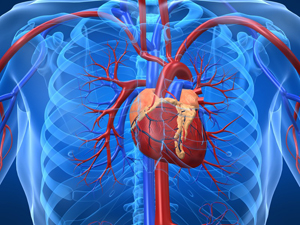
Heart problems are probably the most common physical health condition that our elderly loved ones face. Heart problems can manifest themselves as anything from hypertension (high blood pressure)  and atrial fibrillation (AFib) to malfunctioning valves, blocked arteries, and congestive heart failure

High blood pressure is an interesting health stressor to look at because it can be a contributor to vascular dementia developing, yet high blood pressure is related to stress (it is actually the result of constricted arteries, so the heart has to pump harder to keep blood flow going), so this stressor is really a two-edged sword for our loved ones suffering with dementias and Alzheimer’s Disease. Stress causes blood pressure to rise and high blood pressure causes stress – and damage – to the heart and to the brain.

However, high blood pressure poses a third risk – and stressor – healthwise. As our loved ones age, high blood pressure becomes more difficult to manage medically, so often multiple types of medications are used, including statins, beta blockers, and diuretics, and some of these – especially long-term use of diuretics to pull fluid off the heart and extremities – have detrimental effects on kidney function and can lead to kidney failure.

Atrial fibrillation can be corrected in its early stages with some medications (with a lot of risks) and later with a pacemaker. However, when looking at a surgical option for our loved ones suffering from dementias and Alzheimer’s Disease, we must always consider that going under general anesthesia will always result in further cognitive decline and impairment. And that will be a post-surgical source of more stress for our loved ones.
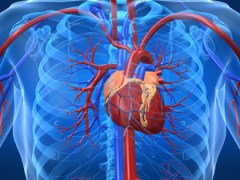
Heart-DiseaseDefective heart valves and blocked or constricted arteries will create stress for our loved ones in many ways. First, there is physical pain associated with these conditions and pain is a stressor. There is also a decreased flow of oxygen, so breathing will become more difficult. If you’ve ever had a hard time catching your breath (or suffered from respiratory problems like asthma), you know how stressful not being able to breathe can be.

But the decreased flow of oxygen also means less oxygen to the brain, which can make cognitive impairment even more pronounced, no matter where our loved ones suffering with dementias and Alzheimer’s Disease are in the course of their journeys, which is another source of stress.

I would strongly urge caregivers of loved ones who also suffer from heart problems to get their loved ones’ oxygen saturation levels tested. A continuous oxygen saturation level below 90 means that the body and the brain is not getting enough oxygen (you will find that these levels go extremely low during sleep).

Oxygen is available for home (or care facility) use and will help dramatically. A doctor has to prescribe it, but the saturation test results will make that easy. And a home health equipment company will deliver the equipment.

oxygen-concentratorWe used a non-tank oxygen concentrator for Mama at home and I had a portable version with a battery pack to take with us when we went out. I kept the portable oxygen concentrator charged all the time in case we lost power because I didn’t want oxygen tanks in our house (true confession: the oxygen tanks really made me nervous and I was terrified they were going to explode and kill us both and that was the only other no-electricity alternative).

Whether to surgically treat defective heart valves and blocked or constricted arteries is again a matter of weighing the overall risks with the overall benefits. 

Although I strongly advise against general anesthesia  with our loved ones with neurological damage and cognitive impairment, there are other surgical options that may be available to treat some of these conditions that do not require putting our loved ones all the way under anesthesia.

For example, my mom had congestive heart failure the last three years of her life, so we were both always on high alert for signs of it reaching an acute (full) stage and I got very good at knowing when we needed to do something, medication-wise, to get the fluid off her heart to prevent possible pneumonia and heart failure.

Five and a half months before Mama died, on a Friday afternoon in March (her birthday), Mama started sweating profusely and complaining of pain and nausea. I immediately started doing a medical inventory with her and trying to ascertain where the pain was and what, if anything, we could do at home to alleviate it.

When Mama vomited the first time, I asked if she wanted to go to the hospital, and she said she didn’t, but asked if I could help her over to the couch to lie down and sleep because she thought that might make her feel better.

Mama slept for about an hour with me hovering, wiping the beads of sweat off her forehead, wondering if I was doing the right thing by letting her decide to go the hospital or stay home. We’d already made the decision that she would not go back to the hospital for her heart problems, but instead would treat those at home under her doctor’s guidance.

I don’t know how I knew, but I knew this wasn’t a heart issue, but I didn’t know what else it could be. When Mama awoke from her nap, she groaned with pain and I managed to get a trash can over to her before she vomited again.

I put my hand over her heart and asked if that hurt there and Mama shook her head. I put my hand on her stomach and asked if it hurt there. Mama shook her head again. I knew she’d had her appendix out when she was 19 or 20, so I didn’t bother with her left lower side. I put my hand on her right side just below her ribs and she cried out and vomited again.

I told Mama we needed to go to the hospital and she agreed with me that time. After several hours in the ER, with pain and anti-nausea medication helping Mama with the physical symptoms, the tests the doctor had run showed that Mama had a gall bladder infection. We had to transfer at about 2 am that Saturday morning to a surgical hospital to deal with that.

The gastrointestinal (GI) doctor who came in around 6:30 am that Saturday morning told us that Mama needed her gallbladder removed. Without even worrying about the cognitive effects of general anesthesia, I knew Mama’s heart wasn’t strong enough to survive it.

I told the GI doctor that wasn’t an option because of her heart and I could visibly see the “whatever” look on his face when he very disdainfully told both of us that he could put a drain into to remove the infection under twilight anesthesia, and I’d have to take care of it for six weeks, but it wouldn’t remove the problem and we’d have to do it again within a year.

I knew the odds of us having to do it again before Mama died were slim to none, so Mama and I talked about it and we agreed to the drain. The procedure was scheduled for Sunday morning.

On Sunday morning, a nurse brought surgery paperwork into Mama’s room early for me to sign. I told her “no surgery” and I refused to sign the paperwork until the GI doctor changed it to the procedure for putting in the drain.

And even though we chose the least affecting method for Mama to do something that had to be done, it caused a lot of stress for Mama (both the procedure and the six weeks the drain was in) and it negatively affected her cognition dramatically for several weeks (she finally stabilized with a little improvement by the third week in April).

When we got home, I immediately revised Mama’s diet to include foods that would help her gallbladder and remove foods that might lead to another infection. I tried to keep a lot of fat out of our diets anyway, but I also knew that Mama had a limited amount of life left, so I indulged her love for ice cream every evening for dessert after dinner and when she told me one day she wanted “a hamburger at that place we used to go to,” I let her splurge on a Five Guys burger with the works and french fries.

But the stress of Mama’s physical health problems never fully went away after that. Even though she recovered beautifully from the gallbladder infection, the congestive heart failure was gaining ground and she was in pain with her heart frequently.

And that would increase her levels of stress, alternately making her worried – about me and the “burden” she thought she was to me (I always reassured her that she was not a burden to me and I wouldn’t be anywhere else doing anything else because I loved her) – and agitated about things. 

My struggle – and our struggle as caregivers for our loved ones with dementias and Alzheimer’s Diseases along with other physical health problems – was not to let Mama’s stress get me stressed out.

Most of the time, I did pretty well managing my own stress in front of her.

But there were plenty of times where, even though Mama didn’t know it, my own stress levels from wanting to make sure she was comfortable and not in pain and that I was doing everything right and my own knowledge that the end was close even though I didn’t know what that would look like were extremely high and sustained.

Truth be told, I don’t really think even now, a year and a half after her death, my sustained stress levels have gone down. It’s seems as though I just traded one kind of stress for other – and, in my opinion, worse – kinds of stress.

(I often wonder if this is just the new normal for me. And how the effects, if I live long enough – although I hope I don’t because I don’t want to be a burden to anyone – will play out for me. I plead with God every day to end my life before I outlive my body and my brain.)

One other type of physical health stressors that are common to our loved ones with dementias and Alzheimer’s Disease are the cognitive impairment-related health issues. The two most common are pneumonia and urinary tract infections.

Pneumonia is many times listed as the cause of death in our loved ones with dementias and Alzheimer’s Disease. This is because as neurological damage increases, having trouble chewing and swallowing (automatic reflexes controlled by the brain) causes choking (a stress mechanism) and food gets aspirated into the lungs, causing infection.

Urinary tract infections can be very common in our loved ones as well. A lack of hydration can be one cause, while improper hygiene can be another cause. However, both can, at the same time, be causes. Urinary tract infections are treatable with antibiotics, so it’s imperative to start those as soon as symptoms appears.

One of the most common symptoms of a urinary tract infection in our loved ones with dementias and Alzheimer’s Disease is a sudden and sharp cognitive decline marked by profound confusion, extreme agitation, and sometimes physically aggressive behavior (a stress mechanism) where there was none before.

So, if we as caregivers observe this in our loved ones, we need to seek immediate medical treatment for them, either by home health nurses or by going to the ER.

This concludes this series on stressors and how they affect our loved ones with cognitive impairment and neurological damage. I hope it’s been informative.

I plan on doing another series in the future on some of the ways we – who are still healthy mentally and physically – can reduce or eliminate the potential stressors others might face if we get terminally ill (these are terminal illnesses) or we die.

The Stressors of Unmet Needs, Physical Environment, and Routine in Caregiving for Our Loved Ones with Dementias and Alzheimer’s Disease

In “The Role of Stress for Our Loved Ones Suffering From Dementias and Alzheimer’s Disease,” we discussed the negative impact that stress has on everyone in terms of cognition, emotion, and behavior. We also discussed that this negative effect gets exacerbated when our loved ones with dementias and Alzheimer’s Disease experience stress.

In this post, we will look at three common areas that can be stressors for our loved ones with dementias and/or Alzheimer’s Disease and what we as caregivers can do to reduce or eliminate these sources of stress.

A source of stress for all human beings is not having our needs met. These include physical needs, spiritual needs, emotional needs, and psychological needs. Even for those of us who have no cognitive impairment, these needs are difficult, at times, to quantify and to verbalize.

For our loved ones with cognitive impairment, where thought and verbiage are tangibly disconnecting from each other, expressing needs that need to be met is even harder, if even possible. Therefore, the responsibility lies with us as caregivers to examine whether there may be needs that aren’t being met.

I strongly urge each of us as caregivers to call to conscious memory who our loved ones were before dementias and Alzheimer’s Disease took center stage. This exercise is vital in determining what needs our loved ones may have that are not being met and then finding ways to meet those needs.

So, let’s ask some questions. Was your loved one a social person who enjoyed being around people? Were faith and spiritual sustenance an important part of your loved one’s life? Was your loved one hot or cold-natured? What were your loved one’s food preferences, meal schedules, and general diet look like? Did your loved one like to exercise or not? Did your loved one like being outdoors or indoors? Did your loved one prefer a lot of light coming into the house or did your loved one prefer less light?

dementia-social-stimulationWhile this list is not exhaustive, we should be able to to see areas in which our loved ones with dementias and Alzheimer’s Disease may have unmet needs. If our loved one was always cold-natured, for example, and we keep the temperature in our homes low, then the need that needs to be met is ensuring that our loved one is warm at all times, whether that means dressing them in layers or turning up the thermostat.

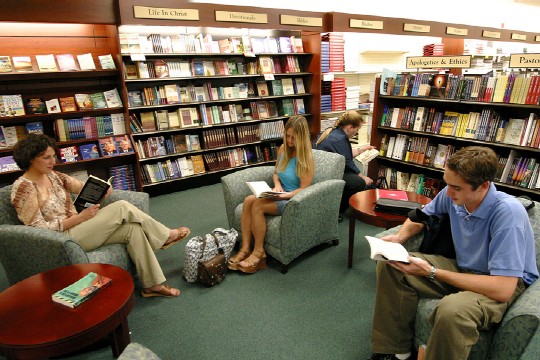
Another example would be that, if our loved one was a social person who loved to be around other people a lot, he or she may be lonely or experiencing isolation as their social network disappears (this happens frequently, I believe, because of the discomfort that a lot of people experience around dementias and Alzheimer’s Disease and because communication can be difficult, so most people don’t make the effort). An easy remedy to this can be something as simple as going to sit in a bookstore, a library, or even the mall on a regular basis. Even though our loved ones may not be making one-on-one contact with all those people, we can talk with them and they can be surrounded by people and it gives the same effect.

I offer these to hopefully stimulate our creativity in safely and successfully eliminating, as far as we are able as caregivers, the unmet needs of our loved ones with dementias and/or Alzheimer’s Disease. As needs get met, there will be less depression and less apathy, which is often the result of unmet needs.

Another stressor can be the physical environment. As cognition declines, the ability to sort through complex situations to have a sense of where to go, what to do, and how to do it becomes increasingly difficult.

So let’s look at some ways that physical environment can make this even more stressful for our loved ones suffering with dementias and Alzheimer’s Disease.

Let’s take clothing (which for me, personally, has always been a challenge because of a rare aspect of color-blindness I suffer from, so I have a very limited and basic wardrobe to eliminate this as a stressor from my life). For our loved ones suffering with dementias and/or Alzheimer’s Disease, opening a closet full of clothes and shoes is a stressor. Often times, when you see someone wearing the same clothes several days in a row, it’s because the physical environment component of trying to pick clothes out of a closet is too stressful.

pjs-on-pillow-dementia-organizationThere are several ways to eliminate this as a stressor. One is to pare down the clothing to a few outfits and to put clothes that are meant to be worn with each other together on the same hanger. Another way to address this is to lay the day’s clothing out where it needs to be put on (for example, a daytime outfit hangs on the closet door – don’t forget the shoes! – and pajamas are on the pillow on the bed).

Why does this help? Beyond the obvious reason that it reduces stress and confusion, it can often also help our loved ones be more independent in personal grooming and dressing. Most dependence comes from simply not knowing what to do. If we as caregivers can eliminate the stressor of having to make complex choices, then we can also give the gift of more independence to our loved ones. 

In many ways, this is no different from what parents do with children as they grow up to make the children more independent in taking care of their own needs as much as they are able. It reduces the stress for everyone involved, and our loved ones are no different in that respect.

Other physical environment components that can be huge stressors are clutter and a lack of organization. Remember that our loved ones with dementias and/or Alzheimer’s Disease are also experiencing visuoperceptual changes. Therefore, the more clutter and lack of organization that is in our loved ones’ physical environments, the more stress from visuoperceptual issues will affect our loved ones negatively.

Practical ways to eliminate this stressor are to get rid of the clutter and get organized. Pathways need to be clear. Get rid of unnecessary and distracting knick-knacks and other items that are just taking up space (often having too many things to look at is overstimulating and creates stress). Have all living areas organized.

For example, Mama spent a lot of time in the recliner in the living room where she could read, look outside, and we could do activities together. The end table next to the chair was organized with her hearing aids (in a case), her glasses (in a case), her Bible, and a coaster with a fresh glass of water on it at all times. Everything went in the same place every time, so Mama knew exactly where to find what she wanted or needed.

The last stressor that we’ll discuss in this post is daily routines for our loved ones with dementias and/or Alzheimer’s Disease. Unstructured or erratic routines are huge source of stress for our loved ones, in part, because they’re losing or have lost their internal clocks of knowing when to do what and they’re depending on us as caregivers to help them, and when we don’t seem to have an internal clock and schedule of when to do what, it’s frightening.

dementia-regular-routineThe unpredictability of something as simple as mealtimes can be very, very scary (think about when we were kids and didn’t know how to tell time and if our parents had eaten whenever the mood struck them, there would’ve been a real concern about if we’d ever eat again).

If bedtime’s at a different time every night, then our loved ones suffering with dementias and/or Alzheimer’s Disease don’t know when they’re supposed to sleep and when they’re supposed to be awake. And if our daytime routines are different every day, there is absolutely no sense of a firm foundation that our loved ones can count on and expect to happen in sequence each day.

All of these create a huge amount of stress for our loved ones. And it’s unnecessary stress that can easily be eliminated. However, it means that we, as caregivers, need to put ourselves on a schedule and adhere to it without deviation (and that can be inconvenient, at times, for us, but it’s not about us, but about our loved ones, so we just have to have the discipline to make it happen).

Once a predictable routine is established and followed, this stressor will be eliminated from the many possible stressors that our loved ones suffering with dementias and/or Alzheimer’s may have be dealing with.

A lot of this is just common sense, but sometimes we have to be reminded to use common sense because life can be quite chaotic and crazy to the point that we, as caregivers, forget to stop, step back, and ascertain what we can do to help our loved ones out. It takes time and it takes patience and it takes slowing down to their paces, but they are worth it! 

The Role of Stress For Our Loved Ones Suffering From Dementias and Alzheimer’s Disease

In the fall of 2013, I took the “Care of Elders with Alzheimer’s Disease and Other Major Neurocognitive Disorders” course, which was taught by the John Hopkins School of Nursing. This course is designed for both individual caregivers at home as well as caregivers in a community setting like assisted living facilities and nursing homes.

If you are a caregiver at home for a loved one suffering from dementias and/or Alzheimer’s Disease, I strongly urge you to take this class. It’s free (health professionals can pay a nominal fee to get a certificate and CEU credit for the course) and it’s got a lot of really good information.

Before I talk about the stress effects on our loved ones who suffer with these neurological diseases, let me talk about the course itself. The approach for care being presented by the course is, unfortunately, in my opinion, still largely confined to the halls of academia.

I have never seen the comprehensive – and sensible and workable – and integrated approach to care that is patient-centered this course emphasizes being done in practice in professional (physicians, nurses, hospitals, etc.) and community-based (assisted living and nursing home) environments.

That, in my opinion, is a major shortcoming and flaw in American health care and in the way America treats its elders – as a business commodity off which they make large profits with little effort and little concern, instead of as people who’ve given the best years of their lives to others – their families, their jobs, their country of residence (federal and state taxes, social security, Medicare, etc.) – and who should now be treated with dignity, honor, and respect. 

Ironically, though, it is among the individual caregivers of loved ones at home that you see this model that John Hopkins is outlining for care of elders with Alzheimer’s Disease and other major neurocognitive disorders in practice. Not all, but in some.

I certainly know this model was the one I used with my mom. She was the priority. Not me, not anything else, and maintaining her dignity and showing her unconditional love, honor, and respect was paramount. I enforced it with the health care professionals on our team, and those who didn’t or wouldn’t make Mama the priority and treat her with dignity and show her the honor, respect, and love that she deserved were quickly fired by me.

(Most of our team was wonderful, by the way, as individuals; my biggest challenge was always getting and keeping everyone on our team on the same page, and that will always be the biggest challenge for the team leader-caregiver.)

This post will talk about the physiological cycle of stress and the effect of what can become continual stress on our loved ones with dementias and/or Alzheimer’s Disease.

I will also briefly list some of the stressors that our loved ones face. In subsequent posts, I will give some tips and guidelines on how we, as caregivers for our loved ones, can reduce or eliminate some of the stressors that we have control over to alleviate as much as is within our power the sources of stress for our loved ones with dementias and/or Alzheimer’s Disease.

I had to, through observation and trial and error, learn a lot of this on my own with Mama, but because she was my priority, and her comfort, safety, and care along with the continual assurance that she was very much loved were paramount, I took the time (one of three key components missing in a lot of caregiving – the others are patience and slowing down to our loved ones’ paces) to figure it out.

The physiology of stress begins in the brain as a chemical reaction to a demand (real, possible, or perceived) that exceeds a person’s ability to adequately cope.

Stress initiates survival-oriented behavior, which is necessary for surviving acute danger. The neurological response is to turn off the prefrontal brain cortex, which is responsible for intelligent and insightful behavior because we don’t have time to reflect on a course of action in the face of an immediate threat. Instead the “survival centers” in the midbrain take over and cause the brain to react instantly in an instinctive way (the fight-or-flight response associated with lots of adrenaline being released). 

prefrontal brain cortex stressThe picture to the right shows the brain in low and high survival-behavior modes. Note the “holes” in the second image of the picture. These are not actual holes in the prefrontal brain cortex, but are areas which are inactive. That’s about as good a visual of stress’s effect on the brain as you can get.

In every situation where we feel stress, the following reactions occur:

  • Cognition is disturbed and can be impaired
  • Emotions are disturbed and can be impaired
  • Behavior that may adversely affect well-being

An example of cognition being disturbed and impaired is that often in the most intense moment of a stressful situation a condition I’ve always heard referred to as “brain freeze” (inability to think, remember, recall anything for a short period of time) can occur. The brain just locks up. For those of us who are not cognitively-impaired already, that’s a scary situation. Imagine how much more frightening it is for our loved ones who are cognitively-impaired by these diseases.

We have all seen and experienced the intense emotional disturbances and impairments of stress. One example is uncontrollable sobbing. Another is ferocious anger. Like cognition, this emotional disturbance and impairment is even more magnified in our loved ones when they experience stress.

An example of behavior that may adversely affect well-being on the extreme end would be suicide. However, other examples might be throwing things, flinging our bodies against something repeatedly, and self-injury like hitting ourselves or cutting ourselves with a sharp object.

This may seem incomprehensible to someone who’s never had unrelenting and long-term stress so strong that it literally creates an insurmountable and continual deep inner pain that will not go away, but this behavioral aspect seeks to override that internal pain with physical pain, which, in general, is much easier to deal with and is short-lived. However, the results can be devastatingly permanent.

For those of us who are not cognitively-impaired, getting past the action stage of the behavior component is a matter of the ability (and sometimes this is just sheer force of will) to wait it out until it passes (it’s brief, but in times of stress, will recur frequently). For our loved ones suffering from dementias and/or Alzheimer’s disease, many times this ability has either been compromised or lost.

We all know people who do well, most of the time, with a lot of stress and other people who do poorly, most of the time, with even a little bit of stress. Most of how we respond to stress depends on the coping mechanisms we’ve developed over time.

One of the immediate coping mechanisms is the ability to determine whether the stressor is real or perceived. If I see a car going 70 mph heading toward me on a sidewalk, the stress is real. However, if I believe – but don’t know – that something that would negatively impact me could happen, the stress is perceived.

Like my mom, perceived stress is something I – and maybe I’m the only one left now that she’s gone, because it’s not something I hear other people ever talk about – really struggle with and my coping mechanisms are not as good as they should be, although I’m trying to work on improving them.

Mama and I were very different in temperament in some ways, but this is a trait we unfortunately share – Mama because of her experiences, especially during her childhood, and me because I need a plan, need to clearly see the plan, and need to be able to execute the plan, and when periods of life hit where there’s no visible plan and I’m in what feels like interminable limbo hell, I get stressed to the max.

A lifetime of chronically high stress levels combined with poor coping mechanisms is now being linked, by scientific research, to a risk of developing vascular dementia (the result of strokes and TIA’s) and Alzheimer’s Disease. One of the responders to stress is a hormone produced by the adrenal gland called glucocorticoids. Repeated exposure to glucocorticoids accelerates the aging process of the brain and damages and shrinks brain tissue, which is clearly seen in Alzheimer’s disease. 

stress dementia Alzheimer's DiseaseThis gives me more incentive to quickly and drastically improve my coping mechanisms (and I admit, so far, I’m failing way more than I’m succeeding, but I’m determined to make this happen) because I know that Mama’s poor coping mechanisms to stress played a role – not the only one – in her development of vascular dementia and Alzheimer’s Disease.

As our loved ones become more cognitively-impaired by these diseases, more and more things of everyday life become stressors (real or perceived) and their anxiety-tolerance thresholds get lower and lower, until almost anything can be a source of stress.

Since we know one of the results of stress is cognitive disturbance and impairment, stressors for our loved ones with dementias and/or Alzheimer’s Disease create even greater cognitive disturbance and impairment, in the form of more confusion, more agitation, more anxiety, more restlessness. There can be a serious and sudden decline in cognitive function because of a stressor that we may or may not be aware of. In addition, we see the emotional and behavioral disturbances and impairments in exaggerated form as well (crying, yelling, hitting, biting, and pacing are common emotional and behavioral manifestations).

However, a lot of these stressors are easily remedied or eliminated, which we will discuss in the next few posts on this topic. For now, though, I’ll list of some of the most common stressors that we’ll be looking at:

  • Unmet needs
  • Physical environments
  • Routines
  • Communication
  • Hearing
  • Vision
  • General physical health

We’ll begin next week looking at these specifically to see how they can be stressors and what we, as loving caregivers, can do to remedy or eliminate them as stressors for our loved ones.