Archives

Where Have You Been?

This is an incredibly poignant post about the history behind the song, “Where Have You Been?,” recorded by Kathy Mattea. This song was written by Jon Vezner about his grandparents. His grandmother suffered from some form of dementia.

What makes this personally poignant to me is that this was the exact question that Mom joyfully and buoyantly asked my twin sister and me upon waking on her “last rally” day (she went into her death sleep the next day, then died two days after that).

It was the first time in about a week and a half that she knew who I was, although we were living together and I was her primary caregiver throughout her suffering with vascular dementia, Lewy Body dementia, and Alzheimer’s Disease, and that she knew I was there with her.

I am very thankful for that day.

John Hopkins Free Online Course for Dementia Care Begins 10-14-13

holding handsA quick reminder that this free, five-week online course on dementia care begins this week. Simply follow the link below to sign up:

https://www.coursera.org/course/dementiacare

For a downloadable copy of the syllabus, go to the Caregivers – Alzheimer’s Disease, Dementia, and Other Age-Related Illnesses group page on Facebook.

Lifestyle Dementia: Underdiscussed, Overlooked, But a Very Real and Present Danger

Today’s post will discuss lifestyle dementia. Many of the people, especially the elderly and very elderly, suffering from dementias and Alzheimer’s Disease today either have the genetic markers for it or – and this is my opinion, but I see strong evidence to support it with the precipitous explosion of dementias and Alzheimer’s Disease – are suffering from the effects of living on a toxic earth, eating toxic food, and breathing toxic air.

However, another group of dementia sufferers is emerging.

They are younger and have very different lifestyles than their elderly and very elderly counterparts with whom they share the same commonalities of dementia. This group of people has dementia that is directly related to lifestyle.

How we live our lives is a series of choices that we make consciously or unconsciously along the way. That is what becomes our lifestyle. Our lifestyle – all of those choices – has short-term effects and long-term effects. 

The long-term effects of those lifestyle choices are beginning to be seen in the growing number of people suffering with lifestyle dementia. One of the generations most noticeably – and disproportionate to the incidence in the expected populations of the elderly and very elderly – affected is the Baby Boomer generation (people born between 1943 and 1960, according to William Strauss and Neil Howe in their book The Fourth Turning, which I highly recommend that everyone read).

I strongly suspect that one of the lifestyle choices, which I’ll discuss later, that was prevalent with this generation during the 1960’s and early 1970’s is a key contributor to the development of the lifestyle dementia we see emerging among this age group today.

Before we proceed with describing lifestyle choices that could lead to lifestyle dementia, it’s important to understand what the word dementia describes. Any loss of function of and/or damage to the internal components of the brain (neurological, chemical, or physical) falls under the broad category of dementia when describing the brain’s condition.

(Inset note: Alzheimer’s Disease is the shrinkage of the size of the brain from the outside in, brought on by a specific condition that occurs in the nerve cells of the brain. Therefore, it’s important to remember that all people suffering from dementia don’t necessarily have Alzheimer’s Disease, while all people suffering from Alzheimer’s disease have a very specific kind of dementia, commonly called tangles and plaques.)

So dementia is a condition – or  state – of the brain. Like many nouns, this condition or state has adjectives that describe where the loss of function or damage is or specific identified abnormalities of the brain that affect function and cognition. Therefore, when we see the term vascular dementia, for example, the loss of function and/or damage to the brain is related to the blood vessels in the brain. 

So what kind of lifestyle choices can lead to lifestyle dementia?

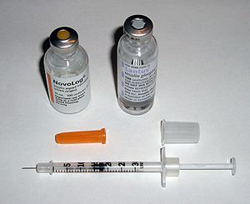
diabetes-insulin-dementiaIn the last twenty to thirty years, the western world has adopted a supersized fast-food diet, a very sedentary lifestyle, and an “ignorance is bliss” attitude toward taking care of their health with regular medical checkups and changes in their lifestyles to address health issues like diabetes and high blood pressure.

Unchecked or uncontrolled, both high blood pressure and diabetes directly affect the health of the blood vessels in the brain, leading to widespread blood vessel damage and neurological cell death, which is the cause of vascular dementia. 

alcoholAnother lifestyle choice that can lead to lifestyle dementia is alcohol abuse. While it’s generally believed that alcohol doesn’t directly kill brain cells, alcohol abuse creates key vitamin deficiencies that adversely affect the brain and adversely affects the liver’s ability to remove toxins from the body. Research shows that women who abuse alcohol begin to exhibit the adverse effects in half the time that men who abuse alcohol do.  

This article from the National Institute of Health gives a very clear and understandable explanation of how alcohol abuse results in long-term damage to the brain. The specific type of dementia that occurs with alcohol abuse is Wernicke-Korsakoff syndrome, which occurs because of a thiamine (B1) deficiency.

A third lifestyle choice that can lead to lifestyle dementia is drug abuse. I noted earlier that one lifestyle choice seems to point to why there is such a high incidence of older Baby Boomers showing signs of dementia at earlier ages than their elderly and very elderly counterparts do. I believe that this phenomenon has a direct correlation to the pervasive and unabashed drug experimentation within this age group in the 1960’s and early 1970’s.

A few years ago, I watched a documentary entitled The Drug Years on the History Channel (it was originally produced by the Sundance Channel and VH1). If you have not seen it, you should (Netflix and Hulu subscribers will find it in the Documentaries section). It’s shocking in some ways, but very informative in others. If you’re like me, you’ll watch it shaking your head a lot. But there’s a lot of history that explains things before some of us (like me) were born or cognizant and it also explains our continuing prevalent and unabashed drug culture in the U.S. today.

The series had a lot of commentary by Martin Torgoff, who wrote 2005’s Can’t Find My Way Home: America in the Great Stoned Age 1945-2000. Intrigued by the title (the first part of the title is the mind-altering drugstitle of one of my favorite songs by the band Traffic), I read the book after watching the documentary. I don’t believe that any book I’ve ever read scared me as much as Torgoff’s book did. And as much head-shaking as I did during the documentary, I did even more reading this book.

As Torgoff described the drug abuse of the 1960’s and early 1970’s and quoted well-known and not-so-well-known people about their own drug use and abuse, it became evident that there was an uninhibited desire to find, use, and abuse any substance that substantially altered the brain. The more altered the brain was, the “better” the experience.

With the psychedelic agents in LSD, acid, psilocybin mushrooms, and peyote, perceptions became altered, hallucinations occurred, and illusions became real.  In short, this generation liberally sought every possible means of chemically inducing the manifestations of dementia. In the process, neurological damage occurred and now, with age, the effects of that damage are becoming more evident with the emergence of lifestyle dementia.

To be clear and to be fair, I’m not saying that every case of early-onset Alzheimer’s Disease and dementia or other types of dementia occurring at a younger-than-usual age is the result of drug abuse. That’s much too broad a brush stroke to paint with. But a recent study showed a pretty strong link between dementia and teenage/young adult lifestyle choices for people without a family history of the diseases.

And the neurological damage from this lifestyle choice continues with the use of more modern drugs like Ecstasy, Adderall, and “bath salts,” which are psychoactive and which stimulate the brain beyond its normal capacity and can produce hallucinations, seizures, and even death.

Bath salts, which have become popular in the last couple of years, permanently create irreversible neurological damage because of the simultaneous and voluminous suckerpunch all at once to the brain with the chemical effects of amphetamines and cocaine.

It remains to be seen, although it certainly will occur, what lifestyle dementias develop among the Millennials using these drugs today.

Some things happen to us in life through no fault of our own. However, we have choices in how we live our lives, and we can make positive lifestyle choices that, while they may not preclude any of us from developing Alzheimer’s Disease and dementias down the road, will ensure that we’ve done every within our power to ensure that our choices and actions haven’t contributed to it.
The Layperson’s Guide to Vascular Dementia, Multi-Infarct Dementia, Small Vessel Ischemia, and TIA’s

There are many kinds of dementia. In the next few posts, we’ll take a look at a few of them, along with Alzheimer’s Disease, which is a distinct neurological diagnosis from dementias.

Before we start, it is important to note that our loved ones can suffer from only Alzheimer’s Disease or only one kind of dementia. Or they may suffer from Alzheimer’s Disease and multiple kinds of dementia. That distinction is important to loving caregiving, which includes medical advocacy for our loved ones, because each brain disease is distinct, affects the brain differently, and has specific characteristics and symptoms and treatment.

I will admit here that one of my pet peeves while caring for my mom was hearing some people who have no real knowledge of these diseases lump everyone who suffers from them under Alzheimer’s Disease and giving advice on how to deal with that, not realizing the complexity of the situation posed by the presence of both dementias and Alzheimer’s Disease.

So, for non-caregivers or those who are unfamiliar and inexperienced with these diseases who may be reading this, please don’t assume because you’ve seen or read The Notebook that you’re an expert on the subject and please don’t offer medical diagnoses and advice.

The best gift you can give is to just listen and offer non-medical support. Most caregivers get so deep into the details and all the aspects of these diseases because they need to be able to take care of their loved ones in so many ways that if there were such a thing as a non-M.D. expert on them, most caregivers would qualify.

This post will discuss vascular (multi-infarct) dementia. The cause of this dementia is small vessel ischemia in the brain, which presents itself as chronic transient ischemic attacks (TIA’s). TIA’s are sometimes also referred to as mini-strokes.

TIA’s can occur when the small vessels in the brain get temporarily blocked, cutting off the blood supply and oxygen to that part of the brain. The cumulative affect of these is what causes the damage that is present in vascular dementia. Multi-infarct dementia just means that there are many areas in the brain where this vascular damage has occurred and accrued.

Although high blood pressure is a culprit, high levels of stress and a history of migraines are also players in these kind of TIA’s.

In my mom’s case, all three were factors, but high levels of stress were what brought on the majority of her TIA’s. I suspect she started having these as a small child, because there were times that she just couldn’t remember what happened in a specific instance but she’d referred to it as “blacking out.”

She never lost consciousness with them that I witnessed, but she used the same expression to describes times when we kids were all babies and she was under a lot of stress and she couldn’t remember certain instances of things.

Her TIA’s were common as we grew up, and although we never got over the shock of the suddenness of symptoms and the helplessness we had to do anything about it, we all got pretty good at taking care of her when she had one, and that lasted for Daddy until his death, and for me into adulthood until Mama’s death.

Her TIA’s always presented the same way. They were sudden. Her face would lose all color and her lips would get very pursed as she seemed to salivate more. There was a sort of paralysis except for her right hand. She would start rubbing her thumb across the first two fingers and that would last until the episode was over. I suspect there was a sense of unreality associated with the TIA, so the feeling of her fingers rubbing together was the only reality for her in those episodes.

I’d always hold Mama’s left hand and kind of stroke it so she knew I was there and she wasn’t alone. When the TIA was over, she’d immediately try to talk and everything came out totally garbled. That would last about thirty minutes and then she’d be okay.

And she never remembered them happening. I remember the first time I was giving her medical history as her POA at an ER (and this was way before the dementias and Alzheimer’s Disease) and I named TIA’s as part of her medical history and she disagreed with me and said she didn’t remember ever having those. I laughed at the time and told her that not remembering them was part of the symptom of having them.

small-vessel-ischemia-brain-mriOver time, though, as small vessel ischemia recurs, eventually clusters of damage occur in the brain. This disrupts the normal neurological pathways of how information is learned and communicated. One of the most clear indicators of vascular dementia is difficulty in communication. One of these difficulties is misnaming things.

For example, the brain knows that a pencil is a pencil. Someone suffering from vascular dementia knows a pencil is a pencil. But because of the damaged pathways, there is often a break in the connection between knowledge and speech, so someone with vascular dementia is just as likely to call a pencil an apple.

Another clear indicator of vascular dementia is slower processing time. A brain with vascular dementia will fight to reroute stored information to speech. However, because of the extensive damage, it has to take a much more convoluted and lengthier route to do that conversion.

A third clear indicator of vascular dementia is that it occurs in sudden, steep steps of decline (brought on by recurrent TIA’s and new clustered areas of damage in the brain). These can occur in a very short period of time, as they did in my mom’s case.

In addition to these definitive indicators, vascular dementia also has features in common with other dementias, including difficulty learning anything new, cognitive impairment, problems with short-term memory, extreme emotional swings, and confusion.

There are no specific treatments for vascular dementia. Unlike any other organ in the body, once the brain has sustained damage, that damage is permanent.

However, there are medications that can address the symptoms of vascular dementia. The two most likely to help are cognitive enhancers: Excelon (although this comes in oral form, the 24-hour patch is best, if there’s no allergic reaction, to get the continual effect of medication that comes in a starting dose of 4.6 mg, a stabilizing dose of 9.5 mg, and a high dose at 13.3 mg)  and Namenda (given in 5 mg increments, two to three times a day).

When I discuss the medications in later posts, I will give some practical experience and advice on these two medications, especially with regard to Medicare, the “donut hole,” and working with your loved one’s psychiatrist to get the medication at either no charge or a reduced rate during the “donut hole” period. Both of these are patented, so there’s no cheaper generic version. And paying full price for them will break the bank.

In the next post, we’ll take a look at Lewy Body dementia: what is is, how it’s diagnosed, what it looks like, and effective treatments for the symptoms.

You Will Never Be the Same Again

Caring for a loved one with dementias and Alzheimer’s Disease changes us. This, I believe, is one of the most unrecognized aspects of going through the journey of these diseases with loved ones.

I know with my mom, who had vascular dementia, Lewy Body dementia, and Alzheimer’s Disease as well as suffering from congestive heart failure, I changed throughout the course of our journey together, perhaps as much or more, in different ways, as she did. 

And now that she’s gone, it’s difficult for me to imagine that person that I was before all this started. That person in that configuration is gone. In some ways, that’s good, because that previous iteration of me had some flaws that needed mending, ideas that needed changing, and attitudes that needed correction.

In other ways, though, it’s challenging. Caregiving is a 24/7 job, especially as the diseases progress and the changes become more rapid and more intense, requiring every bit of time, effort, and diligence on our parts to ensure our loved ones are safe and comfortable.

Because of the nature of dementias and Alzheimer’s Disease, this is a long, extended high-alert, always-alert, always-ready position for caregivers. It becomes who we are and it reflects the tenor of our lives.

And then one day, it suddenly stops. Adjusting to that abrupt and radical change is, in my opinion, of all the things caregivers do in the course of taking care of loved ones, the hardest part.

I think of it as being in a car going from 120 mph to a dead stop within the time it takes to snap your finger. In some ways, it’s like the aftermath of a high-impact car crash that you walk away from.

I have learned, though, that unless you’ve walked in the shoes of caregiving day in and day out for someone you love with dementias and/or Alzheimer’s Disease, it’s very hard to relate to what the now-defunct caregiver is going through in this post-caregiving phase. It’s not that other people don’t want to understand. It’s just that they can’t really if they haven’t been through it.

There is a tremendous sense of being lost. Because loving caregiving requires such a high investment all the way around, when that ends, there’s a sense of purpose, usefulness, and worth that ends with it.

There’s a sense of wandering around aimlessly while the rest of the world around you is going on as it always has. There is a sense of not belonging anywhere, to any time, or any place. It seems like no matter what you do after that, it’s meaningless, compared to what you were able to give your loved one.

My guess is that will be something we carry somewhere inside us the rest of our lives. It’s just part of the change.

Another change will be that you’re more observant and helpful, especially around elderly folks. Not long ago, I volunteered to help during a cookout at a rehabilitation hospital. One of the things I was doing was helping people to the tables, some of which were on concrete and some of which were on grass.

There was an elderly woman with a walker who clearly had balance issues, and although there were staff members around, no one seemed to realize that as she was walking on the sidewalk toward a table in the grass, she was precariously close to the curb and all it would have taken is just a second for her to have lost her balance, fallen and hurt herself. Visions of Mom flashed in my brain and I ran over to help make sure she got where she was going safely.

Greater compassion toward and protectiveness of those who are vulnerable, as our loved ones suffering from dementias and Alzheimer’s Disease are, will be another change that occurs.

A friend of mine who works as a beautician in a senior care facility wrote on FacebookChange the other day about getting cursed out by an 88-year-old woman who didn’t want the shampoo rinsed out of her hair.

Almost immediately, the insensitive and disrespectful comments started. One person said that she would have sprayed the elderly lady in the face if she had cursed at her.

I got very angry. That could have been my mama they were talking about. I sent a private message to my friend explaining that the lady probably had some form of dementia and/or Alzheimer’s Disease and didn’t even know what she was doing and would have probably, given her age, never done that in her right mind. 

And the biggest change will be that your life will never be the same. You will never look at anything the way you looked at it before you embarked on the caregiving journey with your loved one. At a core level, you’ve changed.

And your biggest challenge will be figuring out what to do with that to go forward, to make the experience count, not just for your loved one, but everyone else, in whatever small way you can, that your life intersects with until the day that you draw your last breath.

And you’ll find it’s a very solitary, lonely journey. But like all the journeys you’ve been on up until now, it’s a necessary one. It will take a lot of patience and gentleness with yourself. It will take time. Most of it will be arduous.

But the most important thing I can pass on to you is not to quit and keep putting one foot in front of the other, even if for long stretches it seems you’re walking in place. Sooner or later, as long as you’re moving, eventually it will be in forward motion. 

Going Gentle Into That Good Night Blog

After publishing Going Gentle Into That Good Night, I have given a lot of thought about how to best provide on-going and more detailed practical help and information about loving caregiving for our loved ones with dementias and Alzheimer’s Disease.

I intentionally wrote the book to be read quickly and to give immediate, big-picture information to caregivers.

However, there are a lot of details and little things that will come up along the way. There is a lot of information that can take hours of research to find and put together to evaluate a new or sudden situation or a change in behavior, actions, etc. There are many practical matters and considerations that take time and energy that you won’t necessarily have that need to be addressed.

Based on some of the messages I’ve gotten so far, there’s a real need for a blog like this. And it gives me a chance to continue in my parents’ footsteps of paying forward. In every thing that I have done since Mama died, that’s been the intent behind it. To step into the shoes of my parents’ legacy and leave the world a better place than I found it. Just like they did.

So, my intention with this blog is to give you as much information in one place as I can to help you do what’s most important: loving and practical caregiving.

So follow the blog and we’ll walk through the journeys together. Please comment or if there’s something you’d like to discuss privately, you can email me at goinggentleintothatgoodnight@gmail.com.

And, for those who are inclined, I’ve included a Donate button on this blog. It’s optional, but anything given will be used to continue to educate and help in every way that I am able anybody and everybody who is caregiving (not just dementias and Alzheimer’s, although that will be a strong focus of this blog) for elderly loved ones.

Thanks and welcome aboard!