Profiles in Dementia: Harper Lee (1926 – 2016)

To Kill A Mockingbird was Alabama author Harper Lee's only published novelNelle Harper Lee wrote a seminal work of fiction in the 20th century: To Kill A Mockingbird. It would be the only published work the Alabama author would give to the world, but it was more than enough.

The book was ground-breaking in so many ways. Published at a time (1960) when the eyes of America, and indeed the world, were focused on civil rights in the South, where the shameful ugliness of racism was brought front and center into the living rooms of millions of people and its dastardly proponents – Strom Thurmond, George Wallace, and the Ku Klux Klan, to name just a few – spewed their vitriol in thick-tongued, ignorant voices that I sincerely hope (a lot of this happened, including this book, before I was born) embarrassed and discomfited most Southerners, To Kill A Mockingbird showed a decent South, a fair South, a kind South, and a principled South in stark contrast to what was played out as the South in the rest of the media. Continue reading

2015 Research Offers New Insights Into Lewy Body Dementia – Part 2

This is a microscopic view of a Lewy Body protein in the brainThis is the second part of a three-part series that looks at the latest research into Lewy Body dementia (click here to read Part 1 of this series). My goal in presenting this research is to try to make it understandable and accessible so that we as caregivers of our loved ones who have Lewy Body dementia can have better insights into what is happening neurologically and why it is happening.

You might ask why this matters. Perhaps the vast majority of the people who subscribe to this blog and follow it on the various social media venues, yet seldom ever actually read the posts, don’t really care about the details, preferring instead to read pithy or “nobody knows the trouble I’ve seen” posts that decry or moan about the day-in-day-out behaviors of these neurological diseases that always end up asking “why?” 

The irony never escapes me that many of those people are subscribed to and/or follow this blog which, along with the two books I’ve written, not only gives the “whys,” but also gives practical application information about how to address and respond to the things they and their loved ones are experiencing.  Continue reading

Super Bowl 50, Football, and the Everpresent Looming Specter of Dementia

Football carries a huge risk of neurological damage and the development of dementiaToday, February 7, 2016, the 50th Super Bowl game in NFL (National Football League) history will be played by the Carolina Panthers and the Denver Broncos. Therefore, it is appropriate to discuss the other dark and dangerous side of this football game – and all the ones played before and all the ones that will be played after – before it is played.

Super Bowl games have become extravagant and lavish productions in the last ten years or so, intended to bring into the audience people who normally either don’t have interest in the game or don’t normally watch football. Super Bowl games also represent an obscenely huge financial windfall for the NFL and for advertisers with enough money to pay for the coveted and outrageously expensive advertising spots during the game. Continue reading

Book Review: “The Year of Lear: Shakespeare in 1606” by James Shapiro


In my profile of William Shakespeare’s character, King Lear, from the play of the same name, it was clear that Lear was suffering from dementia and, most probably, Lewy Body dementia.

The Year of Lear Book Review Going Gentle Into That Good NightSo I thought I’d share my review of The Year of Lear: Shakespeare in 1606 by James Shapiro to get a wider perspective on the year that saw Shakespeare give a title character in one of his plays many of the behaviors and symptoms of advanced cognitive impairment and Lewy Body dementia.

This book explores how the world around Shakespeare (beginning with the Gunpowder Plot on November 5, 1605 – now commemorated annually in England as “Guy Fawkes’ Day” – which had deep political and religious roots) during the early part of the reign of King James I, with an especially tumultuous year in 1606, influenced his writing that year.

Much of what was going on politically, socially, and emotionally in England at the time is reflected in the lines of King Lear, Macbeth, and Antony and Cleopatra, all of which are among Shakespeare’s tragedy plays and all of which Shakespeare wrote in 1606.

The Gunpowder Plot in late 1605 triggered much of the political and religious climate that overshadowed 1606. The plot, engineered by English Catholics who feared greater persecution – they got it – and more “do-or-die” pressure to abandon their Catholicism – a prescient fear even they didn’t realize the extent or depths of of James I – underscored the continued intense subterranean battle between England’s Catholics and Protestants.

While the plot was thwarted by the usual treachery and intrigue (it would have obliterated much of the heart of London government – buildings and people – and would have significantly changed the overall physical landscape of London), James I – as King of Scotland first, he was viewed as an interloper by much of the English population – reacted ferociously with a wide net that touched every English citizen, including Shakespeare, determined to have his will – the union of Scotland and England under one umbrella – no matter what he had to do to make it happen.

It seems James I did everything he could to alienate his English subjects, including moving, by disinterring, the graves of the royals in Westminster Abbey.

Most notably, he disinterred Elizabeth I and buried her on top of Mary I (“Bloody Mary,” the religiously-fanatical daughter of Henry VIII and Catherine of Aragon, whose main accomplishment on the throne was a religious pogrom against Protestants, of whom Elizabeth I was one), then moved his mother, Mary, Queen of Scots (one of Elizabeth’s staunchest rivals for the English throne), into Elizabeth’s grave and giving her a greater position of status in the cemetery.

William Shakespeare as a young manShakespeare, who lived in the heart of London most of the year, had a front row seat to all of this as part of the King’s Men, who were patronized by the crown, as they had been during Elizabeth I’s reign.

1606 was a year of fear (the plague hit London particularly hard during 1606, adding to the political and religious fear that was rampant in the city) and division (political and religious) and nostalgia (although by the end of her long reign the English believed Elizabeth I’s rule had become stagnant, the actions of James I made them long for her “good old days”) that punctuated the year.

I highly recommend this book even for people who may not know or really appreciate the incredible talent and acute, heart-of-the-matter insight that Shakespeare brought as a writer to his plays. Perhaps it will be a catalyst to go and read at least these three plays through the eyes of 1606.

Busting Dementia Misinformation: Over-The-Counter Anticholinergic Medications and Dementia Risks

Tylenol PM is an over-the-counter anticholinergic medicationA revival of the claims in an earlier research study that over-the-counter anticholinergic medications (which includes Benadryl and many of the PM versions of acetaminophen and ibuprofen) causes an increased risk of developing dementia is making its way around social media.

As I strongly urge on a continual basis, we must be aware and intelligent about the context of all research and the tendency among humans to extrapolate generalizations and make them absolute truths from very specific research studies, as well as to perpetuate misinformation, disinformation, and out-and-out lies.

We have the responsibility to thoroughly educate ourselves about these diseases and get all the facts – if there actually are any (many of the more outrageous things I’ve seen have little to no factual basis and yet they are the very things that people widely distribute as truth) before believing anything you see and hear (or read).

The more you learn and know about these neurological diseases, the better able you will be able to distinguish between what is true and what is not (there is a lot of garbage and there are a lot of garbage claims out in cyberspace – when we fall for it, Advil PM is an over-the-counter anticholinergic medicationwe, frankly, show our ignorance and unwillingness to do the work required to get any kind of comprehensive and knowledgeable understanding of these diseases).

The facts about this study, its context, and over-the-counter anticholinergic medications are in this clinical report.

Grief in a 24/7 Connected World

Tears of GriefGrief is complex and complicated and no two people grieve the same way.

However, the more we’ve become connected in a 24/7 way through technology, the more we’ve become a shiny-happy-people (I am a huge R.E.M. fan, but this song annoyed me beyond words the first time I heard it and continues to do so now) society that focuses on the inane, on fluff, and on the ridiculous and real, palpable, tangible grief rains on that parade of lollipops, unicorns and butterflies.

As a result, it (and the grievers) are prime targets for some of the most judgmental, critical, harsh, and mean things that people can say and do to other people.

Grieving privately and alone is the best option in a 24/7-connected world

Better to grieve alone, in private, keeping the deepest secrets and pain in our souls to ourselves than to have the grief compounded by ignorance, attacks, and accusations.

“Smart Drugs” (Nootropics) – A Precursor to the Development of Lifestyle Dementia?

Nootropics (smart drugs, brain enhancers, mental magic) fundamentally alter brain chemistry and may be a precursor to developing lifestyle dementiaThis blog has discussed the use of drugs designed for specific kinds of attention-deficit disorders being used by people without an attention-deficit disorder for cognitive enhancement and the risk such usages portends toward an eventual development of lifestyle dementia.

Anything that alters brain chemistry (legal or illegal) introduces the risk of dementia down the road. We must understand that. It seems, however, that we – both the medical community who blithely prescribes these legal brain-altering chemical compositions and we the people, who decide for ourselves and choose to take both legal and illegal brain-altering chemical compositions because they seem to promise a short-term benefit (or because we want to numb our brains and not deal with life as it is and comes) – don’t understand that. Continue reading

2015 Research Offers New Insights Into Lewy Body Dementia – Part 1

Lewy Body Dementia (graphic courtesy of the Lewy Body Dementia Association - http://www.lbda.org/)In 2015, a significant amount of research was dedicated to better understanding what I believe is the least understood of the major types of dementia. That type of dementia is Lewy Body dementia.

This post will will begin to summarize the findings of this latest research in way that is both accessible and will hopefully better educate us as caregivers of loved ones with Lewy Body dementia. Continue reading

Profiles in Dementia: Ronald Reagan (1911 – 2004)

Ronald Reagan Younger PortraitFor reasons that I cannot logically remotely fathom, except that perhaps we humans are highly susceptible to creating sanitized and palatable versions of our recollections of “the good old days,” which in fact were never as good as we remember them to be and may have been downright horrible, United States President Ronald Reagan is continually held up as a hero and a paragon of virtue, wisdom, and good governing.

The reality then and now could not be further from the truth in any of these categories.

Even before Ronald Reagan was president, his mental status was a source of concern. He often made contradictory statements, had frequent difficulty remembering names and people, and regularly seemed to be prone to absent-mindedness.

I was very young when President Reagan came into office, but I have clear recollections of how bad the economy was during his tenure (President Reagan was the “trickle down economics” president, promoting the pie-in-the-sky idea that if the United States gave financial preferences to the very wealthy, then they would in turn create jobs and juice up the economy down through the poorest people in the nation) and how much wrong-doing occurred during his presidency.

Don Henley’s “End of the Innocence,” depicting pervasive corruption, dishonesty, greed, and despicable behavior that touches every part of life and written during President Reagan’s presidency has become, in my mind, the most honest and enduring description of the United States, from its politicians to its businesses to its people, has a couple of verses that deeply resonate with me every time I think of President Reagan’s years in office:

“O’ beautiful, for spacious skies
But now those skies are threatening
They’re beating plowshares into swords
For this tired old man that we elected king

Armchair warriors often fail
And we’ve been poisoned by these fairy tales
The lawyers clean up all details
Since daddy had to lie”

Henley’s song refers to the Iran-Contra affair, which, in more detail than ever before, exposed the truly despicable and seedy underbelly of how the American government, military, and intelligence services have always manipulated, by whatever means were deemed necessary (the end justifies the means), world geopolitics to attempt to give the United States the upper hand in outcomes.

It is very likely that the real principles – Colonel Oliver North threw himself on his symbolic sword as the fall guy when it came to light – in this scandal took advantage of  President Reagan’s already-apparent cognitive impairment.

Evidence that President Reagan was already into his progressive slide into dementia includes his often-confused testimony during the Iran-Contra hearings and the unprecedented number of times, with obvious confusion on his face, he said “I don’t recall.”
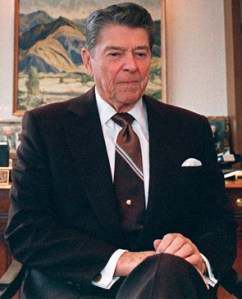
President Reagan had already begun his descent into dementia when he took office in his first term as the president of the United StatesWhile this statement is a standard in legal defenses, what made President Reagan’s more than a legal maneuver was that it was clear that he really didn’t recall much at all.

This year, a study was done by researchers at the University of Arizona on President Reagan’s speech patterns during his eight years (1981 – 1989) as president of the United States.

What the researchers found were subtle changes during those eight years that revealed the tell-tale signs of the change-in- communication step of the journey through dementias and Alzheimer’s Disease.

These included searching for words, substituting generic terms like “thing” for specifics President Reagan could not remember, and a decreasing range of vocabulary as his time in office progressed.

Although President Reagan’s dementia was not publicly announced until 1994 – a move I believe was calculated to give enough time after his presidency to remove suspicion that President Reagan had dementia while in office – it has since become clear that his dementia gave the people around him the leeway to set in motion the kind of governing (and it does nobody except people and institutions with a lot of money and a lot of blackmail-type secrets any favors, while getting sleazier and sleazier by the minute) we live with and take for granted as “normal” today.

President Ronald Reagan died on June 5, 2004.

Profiles in Dementia: Franklin D. Roosevelt (1882 – 1945)

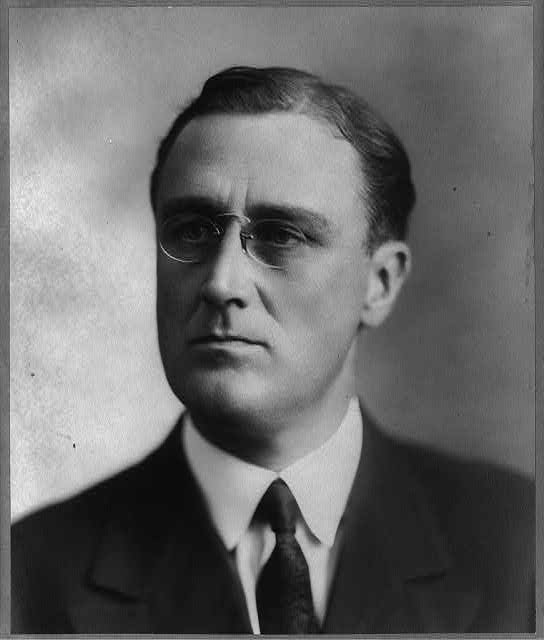
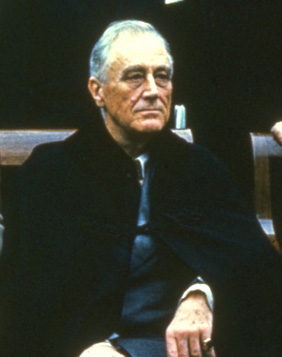
Franklin D. Roosevelt experienced cognitive impairment from vascular dementia the last several years of his presidency of the United StatesWhile it is well known now that President Franklin D. Roosevelt suffered from partial paralysis from polio (he was stricken with the disease when he was 39 years old) that was hidden from the United States during his twelve years as president of the country, what is hardly known is that in the last several years of his life, President Roosevelt’s diastolic hypertension grew significantly worse and he began suffering symptoms of vascular dementia as a result.

Beginning in 1939, President Roosevelt was diagnosed with hypertension, with blood pressure readings averaging between 180/100 and 190/110.

The president’s medical team was never able to get his blood pressure consistently lowered, and, in fact over the next six years, it was more normal for President Roosevelt’s blood pressure to be in the 230/120 to 300/140 range when it was checked (which, surprisingly, given his condition, was not often).

Before President Roosevelt ran for his last term, signs of vascular dementia in terms of cognitive impairment had already materialized.

In addition to the president’s other worsening health problems, he was in no shape for and never should have run for a fourth term as president of the United States.

However, despite the evidence that everyone around him saw and was well aware of, no one stopped President Roosevelt’s last election and no one questioned the wisdom of having someone with cognitive impairment manage the last days of World War II.

History has shown that President Roosevelt’s cognitive impairment was fully apparent at the Yalta conference with Joseph Stalin and Winston Churchill in February 1945 (two months before President Roosevelt died after suffering a massive cerebral hemorrhage in Georgia).

President Roosevelt's cognitive impairment was a deciding factor is how Yalta turned out and what the world looked like geopolitically for the next 44 yearsMany of the factors that should have been addressed with Stalin and the Soviet Union at this conference by President Roosevelt (as the leader of the world’s strongest nation, which the United States emerged as in World War II) were not.

These critical and strategic omissions/concessions directly contributed to the vise-like grip that the Soviet Union – and the spread of Communism – had on eastern Europe after the war and the ensuing Cold War that lasted for almost 50 years.

It is clear in retrospect that President Roosevelt’s dementia played a crucial role in how the geopolitical landscape of the world shaped up, detrimentally, for the next half century.

President Roosevelt died at the age of 63 in Warm Springs, Georgia on April 12, 1945. His last known words were “I have a terrific headache.” He lost consciousness and was dead within two hours.