Tag Archive | cognitive impairment

Profiles in Dementia: Franklin D. Roosevelt (1882 – 1945)

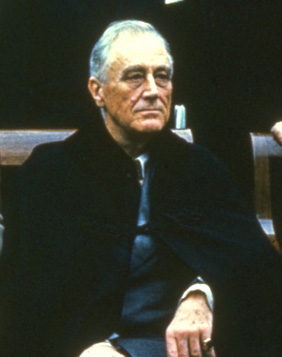
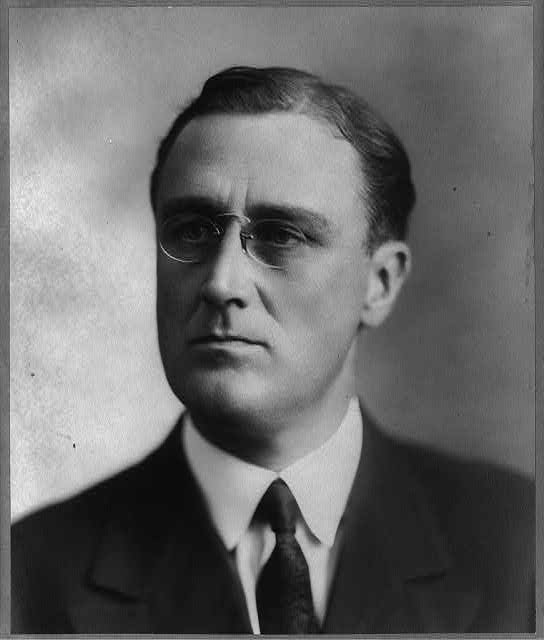
Franklin D. Roosevelt experienced cognitive impairment from vascular dementia the last several years of his presidency of the United StatesWhile it is well known now that President Franklin D. Roosevelt suffered from partial paralysis from polio (he was stricken with the disease when he was 39 years old) that was hidden from the United States during his twelve years as president of the country, what is hardly known is that in the last several years of his life, President Roosevelt’s diastolic hypertension grew significantly worse and he began suffering symptoms of vascular dementia as a result.

Beginning in 1939, President Roosevelt was diagnosed with hypertension, with blood pressure readings averaging between 180/100 and 190/110.

The president’s medical team was never able to get his blood pressure consistently lowered, and, in fact over the next six years, it was more normal for President Roosevelt’s blood pressure to be in the 230/120 to 300/140 range when it was checked (which, surprisingly, given his condition, was not often).

Before President Roosevelt ran for his last term, signs of vascular dementia in terms of cognitive impairment had already materialized.

In addition to the president’s other worsening health problems, he was in no shape for and never should have run for a fourth term as president of the United States.

However, despite the evidence that everyone around him saw and was well aware of, no one stopped President Roosevelt’s last election and no one questioned the wisdom of having someone with cognitive impairment manage the last days of World War II.

History has shown that President Roosevelt’s cognitive impairment was fully apparent at the Yalta conference with Joseph Stalin and Winston Churchill in February 1945 (two months before President Roosevelt died after suffering a massive cerebral hemorrhage in Georgia).

President Roosevelt's cognitive impairment was a deciding factor is how Yalta turned out and what the world looked like geopolitically for the next 44 yearsMany of the factors that should have been addressed with Stalin and the Soviet Union at this conference by President Roosevelt (as the leader of the world’s strongest nation, which the United States emerged as in World War II) were not.

These critical and strategic omissions/concessions directly contributed to the vise-like grip that the Soviet Union – and the spread of Communism – had on eastern Europe after the war and the ensuing Cold War that lasted for almost 50 years.

It is clear in retrospect that President Roosevelt’s dementia played a crucial role in how the geopolitical landscape of the world shaped up, detrimentally, for the next half century.

President Roosevelt died at the age of 63 in Warm Springs, Georgia on April 12, 1945. His last known words were “I have a terrific headache.” He lost consciousness and was dead within two hours.


Technology and Neurology – A Perfect Storm For A Lifestyle Dementia

Technology can have devastating effects on the brainIn my book review of The End of Absence by Michael Harris, we see how an increasingly constant interaction with, reliance on, and addiction to technology is creating devastating effects on us neurologically.

Among these effects are dementia-like symptoms: loss of short-term memory, easy distraction, lack of focus, loss of critical thinking skills, and loss of executive functions.

These effects are happening to people all around us just like you and me. The effects don’t discriminate: even the very young are affected just as profoundly as others of varying ages.

In Nicholas Carr’s The Shallows: What the Internet is Doing to Our Brains, a book everybody should read, the discussion centers on the neurological effects of 24/7 technology connection in the actual composition of the brain.

The research and the science is sobering, especially in light of how it points to the emergence of another lifestyle dementia that is already beginning to affect people, and will increasingly affect vast numbers of people at earlier and earlier ages.

Lifestyle dementias are dementias we choose because we adopt or don’t control or eliminate the lifestyle factors that cause the dementias.

Alcohol abuse and addiction is one of those lifestyle choices. How we treat our bodies (food, exercise, etc.) is another lifestyle choice. The quality and quantity of our sleep is yet another lifestyle choice.

And our relationship with technology presents even one more lifestyle choice. A recent Pew Research Center survey revealed that 20% of Americans report that they are online almost constantly.

That is 1 in every 5 people here in the United States. It is not surprising to me, but it is disturbing to me for many reasons. 

Because my whole career has been intricately involved with technology, I’m uniquely qualified to discuss this since I’ve always made choices to limit my exposure, instinctively, I suppose, realizing the dangers, and I continue to do so because my brain, for better or worse, is the best asset I have and I don’t want my choices to be the reason I lose any functionality it has.

The neuroplasticity of the brain is negatively changed by overexposure to technologyOverexposure to technology completely rewires our brains (neuroplasticity) and not in positive ways. It literally changes our neural pathways, eliminating the ones we don’t use and creating new ones.

Different parts of the brain are stimulated with how we receive information.

Images light up a different area of the brain than words do. Technology lights up a totally different area of the brain than either images or words do.

Which area of our brains get lit up the most often is the part of the brain that becomes dominant and we use the other parts less and less.

Brain cells (neurons) that don't get used die permanently.With disuse, those parts we don’t use begin to die at the cellular level, eventually creating the same kinds of synaptic gaps that are common among dementias.

The brain is the only organ in which there is no cellular regenation. Once the cells in the brain die, they’re gone for good. With time, this cellular death becomes widespread and we experience dementia.

The problem with our increasing interaction exclusively with technology (smart phones and tablets have definitely made this easier) is that technology is purposefully designed to stimulate the part of the brain that deals with emotions.

Because of the emotional stimulation that technology elicits, it consistently bypasses logical, analytic processing of information and the desire and ability to discern between what’s true and false, what’s right and wrong, and what’s valuable and what’s not.

The effect on us is that we are unaware of what’s happening tethered-to-technology-going-gentle-into-that-good-nightbehind the scenes to our brains as we’re tethered to technology, so we don’t realize we’re not logically and analytically processing information coming in and that we’re rapidly losing the desire and ability to discern between what is true and false, what is right and wrong, and what is valuable and what is not.

It is simply disappearing without our awareness that we’re losing the very things that make us unique as humans and which are the most precious gifts we have been given.

The end result is that in the short term we become shallow (gullible, unthinking, ignorant, and imprisoned in a shrinking world that is simply a mirrored reflection of our narcissistic selves) and in the long term that we lose our cognitive abilities altogether.

It’s not to late for most of us to turn this around and do everything in our power to make choices that will stave off this lifestyle dementia. 

But each of us has to make the choice for ourselves. Some of us won’t. Some of us don’t believe this is happening. Some of us don’t care.

However, for those that will, that do believe this is happening, and that do care, here are a few ways to get started:

  1. Unplug from everything at a set time every day and stick to it. Replace the time that you would have spent with technology with an activity that involves the other parts of your brain. These can include hobbies, reading, putting together jigsaw puzzles, playing board games or cards with other people, crossword puzzles, sudoku, and other types of brain-intensive puzzles.
  2. Don’t stay plugged in all day. Do what you need to do (check social media, email, texts, etc.) at set time-delimited times each day (I generally check mine early morning, noon, and 6 pm, giving myself 15 minutes each time and no more). Otherwise, I’m off the grid and working on other productive things.
  3. Unplug completely for 24 hours each week. No phone, no internet, no social media, no nothing. And do something else entirely away from it all. This may, especially if we’re addicted to technology, be quite uncomfortable and unsettling at first (generations before us lived this way and they not only survived just fine, but I suspect they were happier and better off), but eventually you will absolutely crave your unplugged 24 hours and it may lead you to more complete unplugging than that in time.

We only get one brain in our lives. Everything we do supports it or destroys it. Once destruction happens, it’s permanent and it can’t be undone.

Let’s make sure we’re doing everything in our power with our choices to support our brains and not destroy them.

Profiles in Dementia: Zelda Fitzgerald (1900-1948)

Profiles in Dementia Zelda Fitzgerald Going Gentle Into That Good NightI recently finished reading Sometimes Madness is Wisdom: Zelda and Scott Fitzgerald – A Marriage. I highly recommend it, although it’s a harrowing book in so many ways.

Two of those harrowing aspects are Scott’s alcoholism and how he deliberately and consciously broke Zelda, who had her own demons and a genetic predisposition toward mental illness, for good.

A third harrowing aspect of this book is the barbaric state of psychiatry – diagnosis and treatment – in the 1930’s and 1940’s.

Zelda, who was diagnosed in 1930 with schizophrenia (most likely an inaccurate diagnosis, since it’s highly unusual for schizophrenic’s first symptoms to not appear during adolescence), was repeatedly subjected to three types of treatment routinely used for schizophrenia.

Not only did they, in many ways, exacerbate Zelda’s mental illness as well as qualify for legalized torture, but two of them eventually caused irreversible neurological damage, including cognitive impairment and memory loss consistent with all forms of dementia.

The first of these that Zelda endured over the course of 18 years was insulin coma therapy. Begun accidentally by Viennese physician Manfred Sakel, it involved giving large doses of insulin hourly daily for several weeks to keep the patients in a comatose state. It was believed that this gave the brain a chance to rest and heal itself.

Of course, other than the obvious risks of not being able to bring patients out of the comas (happened regularly) or death (also happened regularly), the high doses of insulin produced a prolonged state of hypoglycemia, resulting in permanent neurological damage.

The second treatment that Zelda was routinely given was chemically induced seizures. This treatment, based on very iffy logic at best, was pioneered by Hungarian pathologist Ladislas Joseph von Meduna.

Zelda Sayre Fitzgerald 16 Years Old Going Gentle Into That Good Nightvon Meduna made the unscientific leap with his observation that because people diagnosed with epilepsy rarely were diagnosed with schizophrenia. Therefore, he concluded that the epileptic seizures – and their aftereffects, which to von Meduna’s mind seemed to indicate blissful happiness – must be the reason for rare schizophrenic diagnoses. von Meduna then concluded that the seizures could cure schizophrenia.

By the time Zelda was subjected to chemically induced seizures, the original substances used to induce seizures – strychnine, absinthe, caffeine, and camphor – had been abandoned in favor of the drug Metrazol.

Given to schizophrenics in a regimen of 30-40 injections, with the injection rate of two to three times a week, the first injection produced such a powerful seizure within a minute of injection that torn muscles and fractured bones were not uncommon.

Beyond the high physical risks of violent injury, Metrazol also caused permanent memory loss.

Zelda died in a tragic fire at Highland Hospital, a psychiatric hospital, in Asheville, North Carolina in March of 1948, during the latest of on-and-off commitments to the facility she had from 1936 onward.

Zelda Fitzgerald Self-Portrait 1940's Going Gentle Into That Good NightHowever, in many ways, Zelda was gone years before the fire took her physical life. Zelda spent the last several years of her life devoid of memory, devoid of personality, and devoid of any sort of intellectual spark. 

Zelda’s physical appearance was so drastically changed that friends and acquaintances had a hard time recognizing her. 

Even in her hometown of Montgomery, Alabama, where she lived with her mother when she wasn’t at Highland Hospital, Zelda was unrecognizable to people who’d know her and her family all their lives. 

Zelda spent the majority of the daylight hours in Montgomery restlessly and aimlessly wandering around town in old, ragged, dirty clothes with no evidence of any care for personal grooming until her mother would find her and get her home before darkness fell.

It was a sad end of days for Zelda Fitzgerald.

Profiles in Dementia: William Shakespeare’s King Lear

William Shakespeare as a young manWilliam Shakespeare, the playwright, was one of the most intuitive and astute observers of the human race. A careful reading of his body of plays – especially the histories and the tragedies – show an author who intimately understood human nature and human folly at their very core manifestations.

In King Lear, one of Shakespeare’s most gut-wrenching plays, Shakespeare gives us an in-depth look at what dementia – and, most likely, based on the symptoms, Lewy Body dementia – looks like in action in his portrayal of King Lear.

From a big-picture standpoint, the play shows in close detail how dementia can destroy a family (and a kingdom), and it shows how family dynamics can hasten the destruction. It also shows how dishonesty with our loved ones with dementia is never acceptable

The summary of King Lear is fairly straightforward. King Lear, a monarch in pre-Christian Britain, who is in his eighties and aware of his own cognitive decline, decides to abdicate the throne and split the kingdom among his three daughters, with the promise that they will take care of him. 

The first sign of Lear’s dementia is his irrational criteria for how he’s going to decide which daughter gets the largest portion of the kingdom: not by their abilities, strengths, rulership experience, but by which one professes the greatest love for him.

His two oldest daughters are duplicitous and try to outdo each other with their professions of love for their father (they don’t love him, but they want the lion’s share of the kingdom).

King Lear’s youngest daughter, who genuinely loves her father and who is his favorite, gets disgusted with the whole thing and refuses to play the game.

King Lear, in a sudden fit of rage, then disowns his youngest daughter completely. When one of her friends, the Earl of Kent, tries to reason with the king, King Lear banishes him from the kingdom.

King Lear’s youngest daughter then marries the king of France and leaves King Lear in the hands of his two devious older daughters.

The Tragedy of King Lear - William ShakespeareBoth daughters are aware of King Lear’s vulnerability because of his cognitive decline and are intent on murdering him so that they can have everything without the responsibility of having to take care of him. They treat King Lear horribly in the process of formulating their scheme to end his life and be rid of him.

The youngest daughter comes back from France to fight her sisters, but loses and is sentenced to death instead.

While she is awaiting execution the two older sisters fight over a man they both want. The oldest sister poisons the middle sister, who then dies. 

The man the two sisters were fighting over has been fatally wounded in battle and he dies (but he reverses the execution order of the youngest sister before he dies). After his death, the oldest sister commits suicide.

Meanwhile, the youngest sister is executed before the reversal order reaches the executioners. And King Lear, upon seeing his youngest daughter dead, dies too.

Woven throughout the plot are signs that King Lear has dementia, that he knows something is cognitively wrong, and we watch him actually go through the steps of dementia throughout the play.

King Lear exhibits deteriorating cognitive impairment, irrational thinking, sudden and intense mood changes, paranoia, hallucinations, and the inability to recognize people he knows.

Lewy Body dementia seems to be evident in King Lear’s conversations with nobody (he thinks he sees them but they aren’t there) and the sleep abnormalities that are brought out in the play.

A few poignant lines spoken by King Lear give us a glimpse:

“Who is it that can tell me who I am?”

“O, let me not be mad, not mad, sweet heaven
Keep me in temper: I would not be mad!”

“I am a very foolish fond old man,
Fourscore and upward, not an hour more or less;
And, to deal plainly,
I fear I am not in my perfect mind.”

“You must bear with me:
Pray you now, forget and forgive: I am old and foolish.”

Everyone around King Lear knows he’s not himself, including his deceptive daughters, who note after he disowns his youngest daughter, how bizarre his behavior was toward someone he loved so much and how quickly his temperament changed. King Lear see

As the play progresses, King Lear’s dementia continues to be revealed in his frequent rages against fate and nature, in his disregard for personal comfort or protection from the elements, and in his eventually having fewer and fewer lucid moments in which he recognizes people and knows who he is.

If you haven’t read King Lear in a while or you’ve never read it at all, it is an entirely different experience to read it now with the knowledge of dementia as a backdrop. It’s even more tragic than we even imagined. 


Will Poor Sleep and Sleep Deprivation Now Lead to a Lifestyle-Related Dementia Later?

restorative sleep dementias going gentle into that good nightThe answer is “probably.”

There have been several studies in the last two years on the effects – positive and negative – of sleep on the brain. They all agree on one point: to function optimally, the brain requires quality sleep and enough of it.

They also agree on another point: the way our modern society is structured, the majority of us are not getting enough sleep, and the little sleep we are getting is not quality sleep.

The fact that poor sleep and future dementia are linked is not new.

A sleep disorder known as REM sleep behavior disorder is a key characteristic of Lewy Body dementia, but the sleep disorder is often present decades before symptoms of Lewy Body dementia emerge.

In a study published in the The Journal of the American Medical Association in 2011, researchers showed a strong link between sleep apnea (sleep-disordered breathing) and dementia.

However, new research is now showing that even those of us without these two sleep disorders are getting less sleep and the sleep we do get is not quality sleep. New neurological research is showing us how important enough sleep and good sleep is for our present and future neurological help.

circadian-rhythm-sleepThe body has a natural circadian rhythm designed to promote and facilitate sleep as daylight turns into evening and then night and to promote and facilitate wakefulness as night turns into day.

Until the Industrial Revolution, which actually consists of two iterations (one in the late 18th century and the second, which was the more profound of the two, in the mid-19th century, the human race generally slept and awakened based on the body’s natural circadian rhythm.

After the second iteration of the Industrial Revolution, when crude ways to keep the lights on 24 hours a day, 7 days a week emerged, all that changed. Initially, the only segment of the population that it affected were those who were employed in factories, mines, and foundries.

factory work shift work sleep deprivation going gentle into that good nightAs textile factories, ore and mineral mines, and metal foundries remade the work day into two 11-hour shifts – generally, 7 am – 6 pm and 7 pm – 6 am – the second shift of workers were forced to ignore and work against their natural circadian rhythms to fuel the manufacturing boom, which was bolstered by a greater demand for manufactured goods throughout all strata of the population.

Although there was less concern about the workers – health, quality of life, and even death – then, there is still a significant amount of data from that period that shows most of horrific accidents (the majority of which were attributable to human error and resulted in both permanent disabilities and death) occurred during the later hours of the 2nd shift.

In the early 20th century, as manufacturing expanded into transportation, work days were again revised into three shifts – 7 am – 3 pm, 3 pm – 11 pm, and 11 pm to 7 am – with similar higher accident rates in the 2nd and 3rd shifts.
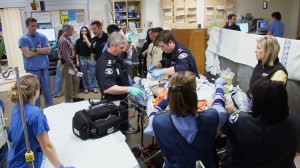
medical professionals shift work going gentle into that good nightMedical professionals in hospitals, nursing facilities, and emergency services work were the next group of people to be required to work in shifts. Additionally, of all the careers in which shift workers were employed, it was not unusual for many medical professionals to work double shifts (back-to-back shifts) to provide necessary services.

During World War II, almost all manufacturing facilities in the U.S. transitioned to 24/7 production and a 1st, 2nd, and 3rd shift to support the Allies’ efforts in the war. After World War II, as those factories transitioned back to civilian manufacturing, they kept 24/7 production and three shifts in place. 

As the Technological Revolution replaced the Industrial Revolution (also in two iterations, with the first one beginning after World War II, and the second one, which now affects every human on the planet, beginning in the late 1960’s) and the world became instantaneously and simultaneously intricately connected, the 24/7 workday began to affect almost everyone on the planet, white-color workers working late nights going gentle into that good nightincluding white-collar workers who saw their workdays – and nights – lengthened beginning in the late 1980’s.

As more and more people have been, by necessity, forced into living and working in a 24/7 environment, researchers have kept a close eye on how successful our efforts to work against our natural circadian rhythms have been.

The answer is we’re all pretty much failures at it and the results are poor quality sleep and sleep deprivation.

And like our ancestors in the Industrial Revolution, working late into the night or all night, whether in a medical facility, an emergency services department, a manufacturing facility, an office, or at home (because half the world’s awake when it’s time for people in the U.S. to go to bed), shows the same elevated risks of accidents and injuries (both work-related and non-work-related) when compared to working during daylight hours.

Here are a few statistics directly tied to shift work (if you’re an office jockey reading this, remember that this applies equally to you and all those late nights and overnights you’re working wherever you’re working them):

  • Work-related injuries increased to a little over 15% on the 2nd shift and almost 28% on the 3rd shift.
  • The longer the shift, the higher the risk of injuries: 13% higher on a 10-hour shift and almost 30% higher on a 12-hour shift. 
  • The more consecutive night shifts worked, the greater the risk of sustaining an injury (37% higher by the fourth consecutive night shift as opposed to 17% higher by the fourth consecutive day shift).
  • Almost 50% of the late-night (10 pm – 1 am) and early-morning (5 am – 8 am) car accidents – fatal and non-fatal – involve drivers who are driving to or from work.

Pretty scary, huh? And, yet, despite all the evidence that it’s a really bad idea, a dangerous idea, and a dumb idea, we, as a society, keep doing it. I won’t get in-depth into the reasons for that here, except to say that they are tied to greed and competitiveness, which are soul issues.

What is the biology behind the statistics above?

That we can answer. And I’ve had more jobs than not where I worked 10-12 hours on a Sunday-Thursday night schedule, where I’ve worked many late, late nights only to be back at my office first thing the next morning, and where I’ve pulled many all-nighters, so I’ve got a lot of firsthand experience to bring to the table.

The reality is that unless you’re physically exhausted – mental exhaustion actually keeps the brain in gear and is totally counterproductive – you can’t get any real quality sleep during the day. Melatonin production is off and all the hormones to keep you awake are in action, so trying to sleep well is a losing battle.

So while you may be able to get a few hours of restless sleep, you do not go through the normal sleep cycles associated with nighttime restorative sleep.

As a result, because your brain is “foggy” when you’re awake, your response times are sluggish, and, combined with the normal circadian rhythm of sleep kicking in at night – even if you’re awake – all of these are directly tied to the increased risks of accidents and injuries during work hours at night.

The later you work at night the more likely you will have an injury and/or accident because these are the normal hours when sleep is deepest and during which you’ll be fighting sleep the most.

But the long-term effects of poor sleep and sleep deprivation are just as serious with regard to neurological health.

In a series of studies on sleep published in late 2013, researchers discovered that good sleep and normal sleep (7-8 hours at night) enables the brain to clean out the toxins – including beta amyloid proteins, which are involved in the development and progression of Alzheimer’s Disease – that have accumulated in it during the day’s mental activities. This process is so energy-intensive that it can be done only during sleep, when the brain doesn’t have anything else to do.

And here’s the thing. Perpetually skimping on sleep, for a lot of us who don’t do shift work and don’t have careers that demand a lot of late, late nights and early, early mornings on a consistent basis, is a lifestyle choice.

Technically, however, all of these types of careers, except for manufacturing work, which puts food on the table and pays the bills for people who might not be able to do so otherwise, are lifestyle choices because anyone going into these careers know the demands before they choose the education and jobs that lead to them.

And that substantially increases your risk of developing a lifestyle dementia.

digital and electronic connectivity sleep deprivedWe, as a society, are very sleep-deprived. And that includes a lot of people who are not earning their living during the night.

Much of that, in my opinion, is because we are digitally and electronically connected all the time and that crowds out the time we allocate for sleep.

A few questions should help you know if this applies to you personally.

  1. Do you watch TV for several hours in bed or do you play video games before you go to sleep?
  2. Is your smart phone or tablet beside your bed so you can check email or keep up with social media? Do you check them during the night?
  3. Are you digitally and electronically connected last thing before you close your eyes at night and first then when you awaken in the morning?
  4. Do you remember what you did at night before you got digitally and electronically connected?

If the answer to the first three questions is “yes” and the answer to the last question is “no,” then you’re making a lifestyle choice, probably sacrificing sleep (it’s important to remember that all these digital and electronic things stimulate the brain, so their after-effects stay with you for quite some time after you turn them off, and that means it takes you longer to fall asleep), to stay connected all the time to a world, that quite frankly, isn’t all that important or real anyway.

And whatever is real or important about it can wait until tomorrow. Like it did when a lot of us were little kids and there was no cable tv, there was no public internet, there were no video games, there were no personal digital/electronic devices, and there were no cell phones.

The world didn’t end then, and it won’t end now if you put all these away early in the evening and give your brain a chance to relax by playing a game with your family, listening to music that soothes your soul, getting lost in a book, or simply being quiet for a little while, using that time to meditate and reflect on your day and make plans for tomorrow.

Even though since I was born I’ve always had trouble sleeping a lot and getting good sleep when I do, I purposely shut everything down early in the evening to engage in quieter and more reflective activities and I stay away from it until I’ve had some quality time in the morning to get ready to tackle it again.

One day each week – for me, it’s the weekly Sabbath – I disconnect completely for the 24 hours between sunset Friday and sunset Saturday, and I’ve begun to move away from being connected much on Sundays as well.

I rarely have my cell phone anywhere near me and even when I do, I rarely use it. I certainly don’t want it in my bedroom with me at night.

With my sleep history, I’m already behind in this game, so I make lifestyle choices to improve my odds the best I can. It may not be enough to stave off dementias, but at least I know the choices I’m making increase the odds that, if I live long enough (I always pray I don’t…we start dying the day we’re born, so it’s pretty much all downhill from that point on), they’re either mild or short and done.

For all of us who can read this today, now is the time to start making sure we’re doing everything in our power to get enough sleep and to get good sleep when we do. That’s a lifestyle choice that only you can make for you and that only I can make for me.

It may mean some hard choices. It may mean a career change. It may mean disconnecting during nighttime from technology. It may mean looking at our lives and figuring out what’s really important in the long-term, instead of buying into the pervasive idea that now is the only important time in our lives.

But in the end, from this moment on, at least in the realm of sleep, you can do something to help yourself, but you have to decide what you’re willing to trade off now and what you’re willing to live with in the future.


The Layperson’s Guide to Vascular Dementia, Multi-Infarct Dementia, Small Vessel Ischemia, and TIA’s

There are many kinds of dementia. In the next few posts, we’ll take a look at a few of them, along with Alzheimer’s Disease, which is a distinct neurological diagnosis from dementias.

Before we start, it is important to note that our loved ones can suffer from only Alzheimer’s Disease or only one kind of dementia. Or they may suffer from Alzheimer’s Disease and multiple kinds of dementia. That distinction is important to loving caregiving, which includes medical advocacy for our loved ones, because each brain disease is distinct, affects the brain differently, and has specific characteristics and symptoms and treatment.

I will admit here that one of my pet peeves while caring for my mom was hearing some people who have no real knowledge of these diseases lump everyone who suffers from them under Alzheimer’s Disease and giving advice on how to deal with that, not realizing the complexity of the situation posed by the presence of both dementias and Alzheimer’s Disease.

So, for non-caregivers or those who are unfamiliar and inexperienced with these diseases who may be reading this, please don’t assume because you’ve seen or read The Notebook that you’re an expert on the subject and please don’t offer medical diagnoses and advice.

The best gift you can give is to just listen and offer non-medical support. Most caregivers get so deep into the details and all the aspects of these diseases because they need to be able to take care of their loved ones in so many ways that if there were such a thing as a non-M.D. expert on them, most caregivers would qualify.

This post will discuss vascular (multi-infarct) dementia. The cause of this dementia is small vessel ischemia in the brain, which presents itself as chronic transient ischemic attacks (TIA’s). TIA’s are sometimes also referred to as mini-strokes.

TIA’s can occur when the small vessels in the brain get temporarily blocked, cutting off the blood supply and oxygen to that part of the brain. The cumulative affect of these is what causes the damage that is present in vascular dementia. Multi-infarct dementia just means that there are many areas in the brain where this vascular damage has occurred and accrued.

Although high blood pressure is a culprit, high levels of stress and a history of migraines are also players in these kind of TIA’s.

In my mom’s case, all three were factors, but high levels of stress were what brought on the majority of her TIA’s. I suspect she started having these as a small child, because there were times that she just couldn’t remember what happened in a specific instance but she’d referred to it as “blacking out.”

She never lost consciousness with them that I witnessed, but she used the same expression to describes times when we kids were all babies and she was under a lot of stress and she couldn’t remember certain instances of things.

Her TIA’s were common as we grew up, and although we never got over the shock of the suddenness of symptoms and the helplessness we had to do anything about it, we all got pretty good at taking care of her when she had one, and that lasted for Daddy until his death, and for me into adulthood until Mama’s death.

Her TIA’s always presented the same way. They were sudden. Her face would lose all color and her lips would get very pursed as she seemed to salivate more. There was a sort of paralysis except for her right hand. She would start rubbing her thumb across the first two fingers and that would last until the episode was over. I suspect there was a sense of unreality associated with the TIA, so the feeling of her fingers rubbing together was the only reality for her in those episodes.

I’d always hold Mama’s left hand and kind of stroke it so she knew I was there and she wasn’t alone. When the TIA was over, she’d immediately try to talk and everything came out totally garbled. That would last about thirty minutes and then she’d be okay.

And she never remembered them happening. I remember the first time I was giving her medical history as her POA at an ER (and this was way before the dementias and Alzheimer’s Disease) and I named TIA’s as part of her medical history and she disagreed with me and said she didn’t remember ever having those. I laughed at the time and told her that not remembering them was part of the symptom of having them.

small-vessel-ischemia-brain-mriOver time, though, as small vessel ischemia recurs, eventually clusters of damage occur in the brain. This disrupts the normal neurological pathways of how information is learned and communicated. One of the most clear indicators of vascular dementia is difficulty in communication. One of these difficulties is misnaming things.

For example, the brain knows that a pencil is a pencil. Someone suffering from vascular dementia knows a pencil is a pencil. But because of the damaged pathways, there is often a break in the connection between knowledge and speech, so someone with vascular dementia is just as likely to call a pencil an apple.

Another clear indicator of vascular dementia is slower processing time. A brain with vascular dementia will fight to reroute stored information to speech. However, because of the extensive damage, it has to take a much more convoluted and lengthier route to do that conversion.

A third clear indicator of vascular dementia is that it occurs in sudden, steep steps of decline (brought on by recurrent TIA’s and new clustered areas of damage in the brain). These can occur in a very short period of time, as they did in my mom’s case.

In addition to these definitive indicators, vascular dementia also has features in common with other dementias, including difficulty learning anything new, cognitive impairment, problems with short-term memory, extreme emotional swings, and confusion.

There are no specific treatments for vascular dementia. Unlike any other organ in the body, once the brain has sustained damage, that damage is permanent.

However, there are medications that can address the symptoms of vascular dementia. The two most likely to help are cognitive enhancers: Excelon (although this comes in oral form, the 24-hour patch is best, if there’s no allergic reaction, to get the continual effect of medication that comes in a starting dose of 4.6 mg, a stabilizing dose of 9.5 mg, and a high dose at 13.3 mg)  and Namenda (given in 5 mg increments, two to three times a day).

When I discuss the medications in later posts, I will give some practical experience and advice on these two medications, especially with regard to Medicare, the “donut hole,” and working with your loved one’s psychiatrist to get the medication at either no charge or a reduced rate during the “donut hole” period. Both of these are patented, so there’s no cheaper generic version. And paying full price for them will break the bank.

In the next post, we’ll take a look at Lewy Body dementia: what is is, how it’s diagnosed, what it looks like, and effective treatments for the symptoms.