Tag Archive | Dementia

Super Bowl 50, Football, and the Everpresent Looming Specter of Dementia

Football carries a huge risk of neurological damage and the development of dementiaToday, February 7, 2016, the 50th Super Bowl game in NFL (National Football League) history will be played by the Carolina Panthers and the Denver Broncos. Therefore, it is appropriate to discuss the other dark and dangerous side of this football game – and all the ones played before and all the ones that will be played after – before it is played.

Super Bowl games have become extravagant and lavish productions in the last ten years or so, intended to bring into the audience people who normally either don’t have interest in the game or don’t normally watch football. Super Bowl games also represent an obscenely huge financial windfall for the NFL and for advertisers with enough money to pay for the coveted and outrageously expensive advertising spots during the game. Continue reading

Busting Dementia Misinformation: Over-The-Counter Anticholinergic Medications and Dementia Risks

Tylenol PM is an over-the-counter anticholinergic medicationA revival of the claims in an earlier research study that over-the-counter anticholinergic medications (which includes Benadryl and many of the PM versions of acetaminophen and ibuprofen) causes an increased risk of developing dementia is making its way around social media.

As I strongly urge on a continual basis, we must be aware and intelligent about the context of all research and the tendency among humans to extrapolate generalizations and make them absolute truths from very specific research studies, as well as to perpetuate misinformation, disinformation, and out-and-out lies.

We have the responsibility to thoroughly educate ourselves about these diseases and get all the facts – if there actually are any (many of the more outrageous things I’ve seen have little to no factual basis and yet they are the very things that people widely distribute as truth) before believing anything you see and hear (or read).

The more you learn and know about these neurological diseases, the better able you will be able to distinguish between what is true and what is not (there is a lot of garbage and there are a lot of garbage claims out in cyberspace – when we fall for it, Advil PM is an over-the-counter anticholinergic medicationwe, frankly, show our ignorance and unwillingness to do the work required to get any kind of comprehensive and knowledgeable understanding of these diseases).

The facts about this study, its context, and over-the-counter anticholinergic medications are in this clinical report.

Grief in a 24/7 Connected World

Tears of GriefGrief is complex and complicated and no two people grieve the same way.

However, the more we’ve become connected in a 24/7 way through technology, the more we’ve become a shiny-happy-people (I am a huge R.E.M. fan, but this song annoyed me beyond words the first time I heard it and continues to do so now) society that focuses on the inane, on fluff, and on the ridiculous and real, palpable, tangible grief rains on that parade of lollipops, unicorns and butterflies.

As a result, it (and the grievers) are prime targets for some of the most judgmental, critical, harsh, and mean things that people can say and do to other people.

Grieving privately and alone is the best option in a 24/7-connected world

Better to grieve alone, in private, keeping the deepest secrets and pain in our souls to ourselves than to have the grief compounded by ignorance, attacks, and accusations.

Profiles in Dementia: Ronald Reagan (1911 – 2004)

Ronald Reagan Younger PortraitFor reasons that I cannot logically remotely fathom, except that perhaps we humans are highly susceptible to creating sanitized and palatable versions of our recollections of “the good old days,” which in fact were never as good as we remember them to be and may have been downright horrible, United States President Ronald Reagan is continually held up as a hero and a paragon of virtue, wisdom, and good governing.

The reality then and now could not be further from the truth in any of these categories.

Even before Ronald Reagan was president, his mental status was a source of concern. He often made contradictory statements, had frequent difficulty remembering names and people, and regularly seemed to be prone to absent-mindedness.

I was very young when President Reagan came into office, but I have clear recollections of how bad the economy was during his tenure (President Reagan was the “trickle down economics” president, promoting the pie-in-the-sky idea that if the United States gave financial preferences to the very wealthy, then they would in turn create jobs and juice up the economy down through the poorest people in the nation) and how much wrong-doing occurred during his presidency.

Don Henley’s “End of the Innocence,” depicting pervasive corruption, dishonesty, greed, and despicable behavior that touches every part of life and written during President Reagan’s presidency has become, in my mind, the most honest and enduring description of the United States, from its politicians to its businesses to its people, has a couple of verses that deeply resonate with me every time I think of President Reagan’s years in office:

“O’ beautiful, for spacious skies
But now those skies are threatening
They’re beating plowshares into swords
For this tired old man that we elected king

Armchair warriors often fail
And we’ve been poisoned by these fairy tales
The lawyers clean up all details
Since daddy had to lie”

Henley’s song refers to the Iran-Contra affair, which, in more detail than ever before, exposed the truly despicable and seedy underbelly of how the American government, military, and intelligence services have always manipulated, by whatever means were deemed necessary (the end justifies the means), world geopolitics to attempt to give the United States the upper hand in outcomes.

It is very likely that the real principles – Colonel Oliver North threw himself on his symbolic sword as the fall guy when it came to light – in this scandal took advantage of  President Reagan’s already-apparent cognitive impairment.

Evidence that President Reagan was already into his progressive slide into dementia includes his often-confused testimony during the Iran-Contra hearings and the unprecedented number of times, with obvious confusion on his face, he said “I don’t recall.”

President Reagan had already begun his descent into dementia when he took office in his first term as the president of the United StatesWhile this statement is a standard in legal defenses, what made President Reagan’s more than a legal maneuver was that it was clear that he really didn’t recall much at all.

This year, a study was done by researchers at the University of Arizona on President Reagan’s speech patterns during his eight years (1981 – 1989) as president of the United States.

What the researchers found were subtle changes during those eight years that revealed the tell-tale signs of the change-in- communication step of the journey through dementias and Alzheimer’s Disease.

These included searching for words, substituting generic terms like “thing” for specifics President Reagan could not remember, and a decreasing range of vocabulary as his time in office progressed.

Although President Reagan’s dementia was not publicly announced until 1994 – a move I believe was calculated to give enough time after his presidency to remove suspicion that President Reagan had dementia while in office – it has since become clear that his dementia gave the people around him the leeway to set in motion the kind of governing (and it does nobody except people and institutions with a lot of money and a lot of blackmail-type secrets any favors, while getting sleazier and sleazier by the minute) we live with and take for granted as “normal” today.

President Ronald Reagan died on June 5, 2004.

The Fallacy of “Silver Bullet” Solutions to Dementias and Alzheimer’s Disease

There are no silver bullet solutions for dementias and Alzheimer's Disease. Believing otherwise is both ignorant and dangerous.There are no “silver bullet” solutions to the growing epidemic of dementias and Alzheimer’s Disease among the human population

Almost daily, there are reports – from the internet, which is a numbers game in terms of reliability and accuracy of information (the more hits a site gets, the higher it appears in the search engines), not an indicator of expertise and factual information – of “silver bullet” solutions to these neurological diseases.

I suppose, because of the devastating effects of the journey through dementias and Alzheimer’s Disease that our loved ones experience and we, as caregivers, intimately deal with as we go through the journey with them, that we all our susceptible to a measure of magical thinking that leads us to even remotely consider or believe the most outlandish – and patently false – claims that a solution will reverse or cure these irreversible and incurable neurogically degenerative diseases.

What makes me angry about the “silver bullet” solutions that keep cropping up is that they prey on the vulnerable (and that includes us, as caregivers), giving false hope and, often, reaping a huge monetary reward (if they’re selling the “silver bullet” solution) at our expense.

This conduct is shameful. This conduct is cruel.

How can we as caregivers avoid falling into the “silver bullet” solutions trap?

We must thorough educate ourselves about dementia and what's true and what's not.First, we must educate ourselves and study diligently to learn and know the facts about dementias and Alzheimer’s Disease. We must understand the physiology, neurology, and neuroscience of the brain.

Going Gentle Into That Good Night has many, many articles that detail, from a layperson’s point of view, each of the dementias, including Alzheimer’s Disease, as well as factors in their development and the prominent indicators of each type of dementia.

you-ought-know-dementia-going-gentle-into-that-good-night-book-coverSecond, we must understand dementias and Alzheimer’s Disease in terms of their steps and what to expect in each stage and how to walk with our loved ones with these neurological diseases through each step

This is not the oversimplified stage progression that the Alzheimer’s Association (which does not include details of exactly what happens in a detailed and sequential way and nor what and how we caregivers successfully navigation through the journey of these diseases).

Without a deep and thorough understanding of how dementias and Alzheimer’s Disease begin (often decades before any overt symptoms appear), progress, and end, we will be susceptible to the false information and misinformation of “silver bullet” solutions, which will do neither our loved ones or us any good, and will only add additional unnecessary suffering to our journeys through these neurological diseases.

Ignoring or avoiding this aspect of our educational process will not make the development of the development and progression of dementias and Alzheimer’s Disease go away. Instead, it will only make the journey for our loved ones and us as caregivers harder, more painful, and more sorrowful than they should be or need to be. The choice is ours.

Discern between credible information and uncredible information about dementias and Alzheimer's DiseaseThird, we need to become experts at discerning credibility and balderdash in the information coming at us.

I see articles all the time (not in just discussing dementias and Alzheimer’s Disease, but everywhere in life) from websites that are clearly not credible – look at the website name first and that will give you good insights into the quality of the information source – (and the information is misleading, at best, and totally false, at worst) presented and endorsed by a surprisingly high number of people as “truth.”

That is because of profound, and in many cases, willing ignorance. We, as caregivers for our loved ones with dementias and Alzheimer’s Disease, cannot afford to be ignorant about these neurological diseases.

There are plenty of snake oil propagators and sales people on the web. They want you to believe them either because they want to make a name for themselves or they want your money. Or both.

It’s that simple. We must be vigilant to not fall for the snake oil propagators and the snake oil sales people. We – and our loved ones with dementias and Alzheimer’s Disease – will be the losers in this equation. Always.

Humans have an unbelievable capacity for magical thinking in spite of the facts and evidence to the contrary right in front of them.And, fourth, we have to recognize our own capacity for magical thinking. Even as children, we have an innate capacity to believe things that are unrealistic or untrue, but they are how we want them to be.

That is part of being human. While there is an aspect of this ability that feeds imagination and creativity productively, the majority of it leads us to the unhappiness of disappointment, disillusionment, and denial of what’s right in front of our faces.

That does us no good and it does our loved ones with dementias and Alzheimer’s Disease no good. In fact, it does us all a lot of harm in the long run.

We must be willing to confront these neurological diseases head-on, realistically, without the blinders of illusions and false hopes hindering our competent, compassionate, and loving care for our loved ones with dementias and Alzheimer’s Disease.

Our loved ones are depending on us to do this. They deserve our best and most-well-informed efforts on their behalf because they’ve placed their trust and their lives in our hands.

What will we do?


Profiles in Dementia: Norman Rockwell (1894 – 1978)

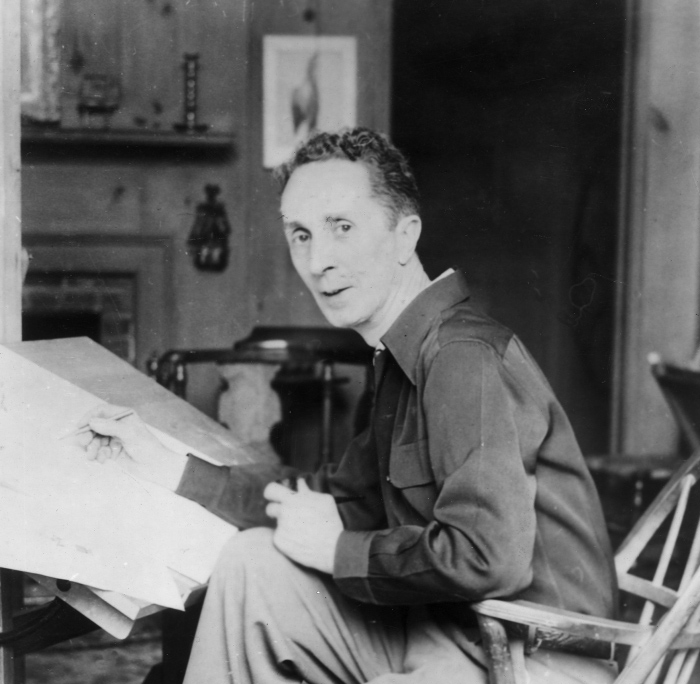
1945 Photo of Norman RockwellNormal Rockwell’s artistic creations are an entrenched part of Americana. He captured everyday life with a unique emotional component that seemed and seems to touch the American soul deeply.

Rockwell is best known for the 47 years that his iconic cover illustrations graced The Saturday Evening Post, but his body of work also included other magazines, several books, and prints for both the common man and collectors.

Norman Rockwell: Artist and Illustrator BookGrowing up, I remember frequently picking up the oversized, hardcover edition of Norman Rockwell: Artist and Illustrator that my parents had purchased and immersing myself in a thoughtful journey through the large body of his work. There were some that stand out in my mind still. A sampling of those include:

But the four-part Freedoms From… illustrations that Rockwell did in 1943 (during World War II to shore up and promote American involvement in the war) are probably the ones that tug, even today, at American heartstrings.

In part, I believe, the Norman Rockwell - Freedom from Want (1943)reason is they represent an ideal that we all wish existed, but which, in fact, never did and never will in our lifetimes.

They invoke a nostalgia for our imagined past as a nation, as families, as people. And I suppose that we want to be those people is a good thing, but the reality that we’re not is, for me, quite disheartening.

But I still love the pictures even in my discouragement at how far we all fall short of the ideals they portray. My hope lies in a better fulfillment in another life, while my despair comes from knowing it won’t be this one.

Rockwell struggled with severe depressive episodes, as it seems most creative people do, throughout his life, but it rarely, if at all, is seen in his art, which is, frankly, amazing and admirable.

In the last decade of his life, Rockwell developed dementia and for the last six years of his life lost the ability completely to do any artwork or illustrations at all.

Rockwell died in 1978 at the age of 84 from emphysema. 

Grief

Grief is unique and the grieving process is different for everyoneRecently in one of my caregivers’ support groups, I was asked by of the members if I could give her recommendations on books she could read on how to cope with/get over the intense grief she is still experiencing several months after the death of her grandmother (who had dementia).

My response was that I didn’t know that a book would help her because grief and the grieving process is unique to each of us, especially in the case of dementias because we lose our loved ones with dementias and Alzheimer’s twice: first while they’re still living and then again when they die.

Grief is sometimes very complicated. We all grieve differently, based on our relationships, our personalities, our temperaments, and our experiences in life.

The reality is that no two people ever grieve exactly the same way.

And this is one of those areas of life where people can cause a lot of irreparable damage – and layer even more pain on top of the pain of grieving – by imposing their ideas about grieving (how long, how much, how deeply, etc.) onto those grieving in the form of criticism for and impatience with the process as it unfolds.

None of us can get inside the grief of another human being. We’re not them. We haven’t walked in their shoes. We don’t know everything about them and we don’t know everything they know.

To assume that we do and to turn those assumptions into lectures about how we have been where they have been and we know what they’re going through and we know they’re not “doing it” right is the height of ignorance and arrogance.

Having had several friends in the last couple of months lose a parent and walking through the valley of the shadow of impending death with someone else who is losing a parent right now has brought the grieving process, which I’m still in to one degree or another with both of my parents, and its winding road that it is continuing to carve out in my life, back to the forefront of my mind.

The reality is that grief never really leaves us (it changes over time and it changes us over time, but it also comes right back in full force at you in the oddest moments even after a lot of time has passed).

In the end, grief is the price of love. It’s a high price, but I know that none of us would ever choose not to pay it.

I can’t imagine not having ever had my parents in my life, so even though their deaths have left gaping, sometimes acutely oozing, sometimes intensely aching holes in my heart that will never be repaired in this life, having them both for as long as I was blessed to have them makes this worth it.

Even in those moments when the pain is so strong that I can’t remember it for that instance.

So, for all of us who are somewhere on that continuum of the grieving process, know that grief after death means we loved in life. It doesn’t have a playbook nor does it have a time limit. It will get easier to do over time, but it will be a constant companion for the rest of our lives. 

And, when it’s all said and done, that is a very, very good thing. Never forget that.

Profiles in Dementia: Rita Hayworth (1918 – 1987)

Rita Hayworth Alzheimer's Disease Alcohol-Related DementiaRita Hayworth was an American actress whose career peaked in the 1940’s as Columbia Pictures’ most lucrative female lead, with a career that included 61 movies over a 37-year span.

One of Hayworth’s most acclaimed performances was in 1946’s Gilda, starring opposite leading man Glenn Ford. Hayworth also starred in two movies with Fred Astaire, who said she was his favorite dancing partner on screen.

However, fame and fortune could not stave off Hayworth’s personal demons, one of which was alcoholism.

By the late 1950’s, Hayworth’s chronic abuse of alcohol had ravaged the beauty of her younger years and had aged her considerably, making her no longer as attractive to Columbia as a leading lady even though she wasn’t 40 years old yet.

Alcoholism also created havoc in Hayworth’s personal life – she married and divorced five times (to men who in their own rights were not good choices).

By the 1970’s, when Hayworth was in her mid-50’s, the ravages of years of alcohol abuse began to also affect her brain. From 1972 until her death 1987, Hayworth’s cognitive impairment, memory loss, and repetitive outrageous behavior were what kept her name in the news headlines.

Rita Hayworth as an older womanHayworth died in February 1987 at the age of 68. Although she was the first public face of Alzheimer’s Disease (then a relatively-unheard-of form of dementia), there is absolutely no doubt that Hayworth also had alcohol-related dementia (also in 1987, mixed dementias and the many types of dementia were relatively unheard of as well), which probably hastened both her neurological decline and her death.

Believe Half of What You See and None of What You Hear (or Read): Navigating Dementias Information Online

The Internet Is Not Reliable - We Must Prove or Disprove EverythingWe humans are a very gullible bunch. We are also capable of the most incredible leaps of faith in tying the most disparate and thinly-threaded information together while we routinely disbelieve proven facts and credible information backed by proof, analysis, and critical thinking.

Why is that we go to the outermost reaches of implausible information to build our internal knowledgebases on instead of doing real, credible – yes, it takes time, it takes effort, it takes analysis, it takes critical thinking, it takes patience, and it takes commitment – research to understand the various kinds of dementa (Alzheimer’s is just one kind of dementia), to understand what the scientific process – and effects are – and to understand how we as caregivers can love and support our loved ones with honor and dignity?

Going Gentle Into That Good Night is a comprehensive resource for factual, well-researched, and practical information on dementias. The information is free for everybody. Yet routinely I see the most outlandish and untrue information on dementias on social media.

Silver bullet cures (there are no cures). Unproven links to other diseases based on an infinitesimally small test sample (no real scientist or pathologist would hang their careers on samplings this small to announce a finding). Claims that this or that “natural” thing will reverse or improve a brain already neurologically compromised.

It sounds wonderful. But it is misinformation, disinformation, and, in many cases, completely dishonest.

For a lot of these things, the motive is to get us to spend a lot of our hard-earned money on a pipe dream while the people getting rich on our backs are laughing all the way to the bank. For the other things, it is simply a matter of hacks or inferior scientists, doctors, etc. trying to get their 15 minutes of fame.

All at our expense and at the expense of our loved ones with dementias and Alzheimer’s Disease. Not only is there a monetary expense, but there is also an emotional expense, a psychological expense, and a physical expense.

All of these areas can be significantly drained and irreparably damaged in the process.

Little Women author Louisa May Alcott died prematurely because of mercury poisoningAn example of this insanity in the pre-information age was in the widespread usage of mercury as a cure-all during the 18th and 19th centuries. Mercury, it turns out, is incredibly toxic and rapidly leads to premature death (Louisa May Alcott, author of Little Women, died an early death from mercury, which was prescribed for her various physical ailments, poisoning).

It is easy to think, “Duh!” now, but the same kind of misinformation, disinformation, and outright lies are even more rampant and accessible today because of technology.

If you want to believe something – even something unproven, outrageous, dead wrong, and possibly life-threatening – the internet offers you the backup and the “proof” you need to justify whatever it is you want to believe.

The internet is full of hacks. It is full of wannabes. It is full of misinformation, disinformation, and lies. About dementias. And about everything else.

Do not believe anything that you cannot prove yourself beyond a shadow of a doubt. Do not trust anything just because it looks like somebody credible (a doctor, perhaps) said it. 

I implore you not to check your critical thinking, your BS meter (we all have one, I hope), your logic, your reason, and your common sense at the door when you enter the wild and wacky world of the internet.

Here’s the most important thing to remember. Most disinformation, misinformation, and outright lies have a tiny grain of truth in them. That is always the hook. Always.

However one grain of truth surrounded by countless grains of not truth still makes the information as a whole untrue. Do not fall for the hook because once you do, then you are moving as far and as fast away from the truth as possible.
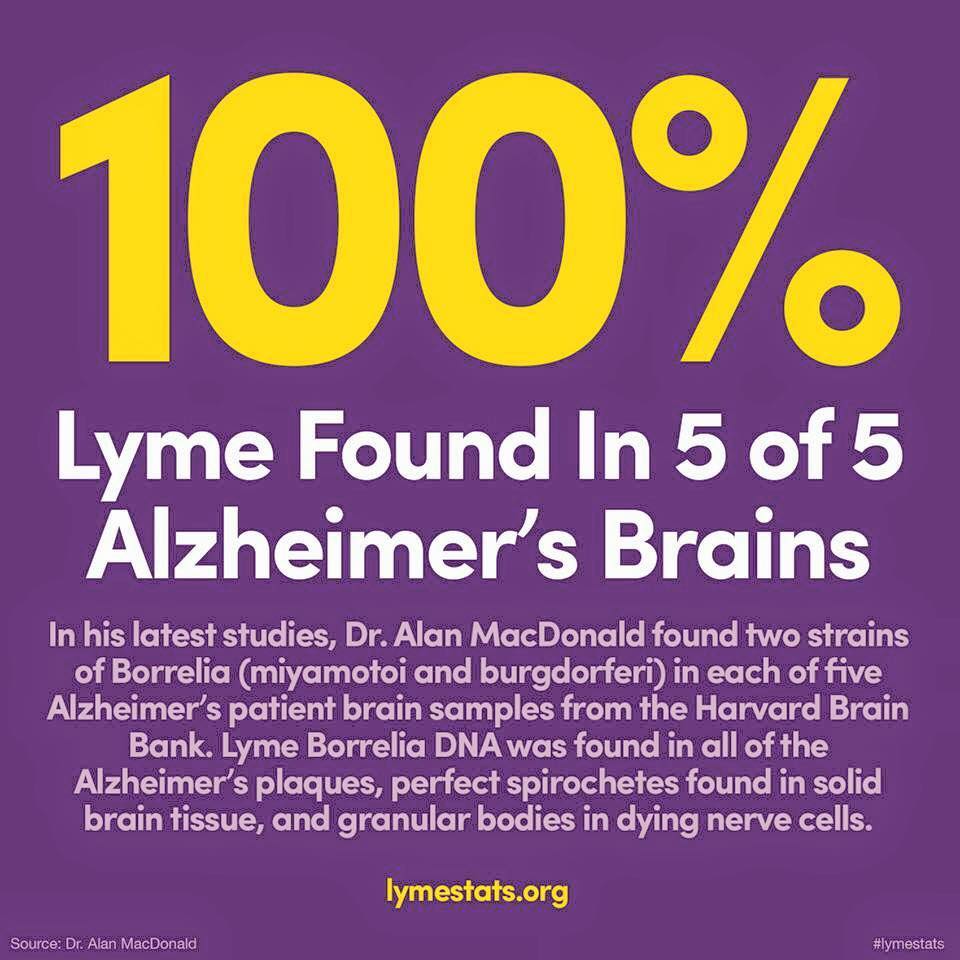
Misinformation on Alzheimer's DiseaseAn example related directly to dementias is the supposition that shows up over and over that Lyme Disease is the cause of Alzheimer’s Disease.

This is sensational disinformation and misinformation. A healthy dose of common sense with thoughtful, careful, and diligent research, analysis, and critical thinking would prove or disprove this bombshell claim.

Common sense brings the “5 in 5 brains” into focus. Five brains out of the millions of people who have had and who have some form of dementia is not a credible sampling of the population affected.

I could very easily go out and find five random people who have the same auburn hair that I do and declare that I have turned genetics upside down and found that auburn hair is a dominant trait (it is recessive).

This is common sense and logic and we must bring these to the table when we’re looking at any and all information. Applied to this graphic, we should automatically mistrust this information.

But that’s not enough to prove it wrong. We actually have to go and do some research. This microstudy was done by McDonald in 2006. The opening statement of the abstract tells us key information through which to view McDonald’s microstudy: “Here is hypothesized a truly revolutionary notion…”

A hypothesis is not fact. It is a theory, a guess, an imagination that remains to be proved or disproved. The infographic, then, presents the information as already being proved, which is misinformation.

That the study was done almost 10 years ago also raises the eyebrows of doubt because much has been done in the research and causes of dementias and Alzheimer’s Disease in those intervening years.

In fact, with some research on the possible link between Lyme Disease and Alzheimer’s Disease, we find a study from 2014 (eight years after McDonald’s microstudy) that definitively repudiates the existence of a link between the two diseases.

To not verify and prove anything and everything is not only lazy, but in many ways, ignorant. Why would we not want to get all the facts instead of trying to support some pet theory that we believe? I don’t understand that.

Too few of us, to our discredit, actually go through this process and that is what I am begging each of you and imploring each of you to do. Know why you know what you know. Know why you believe what you believe. Know why you do what you do.

Never, ever accept anybody else’s word for anything. Prove it. Disprove it. But never just accept it.

Ever. If not for ourselves, for our loved ones. They’ve entrusted their lives to us. We owe it to them to be rigorously honest and apply that everywhere in our lives and to not fall for gimmicks, misinformation, disinformation, and outright lies.

The cost of not doing this is high to everyone.

To us in terms of our character and our credibility (if we perpetuate disinformation, misinformation, and erroneous information, then we are leading people astray and away from the truth).

To our loved ones in terms of their care and their lives (we can cause much harm and much suffering by believing things that are not true and not proven).

A huge part of true love is the continuous hard work it requires us to put into living it, being it, showing it consistently and continually.

Is our love real or is it not? How do we know?

 

Help is Available to Pay for the Medications Our Loved Ones With Dementias and Alzheimer’s Disease Need

Financial Assistance to Help Pay For Prescriptions is AvailableOn top of the devastating neurological, physical, and emotional toll that dementias and Alzheimer’s Disease have on our loved ones, the cost of care – hospital equipment, adaptive devices, supplies, and medications – even when we as caregivers are carrying a fair share of that burden is often financially overwhelming.

Most costly, especially for our loved ones who depend on Medicare (and, hopefully, a Part B supplemental policy and a prescription plan), are the prescription medications used to help manage symptoms and behaviors associated with dementias and Alzheimer’s Disease.

Very few of these medications have generic equivalents, so there is no other option but to buy the Big Pharma patented – and outrageously expensive – medications.

When our loved ones with dementias and Alzheimer’s Disease who are covered by Medicare hit the “donut hole” of coverage, the prescription costs go through the roof because they are billed at full price.

However, there are options available for assistance with paying for these medications all year round. 

I’ll summarize the options here:

  1. Do your homework before filling the prescriptions. Big-box retail stores like WalMart and Sam’s Club (Costco and BJ’s as well) have more affordable prices than stores that are specifically geared around selling medication (CVS, Walgreen’s, etc.). Independent pharmacies may be able to give a better price as well.
  2. If the PCP prescribes a medication that the insurance plan doesn’t cover, you can appeal for coverage.
    1. The insurance plan will send a letter of denial.
    2. Make sure that the PCP provides documentation that the medication is medically necessary.
    3. Contact your state’s regulator to ask for a free independent medical review.
  3. Financial assistance may be available.
    1. NeedyMeds is a national non-profit organization that helps connect people with financial assistance.
    2. Other non-profits who may be able to help with financial assistance for prescription medication are: Partnership for Prescription Assistance, Patient Services, Inc., and Patient Advocate Foundation’s National Financial Resource Directory.
    3. Financial assistance – and sometimes free medications – is also available from pharmaceutical companies for medications that are still patented (there are no generic equivalents).

A note from my own experience will save you a lot of time, aggravation, and trouble. Having a PCP or a geriatric psychiatrist deal with the pharmaceutical companies for assistance with patented medications will get the fastest and best results.

The pharmaceutical companies have applications for assistance that the PCP or geriatric psychiatrist will provide. You will have to provide income statements, Medicare expenses already paid, and other expenses related to care. Include everything!

The PCP or geriatric psychiatrist will submit the paperwork and if it is approved, the medication will be sent to them and dispensed from them. The good news is that once you’re in, you don’t have to redo the paperwork again.

Another thing to be aware of is that these programs are not designed just to assist the most economically-disadvantaged members of our society.

The middle-class, which is the largest segment of American society, is feeling the financial squeeze on all fronts more than any other group (and if we are taking prescription medication, we can use some of these resources too for financial assistance to help pay for them). Even though our loved ones with dementia and Alzheimer’s Disease may have pensions, Social Security, and Medicare coverage, the costs of living – and dying – are far outpacing what they have coming in each month.

So this is a potential lifeboat to keep them as financially solvent as possible, while ensuring that they have the medication they need.