Archives

Profiles in Dementia: Rita Hayworth (1918 – 1987)

Rita Hayworth Alzheimer's Disease Alcohol-Related DementiaRita Hayworth was an American actress whose career peaked in the 1940’s as Columbia Pictures’ most lucrative female lead, with a career that included 61 movies over a 37-year span.

One of Hayworth’s most acclaimed performances was in 1946’s Gilda, starring opposite leading man Glenn Ford. Hayworth also starred in two movies with Fred Astaire, who said she was his favorite dancing partner on screen.

However, fame and fortune could not stave off Hayworth’s personal demons, one of which was alcoholism.

By the late 1950’s, Hayworth’s chronic abuse of alcohol had ravaged the beauty of her younger years and had aged her considerably, making her no longer as attractive to Columbia as a leading lady even though she wasn’t 40 years old yet.

Alcoholism also created havoc in Hayworth’s personal life – she married and divorced five times (to men who in their own rights were not good choices).

By the 1970’s, when Hayworth was in her mid-50’s, the ravages of years of alcohol abuse began to also affect her brain. From 1972 until her death 1987, Hayworth’s cognitive impairment, memory loss, and repetitive outrageous behavior were what kept her name in the news headlines.

Rita Hayworth as an older womanHayworth died in February 1987 at the age of 68. Although she was the first public face of Alzheimer’s Disease (then a relatively-unheard-of form of dementia), there is absolutely no doubt that Hayworth also had alcohol-related dementia (also in 1987, mixed dementias and the many types of dementia were relatively unheard of as well), which probably hastened both her neurological decline and her death.

Believe Half of What You See and None of What You Hear (or Read): Navigating Dementias Information Online

The Internet Is Not Reliable - We Must Prove or Disprove EverythingWe humans are a very gullible bunch. We are also capable of the most incredible leaps of faith in tying the most disparate and thinly-threaded information together while we routinely disbelieve proven facts and credible information backed by proof, analysis, and critical thinking.

Why is that we go to the outermost reaches of implausible information to build our internal knowledgebases on instead of doing real, credible – yes, it takes time, it takes effort, it takes analysis, it takes critical thinking, it takes patience, and it takes commitment – research to understand the various kinds of dementa (Alzheimer’s is just one kind of dementia), to understand what the scientific process – and effects are – and to understand how we as caregivers can love and support our loved ones with honor and dignity?

Going Gentle Into That Good Night is a comprehensive resource for factual, well-researched, and practical information on dementias. The information is free for everybody. Yet routinely I see the most outlandish and untrue information on dementias on social media.

Silver bullet cures (there are no cures). Unproven links to other diseases based on an infinitesimally small test sample (no real scientist or pathologist would hang their careers on samplings this small to announce a finding). Claims that this or that “natural” thing will reverse or improve a brain already neurologically compromised.

It sounds wonderful. But it is misinformation, disinformation, and, in many cases, completely dishonest.

For a lot of these things, the motive is to get us to spend a lot of our hard-earned money on a pipe dream while the people getting rich on our backs are laughing all the way to the bank. For the other things, it is simply a matter of hacks or inferior scientists, doctors, etc. trying to get their 15 minutes of fame.

All at our expense and at the expense of our loved ones with dementias and Alzheimer’s Disease. Not only is there a monetary expense, but there is also an emotional expense, a psychological expense, and a physical expense.

All of these areas can be significantly drained and irreparably damaged in the process.

Little Women author Louisa May Alcott died prematurely because of mercury poisoningAn example of this insanity in the pre-information age was in the widespread usage of mercury as a cure-all during the 18th and 19th centuries. Mercury, it turns out, is incredibly toxic and rapidly leads to premature death (Louisa May Alcott, author of Little Women, died an early death from mercury, which was prescribed for her various physical ailments, poisoning).

It is easy to think, “Duh!” now, but the same kind of misinformation, disinformation, and outright lies are even more rampant and accessible today because of technology.

If you want to believe something – even something unproven, outrageous, dead wrong, and possibly life-threatening – the internet offers you the backup and the “proof” you need to justify whatever it is you want to believe.

The internet is full of hacks. It is full of wannabes. It is full of misinformation, disinformation, and lies. About dementias. And about everything else.

Do not believe anything that you cannot prove yourself beyond a shadow of a doubt. Do not trust anything just because it looks like somebody credible (a doctor, perhaps) said it. 

I implore you not to check your critical thinking, your BS meter (we all have one, I hope), your logic, your reason, and your common sense at the door when you enter the wild and wacky world of the internet.

Here’s the most important thing to remember. Most disinformation, misinformation, and outright lies have a tiny grain of truth in them. That is always the hook. Always.

However one grain of truth surrounded by countless grains of not truth still makes the information as a whole untrue. Do not fall for the hook because once you do, then you are moving as far and as fast away from the truth as possible.

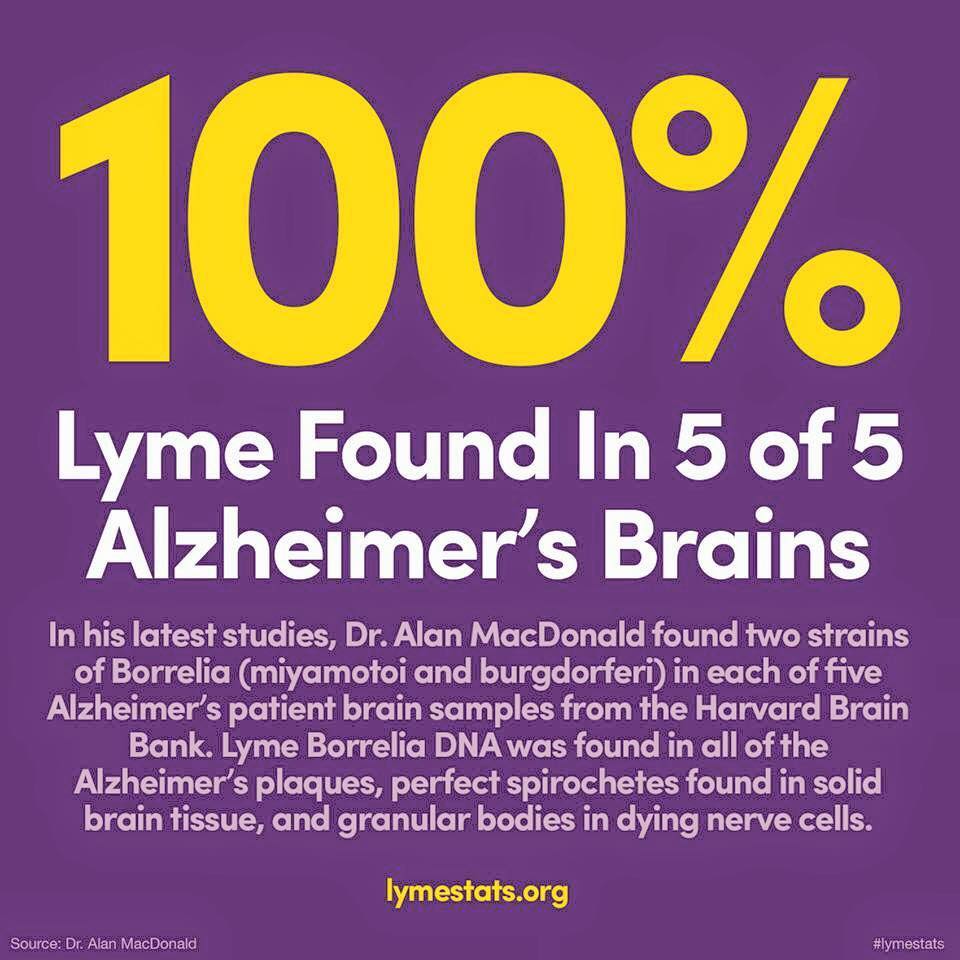
Misinformation on Alzheimer's DiseaseAn example related directly to dementias is the supposition that shows up over and over that Lyme Disease is the cause of Alzheimer’s Disease.

This is sensational disinformation and misinformation. A healthy dose of common sense with thoughtful, careful, and diligent research, analysis, and critical thinking would prove or disprove this bombshell claim.

Common sense brings the “5 in 5 brains” into focus. Five brains out of the millions of people who have had and who have some form of dementia is not a credible sampling of the population affected.

I could very easily go out and find five random people who have the same auburn hair that I do and declare that I have turned genetics upside down and found that auburn hair is a dominant trait (it is recessive).

This is common sense and logic and we must bring these to the table when we’re looking at any and all information. Applied to this graphic, we should automatically mistrust this information.

But that’s not enough to prove it wrong. We actually have to go and do some research. This microstudy was done by McDonald in 2006. The opening statement of the abstract tells us key information through which to view McDonald’s microstudy: “Here is hypothesized a truly revolutionary notion…”

A hypothesis is not fact. It is a theory, a guess, an imagination that remains to be proved or disproved. The infographic, then, presents the information as already being proved, which is misinformation.

That the study was done almost 10 years ago also raises the eyebrows of doubt because much has been done in the research and causes of dementias and Alzheimer’s Disease in those intervening years.

In fact, with some research on the possible link between Lyme Disease and Alzheimer’s Disease, we find a study from 2014 (eight years after McDonald’s microstudy) that definitively repudiates the existence of a link between the two diseases.

To not verify and prove anything and everything is not only lazy, but in many ways, ignorant. Why would we not want to get all the facts instead of trying to support some pet theory that we believe? I don’t understand that.

Too few of us, to our discredit, actually go through this process and that is what I am begging each of you and imploring each of you to do. Know why you know what you know. Know why you believe what you believe. Know why you do what you do.

Never, ever accept anybody else’s word for anything. Prove it. Disprove it. But never just accept it.

Ever. If not for ourselves, for our loved ones. They’ve entrusted their lives to us. We owe it to them to be rigorously honest and apply that everywhere in our lives and to not fall for gimmicks, misinformation, disinformation, and outright lies.

The cost of not doing this is high to everyone.

To us in terms of our character and our credibility (if we perpetuate disinformation, misinformation, and erroneous information, then we are leading people astray and away from the truth).

To our loved ones in terms of their care and their lives (we can cause much harm and much suffering by believing things that are not true and not proven).

A huge part of true love is the continuous hard work it requires us to put into living it, being it, showing it consistently and continually.

Is our love real or is it not? How do we know?


Profiles in Dementia: Miss Daisy of “Driving Miss Daisy”

Driving Miss DaisyDriving Miss Daisy, the 1990 Academy Award-winning movie, is one of those rare movies that is both expansive and intimate as we take a journey through 25 years of the elderly life of Miss Daisy.

Miss Daisy, portrayed by one of the finest actresses I’ve ever seen, Jessica Tandy, is both a student and an educator (she’s a former schoolteacher) in this multilayered drama that takes her and us through the sweeping political and social changes in the three decades following the end of World War II.

The unlikely, and initially unwanted, relationship and friendship that develops between the 72-year-old lively and independent Miss Daisy and the calm and steady Hoke Colburn, portrayed by Morgan Freeman, who is hired by Miss Daisy’s son, Boolie, portrayed by Dan Akroyd, as Miss Daisy’s driver after she wrecks her car for a second time in a short time span is both poignant and endearing.

Although they come from completely different worlds in every sense of the word, they learn a lot from each other and they grow because of each other.

When Hoke comes in one morning after 23 years with Miss Daisy and finds her frantically running around the house because she believes she’s late for school to teach her students, he calls Boolie, who immediately puts Miss Daisy in a nursing home.

Hoke, who now depends on others to drive him around, isn’t able to visit Miss Daisy often, but he goes to see her in the nursing home when he gets the chance. 

Boolie has a mostly hands-off relationship with his mother: he loves her and takes care of the practical things she needs, but she’s mainly a nuisance who often gets in the way of the rest of his life.  Watching their interaction – and the lack of time Boolie has for Miss Daisy – is reminiscent of what many of us see in our own family dynamics with caregiving in general.

Hoke, on the other hand, is nurturing and compassionate and provides the time and the companionship that is missing from Boolie’s relationship with his mother.

We see the difference in these relationships with Miss Daisy, as well as the rapid decline of dementia, near the end of the movie when Boolie and Hoke go to see her in the nursing home on Thanksgiving Day.

Miss Daisy looks and acts like a shell of her former self. She is unable to communicate and doesn’t seem to recognize either Boolie or Hoke. 

Boolie makes quick contact and disappears, while Hoke goes in to the dining room to sit with Miss Daisy while she mostly doesn’t eat Thanksgiving dinner.

Hoke talks with her, both about the past and about his present life. He notices that a piece of pumpkin pie sits in front of Miss Daisy uneaten.

Miss Daisy dementiaSensing that Miss Daisy may not remember how to eat the pie, Hoke cuts it into pieces and feeds it to her. We see just the briefest of sparkles return to Miss Daisy’s eyes as she savors each bite and the brief glimpses of recognition Miss Daisy has for her old friend Hoke even through the mostly impenetrable walls of dementia that have enveloped her mind.

I highly recommend Driving Miss Daisy. It is a tear-jerker at unexpected places throughout the movie, so grab the tissues because you’re going to need them, but it’s well worth it. 


The Layperson’s Guide to Revocable Living Trusts, Guardianships, and Conservatorships

Contingency Planning End of Life Planning Elderly Parents and ChildrenWhen our loved ones with dementias and Alzheimer’s Disease reach the part of the journey through these neurological diseases where they are unable to handle their own financial and legal matters, we as caregivers have no option but to step in and act for them and in their best interests.

Here in the United States, there is an incomprehensible aversion to planning for the possibility of having to entrust our lives to someone else and for how we want to die

It’s as though we have this national collective mentality that if we don’t think about it, then it won’t happen.

The bad news? No matter what, it’s still going to happen.

And someone is going to be left holding the bag – maybe the person we would have designated or maybe someone we don’t want making decisions for us – to decide for us.

If it’s a person we trust, then they have the agony of trying to figure out what’s best and what we would have wanted. This is especially agonizing when dealing with end-of-life issues.

Too many people in this position of not knowing what we want, because we refused to talk about it, prolong our suffering and run up needless bills in the process, simply delaying what would have been the inevitable outcome anyway.

If it’s a person we don’t trust, all bets are off. And it is not going to be pretty.

The time to prepare for both of these inevitables – unless we die early and truly unexpectedly (I can’t help but laugh every time I see an obituary for a really elderly person that says they died unexpectedly: suddenly, perhaps; unexpectedly, no) – is when we have the ability to and can make sure what we want to happen happens.

A Revocable Living Trust is A Good Option for Ensuring Elderly and End-of-Life NeedsFrom the standpoint of appointing someone we trust to handle our financial and legal affairs (most of us do an okay job with medical powers of attorney, but even that gets ignored more than it should), a revocable living trust is probably the best and safest way to go.

The benefits of a revocable living trust are:

  • The person creating it retains control and can revoke control at any time as long as they are competent;
  • It can be set up with a small amount of money or a piece of property in the trust and the attorney’s fee (varies by state);
  • The person creating it designates the person/people they trust to handle their legal/financial affairs;
  • It eliminates the need for a will;
  • It cannot be legally contested;
  • The process of transferring control to the designated trustee in the case of incompetency requires a professional (psychiatric) letter with the diagnosis and evidence of incompetency;
  • It, with the professional letter declaring incompetency, is the only documentation needed for the designated trustee to handle finances and legal matters.

A revocable living trust is probably the easiest way to ensure what we want both in life if we can’t do it ourselves and in death after we’re gone.

However, it is of supreme importance to choose wisely and be absolutely convinced of the trustworthiness of the person we designate to be our trustee.

The bottom line? If we have any doubts as to whether we can trust someone completely, we do not choose them as our trustee.

It will not end well for us – in fact, it could end gruesomely and tragically – and all our careful planning will have been for nothing, to put it mildly.

But what if, as many Americans do, our loved ones with dementias and Alzheimer’s Disease reach the stage where they are not competent to handle their affairs without any legal documents in place?

There are two options, and by the time this is needed, it’s likely that the petitioner (us for our loved ones or our families for us) will need both of them granted.

Both options are very costly (much more expensive than the cost of powers of attorney and a revocable living trust), often take a long time to be granted, and, in many cases, set off a family war, which not only can delay a decision, but can also create irreparable rifts within the family.

One option is guardianship. Guardianships give the petitioner the legal authority to take physical care of the loved one who is incapacitated.

The process to obtaining guardianship begins with getting a professional letter confirming the person for whom guardianship is sought is incompetent to handle their own affairs.

That letter must be taken to an attorney to have a petition drawn up to submit with the letter to the court. The petitioner is responsible for all the attorney fees (general estimates are in the $2500 to $4000 range if the petition is uncontested) and court costs.

Petitioning for legal guardianship and conservatorship is a lengthy and costly processThe court will decide – slowly – whether to grant the guardianship and the entire process can take several months at the very least.

The second option is a conservatorship. A conservatorship gives the petitioner the legal authority to handle financial and estate matters for of the loved one who is incapacitated.

A conservatorship has the same legal requirements and process as a guardianship and has the same potential problems as well. That’s why if a petitioner has no other choice but to pursue these options, it’s prudent to do both of them at the same time.

There is an additional requirement for the petitioner who is granted a conservatorship for a loved one who is incapacitated. The petitioner will have to file a detailed annual financial report for the estate to the court for review to ensure that the estate is being managed as the court sees fit.

If the petitions for guardianship and conservatorship are uncontested, they will take a much longer time and much, much more money to obtain than having an attorney draw up a revocable living trust that settles everything.

If the guardianship and conservatorship petitions are contested by other family members, it’s conceivable that the legal fight could outlast the loved one who is incapacitated and the amount of money spent to fund the fight would be outrageously high.

We may have no choice in these matters with our loved ones that we are caregivers for, but I urge each of us to consider taking care of these things for ourselves now for our potential caregivers.

We need to tell our families what we want, carewise, for longterm care and at the end of our lives. We need to choose and discuss with the person we want to ensure that our wishes are carried out. We need to get the legal paperwork done and keep one copy in our home safe or a safety deposit box at the bank and give the other copy to the person we designate to carry out our wishes.

We never know when time and chance are going to happen. Today is the day to prepare for that. Tomorrow may be too late.


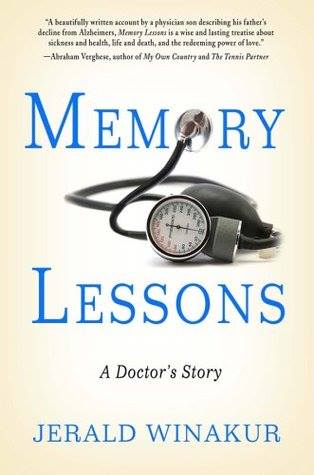
“Memory Lessons” – Jerald Winakur: Book Review and Recommendation for Caregivers

Going Gentle Into That Good Night Book Review and RecommendationMemory Lessons: A Doctor’s Story by Jerald Winakur is a must-read for all us who are caregivers for loved ones with dementias and Alzheimer’s Disease. Going Gentle Into That Good Night cannot recommend it highly enough.

This is my Goodreads review:

“What an incredible book! Dr. Winakur is a geriatric physician – old-school, steadfastly bucking against the managed care model of the for-profit companies that own medicine in the U.S. and Big Pharma, the for-profit companies who advertise magic-in-a-pill drugs directly to consumers and pay off medical providers to prescribe them – and is/was the son of aging parents, one of whom was his dad, who had dementia.

Dr. Winakur weaves the story of his philosophy as a doctor – do not harm, take the time to listen t0 and to think about each patient, we all forget, in devaluing our elderly population and shuffling them off to care facilities because we’re too busy with our own lives and can’t be bothered, that not only do we owe them our turn in the circle of life, taking care of them when they need us most just as they took care of us when we needed them most, but one day, if we live long enough, we will be them and the examples we set with our own attitudes and behavior toward them are what our children see and what they will, in turn, do to us – with the story of his family and his parents.

It is refreshing, poignant, and from the heart.

A must read!”

This is great book for all of us as caregivers. He is a doctor and a caregiver for his parents. It’s interesting to see how he deals with the same dilemmas and decisions as a son, in spite of being a geriatric physician, that we do as sons, daughters, grandchildren, sons-in-law, daughters-in-law, and spouses of our loved ones.

The Layperson’s Guide to Traumatic Brain Injury (TBI) and Chronic Traumatic Encephalopathy (CTE)

Closed Head Injury Traumatic Brain Injury

Our brains are very soft organs that are surrounded by spinal fluid and are protected by the hard outer covering of our skulls.

Under normal circumstances, spinal fluid cushions the brain and keeps it from crashing into the skull. However, if our heads or our bodies are hit hard, our brains can slam into our skulls and result in traumatic brain injuries (TBIs). TBIs are also caused when the skull is fractured and the brain is directly damaged by outside force.

BrainAlthough concussions, which we’ll discuss later, are sometimes referred to as mild TBIs, the reality is that no injury to the brain is mild and repeated injuries will lead to neurological degeneration that includes dementia.

TBIs are complex neurological injuries that result in a wide variety and severity of symptoms and disabilities.

The least severe symptoms of TBIs – and these may not happen immediately and, in fact, may occur some time after the injury, can include:

  • Temporary loss of consciousness
  • Dizziness
  • Headache
  • Slurred speech
  • Confusion
  • Temporary memory loss
  • Grogginess and sleepiness
  • Double vision or blurred vision
  • Nausea or vomiting
  • Sensitivity to light
  • Balance problems
  • Slow reaction to stimuli

The most severe symptoms of TBIs can include:

  • Extended loss of consciousness or coma
  • Permanent and severe brain damage
  • Partial or complete motor paralysis
  • Death

Going Gentle Into That Good Night TBI CDC Annual StatisicsThe most common causes of TBIs, according to the Centers for Disease Control, are:

  1. Falls (40.5%)
  2. Car accidents (14.3%)
  3. Head/body collisions with people or things (15.5%)
  4. Assaults (10.7%)

In the category of TBIs from falling, most of the falls occur disproportionately in the very young (55% of falls among children occur in children between the ages of 0 and 14) and the very old (81% of falls among adults occur in adults who are 65 or older).

Most of the TBIs in the Other category (19%) are from personal firearms and military weapons.

What CTE Does to The Brain

Courtesy of Sports Legacy Institute (http://www.sportslegacy.org/)

A type of TBI that is more frequently in the headlines today is Chronic Traumatic Encephalopathy (CTE). CTE is brain damage that occurs as a result of repeated concussions (a concussion is defined as injury to the brain from a direct blow to the head or from the head or upper body being violently shaken).

The first identified variant of CTE was described in 1928 by forensic pathologist Dr. Harrison Stanford Martland as pugilistic (from the Latin word pugil, which is translated as “boxer” or “fighter”) dementia. The symptoms included tremors (Parkinsonism), slowed movement, mental confusion, and speech difficulties.

In 1973, the neuropathology of pugilistic dementia was discovered and described by a team of pathologists led by J. A. Corsellis who documented their findings after performing thorough autopsies on the brains of 15 deceased boxers.

Going Gentle Into That Good Night Muhammad Ali BoxerFormer boxing heavyweight champion Muhammad Ali began boxing in Kentucky when he was 12 years old.

By the age of 18, he had boxed his way to the heavyweight gold medal at the Olympics (1960).

A few months later Ali began his professional boxing career. He quickly gained national prominence because of his skill in the ring and his trademark quote: “Float like a butterfly, sting like a bee. The hands can’t hit what the eyes can’t see.” He boxed professionally until his retirement in 1981.

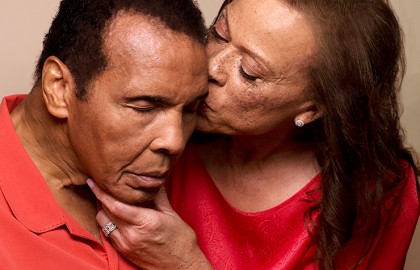
In 1984, Ali was diagnosed with Parkinsonism (the tremors of pugilistic dementia) and his neurological health has deteriorated steadily to include all the advanced symptoms of Muhammad and Lonnie Ali 2014this variant of CTE.

His wife, Lonnie, is his caregiver and contributed to a moving article that AARP published last year about what she and Ali deal with on a daily basis as a result of the neurological degeneration that CTE has caused.

CTE has increasingly become a major health concern in the high-contact sports of professional wrestling, ice hockey, soccer, and football as more and more current and retired athletes are showing symptoms consistent with CTE.

NFL Football CTE going gentle into that good nightIn recent years, football – and especially professional football – has become the focal point for a closer examination of CTE. Not only has this sport become more violent in terms of how the game is played, but how concussions are treated – or not treated – has also come under greater scrutiny.

Joseph Maroon, Pittsburgh Steelers Team Doctor CTE Overexaggerated Rare March 18, 2015

Joseph Maroon, Pittsburgh Steelers Team Doctor

Although NFL team doctors assert that CTE is “rare” or “overexaggerated,” the hard scientific neurological and physiological evidence proves that these doctors are simply paid hirelings who care more about their paychecks than they do about the overall health of the players.

Let’s examine the facts. In a 2014 landmark study by the largest brain bank in the United States, 76 of the 79 brains of deceased NFL players that pathologists examined had TBI, and specifically, CTE.

A class action lawsuit has been filed – and a tentative agreement reached with the NFL – by retired NFL football players and/or their families (some of the players have already died from neurodegenerative causes) which claims that players were not (a) adequately protected from suffering concussions, (b) medically treated properly following concussions, and (c) provided adequate medical compensation to treat the burgeoning costs of CTE as it progresses.

This gist of this lawsuit is that the NFL used – and abused – these players to fabulously guild the seemingly-endless coffers of the NFL, often forcing the players by intimidation or fear to get back on the field as soon as they could after suffering a concussion (often in the same game), and then abandoned their responsibility to their former employees (as part of their contractual agreement) as soon as the employees began costing them money instead of making them money.

Even more damning to the NFL is the actuarial report accompanying the lawsuit that indicates that at least 1/3 of NFL players will suffer CTE.

If there is a silver lining in all of this, it is that the younger NFL players have a much greater awareness of the relationship – and their increased risk – between professional football and CTE.

They are aware of the very real probability that they will be one of the 1 out of every 3 players who develops CTE.

And they’re choosing their long-term health, including their brain health, over temporary fame and fortune.

Jake Locker Retires at 26 An unprecedented number of younger – and in-their-prime in the professional football world – NFL players have already retired before the 2015-2016 season begins.

They include:

  • Cortland Finnegan – Age 31
  • Jake Locker – Age 26
  • Jason Worilds – Age 27
  • Chris Borland – Age 24

While Finnegan, Locker, and Worilds did not publicly cite CTE as a factor in their premature retirements from the NFL, there can be no logical reason to doubt that the mounting evidence was a factor in their decisions.

Chris Borland, on the other hand, made no secret that the high probability of CTE was the reason for his decision to retire.

Chris Borland Retires from San Francisco 49ers Age 24Borland just finished his rookie season (2014-2015) with the San Francisco 49ers, but he revealed after the season that he suffered a concussion in training camp last fall. Instead of reporting the concussion, Borland covered it up so that he could continue to practice and win a starting position on the team.

This is the kind of competitive pressure that gets put on these young players by the NFL (yes, Borland made the decision and he bears the responsibility for it, but had he reported the concussion, he would have been replaced and lost the starting spot and may not have played all season).

Fortunately, though, Borland came to his senses and realized how much he had jeopardized – and would continue to – his neurological health.

As he said on the March 16, 2015 edition of ESPN’s Outside the Lines, “”I just thought to myself, ‘What am I doing? Is this how I’m going to live my adult life, banging my head, especially with what I’ve learned and knew about the dangers?'” 

We can only hope that more athletes in high-contact sports will know the higher risks of TBIs they face, not just in the professional leagues, but at the amateur levels, and they will choose to walk away from certain neurological damage.

In the meantime, we have a better understanding just in our daily lives of how TBIs can happen and what the results can be, so I hope that we’re a little more observant and attentive after falls with our little loved ones and our older loved ones, especially those already going through the journey through dementias and Alzheimer’s Disease, as they are even more prone to falling than the general elderly population.

As Sergeant Phil Esterhaus says at the end of every roll call on Hill Street Blues (a favorite TV show of mine during my high school and college years), “Hey, let’s be careful out there.”


Part 3 – “The End of Absence” (Michael Harris) Book Review

The Visual InternetThis is the last of a three-part series of reviews that I am writing on The End of Absence: Reclaiming What We’ve Lost in a World of Constant Connection written by Michael Harris in 2014.
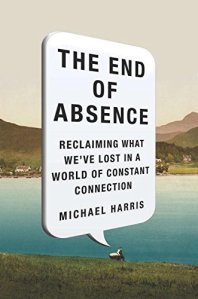
The End of Absence: Reclaiming What We've Lost in a World of Constant Connection by Michael HarrisIn “Part 1 – The End of Absence (Michael Harris) Book Review,” we looked at the definition of absence and how it relates to our quality of life.

We also discussed how constant connection to technology is eliminating absence from our lives, and in the process, rewiring our brains with dementia-like characteristics. It is a lifestyle dementia that we are consciously creating by choosing to live in a world of constant connection.

We also discussed how the disappearance of absence is also causing the disappearance of our ability to think, to to reason, to plan, to dream, to create, and to innovate. In short, we’re trading the depth of real life, with all its hills and valleys, simplicities and complexities, and triumphs and failures (all of which make us better people, in the end), for a fake, virtual, shallow life that, in the end, means absolutely nothing.

In “Part 2 – The End of Absence (Michael Harris) Book Review,” we discussed data mining and predictive analysis, showing how the internet is actually shrinking our worlds, instead of expanding them.

We also discussed how our virtual worlds, with our ability to easily eliminate anyone and anything that doesn’t look us, ends up just being a mirror we look into, which first stagnates, then eliminates growth, change, maturity, and thinking.

We also discussed how we’ve surrendered our critical thinking to the internet world of public opinion, which is often ignorant, uninformed, and devoid of expertise. As a result, we get a lot of wrong, bad, and possibly even dangerous information that we are increasingly accepting as valuable and good, without any control mechanisms in place to follow through and make sure that we’re not being led down the primrose path.

And, finally, we discussed how a constant connection to technology erodes the selfless part of us (empathy, caring, serving, looking for all others) and cultivates the self-centered, self-absorbed, selfish part of us.

The reward factor of being the center of attention all the time, even when we’re just typing nonsense or run-of-the-mill things, motivates and grows this self-absorption until all we look for is adulation and affirmation.

The impact of this is that truth – as hard as it can be to stomach sometimes – goes by the wayside and a completely false sense of self, worth, and value, albeit virtual and not real, becomes our view of ourselves.

In this last part of our review of The End of Absence: Reclaiming What We’ve Lost in a World of Constant Connection, we are going to examine further how our lives are being robbed of meaning, experience and richness by our constant connection to technology.

We are also going to look at ways to bring absence back into our lives, if we’re brave enough, daring enough, and strong enough to quit following the masses into intellectual oblivion by enslaving ourselves to the machines.

My experience says that humanity in general just doesn’t have the willpower nor the intense desire to free itself from what’s destroying it. Once we get comfortable, we don’t want to move.

I hope that I’m wrong in this case, but the pragmatist in me says I’m probably not.

One of the ways in which our constant connection to technology is robbing us of meaning, experience, and richness in our lives is that our focus has become broadcasting life instead of living life. We, in effect, live in an augmented reality that we stage, produce, and filter through the lenses of our smart phones or digital cameras, but which we don’t experience in the moment or spontaneously participate in.

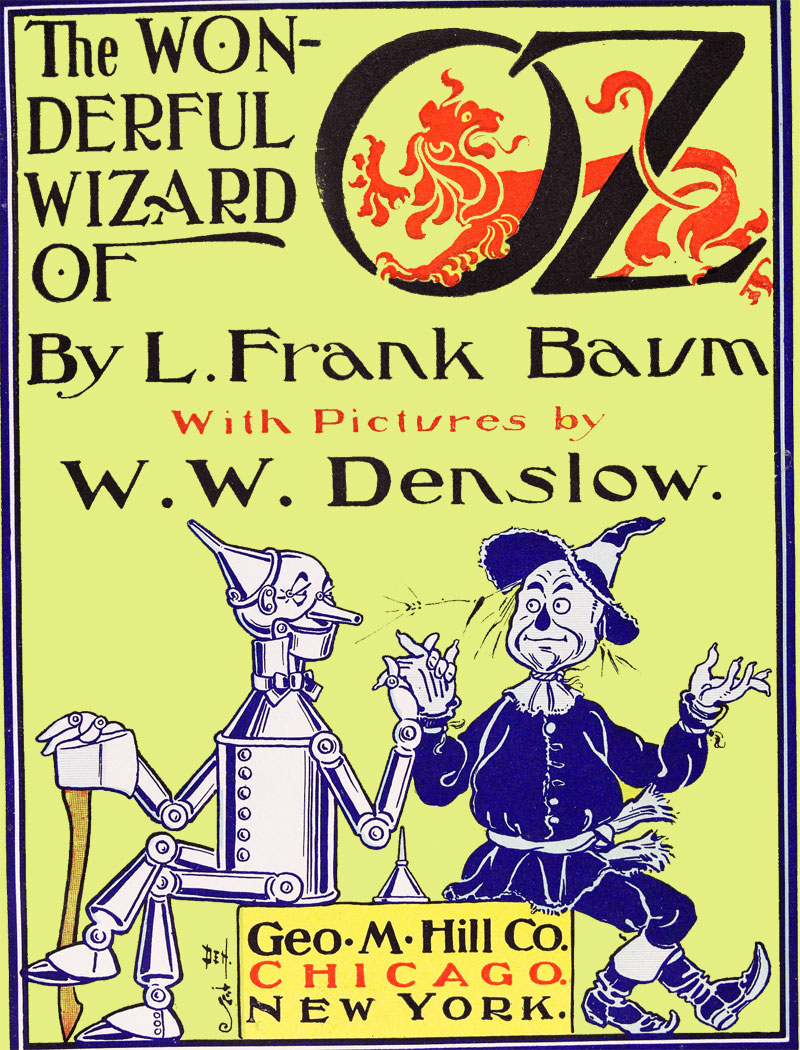
The Wonderful Wizard of Oz Going Gentle Into That Good NightHarris gives a perfect example of augmented reality from L. Frank Baum’s classic book, The Wonderful Wizard of Oz.

Although in the 1939 movie, Emerald City is actually green (the movie starts out in black and white and then suddenly changes to full color as soon as Dorothy leaves Kansas and is on her way to Oz), in the book it was not.

The reason that Dorothy and Scarecrow, Cowardly Lion, and Tin Man believe that Emerald City is green in the book is because the Wizard of Oz  tells them to put on safety glasses to protect their eyes. The safety glasses are tinted green, so everything these four see is green. 

In other words, they’re not seeing anything as it actually is, but instead they seeing it through a filter that makes what they are seeing seem real, but in fact, it’s not.

Just like most of us don’t normally style our food every day like the chefs on the Food Network and most of us don’t naturally stage our lives and homes to be photo-perfect. That’s just not reality, if we’re actually living our lives.

However, the trend toward this as our normal way of treating life is growing, and we are increasingly spending more time making our lives social-media-friendly than we are actually living them as they naturally occur and not even worrying about whether all our virtual world even knows anything about them.

Examples of this abound on social media with pictures of food we eat and events that we go to such as weddings, family reunions, social gatherings, etc.

How many times – and for how much time – have we stepped out of the reality of a messy kitchen while we’re cooking and plates of food that aren’t perfectly arranged and garnished to stage our breakfast or dinner meals for social media?

How many times at social gatherings do we spend all our time documenting activities and sharing them on social media instead of actually participating in what’s going on?

When we start living an augmented reality, then we lose authenticity and genuineness. The more and the longer we do this, the less able we will be able to know the difference between what’s real and what’s staged, and the less we exercise our natural and tint-free sight, the more easily we will be manipulated and controlled by other people and other things.

Wag the Dog Dustin Hoffman Robert De NiroIf you haven’t seen the movie, Wag the Dog, you should watch it soon. This movie was prescient with regard to the augmented reality of all media, politics, and “news” and how it would manipulate the United State public into believing whatever they saw or heard, without questioning and without verifying. Digital technology has just exponentially enhanced this manipulation.

It is always with this movie in the back of my mind that I take most of the stuff I read or hear from any media outlet with a grain of salt, because I know it’s not true (spinning, angling, omissions, innuendo, gossip, etc.) and I also know it’s not genuine or authentic, but instead staged and produced to have a desired effect on the general population.

Augmented reality destroys truth. For those of us – and it seems there aren’t many of us left who aren’t all caught up in it, hook, line, and sinker as if it is true – who know it’s not true, it has also destroyed our trust.

Another example of augmented reality is with US citizens and their participation in political processes.

House of Cards Kevin Spacey Robin WrightHere’s the reality. All politicians are liars and the process of politics is dishonest and dishonesty (the first two seasons were so hard for me to stomach that I refuse to watch any more of it, but Netflix’s original series House of Cards, with Kevin Spacey and Robin Wright, gets this in every disgusting and gut-wrenching detail).

And yet a lot of American citizens want to participate in a process that ultimately (here’s the other augmented reality: money and electoral colleges do the down and dirty decision-making, not the American public – the voting thing is just a ruse to make people believe they are instrumental in the process, but they’re not) chooses somebody who is thoroughly dishonest and can’t be trusted.

And when Americans are asked why they participate when confronted with the corruption, the dishonesty, and the lies of politicians and politics, nine times out of ten, one of the answers is “I’m choosing the lesser of two evils.”

That’s augmented reality, folks. Evil is evil. Why would any of us choose it at all?

And augmented reality is not limited to the media, to politics, and to politicians. It is everywhere in our society today. Education, entertainment, religion, social activism, nonprofits, business – if you can name it, augmented reality rules.

And technology has fueled this infiltration into everything we see and we hear.

But that alone is not enough to dupe us, to manipulate us, and to control us.

What makes us entirely susceptible to being duped, manipulated, and controlled is our constant connection to technology. It is analogous to the certainty of radiation contamination – and death – with prolonged exposure to radioactive materials.

Where and with what we spend most of our time is what we come to believe is true and reality.

Because we have, over time, chosen to spend our time constantly connected to digital technology and have gradually eliminated absence in our lives, our ability to objectively think, logically think, and critically think, as well as to prove or disprove information and things as true or untrue by analysis and research, we have also put ourselves into the position of completely accepting lies as truth and fake as real.  

How many times have we seen some internet hoax automatically recycled on the internet as truth (and then tons of people start sharing it and broadcasting it), when a simple (and fast) check of Snopes before we share it all over the internet would tell us it’s a hoax?

Our constant connection to digital technology has made us vulnerable and gullible. We are much more willing to accept augmented reality than we are actual reality.

Here’s why. Actual reality contains inherent risks. It’s also messy at times. It’s hard at times. It’s ugly at times. And it’s negative at times. That’s part of breathing for a living.

But digital technology, with its filtering capabilities that let us choose to unfriend, unfollow, unlike anything that is risky, messy, hard, ugly, and negative, has essentially created an augmented reality made up of rainbows, lollipops, and unicorns that completely disconnects us from the realities of life, growth, change, and maturity, as well as developing our uniquely human capacity to care, to empathize, to comfort, to encourage, to be patient, and to be kind and merciful toward other people.

Of course, we expect all those things from other people – and we get an inauthentic and superficial version from our virtual world (I mean, really, how hard is to type a few letters saying “sorry,” and then just go on with life because it is not right in front of you and it’s not impacting you in real time?) – because our constant connection to digital technology has led us to believe that everything really is “all about me.”

Technology is not the originator of this “You’re Good Enough, You’re Smart Enough, and Doggone It, People Like Younarcissism that infects our entire society today, but it has been the catalyst for its rampant and invasive spread into every part of our society and our lives.

So now you know the bad news that all of us are facing with regard to a constant connection to technology.

Are we doomed to this fate with no recourse?

Have we irreversibly surrendered all our power to this invisible monster that is gorging itself on all the things that make you you and me me until we’re all just hollow shells of nothingness on the outside attached to technology’s puppetmaster strings?

The good news is that we are not doomed with no recourse nor is this current trajectory irreversible.

However, like any addiction or entrenched habit, we will first have to consciously choose, then commit, and then act, making those actions a permanent replacement for what we are doing now, to reverse it.

And it will be hard until it becomes our new (and for those of born before 1985, our old) habit. And it will take a huge amount of self-control and discipline to actually accomplish it.

Are we up to the challenge? I hope so.

So, then, what steps can we implement right now to start the reversal?

The first step is to limit our exposure to constant connection.

Instead of checking email every hour, commit to checking it no more than three times a day (morning, noon, and, this is my usual cutoff, the end of the day…meaning the end of daylight hours). 

Instead of wearing your smart phone like underwear, leave it on a desk or a cabinet out of your immediate reach. You really don’t have to pick it up and answer every text or every call as soon as they come in. If someone really wants to talk to you, they’ll leave a voicemail (most people don’t).

Limit checking texts and voicemails to three times a day. Set aside, within each of those times, a certain amount of time to deal with them, and stop when time runs out. And put the phone away again until the next time you’re scheduled to check it.

Here’s the funny thing. People will adjust to this schedule and they will learn when you’re available and when you’re not and eventually that’ll be the only time they contact you. 

Emergencies, of course, are still emergencies and they are always exceptions to this rule.

However, we need to make sure that we understand what a real emergency is. Being out of milk for coffee, for example, is not an emergency. Our brains are going have to be retrained in a lot of different ways.

Allocate a certain amount of time each day (no more than two hours total) that you will spend on social media sites. The reality is that social media sites are the biggest time-wasters, for the most part, within digital technology.

This is time that we can easily recover for absence – solitude, peace, and quiet to reflect, to think, to dream, to plan, to innovate, to create, to learn – to be a part of our daily lives.

Instead of immediately going to Google when you don’t know something or you can’t remember something, write the question down and go to the library or a bookstore when you’re able and find a book and look it up.

This will be hard, because our constant connection to technology has produced impatience and a need for immediate gratification in us.

But delayed gratification will do two things. First, it will build patience. Second, we will begin to sort through things and regain a balance of what’s important and what isn’t.

If the effort of going to library or a bookstore to answer a question we have isn’t worth the time and energy, we’ll know that’s unimportant – and we can get rid of it.

However, if we can’t wait to get to the library or the bookstore to research our question, and we make that an urgent to-do item, then we’ll know that’s important – and we will keep it.

With a constant connection to technology, everything’s important, while in real life, there are some things that are important and some things that aren’t. This will help us regain that balance and perspective.

Turn your devices and all the noise (including music) off. On weekdays, set a time and turn them off with no exceptions.

Replace that time you would have spent on them with interacting with a good book (yeah, the ones with the pages and the real covers) or interacting with real people, like family and friends, by having dinner together or playing a board game or cards (not video games) together. This will naturally lead to conversation and connection with real people and real life. Do not turn the devices back on until the next day.

Choose one or two days a week to disconnect altogether from technology. Turn it all off. The weekend is an excellent time to do this and will give you plenty of absence in which to rest, recharge, and regroup with no extraneous interference impeding you.

I personally find it very difficult to jump back into the world of connection each week when I do this myself. I love not even thinking about and I don’t miss it at all.

With all the absence it builds into my weekends, I often find myself wishing I never had to reconnect ever again because I realize how disruptive it is in my life, even though I have strict limits on it and I’ve cut my exposure time down to the bare minimum.

In the end, even a little is still too much, at least for me.

When you have all the time back that doing these few things will give you, use it wisely.

If you have a neglected hobby, take it up again. If you don’t have a hobby, find one.

Read books. Take walks.

If you’ve got snow on the ground, bundle up and go outside to play in it. Build a snow fort or build a snowman. Admire the beauty and cleanness of a freshly-fallen snow.

Watch how the sun reflects off of it. Watch the clouds in the sky. Watch a sunset from beginning to end.

When spring comes, go find a lush, grassy hill or meadow and lie down on the ground and look at the sky.

Ride a bike. In the summer, go outside at night and look at the sky and the stars and the planets and dream.

In the fall, walk through the unparalleled beauty of the vast array of colors of the trees as they change.

Get outside and do something, not just for your body, but also for your mind.

The bottom line is there is no substitute for absence.

We aren’t missing it because we let it go gradually along the way over time and we didn’t even notice.

But when we start bringing absence back into our lives, we will be surprised, after we get used to it again, how much we missed it and how much we almost lost it for good, and, my hope, is that we will be determined never to let it go again.


Remembering a Quintessential Leader: UNC Basketball Coach Dean Smith (1931-2015)

Coach Dean Smith had dementia the last several years of his life and as he made the inevitable slide into deep cognitive impairment, there were very few of his players and coaches that he remembered during the last couple of years.

One occasional exception was Bill Guthridge, his long-time assistant coach who became head coach after Coach Smith’s retirement. Bill Guthridge, it has recently been revealed, is going through the journey of vascular dementia.

This was my tribute to Coach Smith on my leadership blog and it deserves a place here because he has gone gentle into that good night.

The Quintessential Leader's avatarThe Quintessential Leader

Coach Dean Smith UNC quintessential leaderCoach Dean Smith, who led the University of North Carolina basketball program for 36 years, died on February 7, 2015 after a long battle with dementia. Throughout his coaching career and his life after coaching, Coach Smith embodied many of the characteristics of quintessential leadership.

He was not a perfect man, but none of us can claim perfection either. There were times when he wasn’t a quintessential leader, just as there are times we are not quintessential leaders.

But when Coach Smith’s life as a whole, both on the basketball court and off, is considered (and that’s the only way to consider anyone’s life, including our own, because no one – including each of us – gets it right every single time), it’s clear that his goal was to be a quintessential leader. And the results of his commitment to that goal are evident to this day.

I grew up…

View original post 1,608 more words

Will Poor Sleep and Sleep Deprivation Now Lead to a Lifestyle-Related Dementia Later?

restorative sleep dementias going gentle into that good nightThe answer is “probably.”

There have been several studies in the last two years on the effects – positive and negative – of sleep on the brain. They all agree on one point: to function optimally, the brain requires quality sleep and enough of it.

They also agree on another point: the way our modern society is structured, the majority of us are not getting enough sleep, and the little sleep we are getting is not quality sleep.

The fact that poor sleep and future dementia are linked is not new.

A sleep disorder known as REM sleep behavior disorder is a key characteristic of Lewy Body dementia, but the sleep disorder is often present decades before symptoms of Lewy Body dementia emerge.

In a study published in the The Journal of the American Medical Association in 2011, researchers showed a strong link between sleep apnea (sleep-disordered breathing) and dementia.

However, new research is now showing that even those of us without these two sleep disorders are getting less sleep and the sleep we do get is not quality sleep. New neurological research is showing us how important enough sleep and good sleep is for our present and future neurological help.

circadian-rhythm-sleepThe body has a natural circadian rhythm designed to promote and facilitate sleep as daylight turns into evening and then night and to promote and facilitate wakefulness as night turns into day.

Until the Industrial Revolution, which actually consists of two iterations (one in the late 18th century and the second, which was the more profound of the two, in the mid-19th century, the human race generally slept and awakened based on the body’s natural circadian rhythm.

After the second iteration of the Industrial Revolution, when crude ways to keep the lights on 24 hours a day, 7 days a week emerged, all that changed. Initially, the only segment of the population that it affected were those who were employed in factories, mines, and foundries.

factory work shift work sleep deprivation going gentle into that good nightAs textile factories, ore and mineral mines, and metal foundries remade the work day into two 11-hour shifts – generally, 7 am – 6 pm and 7 pm – 6 am – the second shift of workers were forced to ignore and work against their natural circadian rhythms to fuel the manufacturing boom, which was bolstered by a greater demand for manufactured goods throughout all strata of the population.

Although there was less concern about the workers – health, quality of life, and even death – then, there is still a significant amount of data from that period that shows most of horrific accidents (the majority of which were attributable to human error and resulted in both permanent disabilities and death) occurred during the later hours of the 2nd shift.

In the early 20th century, as manufacturing expanded into transportation, work days were again revised into three shifts – 7 am – 3 pm, 3 pm – 11 pm, and 11 pm to 7 am – with similar higher accident rates in the 2nd and 3rd shifts.

medical professionals shift work going gentle into that good nightMedical professionals in hospitals, nursing facilities, and emergency services work were the next group of people to be required to work in shifts. Additionally, of all the careers in which shift workers were employed, it was not unusual for many medical professionals to work double shifts (back-to-back shifts) to provide necessary services.

During World War II, almost all manufacturing facilities in the U.S. transitioned to 24/7 production and a 1st, 2nd, and 3rd shift to support the Allies’ efforts in the war. After World War II, as those factories transitioned back to civilian manufacturing, they kept 24/7 production and three shifts in place. 

As the Technological Revolution replaced the Industrial Revolution (also in two iterations, with the first one beginning after World War II, and the second one, which now affects every human on the planet, beginning in the late 1960’s) and the world became instantaneously and simultaneously intricately connected, the 24/7 workday began to affect almost everyone on the planet, white-color workers working late nights going gentle into that good nightincluding white-collar workers who saw their workdays – and nights – lengthened beginning in the late 1980’s.

As more and more people have been, by necessity, forced into living and working in a 24/7 environment, researchers have kept a close eye on how successful our efforts to work against our natural circadian rhythms have been.

The answer is we’re all pretty much failures at it and the results are poor quality sleep and sleep deprivation.

And like our ancestors in the Industrial Revolution, working late into the night or all night, whether in a medical facility, an emergency services department, a manufacturing facility, an office, or at home (because half the world’s awake when it’s time for people in the U.S. to go to bed), shows the same elevated risks of accidents and injuries (both work-related and non-work-related) when compared to working during daylight hours.

Here are a few statistics directly tied to shift work (if you’re an office jockey reading this, remember that this applies equally to you and all those late nights and overnights you’re working wherever you’re working them):

  • Work-related injuries increased to a little over 15% on the 2nd shift and almost 28% on the 3rd shift.
  • The longer the shift, the higher the risk of injuries: 13% higher on a 10-hour shift and almost 30% higher on a 12-hour shift. 
  • The more consecutive night shifts worked, the greater the risk of sustaining an injury (37% higher by the fourth consecutive night shift as opposed to 17% higher by the fourth consecutive day shift).
  • Almost 50% of the late-night (10 pm – 1 am) and early-morning (5 am – 8 am) car accidents – fatal and non-fatal – involve drivers who are driving to or from work.

Pretty scary, huh? And, yet, despite all the evidence that it’s a really bad idea, a dangerous idea, and a dumb idea, we, as a society, keep doing it. I won’t get in-depth into the reasons for that here, except to say that they are tied to greed and competitiveness, which are soul issues.

What is the biology behind the statistics above?

That we can answer. And I’ve had more jobs than not where I worked 10-12 hours on a Sunday-Thursday night schedule, where I’ve worked many late, late nights only to be back at my office first thing the next morning, and where I’ve pulled many all-nighters, so I’ve got a lot of firsthand experience to bring to the table.

The reality is that unless you’re physically exhausted – mental exhaustion actually keeps the brain in gear and is totally counterproductive – you can’t get any real quality sleep during the day. Melatonin production is off and all the hormones to keep you awake are in action, so trying to sleep well is a losing battle.

So while you may be able to get a few hours of restless sleep, you do not go through the normal sleep cycles associated with nighttime restorative sleep.

As a result, because your brain is “foggy” when you’re awake, your response times are sluggish, and, combined with the normal circadian rhythm of sleep kicking in at night – even if you’re awake – all of these are directly tied to the increased risks of accidents and injuries during work hours at night.

The later you work at night the more likely you will have an injury and/or accident because these are the normal hours when sleep is deepest and during which you’ll be fighting sleep the most.

But the long-term effects of poor sleep and sleep deprivation are just as serious with regard to neurological health.

In a series of studies on sleep published in late 2013, researchers discovered that good sleep and normal sleep (7-8 hours at night) enables the brain to clean out the toxins – including beta amyloid proteins, which are involved in the development and progression of Alzheimer’s Disease – that have accumulated in it during the day’s mental activities. This process is so energy-intensive that it can be done only during sleep, when the brain doesn’t have anything else to do.

And here’s the thing. Perpetually skimping on sleep, for a lot of us who don’t do shift work and don’t have careers that demand a lot of late, late nights and early, early mornings on a consistent basis, is a lifestyle choice.

Technically, however, all of these types of careers, except for manufacturing work, which puts food on the table and pays the bills for people who might not be able to do so otherwise, are lifestyle choices because anyone going into these careers know the demands before they choose the education and jobs that lead to them.

And that substantially increases your risk of developing a lifestyle dementia.

digital and electronic connectivity sleep deprivedWe, as a society, are very sleep-deprived. And that includes a lot of people who are not earning their living during the night.

Much of that, in my opinion, is because we are digitally and electronically connected all the time and that crowds out the time we allocate for sleep.

A few questions should help you know if this applies to you personally.

  1. Do you watch TV for several hours in bed or do you play video games before you go to sleep?
  2. Is your smart phone or tablet beside your bed so you can check email or keep up with social media? Do you check them during the night?
  3. Are you digitally and electronically connected last thing before you close your eyes at night and first then when you awaken in the morning?
  4. Do you remember what you did at night before you got digitally and electronically connected?

If the answer to the first three questions is “yes” and the answer to the last question is “no,” then you’re making a lifestyle choice, probably sacrificing sleep (it’s important to remember that all these digital and electronic things stimulate the brain, so their after-effects stay with you for quite some time after you turn them off, and that means it takes you longer to fall asleep), to stay connected all the time to a world, that quite frankly, isn’t all that important or real anyway.

And whatever is real or important about it can wait until tomorrow. Like it did when a lot of us were little kids and there was no cable tv, there was no public internet, there were no video games, there were no personal digital/electronic devices, and there were no cell phones.

The world didn’t end then, and it won’t end now if you put all these away early in the evening and give your brain a chance to relax by playing a game with your family, listening to music that soothes your soul, getting lost in a book, or simply being quiet for a little while, using that time to meditate and reflect on your day and make plans for tomorrow.

Even though since I was born I’ve always had trouble sleeping a lot and getting good sleep when I do, I purposely shut everything down early in the evening to engage in quieter and more reflective activities and I stay away from it until I’ve had some quality time in the morning to get ready to tackle it again.

One day each week – for me, it’s the weekly Sabbath – I disconnect completely for the 24 hours between sunset Friday and sunset Saturday, and I’ve begun to move away from being connected much on Sundays as well.

I rarely have my cell phone anywhere near me and even when I do, I rarely use it. I certainly don’t want it in my bedroom with me at night.

With my sleep history, I’m already behind in this game, so I make lifestyle choices to improve my odds the best I can. It may not be enough to stave off dementias, but at least I know the choices I’m making increase the odds that, if I live long enough (I always pray I don’t…we start dying the day we’re born, so it’s pretty much all downhill from that point on), they’re either mild or short and done.

For all of us who can read this today, now is the time to start making sure we’re doing everything in our power to get enough sleep and to get good sleep when we do. That’s a lifestyle choice that only you can make for you and that only I can make for me.

It may mean some hard choices. It may mean a career change. It may mean disconnecting during nighttime from technology. It may mean looking at our lives and figuring out what’s really important in the long-term, instead of buying into the pervasive idea that now is the only important time in our lives.

But in the end, from this moment on, at least in the realm of sleep, you can do something to help yourself, but you have to decide what you’re willing to trade off now and what you’re willing to live with in the future.


Making Life a Little Easier in the Care of Our Loved Ones with Dementias and Alzheimer’s Disease – Part 3

elderly father adult son caregiver dementia ADThis is the last in a series of posts that discusses everyday practical needs that almost no one ever talks about in providing care and making life easier for both us as caregivers and the loved ones with dementias and Alzheimer’s Disease that we care for.

In the first post in this series, we discussed how to make things easier day-to-day for our loved ones in the areas of eating and incontinence.

In the second post in this series, we discussed day-to-day helps in the areas of personal grooming and bathing in the journey through dementias and Alzheimer’s Disease with our loved ones

In this post, we’re going to discuss the other day-to-day areas where we can make care easier for ourselves and our loved ones in the journey through dementias and Alzheimer’s Disease.

The first area we’ll look it is how to effectively and safely address limited mobility and problematic mobility issues that arise both as a result of the progression of these degenerative neurological diseases and the aging process itself.

Because dementias and Alzheimer’s Disease affect the parts of the brain that control movement and balance, even our loved ones with no other health-related mobility limitations will eventually develop a shuffling gait and maintaining their balance when standing or walking will be difficult, increasing their risk of falls and injuries.

Our loved ones will also have a much harder time getting up and down from a seated position.

One of the most noticeable difficulties will be getting up from and sitting down on the toilet.

bedside commode going gentle into that good nightMany occupational therapists will recommend, as part of the home adaptive accessory purchases, buying a bedside commode for use when our loved ones are sick and unable to easily get to the bathroom or when – especially toward the end of life – if our loved ones aren’t completely immobile, walking any distance is too difficult.

A bedside commode will cost between $30-$40 out-of-pocket and can be purchased at a local medical supply store. However, with home health care or palliative health care, this will be covered by insurance (Medicare or other insurance) as part of the home health care or palliative health care services and equipment.

Occupational therapists will also recommend using the chair portion of the bedside commode over the bathroom toilet in the interim to facility easy standing and sitting.

This is not the best option.

The bedside commode chair is wide, and often won’t fit well, especially in smaller bathrooms, and securely enough over the toilet for this application.

Additionally, the distance between it and the toilet (even with the open guard that comes with most of them) makes keeping the toilet area clean and sanitary more difficult.

So I recommend, instead, a raised toilet seat with arms. 

raised toilet seat going gentle into that good nightA raised toilet seat will cost around $60 out-of-pocket and can be purchased at a local medical supply store. However, with home health care or palliative health care, this may also be covered by insurance (Medicare or other insurance) as part of the home health care or palliative health care services and equipment.

The advantage of a raised toilet seat with arms is that it attaches to the toilet, is more secure when standing and sitting, and is more comfortable than the bedside commode chair. It is also more sanitary and easier to keep clean.

Installation is quick and easy. With the toilet seat up, the raised toilet seat is placed directly on the bowl of the toilet where it attaches securely with a large plastic bolt to the inside of the bowl.

As our loved ones progress in their journeys through dementias and Alzheimer’s Disease, they will become more sedentary than active.

This will mean sitting for long periods of time. Motor skills become more muted with neurological degeneration and a lot of the automatic sensory information that the brain gets, processes, and responds to will disappear.

Therefore, it will become less automatic for our loved ones with dementias and Alzheimer’s Disease to feel the natural discomfort of sitting in one position or sitting still for a long period of time that, when we’re neurologically healthy, causes us to automatically move and shift weight frequently when we’re seated.

This results in the increased likelihood of pressure sores and pressure ulcers developing. Once the skin breaks down in this manner, treatment and healing are difficult at best. Because of this, infection and sepsis often follow leading to death.

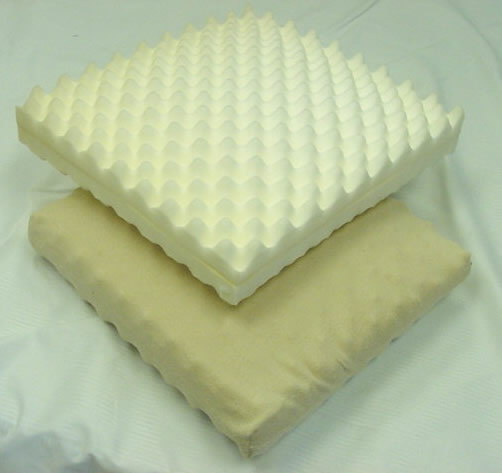
The most effective way to prevent pressure sores and pressure ulcers from sitting for long periods of time is to buy padding for chair foam pad going gentle into that good nightthe chair that distributes weight more evenly and that does the work of ensuring that automatic shifting of weight occurs.

The least expensive way (about $20) to do this is to put a thick (at least 4″) egg-crate-type foam pad (most come with a plastic covering to help with incontinence issues) in the chair that our loved ones with dementias and Alzheimer’s Disease spend most of their seated time in. 

These can be purchased at most big-box retail stores.

Another physiological change that occurs for our loved ones as dementias and Alzheimer’s Disease progress is difficulty swallowing (known as dysphagia). This difficulty includes liquids and solid foods, as well as medication.

Dysphagia presents two real dangers to our loved ones. One is choking. The other is aspirating food into the lungs, which can lead to the development of pneumonia. In fact, it is more common than not that pneumonia is the cause of death for our loved ones with dementias and Alzheimer’s Disease.

That’s how serious swallowing issues are for our loved ones.

However, we can help mitigate this risk by some very simple techniques that will facilitate easier swallowing and reduce the risks of choking and aspirating food into the lungs.

Let’s start with taking medication since this is usually where swallowing issues appear first in the journey through these neurological diseases.

However, before I discuss the technique that usually is helpful for our loved ones to more easily swallow medications, it is important to discuss the medications themselves and the form they are administered in.

pill cutter splitter going gentle into that good nightFirst, as caregivers, we should all have a pill cutter (also known as a pill splitter) as part of pharmacy stash. These can be pick up at any pharmacy very inexpensively.

This will come in handy when managing medications with varying dosages (such as diuretics or glucocorticoids like prednisone, which might be increased temporarily or gradually and then decreased the same way). 

However, I strongly advise against a pill crusher and crushing any medications (although assisted living facilities and nursing homes routinely ignore this when administering medications to residents with dysphagia). The reason is because there are medications that when crushed can cause serious side effects and become completely non-therapeutic.

unsweetened applesauce medication swallowing going gentle into that good nightWhen our loved ones with dementias and Alzheimer’s Disease begin to have problems swallowing medications with water or juice, the easiest and usually-most-effective way to help them be able to swallow the medication is to use applesauce (I recommend unsweetened).

Put the pill on about 2/3 teaspoon of applesauce, which goes down the throat more easily, and swallowing should be much easier.

If our loved ones have medication that come in a large pill form (potassium supplements are a good example and because they tend to dissolve in the mouth and are very bitter are not a good candidate for cutting in half), we should have our loved ones’ primary care providers (PCPs) prescribe a different form of the medication.

Some medications are available in a liquid form (potassium, for example, comes in a liquid form and can be mixed with applesauce).

Other medications are available in a sprinkle form (for example, Depakote, which is often used for mood balance in Lewy Body dementia because of the high sensitivity to anti-psychotics like SeroquelXR, is available in sprinkle form and can be mixed with food).

If a liquid or sprinkle form of the medication is not available, then we should work with the PCP to change to a smaller-pill alternative that will produce equivalent results.

As swallowing becomes even more difficult for our loved ones, liquids and solid food may need to be altered as well.

Sometimes this can be as simple as cutting up food (meat, for example, can be very hard to chew thoroughly in large pieces) into very small pieces and modifying or eliminating foods.

Easy foods to modify are vegetables. Raw vegetables and salads become difficult to chew and swallow for our loved ones as they reach this stage of dementias and Alzheimer’s Disease. Easy alternatives to ensure good nutrition are cooked beans and finely chopped vegetables, including pureed vegetables and beans dysphagiasome of the lettuces we normally use for raw salads (avoid kale and mustard greens – I use these for raw salads – because even cooked, they can be difficult to swallow).

You can also use these cooked beans and vegetables to make a creamy pureed soup. The key is to make the soup so that it approximates the texture of applesauce (not too thick and not too thin).

And I will pass this modification on as a personal note – if you want my recipe, email me at goinggentleintothatgoodnight@gmail.com – for cornbread. Crumbly, grainy, and textured breads and crackers are eliminated from our loved ones’ diets when swallowing everything becomes problematic. The reason is that they can choke and aspirate the little grains and crumbs into their lungs.

But my mama loved cornbread and I wanted to see if I could find a way to keep it in her diet. I had been doing some reading on healthy substitutions in baking (for oil, for sugar) prior to this ever being an issue, so I decided to try one of the healthy substitutions for oil – yogurt – in a batch of cornbread to see if it would change the texture from grainy to smooth. It worked perfectly (beautiful texture) and we were able to keep that in Mama’s diet (and any time we can find a way to do this, please go for it and try it!). 

Swallowing issues may advance to the point where the dysphagia diet levels need to be implemented. There are three levels in this diet, depending on badly swallowing is compromised. I have not personally used these, although I’m familiar with them.

However, this is something that a speech therapist with home health care or palliative health care is qualified to and can help and guide us through at this juncture with our loved ones with dementias and Alzheimer’s Disease.

I can’t emphasize enough how important it is for us as caregivers to have one or other of home health care or palliative health care on board as we provide care for our loved ones since they have resources, like speech therapists, who are available to walk us step-by-step through each phase or issue that we may encountered.

This is the last post in this series. If there are other day-to-day “in-the-moment” things related to caregiving for our loved ones with dementias and Alzheimer’s Disease that would make your life – and, no doubt, many others’ – easier that you would like to see discussed, leave a comment here and I’ll work with you to get you the answers and the help you need.

And please don’t forget to share this on social media. Dementias are more prevalent than ever – and will only increase from this point on – and more and more people are in the role of caregiving for their loved ones.

I often have people ask me what they can do to help and support other caregivers. All you have to do is share. I’ll do the hard lifting of research and writing. 🙂

Even if you don’t know all the people in your online networks, by sharing this information with them, you may be giving a lifeline to someone who is struggling, feeling overwhelmed, and completely alone on their journey.

We never know whose lives are crossing the path with ours. And this may be a random act of kindness that you’ll never even know you did. All you have to do it hit the Share buttons (and there is an email button for those who may not be on social media) for the social media forums you’re on to pass this information along to whoever may need it and can use it.

Thanks!